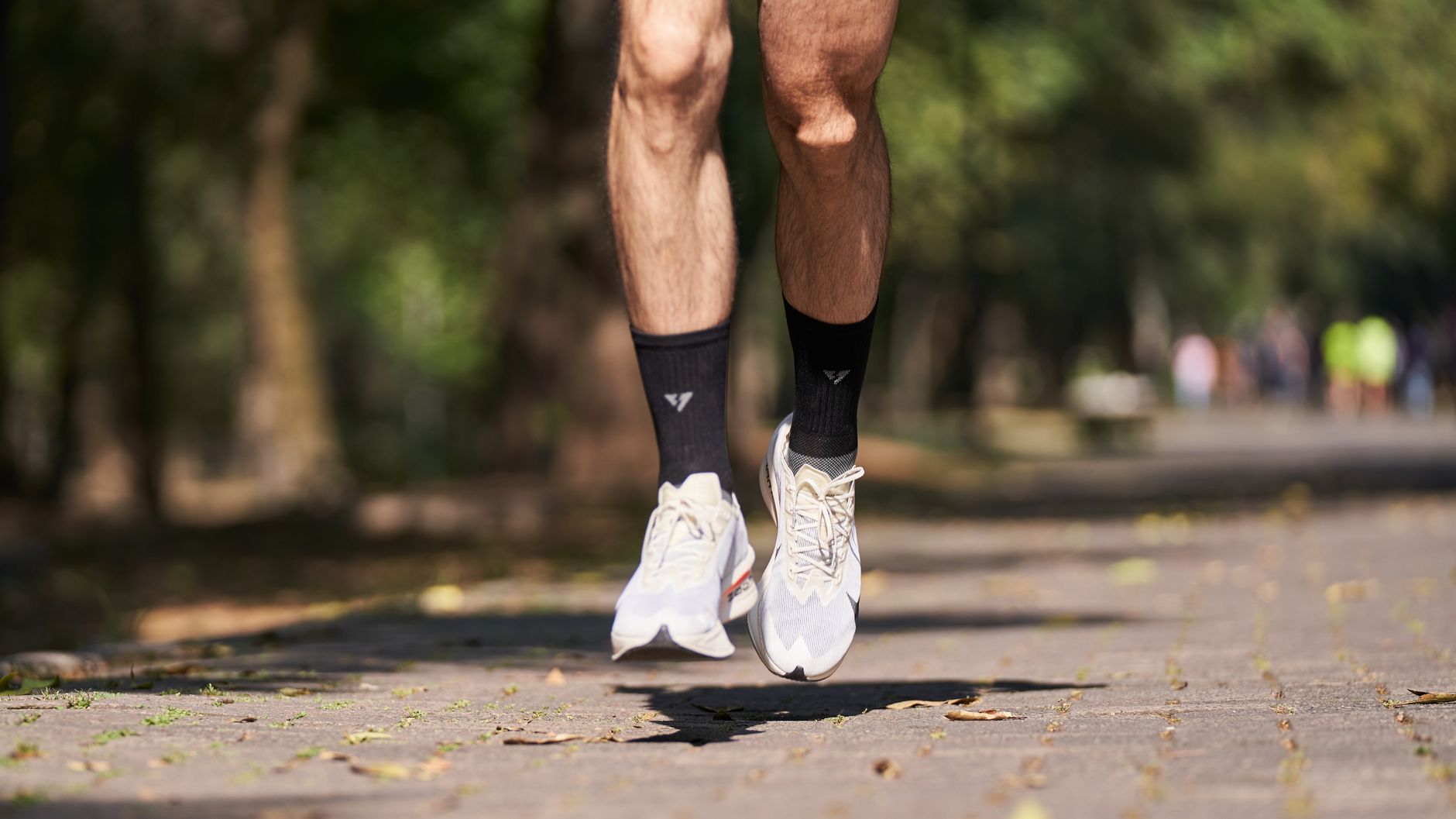
Moisture-wicking socks pull sweat away and cut blister risk, while snug compression socks do not improve speed or effort. A double-sock system with liner and outer can lower injury risk, but wrong thickness raises it, so match material and fit to your run. This guide compares everyday synthetics, double-layer setups, compression, and cooling designs. It focuses on blisters, perceived effort, and recovery.
Medical information disclaimer: This article is for general educational purposes only and does not provide medical advice, diagnosis, or treatment. Always consult a physician or other qualified health professional about symptoms, medications, tests, or treatment decisions.
Table of Contents
- Which material prevents blisters best?
- When do double socks help or hurt?
- Do compression socks make you faster?
- What helps recovery and hot-weather friction?
- How do you pick socks for your next run?
Which material prevents blisters best?
Acrylic synthetic socks produced about 48% fewer new blisters than cotton among 357 Army recruits during marches. A dense polyester liner plus wool-polypropylene outer cut overall incidence to 40% versus 69% with a single sock and halved severe cases, according to the Premier Science systematic review.
Brooks Running explains cotton holds sweat against skin and raises friction, while nylon, polyester, Lycra, spandex, and merino blends move moisture away. Dermatologists advising athletes, reported by Dermatology Times for the American Academy of Dermatology, recommend moisture-wicking socks, well-fitting shoes, drying powders or antiperspirants, petroleum jelly, or adhesive pads.
When do double socks help or hurt?
Not every two-layer setup helps. A thin polyester liner under a standard military wool-cotton-nylon sock raised blisters to 77% versus 69% alone, according to the Blister Prevention review of the Knapik trial.
Thickness controls friction and pressure inside the shoe. A dense, well-fitted pairing limits foot movement, while a thin, loose liner adds folds and traps moisture. Test any combination on short runs before race day and check for hot spots.
Do compression socks make you faster?
A systematic review with meta-analysis found very-low- to moderate-certainty evidence that wearing compression socks during running does not improve physiological measures, running performance, or perceived effort versus regular socks, according to the PubMed-indexed systematic review. That finding covers in-run speed and effort, not comfort or preference. Do not buy compression for a faster time; judge it on fit, comfort, and recovery needs.
What helps recovery and hot-weather friction?
Insufficiently active adults reported less soreness and generally better recovery at 24 and 48 hours after exercising in compression socks. The finding supports use for post-run recovery rather than in-run speed, according to the PMC study.
A Life/MDPI study tested trail-run socks with toe cooling zones. They kept toe temperature lower and limited heat and moisture buildup, reducing friction and skin-injury risk on long or hot runs.
How do you pick socks for your next run?
Match sock to distance, heat, and shoes. Use this quick check before you buy.
Try new socks on two short runs first. If you feel a hot spot, stop and adjust fit, powder, jelly, or pads before a blister forms.
- Avoid cotton for runs; choose acrylic, polyester, nylon, or merino blend that wicks
- Keep shoes well-fitted; pair liner and outer without crowding toes
- Save compression for after long efforts if soreness lingers
- For hot or long trail runs, favor ventilated toe zones
3 thoughts on “Running Socks Comparison Guide: Benefits, Effort, and Injury Risk”
Comments are closed.