
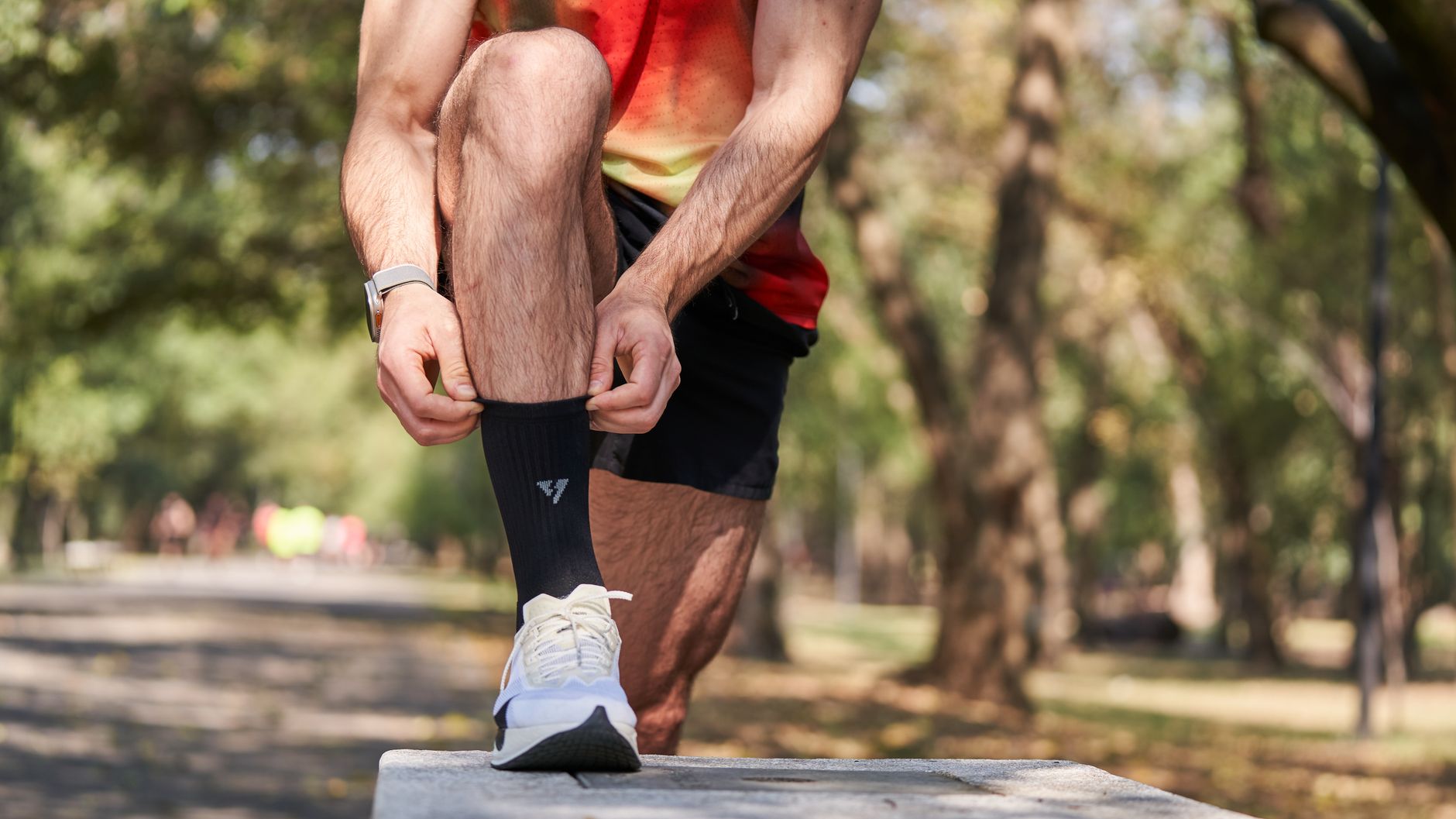
The most common compression socks running mistakes are overdosing pressure, training in recovery socks, and expecting better form or economy. Avoid starting high, skipping measurements, and running through numbness or risky health signs.
Compression socks are graduated sleeves for the lower leg that press hardest at the ankle. Victoria University treadmill trials found they reduced muscle movement and activation without improving running economy. That gap explains why fit, pressure, and use matter more than mileage.
Medical information disclaimer: This article is for general educational purposes only and does not provide medical advice, diagnosis, or treatment. Always consult a physician or other qualified health professional about symptoms, medications, tests, or treatment decisions.
Table of Contents
- Expecting faster form from socks
- Starting with too much pressure
- Wearing one pair for training and bed
- Ignoring warning signs and health limits
Expecting faster form from socks
In 16 highly trained male runners, Indiana University found sleeves did not change oxygen use, economy, or mechanics, as reported in the ScienceDaily summary. Treat socks as comfort and coverage, not coaching.
Victoria University treadmill tests showed less muscle displacement and activation without better economy. Do not lengthen your stride or skip drills because your calves feel steadier. Keep form work, strength, and pacing separate from sock choice.
Starting with too much pressure
CEP Running notes running compression often spans 15-30 mmHg, with 15-20 for light support and 20-30 for performance, per its buying guide. Beginners who start at the top range often mistake squeeze for support.
MedicalXpress reported runners in stockings had 22 mmHg higher muscle pressure and 11 percent lower oxygenation, as detailed in its 2022 study report. The same report found no drop in myoglobin or creatine kinase. Start light for training and move up only if fit stays comfortable.
Wearing one pair for training and bed
CEP Running activity guidance advises lower compression for training and competition and firmer socks for recovery. The same guidance says remove them before bed unless a clinician directs overnight use.
CEP Running fit guidance says measure ankle and widest calf for graduated pressure strongest at the ankle, as shown in its fit guide. The same guide flags pain, numbness, or tingling as too tight. Replace guesswork with a tape measure before race week.
Ignoring warning signs and health limits
Stop and check fit if you feel warning signs. Do not treat compression as routine apparel when the body signals trouble.
Cleveland Clinic says seek clinician guidance for peripheral artery disease, severely reduced heart function, sudden severe swelling, or skin infection or wounds. The Canadian Medical Association Journal lists fragile tissue-paper skin, recent graft, gangrene, oozing dermatitis, or severe cellulitis as contraindications. Do not run through skin breakdown in compression; change training and seek care.
- pain, numbness, or tingling
- sudden severe swelling
- skin break, oozing, or infection