
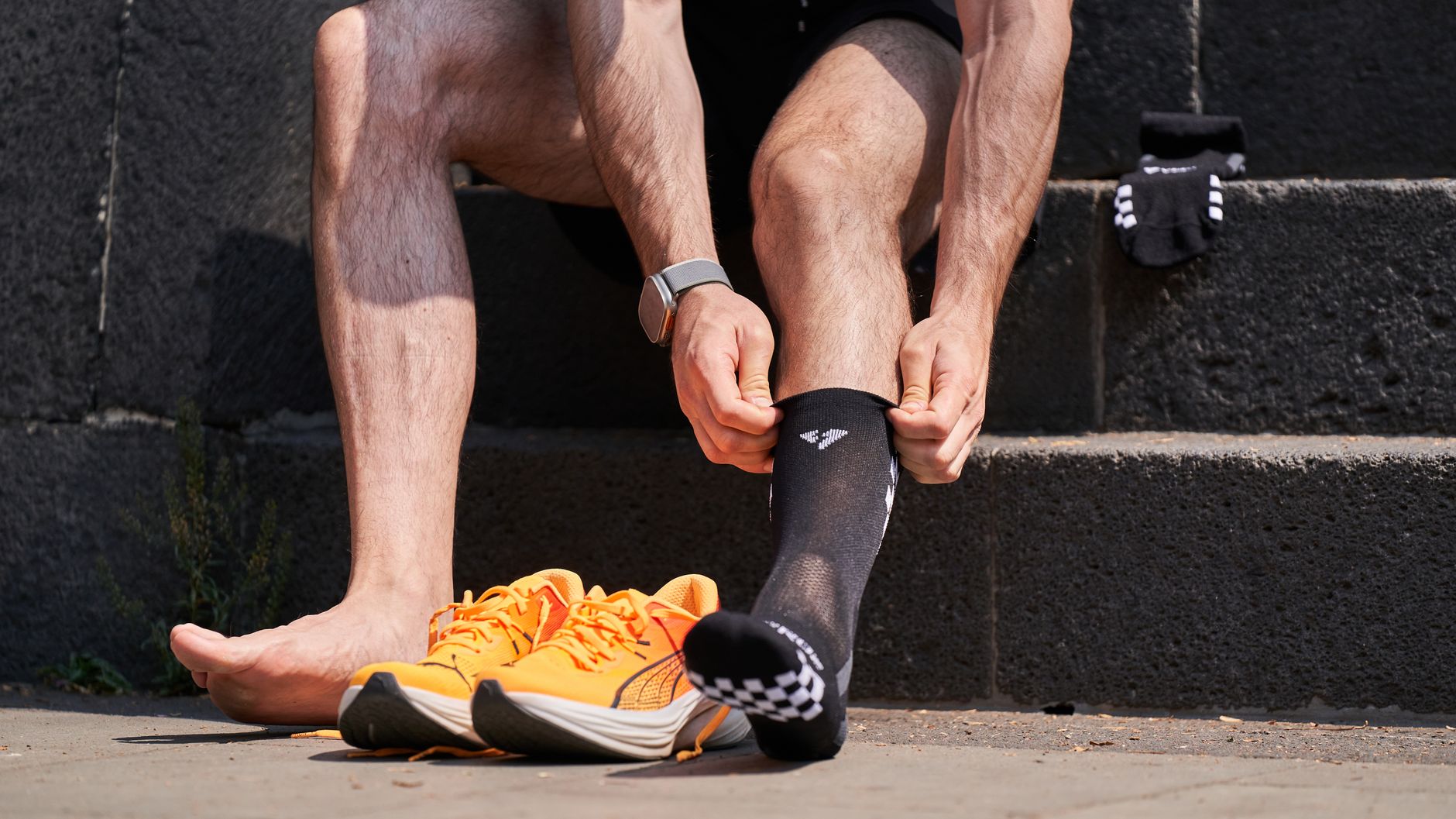
Running socks change blister risk more than speed or effort. Padded wicking socks cut blisters, while compression stockings show no running performance gain and may reduce calf oxygen. Running socks are knit athletic socks designed to manage moisture, friction, and fit inside running shoes. The main choice is between cushioned moisture-wicking socks for blister prevention and graduated compression stockings marketed for circulation and recovery.
Medical information disclaimer: This article is for general educational purposes only and does not provide medical advice, diagnosis, or treatment. Always consult a physician or other qualified health professional about symptoms, medications, tests, or treatment decisions.
Table of Contents
- Do wicking socks prevent blisters?
- Does construction matter more than fiber?
- Do compression socks improve effort or speed?
- How should you choose socks for lower injury risk?
Do wicking socks prevent blisters?
Friction blisters arise from heat plus moisture plus shoe friction. Dermatologists state that synthetic moisture-wicking socks prevent them by keeping skin cool and dry.
In a 35-runner double-blind trial reported in the Journal of the American Podiatric Medical Association, identically padded acrylic socks caused about half as many blisters and smaller blisters than cotton socks trial comparison of cotton and acrylic socks. That result applies to identically padded socks, not all acrylic socks. Fit, shoe friction, and wetness still affect risk.
Does construction matter more than fiber?
Yes, construction can outweigh fiber for blister prevention. A follow-up runner trial using generic cushion-sole socks found no superiority for cotton or acrylic.
Padding placement, knit density, heel and toe design, and snug fit shape shear forces. Fiber helps mainly by moving moisture and holding shape when wet. Choose padded heel and toe, smooth seams, and a heel fit that resists slipping.
Do compression socks improve effort or speed?
No meaningful benefit emerged for healthy runners. University of Gothenburg researchers reported through MedicalXpress that compression stockings raised lower-leg intramuscular pressure by 22 mmHg and reduced calf muscle oxygenation versus ordinary socks Gothenburg running tests.
The same research program found no reduction in muscle-damage markers myoglobin and creatine kinase. A SOCKSHOP summary of systematic running-compression reviews found no meaningful improvement in speed, time to exhaustion, perceived effort, or soreness versus normal socks running-compression literature review.
How should you choose socks for lower injury risk?
Avoid 100% cotton for long or sweaty runs. Use wicking acrylic, synthetic, or wool blends with heel and toe padding and a snug midfoot fit.
Test new socks on short runs before race day. Stop and address hot spots early, since continued friction enlarges blisters.
- Pick your usual running-shoe size range, then check heel grip
- Choose light padding for races and thicker cushioning for long runs
- Change socks when wet during rain, trail runs, or marathons
- Replace socks once elastic loosens or fabric thins at pressure points