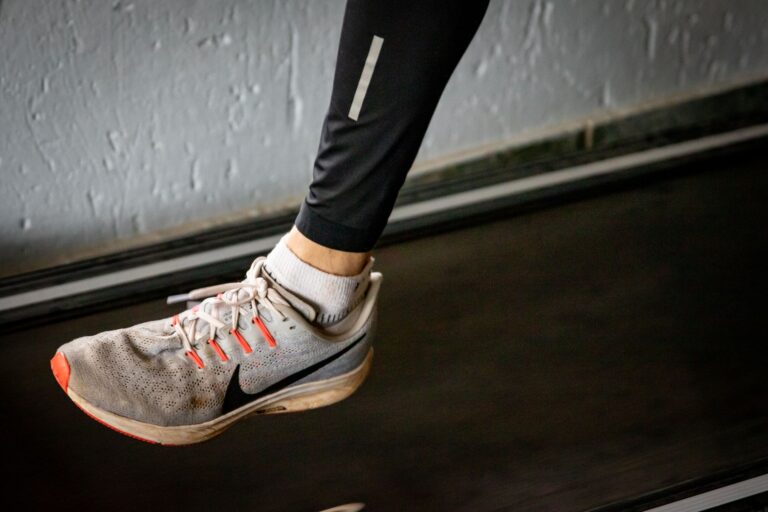
Nike’s latest sole technology advancements represent three distinct innovation paths that address different aspects of running performance. At the cutting edge sits Project Amplify, the world’s first powered footwear system featuring an integrated motor, drive belt, and rechargeable battery housed in a cuff worn around the ankle. The system connects to a carbon fiber-plated running shoe and has demonstrated measurable results: some athletes who tested it reduced their mile time from 12 minutes to 10 minutes—a two-minute improvement that highlights how mechanical assistance can meaningfully impact pace. Beyond powered assistance, Nike has developed the Nike Mind system, which takes a biomechanical approach to performance.
Rather than adding motors, this technology uses 22 anatomically mapped foam nodes positioned on the shoe sole that move in a piston-like rhythm. These nodes target key pressure point areas connected to sensory regions of the brain, aiming to enhance focus and activation before and after competition. The first models, Mind 001 and Mind 002, launched in January 2026 and represent Nike’s shift toward neurotech-integrated footwear. For runners seeking performance without experimental technology, Nike’s ReactX foam midsole in the Structure 26 offers a more traditional stability platform. These concurrent approaches—powered, neurological, and conventional—show that Nike is hedging its bets across different theories of what runners actually need to go faster.
Table of Contents
- What Makes Nike’s Powered Footwear System Different from Traditional Running Shoes?
- Understanding Nike Mind’s Neurological Approach to Sole Technology
- How ReactX Foam Represents Nike’s Conservative Innovation Strategy
- Comparing Sole Technology Across Nike’s 2026 Performance Line
- The Durability and Maintenance Reality of Advanced Sole Systems
- Nike’s 2026 Strategy: Racing Innovation Over Lifestyle Focus
- Why Sole Technology Advancement Matters Beyond Marketing Claims
- Frequently Asked Questions
What Makes Nike’s Powered Footwear System Different from Traditional Running Shoes?
Project Amplify fundamentally changes the relationship between runner effort and forward motion by adding external energy directly to the stride. Unlike traditional shoes that rely entirely on foam return and runner mechanics, the powered system actively propels the wearer forward through each step. This is not a minor tweak to cushioning; the difference between a 12-minute mile and a 10-minute mile represents a 16.7% improvement in speed for the same perceived effort level. That magnitude of difference suggests the motor and drive belt system genuinely reduces the muscular work required per stride, rather than providing psychological benefit or marginal stiffness improvement.
The trade-off is complexity. The system requires charging, maintenance, and a battery pack that adds weight to the ankle area rather than distributing it throughout the shoe like traditional midsole materials. For casual runners or those with limited access to charging infrastructure, this creates practical friction that standard footwear doesn’t impose. Additionally, relying on powered assistance for training might create biomechanical dependency—muscles adapted to motor-assisted propulsion may perform differently when that assistance is removed, which raises questions about whether the speed gain transfers to unpowered running or is purely a product-dependent advantage.
Understanding Nike Mind’s Neurological Approach to Sole Technology
The Nike Mind system operates on a different principle entirely: instead of adding external force, it attempts to optimize the neurological feedback loop between foot and brain. The 22 foam nodes act as mechanical stimulators that activate pressure-sensitive areas on the plantar surface of the foot, which map to sensory and motor regions of the brain. This approach assumes that enhanced sensory input from the sole can improve focus, coordination, and mental readiness during competition. The piston-like motion of these nodes suggests they’re designed to provide rhythmic, patterned stimulation rather than constant pressure.
However, the evidence supporting neurologically targeted footwear is still emerging. While acupressure and reflexology traditions claim that foot pressure points connect to broader body systems, the peer-reviewed research specifically validating Nike Mind’s 22-node design and its impact on athletic performance has not been widely published yet. Runners considering Mind 001 or Mind 002 are partly participating in a real-world test of the technology rather than relying on established scientific validation. The psychological component—wearing innovative neurotech shoes—may itself provide a confidence boost that partly accounts for any measured improvement, a placebo effect that wouldn’t reduce performance but also wouldn’t be a function of the technology’s direct mechanical action.
How ReactX Foam Represents Nike’s Conservative Innovation Strategy
Not all of Nike’s 2026 running innovation involves cutting-edge motors or neurological stimulation. The Nike Structure 26, built around a full ReactX foam midsole, represents the incremental refinement approach that has defined most running shoe progress for the past two decades. ReactX is engineered to deliver stability—the shoe’s primary function—while maintaining a responsive, fluid running feel. This reflects a core tension in running shoe design: providing enough support to guide the foot without creating a stiff, disconnected sensation that discourages natural motion.
The Structure 26’s strategy is to solve a well-defined problem for a specific runner type: those who need pronation control and medial support but don’t want to sacrifice the cushioning and energy return that make modern running shoes appealing. This is a crowd-pleaser approach rather than a performance-frontier approach. It works because it balances stability and comfort through proven materials and geometry, not through novel technology. For many runners, this conventional path of continuous midsole improvement is more trustworthy than unproven systems, since decades of Structure iterations have established a track record.
Comparing Sole Technology Across Nike’s 2026 Performance Line
Choosing between these approaches requires understanding your own running priorities and risk tolerance. Project Amplify is designed for athletes chasing absolute speed gains and who have access to consistent charging and are comfortable with experimental technology. A runner training for a competitive mile race with access to charging facilities might justify the added complexity. But a runner on a 20-mile weekly training program would likely find the battery life insufficient for long runs, and the psychological dependence on power assistance during tempo work counterproductive.
Nike Mind appeals to runners seeking a middle ground: a performance enhancement that doesn’t require external power but also isn’t just better foam. The appeal is strongest for competition day, where the psychological and neurological edge could matter most. Training runs in the Structure 26 remain practical, then switching to Mind shoes for races. This hybrid approach sidesteps the all-or-nothing commitment that Project Amplify demands, though it also means accepting that the neurological benefit, while researched, isn’t as mechanically direct as powered propulsion.
The Durability and Maintenance Reality of Advanced Sole Systems
One overlooked aspect of advanced footwear technology is the maintenance burden and depreciation curve. Project Amplify’s motor and battery system will eventually degrade—rechargeable batteries typically lose capacity over 300-500 charge cycles, and the mechanical drive belt may wear out under sustained use. Once the battery degrades or the motor fails, the shoe essentially becomes unusable in powered mode, and a replacement battery or motor repair may be expensive relative to the shoe’s original cost. Standard running shoes degrade through foam breakdown, but that’s a gradual process; powered systems have a more discrete failure point.
Nike Mind’s foam nodes face a different problem: compression and durability of the specialized foam. Repeated piston-like actuation of 22 nodes means the foam is being cycled through compression and recovery thousands of times per mile. If that foam begins to flatten or lose responsiveness, the neurological stimulation it’s designed to provide diminishes. Unlike traditional midsoles where a firming foam is generally fine for basic cushioning, a compromised Mind sole loses its specific functional value. Runners who invest in these systems should plan for a shorter lifespan than typical stability shoes and budget accordingly.
Nike’s 2026 Strategy: Racing Innovation Over Lifestyle Focus
Nike’s prioritization of racing innovation, design, and performance advancement in 2026 indicates a deliberate choice to focus on competitive runners rather than recreational joggers. Project Amplify, Nike Mind, and incremental ReactX refinement all target runners who measure performance, train systematically, and are willing to adopt new technology to chase improvements. This is a narrower market than casual running, but it’s also where the most engaged customers and media attention concentrate.
A significant speed improvement in a high-profile athlete’s race generates more marketing value than incremental comfort improvements for weekend joggers. This racing focus means Nike is betting that innovation in elite performance will eventually trickle down to mainstream products. Better understanding of how powered systems work, how neural feedback impacts running, and how foam geometry optimizes stability in racing conditions all inform future consumer shoe design. What’s cutting-edge today—the integration of electronics with footwear, the mapping of pressure-point zones on the sole—becomes normal product development within a few years.
Why Sole Technology Advancement Matters Beyond Marketing Claims
Understanding the science of these innovations matters because it allows runners to evaluate whether a new technology actually addresses their limitations or simply sounds impressive. Project Amplify works because it mechanically reduces the work required per stride; the data supports this. Nike Mind works through a theory of neurological enhancement that’s plausible but less directly measurable; runners adopting it should recognize they’re engaging with emerging science rather than proven performance enhancers. ReactX foam works through established principles of cushioning and energy return that decades of shoe design have validated. Nike’s 2026 sole technology advancement doesn’t mean every runner needs to adopt powered shoes or neural-feedback insoles.
It means the footwear landscape is diversifying beyond “better foam” as the only innovation pathway. A runner who runs to stay healthy will likely continue getting value from thoughtfully designed traditional shoes. A competitive runner might find a two-minute mile improvement worth the complexity of Project Amplify. A runner preparing for a single important race might use Nike Mind as a pre-competition tool. The advancement is real; which advancement matters depends entirely on what you’re trying to achieve.
Frequently Asked Questions
Does Project Amplify work for all runners?
Project Amplify showed a two-minute mile improvement for some athletes tested, but results vary by individual running mechanics, fitness level, and how well the system fits your gait. It’s most effective when mechanical assistance aligns with your running style.
How long does the Project Amplify battery last?
The rechargeable battery is integrated into an ankle cuff, but Nike hasn’t published specific runtime specifications. For long training runs, battery life is likely a limiting factor, making it more suitable for tempo work and races than for easy distance runs.
Is Nike Mind based on proven science?
The underlying principles—that foot pressure activates sensory brain regions and that enhanced stimulation improves focus—have some scientific basis, but the specific 22-node design and its performance benefits in running haven’t undergone extensive peer-reviewed validation. Early models launched in January 2026, so long-term performance data is still being collected.
Should I switch to Nike Structure 26 if I’m currently in an older stability shoe?
Structure 26 offers modern ReactX foam technology for better energy return and stability, but incremental improvements in traditional footwear are modest. Switch only if your current shoe is worn out or you’re experiencing discomfort that better midsole support might address.
Can I use Project Amplify or Nike Mind for casual running?
Technically yes, but Project Amplify requires charging infrastructure and the battery may not last a full training week’s worth of easy runs. Nike Mind is more practical for casual use, though for easy-pace running the neurological benefit is less relevant than on race day.
What’s the price difference between these technologies?
Nike hasn’t published detailed pricing, but powered footwear systems typically cost significantly more than traditional shoes due to motor, battery, and engineering complexity. ReactX-based shoes like the Structure 26 are priced in the standard running shoe range.