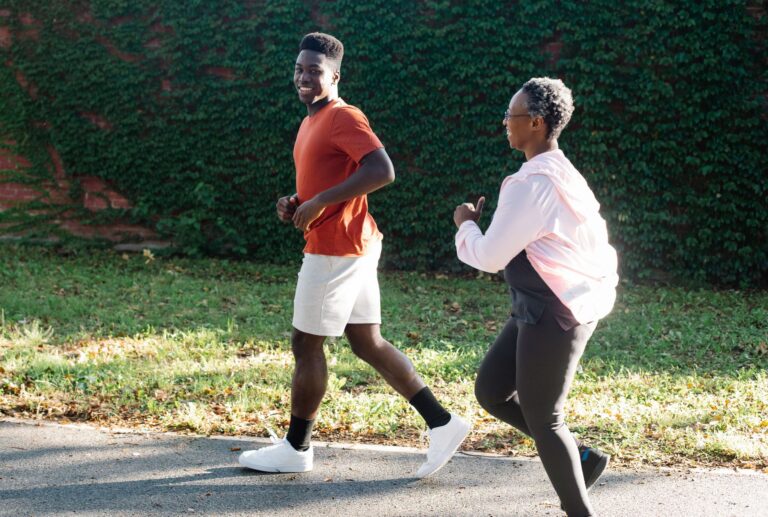
Recent research has fundamentally shifted how scientists and runners understand VO2 max—moving beyond the assumption that body weight determines cardiovascular fitness. A large-scale analysis of 398,716 individuals reveals that cardiorespiratory fitness, measured through VO2 max testing, is a far stronger predictor of mortality risk than body composition. People with good VO2 max levels show no significant increase in mortality risk regardless of their BMI, while unfit individuals face 2–3 times higher mortality risk. This finding challenges decades of fitness conventional wisdom and suggests that runners and health enthusiasts should prioritize building aerobic capacity over achieving a specific scale weight.
The 2026 discoveries extend far beyond this single insight. A comprehensive scoping review analyzing 617 peer-reviewed studies confirms VO2 max as a well-established predictor of cardiovascular health, morbidity, and all-cause mortality. New research also quantifies exactly how much mortality risk drops with each fitness improvement, identifies the ideal training volume for maximal gains, and even reveals the optimal time of day to exercise for cardiovascular benefits. Together, these findings provide runners with unprecedented clarity on what actually moves the needle in endurance fitness.
Table of Contents
- How Fitness Proven Superior to Body Weight for Health Outcomes
- The Quantified Mortality Risk Reduction—Every MET Point Matters
- Training Volume and VO2 Max Progression—The Garmin 2026 Dataset
- The Exercise Timing Discovery—Morning Training for Better Cardiovascular Adaptation
- Emerging AI-Based Assessment Methods and Heart Rate Variability Links
- The Scope of Research Evidence—617 Studies Analyzed
- Future Directions—Predictive Medicine and Personalized Training
- Conclusion
How Fitness Proven Superior to Body Weight for Health Outcomes
The most striking recent discovery comes from KORR Medical Technologies’ analysis of nearly 400,000 people. The research found that individuals with high cardiorespiratory fitness—indicated by strong VO2 max scores—experienced no statistically significant increase in mortality risk across all BMI categories. A person could be classified as overweight or obese by conventional standards yet show excellent survival outcomes if their VO2 max was high. Conversely, individuals with low VO2 max scores showed substantially elevated mortality risk regardless of how lean they were.
This reshapes the conversation around health risk. A runner weighing 180 pounds with a VO2 max of 55 ml/kg/min faces dramatically lower mortality risk than a runner weighing 155 pounds with a VO2 max of 30 ml/kg/min. The data suggests that the body composition obsession in fitness culture has distracted from the metric that actually matters: the heart’s ability to deliver oxygen to working muscles. For aging runners especially, this finding removes a common source of anxiety about weight and redirects focus toward where it generates real health returns.

The Quantified Mortality Risk Reduction—Every MET Point Matters
Scientists have now quantified precisely how much additional mortality risk drops with each increment of fitness improvement. research from JAMA and the Cooper Institute confirms that every 1 MET increase in VO2 max—which corresponds to approximately 3.5 ml/kg/min—reduces mortality risk by 13–15%. This creates a clear mathematical incentive: someone who improves their VO2 max from 35 to 40 ml/kg/min (a 5-MET gain) reduces their mortality risk by roughly 65–75%, a massive health gain from what many runners achieve in a few months of structured training.
The relationship holds across age groups and fitness levels, though there’s a critical limitation: the mortality risk reduction curve doesn’t continue indefinitely. Elite athletes with VO2 max scores above 60 ml/kg/min don’t show proportionally lower mortality than those at 55 ml/kg/min. The protective effect plateaus at high fitness levels, meaning the most dramatic life-extending benefits come from the transition from sedentary to moderately fit, not from chasing elite performance numbers. For most runners, understanding this 13–15% risk reduction per MET makes the case for consistent endurance training more compelling than any abstract fitness goal.
Training Volume and VO2 Max Progression—The Garmin 2026 Dataset
Garmin’s 2026 analysis of millions of cyclists revealed a clear dose-response relationship between weekly training volume and VO2 max improvements. Athletes averaging 20–40 miles per week showed VO2 max levels around 51 ml/kg/min. Those increasing to 40–60 miles weekly reached approximately 53 ml/kg/min. The progression continued: 60–80 miles per week corresponded to 54 ml/kg/min, and serious cyclists logging 180–200 miles weekly achieved 62 ml/kg/min. This data provides runners with a practical roadmap: the more consistently you train aerobically, the higher your VO2 max climbs.
However, there’s an important tradeoff embedded in these numbers. The improvements per additional mile of weekly training decrease as volume increases. The jump from sedentary to 20–40 miles weekly generates substantial VO2 max gains, but increasing from 60–80 to 180–200 miles weekly yields only an 8-point improvement. This means casual runners and joggers capture the vast majority of VO2 max benefits from moderate training consistency, while professional-level volume produces diminishing returns. Most runners can reach excellent health-protective VO2 max levels (45+ ml/kg/min) without committing to the extreme mileage that elite athletes pursue.

The Exercise Timing Discovery—Morning Training for Better Cardiovascular Adaptation
A study of approximately 800 older adults uncovered an unexpected advantage for morning exercisers. Those who completed their workouts earlier in the day demonstrated higher VO2 max levels and improved walking efficiency compared to evening exercisers matched for total training volume. While the exact physiological mechanism remains under investigation, researchers hypothesize that morning exercise may optimize circadian alignment with metabolic processes, producing greater aerobic adaptation.
For aging runners, this finding offers a practical consideration during training schedule planning. If VO2 max improvement is the goal and morning training is feasible, shifting workouts earlier in the day may enhance results relative to the same work completed in the evening. The effect was measured in older adults specifically, so the magnitude of benefit for younger runners remains unclear. Still, this discovery adds nuance to training prescription: it’s not just about accumulating aerobic work, but also about timing that work strategically within the circadian cycle.
Emerging AI-Based Assessment Methods and Heart Rate Variability Links
The technological frontier of VO2 max assessment has expanded with recent innovations. Nature published research on AI-based prediction of VO2 max derived from 24-hour Holter ECG recordings, representing a significant shift from traditional lab testing. The AI model analyzes patterns in heart rate data and electrical activity, estimating VO2 max with reasonable accuracy. This approach could democratize VO2 max assessment, making it available to people without access to laboratory testing facilities or wearable devices specifically calibrated for the measurement.
Research has also identified connections between VO2 max and heart rate variability (HRV) parameters in individuals with high cardiovascular disease risk. HRV—the variation in time between heartbeats—serves as a marker of autonomic nervous system function. Higher HRV generally correlates with better cardiovascular health, and studies now show these HRV metrics track alongside VO2 max improvements during training. The limitation is that HRV measurement quality varies significantly depending on sensor type and environmental conditions, so using HRV as a VO2 max proxy requires careful validation rather than blind reliance on wearable data.

The Scope of Research Evidence—617 Studies Analyzed
A scoping review published in February 2026 analyzed 617 peer-reviewed studies examining VO2 max as a health predictor. The analysis confirmed what researchers have suspected but now quantified definitively: VO2 max is a well-established, robust indicator of cardiovascular health outcomes, morbidity rates, and all-cause mortality across diverse populations. The breadth of this evidence base means runners can trust VO2 max improvements as a genuine health investment, not a vanity metric created by fitness marketing.
The comprehensiveness of this research also revealed gaps. Studies on VO2 max benefits were concentrated in certain populations (primarily middle-aged and older adults in developed countries) while remaining sparse in younger populations and diverse ethnic groups. This means the quantified 13–15% mortality risk reduction applies with high confidence to the studied populations but requires caution when generalizing to everyone. For runners outside the typical research demographic, VO2 max remains a valuable fitness marker, but individual variation in response to training deserves acknowledgment.
Future Directions—Predictive Medicine and Personalized Training
The convergence of large datasets, AI modeling, and wearable technology suggests VO2 max assessment will become increasingly accessible and personalized over the coming years. Rather than relying solely on laboratory treadmill tests, runners may receive VO2 max estimates from routine devices they already carry, enabling more frequent monitoring and better training prescription. This shift could transform how runners approach periodization and intensity balance, allowing real-time feedback on aerobic adaptation rather than waiting months between formal assessments.
The research trajectory also points toward individualized prediction of VO2 max response to different training styles. Current evidence suggests volume matters, timing matters, and fitness-building matters more than weight. But future research will likely identify which runners respond optimally to high-volume steady-state training versus interval-based approaches, and how genetics and age interact with training stimulus. This personalization represents the next frontier beyond the broad discoveries of 2026—moving from “VO2 max matters” to “here’s exactly how to maximize your specific VO2 max trajectory.”.
Conclusion
The new VO2 max discoveries of 2026 consolidate a powerful truth: cardiorespiratory fitness, measured by VO2 max, is the most reliable predictor of cardiovascular health and longevity available to runners today. Large-scale research involving hundreds of thousands of people confirms that fitness trumps body weight, that every fitness increment reduces mortality risk by 13–15%, and that consistent aerobic training volume drives these improvements. These aren’t marginal health claims but quantified, evidence-based relationships that reframe how runners should prioritize their training. For runners looking to act on these discoveries, the path forward combines consistency with strategic timing.
Building aerobic capacity through regular training—whether that’s 40–60 miles weekly for dedicated runners or more modest volumes for casual joggers—produces both immediate performance gains and long-term mortality risk reduction. Morning exercise timing may provide additional optimization for aging runners. Most importantly, the research removes the distraction of body weight obsession and refocuses energy on the single metric that actually predicts how long and how healthily you’ll live. That clarity, backed by analysis of hundreds of thousands of people and hundreds of peer-reviewed studies, makes VO2 max training the clearest return-on-investment decision a runner can make.