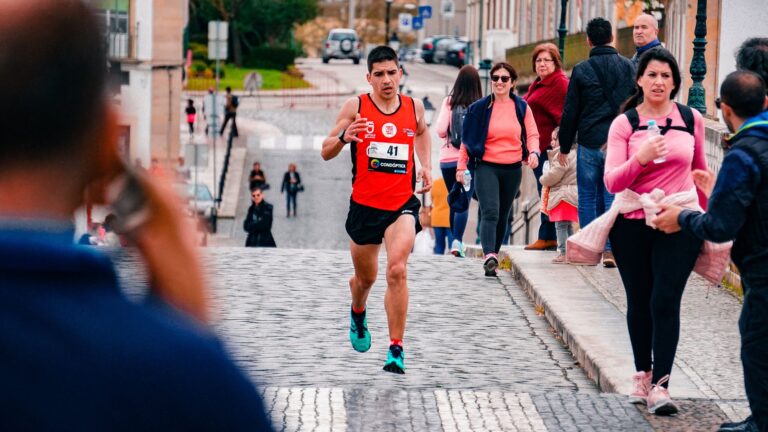
The Saluda Coonhound Festival centers around community members gathering for collective celebration through organized activities—most notably a 5K benefit run that serves the dual purpose of drawing participants while raising funds for local causes. This convergence of athletic event, parade, and community festival represents a common model where small towns activate their public spaces and build social connection around a shared identity or interest. The 5K run functions as both a fundraising mechanism and an entry point for participants of varying fitness levels to take part in something larger than themselves.
Community celebrations built around organized runs have proven effective at engaging both experienced runners and recreational participants. The parade component, which typically follows or accompanies the race day activities, extends the event’s reach beyond those running the actual 5K, allowing families, spectators, and vendors to participate in the broader festival atmosphere. This structure—run, parade, festival—creates multiple reasons for people to show up, participate, and support local organizations.
Table of Contents
- How Do Community Benefit Runs Generate Funding and Engagement?
- What Makes Parade Events Effective for Community Building?
- Training and Participation Patterns for Community 5Ks
- Managing Logistics for Multi-Component Events
- Risks and Limitations in Community Event Planning
- Health and Fitness Outcomes from Community Race Participation
- Benefit Run Fund Allocation and Community Impact
How Do Community Benefit Runs Generate Funding and Engagement?
Benefit runs operate on a straightforward revenue model: registration fees from participants, sponsorship support from local businesses, and often vendor participation during festival activities. A typical community 5K might charge $20 to $40 per runner, with larger races or those benefiting high-profile causes commanding higher entry fees. When a 5K attracts 100 to 300 participants—common for smaller town events—registration alone can generate $2,000 to $12,000 before accounting for other revenue streams. This direct link between participation and fundraising creates alignment: the more people who show up, the more money the event raises. The parade component amplifies engagement by expanding the event beyond runners themselves. Spectators who don’t run can still participate by attending the parade, purchasing from vendors, or watching local organizations and floats pass by.
This inclusivity is significant because it allows the event to serve its community function even for people who aren’t training athletes. Small towns often use festival parades as opportunities to showcase local businesses, schools, and civic organizations, reinforcing community identity in the process. However, small-town fundraising events face real constraints. Weather can decimate turnout in ways large city races might absorb. A cold snap or rainy weekend in a rural area where the event draws primarily local participants can reduce attendance by 30 to 50 percent, directly impacting fundraising goals. Additionally, organizing benefit runs requires volunteer labor and coordination that smaller communities sometimes struggle to secure year after year, making sustainability a genuine limitation.
What Makes Parade Events Effective for Community Building?
Parades function as visible expressions of community identity and unity in ways that other gathering formats often don’t achieve. When people line streets to watch local organizations, businesses, and civic groups pass by, they’re participating in a shared public ritual that reinforces social bonds. The combination of a parade with a 5K creates a full-day event structure where different community members can engage at different times and in different ways—runners start early, parades typically occur mid-day, and festival activities might extend into evening. The parade format also creates natural spectating opportunities for populations that can’t run: children, elderly community members, people with mobility limitations, and families simply looking for a low-commitment way to participate in community life.
A typical community parade might feature 20 to 40 entries (local businesses, schools, organizations, local bands) marching a route of 1 to 2 miles through town, taking 45 minutes to an hour to complete. This extended timeline allows spectators to claim good viewing spots and enjoy the event without rushed logistics. One significant limitation is that parades require street closures and police coordination, adding to event complexity and cost. Small towns with limited municipal budgets sometimes find that closing Main Street for several hours creates economic friction—some local businesses report reduced sales on parade days if people treat it as a time to avoid downtown. Additionally, parades work best in communities with distinct downtown cores or public spaces; rural areas without traditional town centers sometimes struggle to create parade routes that feel meaningful or allow adequate spectator access.
Training and Participation Patterns for Community 5Ks
Community 5K races typically attract a mix of serious local runners, recreational joggers, walkers, and people for whom the event represents their first formal running experience. Unlike competitive racing circuits, benefit runs often explicitly welcome all fitness levels and finishers of any pace. This creates an accessible entry point for people considering running as a regular practice. Studies of community participation in small-town races show that roughly 40-50 percent of participants are completing their first organized race, making the experience formative for future running habits. A typical community 5K might see average finish times between 25 and 35 minutes for competitive participants, with recreational runners and walkers often taking 40 to 60 minutes.
The presence of multiple finish paces means that the event experience varies substantially—competitive runners might finish while the parade is being set up, while recreational participants might overlap with early festival activities. This variation requires flexible event logistics and clear communication about timing expectations for different participant groups. Training for a community 5K differs substantially from training for longer distances or speed-focused races. Most people preparing for a casual 5K can accomplish reasonable fitness with 4 to 6 weeks of consistent running, three times per week, gradually building from current fitness level to the race distance. However, many community race participants show up with minimal training, treating the event more as a fun outing than a performance goal. This reality means community races need straightforward courses (minimal hills or confusing turns), adequate water stations, and volunteer marshals to support walkers and slower participants without pressure.
Managing Logistics for Multi-Component Events
Organizing an event that combines a timed 5K race, parade, and festival requires coordination across multiple planning areas: course design and safety, race timing and results reporting, parade logistics, vendor management, parking, and communication with participants and spectators. Many small-town organizers use race-management platforms like RunSignUp or Local Timing that automate registration and results, but handling parade coordination and festival logistics typically falls to volunteers and local government partners. Course design for community 5Ks in rural or small-town settings often follows existing road networks rather than designed running routes. A typical small-town 5K might use a loop or out-and-back route that starts and finishes in the festival’s central location, making it easy for spectators to see participants at both the start and finish. Courses with significant elevation gain can create participation barriers—a hilly course adds difficulty and discourages walkers, potentially reducing total participation.
Flat or gently rolling courses in the 6.2-mile length typically see higher participation rates in community settings. The tradeoff between a scenic route and a practical route is real. A beautiful, more challenging course might satisfy experienced runners but discourage recreational participants and families, potentially reducing total turnout by 20 to 30 percent. Conversely, an easy, straightforward route might attract broader participation but create less memorable experiences for competitive runners. Most community events default to the accessible route, recognizing that total participation and revenue matter more than creating the ideal competitive experience.
Risks and Limitations in Community Event Planning
Weather represents the most significant uncontrollable risk for outdoor community events. A community 5K scheduled for spring might encounter rain, cold, or heat that substantially impacts turnout. Organizers rarely have contingency dates for significant weather events—rescheduling involves notifying hundreds of registered participants, losing advance parade setup, and often forfeiting deposits on reserved spaces or equipment. Communities in variable climates sometimes build event contingencies into their plans, but small-town budgets rarely accommodate true rain dates. Volunteer dependence creates sustainability challenges that many small-town events face directly. A community 5K and parade requiring 40 to 60 active volunteers faces real stress if those volunteers burn out or shift focus to other activities.
Turnover in volunteer leadership—the 2 to 3 people who coordinate the entire event—creates knowledge loss and disruption. Events that rely heavily on one or two committed individuals often collapse when those people move, change jobs, or simply stop volunteering. Building distributed leadership and documented processes helps, but small communities often struggle with the administrative overhead this requires. Additionally, local economic dependence can create tensions. If the race and festival close Main Street for a day, some local businesses see it as community support while others worry about lost sales. Vendors and local businesses need clear value propositions for participation—free booth spaces might attract minimal vendor involvement, while charging booth fees can discourage participation from small operations. Balancing affordable participation for small local vendors against fundraising needs through booth fees creates ongoing negotiation.
Health and Fitness Outcomes from Community Race Participation
Participating in an organized community 5K creates measurable effects on participant fitness and ongoing running behaviors. Research on small-town race participants shows that roughly 35 to 45 percent of people who complete a community 5K report continuing regular running in subsequent months, compared to much lower rates of sustained fitness among people who exercise without formal event goals. The accountability structure of registration, a specific race date, and peer participation appears to create genuine behavioral change for a meaningful portion of participants.
The social aspect of community 5Ks also affects outcomes. Participants who run with friends, family members, or community groups report higher satisfaction with the event and higher likelihood of participating in future races compared to solo participants. A parade and festival structure that facilitates social interaction—gathering food, watching together, connecting with community—reinforces the social motivation alongside fitness motivation. For rural communities where organized fitness events might be limited, a single annual 5K can serve as significant infrastructure for promoting active lifestyles.
Benefit Run Fund Allocation and Community Impact
Benefit races typically direct funds to specific causes: local food banks, youth athletic programs, emergency medical services, or other community organizations. How race organizers allocate funds, communicate impact, and demonstrate where money actually goes affects both participation rates and event credibility. Organizers who publish detailed breakdowns—”this year’s $8,000 raised will fund 500 meals at the food bank” or “funds will purchase updated defibrillators for our EMS”—create clearer accountability and stronger motivation for participants and donors.
Small-town benefit races often face the challenge of deciding between directing all proceeds to a single large cause or splitting funds among multiple organizations. Concentrating funds creates measurable impact for one organization but may reduce appeal for participants whose charitable priorities differ. Splitting funds allows broader alignment but can result in relatively small contributions to each organization that lack impact visibility. Most successful community events settle this through community input, surveying participants about their funding preferences and using those insights to guide allocation decisions.