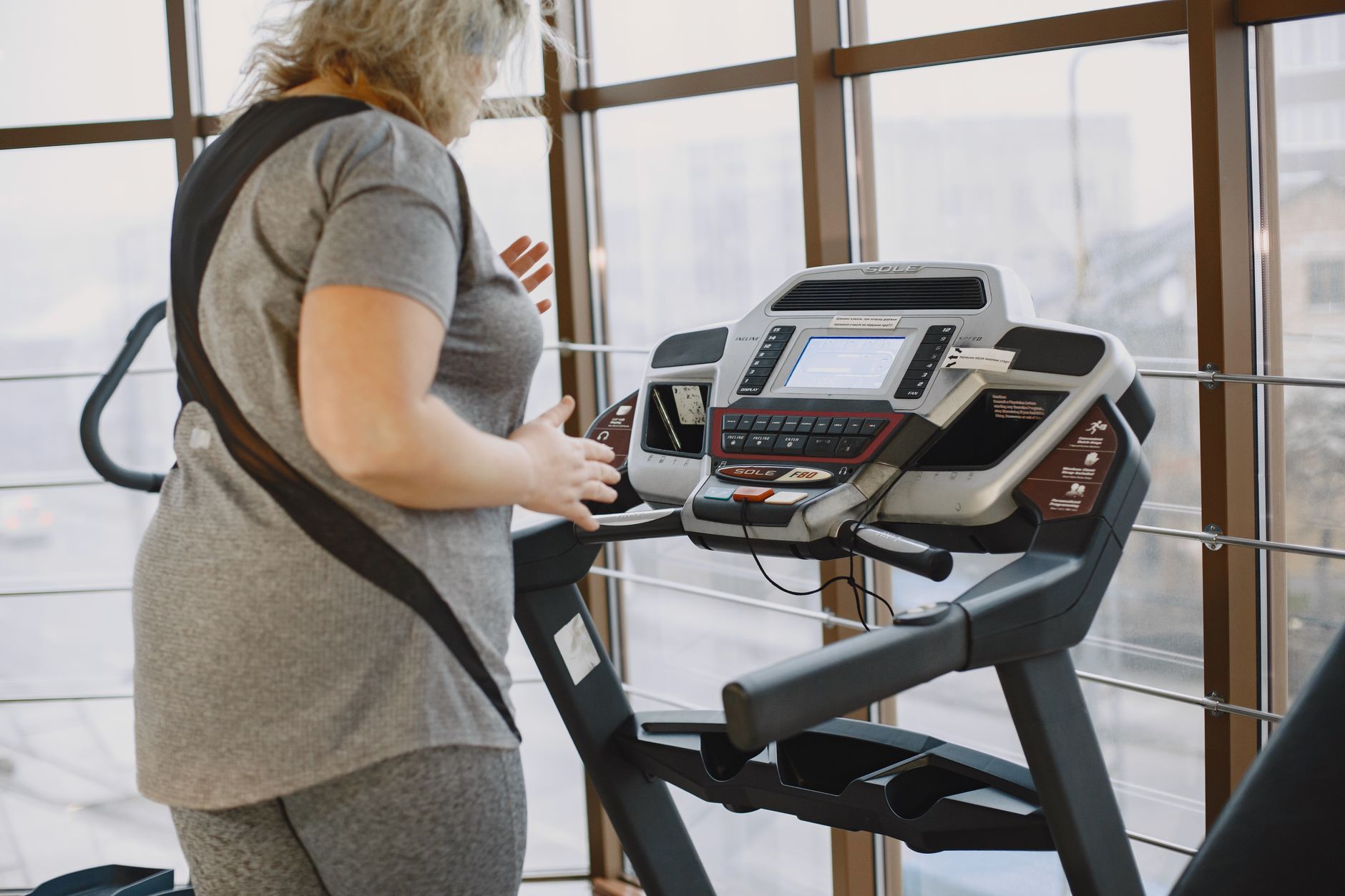
Incline walking on a treadmill is the practice of walking on a motorized treadmill set to a slope angle rather than a flat surface, which increases the intensity of your workout without forcing you to run. When you walk on a 5 to 15 percent incline instead of a flat treadmill, your body recruits more muscle fibers in your glutes, hamstrings, and calves while maintaining the lower impact of walking rather than jogging. For example, a 180-pound person burns approximately 40 percent more calories walking at 3 miles per hour on a 6 percent incline compared to the same speed on a flat surface—roughly 290 calories in 30 minutes versus 210 calories—making incline walking an efficient option for people seeking cardiovascular benefits without the joint stress of running.
Incline walking has become one of the most popular methods for building leg strength and endurance because it bridges the gap between casual flat-ground walking and high-impact running. Unlike traditional running, which can strain knees, ankles, and hips, incline walking allows your body to work harder while keeping one foot in contact with the treadmill belt at all times. This makes it accessible for runners recovering from injury, people managing chronic joint pain, and fitness enthusiasts looking to diversify their training without abandoning the treadmill.
Table of Contents
- How Much Incline Should You Use for Walking?
- Why Incline Walking Builds Muscle More Effectively Than Flat Walking
- Cardiovascular Benefits of Treadmill Inclines
- Incline Walking vs. Running on a Flat Treadmill: Which Is Better for Your Goals?
- Common Mistakes and Risks With Incline Treadmill Walking
- Incline Walking for Weight Loss and Metabolic Health
- Incorporating Incline Walking Into Endurance Training
- Conclusion
- Frequently Asked Questions
How Much Incline Should You Use for Walking?
The ideal incline for treadmill walking depends on your current fitness level and goals, but research and practical experience suggest starting between 1 and 3 percent for beginners and progressing to 5 to 10 percent for moderate intensity. If you’re new to incline walking, a 2 percent grade roughly mimics the energy cost of outdoor walking and feels more natural than flat treadmill walking because it counteracts the lack of wind resistance and terrain variation that outdoor environments provide. Most fitness studies use 6 to 8 percent incline as the “sweet spot” for steady-state aerobic work, where you can maintain a conversation but feel your heart rate elevated.
A practical example: if you weigh 160 pounds and walk at 3.5 mph on a flat treadmill, your heart rate might settle around 100 to 110 beats per minute. On the same speed at a 6 percent incline, your heart rate often climbs to 130 to 145 bpm without any increase in speed, meaning your cardiovascular system works significantly harder. Beyond 12 percent incline, most people transition into “hill training” territory, which requires more careful attention to form and can introduce muscle soreness if you’re not accustomed to it. Many runners use inclines above 10 percent specifically on lower-intensity running days to build strength while protecting their knees and ankles.
Why Incline Walking Builds Muscle More Effectively Than Flat Walking
Incline walking forces your posterior chain—glutes, hamstrings, and calf muscles—to work through a greater range of motion and against gravity at a steeper angle, which triggers more muscle growth stimulus than flat walking. When you walk uphill, your glutes have to extend your hip with each step to propel you forward and upward, activating these large muscles far more intensely than they would on a flat surface. Your calves engage eccentrically on the descent phase as you lower your heel, and your core muscles have to stabilize your body to keep it upright against the incline.
However, one limitation of incline walking is that it places concentrated stress on the lower back and hip flexors, particularly if you hold onto the handrails or lean backward. Leaning backward to relieve leg fatigue shifts the demand away from your glutes and onto your lower back, which can cause discomfort if you’re not careful about your posture. To reap the full benefit of incline walking for leg strength, you should stand upright with only light fingertip contact on the handrails for balance—not support. If you experience lower back pain during or after incline walking, it’s often a sign that your incline is too steep for your current conditioning level, or that you need to strengthen your core before progressing to higher grades.
Cardiovascular Benefits of Treadmill Inclines
Incline walking delivers cardiovascular improvements comparable to moderate-intensity running, but with substantially less impact on your joints. Your heart rate elevation on an incline is primarily driven by two factors: the increase in gravitational load and the greater muscle mass recruitment. A 2023 study comparing incline walking to flat running found that participants achieved nearly the same relative heart rate intensity, oxygen consumption, and perceived exertion on a 8 percent incline at 3.5 mph as they did running at 6 mph on a flat treadmill.
A specific example: a runner managing patellar tendinitis can maintain their aerobic conditioning by walking at 4 mph on a 10 percent incline five days a week instead of running, keeping their heart rate in the 140 to 160 bpm zone while allowing the inflammation to subside. Over four to six weeks, they can return to running with minimal loss of aerobic capacity. The cardiovascular adaptation is genuine—your heart becomes more efficient, your VO2 max improves slightly, and your endurance increases—but the adaptation curve is often less steep than running because the intensity ceiling is lower. Most people find their maximum achievable heart rate on an incline walk is 10 to 15 percent lower than on a flat run, which means incline walking works best as a maintenance tool during injury recovery rather than as a primary training stimulus for competitive runners.
Incline Walking vs. Running on a Flat Treadmill: Which Is Better for Your Goals?
The choice between incline walking and flat running depends entirely on your goals, injury history, and timeline. If you’re training for a 5K or 10K road race, flat running remains superior because it more closely mimics race conditions and develops the explosive leg power and rapid turnover that competitive running demands. However, if your goal is building lower-body strength, burning calories in less time, or maintaining fitness while managing joint pain, incline walking often delivers better results with lower injury risk.
A practical comparison: a 200-pound person running at 6 mph on flat ground for 30 minutes burns roughly 360 calories and stresses their knees and ankles with ground reaction forces exceeding 2.5 times body weight. The same person walking at 4 mph on a 10 percent incline for 30 minutes burns approximately 330 calories and experiences ground reaction forces closer to 1.2 times body weight. The calorie difference is minimal, but the joint stress is dramatically lower. Additionally, incline walking engages more glute activation, which means greater long-term strength development in the muscles that power running, despite the lack of running-specific adaptations.
Common Mistakes and Risks With Incline Treadmill Walking
The most frequent error people make with incline walking is progressing the incline too quickly, especially when combining it with increased duration or speed. Jumping from a 2 percent incline to a 10 percent incline in one session, or adding both incline and speed simultaneously, dramatically increases the eccentric loading on your calf muscles and can trigger delayed-onset muscle soreness (DOMS) that lasts five to seven days. If you’re new to incline walking, increase your grade by no more than 1 to 2 percent per week, and keep your speed consistent as you adjust the incline.
Another significant risk is overreliance on the handrails, which reduces the effectiveness of the workout and creates poor movement patterns that transfer to outdoor walking and running. When you grip the handrails tightly, you reduce the load on your legs by as much as 20 to 25 percent while simultaneously leaning forward, which changes your gait mechanics and can lead to compensatory injuries in your hips or knees. A third warning: some people develop Achilles tendon tightness or calf strains after introducing high-incline walking because the calf muscles are shortened in a flexed position, and sudden increases in volume shock the tendon. To mitigate this, perform calf stretches before and after incline walking, and consider foam rolling your calves on rest days.
Incline Walking for Weight Loss and Metabolic Health
Incline walking creates a favorable metabolic environment for fat loss because it burns a meaningful number of calories while remaining sustainable enough for people to perform consistently. A 2022 study found that sedentary adults who incorporated 30 minutes of incline treadmill walking three times per week for 12 weeks showed an average weight loss of 4.2 pounds while also improving insulin sensitivity and fasting blood glucose levels. The consistency factor is critical: most people can sustain incline walking as a regular practice because the joint impact is low, the perceived exertion is moderate, and they can watch television or read on a tablet while doing it. One practical example: a 250-pound person with prediabetes begins a routine of 40 minutes on a 6 percent incline at 3.2 mph, five days per week.
Over three months, they lose 9 pounds and reduce their fasting blood glucose from 118 to 104 mg/dL. They report higher energy throughout the day and better sleep quality. The weight loss is attributable both to the calories burned during the walking sessions and to the secondary effects of consistent aerobic activity on appetite regulation and metabolic rate. However, incline walking alone is insufficient for substantial weight loss without dietary changes; the best results come from combining regular incline walking with modest caloric deficit and strength training.
Incorporating Incline Walking Into Endurance Training
Endurance runners increasingly use incline walking as a complementary training method during base-building phases, injury recovery, and on designated recovery days. Elite runners and coaches have found that including one weekly session of 45 to 60 minutes on a moderate incline (6 to 8 percent) strengthens the glutes and hamstrings without the cumulative impact load of additional running volume, which preserves energy for quality running workouts and reduces overtraining risk.
As more research emerges on return-to-sport protocols following injury, incline walking is becoming a standard bridge between complete rest and full running reentry. The treadmill environment allows for precise control of grade, speed, and duration, which makes it easier to progress gradually and measure objective improvements. Looking forward, incline walking may become an even more integrated part of mainstream fitness as wearable technology makes it easier for people to track and optimize their workouts.
Conclusion
Incline walking on a treadmill is a powerful, low-impact training tool that builds strength, improves cardiovascular fitness, and supports weight loss with significantly less joint stress than running. The key to success is starting conservatively with incline and speed, prioritizing upright posture without handrail support, and progressing gradually to allow your muscles and connective tissues to adapt.
Your next step is to begin with a 2 to 3 percent incline at a comfortable walking pace and perform two to three sessions per week for two to three weeks before increasing the grade. Monitor how your calves, glutes, and lower back respond, and don’t hesitate to dial back the incline if you experience persistent soreness or pain. Over time, incline walking can become a reliable component of your training toolkit, whether you’re returning from injury, building aerobic capacity, or simply looking for an effective workout that feels sustainable.
Frequently Asked Questions
How long does it take to see results from incline treadmill walking?
Most people notice improved cardiovascular fitness and leg strength within three to four weeks of consistent practice, with visible body composition changes typically appearing after six to eight weeks of regular incline walking combined with reasonable nutrition.
Can incline walking replace running for fitness?
Incline walking improves aerobic capacity and leg strength effectively, but it does not develop running-specific adaptations like cadence, stride power, or impact tolerance. It works best as a supplement to running or as a replacement during injury recovery rather than as a complete substitute.
What incline percentage should I use if I’m recovering from a running injury?
Start at 2 to 3 percent incline and walk at a comfortable pace where your injured joint feels no pain during or after the session. Gradually progress by 1 to 2 percent every one to two weeks, provided pain remains absent. Most people can return to running while maintaining a maintenance incline walk of 4 to 6 percent.
Does holding the handrails on an incline treadmill reduce calorie burn?
Yes, gripping the handrails tightly can reduce calorie expenditure by 20 to 25 percent and diminish lower-body muscle activation. Use light fingertip contact for balance only, keeping most of your weight supported by your legs.
Is incline treadmill walking safe for people with knee arthritis?
Incline walking is often safer than flat running for people with knee arthritis because it reduces ground reaction forces and allows for controlled speed and grade progression. However, some individuals find steep inclines uncomfortable. Start at 3 to 4 percent and increase only if pain-free. Consult a physical therapist if you experience knee discomfort.
How should I warm up before incline walking?
Begin with two to three minutes of flat treadmill walking at an easy pace, then gradually increase the incline by 1 to 2 percent every 30 seconds until you reach your target grade. This allows your muscles and tendons to adapt to the workload gradually rather than suddenly.