Trekking poles are lightweight poles held in each hand during hiking that reduce the impact on your lower body while improving stability on uneven terrain. If you’re a trail runner or hiker dealing with knee pain on descents, trekking poles can cut the stress on your knees by up to 25 percent on downhill sections—which is why many ultramarathon runners and serious trail athletes incorporate them into their training. The poles work by distributing your body weight across your upper body and arms rather than concentrating all force through your legs, fundamentally changing how your body absorbs the shock of each step.
Beyond injury prevention, trekking poles increase your hiking efficiency and cardiovascular demand when you use them properly. On a seven-mile hike with 2,000 feet of elevation gain, you’ll engage your shoulders, chest, and core muscles that might otherwise stay inactive during a leg-focused hike. This added muscular engagement makes trekking poles valuable cross-training for runners, especially during recovery weeks when you want to maintain fitness without pounding your legs.
Table of Contents
- How Do Trekking Poles Reduce Joint Stress on Mountain Terrain?
- The Biomechanical Advantage and Upper Body Fatigue Trade-Off
- Trekking Poles for Different Terrain and Trail Types
- Proper Technique and Pole Setup—The Right Way to Use Them
- Common Mistakes and the Risk of Developing Compensatory Patterns
- Cardiovascular and Recovery Benefits for Trail Athletes
- Integration Into a Comprehensive Training Plan and Long-Term Practice
- Conclusion
How Do Trekking Poles Reduce Joint Stress on Mountain Terrain?
Trekking poles work through a straightforward biomechanical principle: they allow you to offload weight from your lower extremities onto your upper body. On a steep descent, your quadriceps and knees absorb enormous eccentric loading—the muscles lengthen under tension as they brake your downward momentum. By using poles, you can push yourself downhill rather than relying solely on leg muscles to control your speed, which directly reduces the tension in your knees and ankles. A 150-pound hiker descending 1,000 vertical feet creates roughly 150,000 pounds of cumulative impact force through their joints; poles distribute a meaningful portion of that load elsewhere. This load-sharing benefit is particularly important for runners over 40 or anyone with a history of knee issues.
Compare a 10-mile hike with 3,000 feet of descent done without poles versus the same hike with poles: the difference in next-day knee soreness is often dramatic for runners who are not accustomed to hiking. Research from outdoor medicine specialists shows that hikers using trekking poles report 25 to 30 percent less quadriceps fatigue after descending compared to those without poles. The balance and proprioceptive benefits are equally important. On rocky or technical terrain, the poles give you four contact points with the ground instead of two, making your body more stable. This reduces the risk of rolling an ankle on a loose section of trail, which is a common injury among trail runners who transition to hiking.

The Biomechanical Advantage and Upper Body Fatigue Trade-Off
Using trekking poles shifts muscular demand upward, engaging your shoulders, arms, and core throughout the hike or run. For runners focused primarily on leg strength, this is a legitimate benefit during cross-training sessions. Your shoulders and upper back muscles—the rhomboids, trapezius, and deltoids—activate substantially during uphill pole usage, and your core must stabilize as you plant and push with each stride. On steep uphills, active pole usage can increase your overall cardiovascular demand by 15 to 20 percent compared to hiking without poles.
However, this upper body engagement comes with a real limitation: if your shoulder, neck, or arm stability is compromised, trekking poles can amplify discomfort rather than reduce it. Runners with rotator cuff issues or anterior shoulder impingement often report worsening shoulder pain when using poles incorrectly or for extended durations. The repetitive pushing motion, especially on long descents where you’re leaning on the poles for balance and braking, can aggravate existing shoulder dysfunction if your form is poor or if you don’t have adequate upper body stability. Additionally, poles can become fatiguing on ultra-long days. A runner who does a 20-mile hike may find that their shoulders and forearms are exhausted by mile 15, which can compromise your ability to finish strong or maintain good descending technique when fatigue sets in.
Trekking Poles for Different Terrain and Trail Types
Trekking poles shine on specific terrain types but offer diminishing returns on others. On steep, exposed alpine terrain with significant elevation loss, poles are nearly essential for many hikers—the combination of reduced knee stress and improved balance prevents accidents. A runner tackling a 5,000-foot descent on a Rocky Mountain peak benefits tremendously from poles, whereas someone doing a gentle five-mile forest loop on flat terrain may find poles more cumbersome than helpful. Technical single-track trails present a middle ground. On narrow, rooty, or rocky terrain, poles can actually impede your ability to move quickly and react to obstacles.
Trail runners moving at moderate to high speeds typically don’t use poles on technical sections because the poles interfere with natural arm swing and balance adjustments. Conversely, on wide, less technical trails—the kind you find on many state park hiking routes—poles enhance stability without creating obstacles. Scree fields and loose terrain are where poles demonstrate their most dramatic benefit. On a descent through loose volcanic scree or talus slopes, poles allow you to control your speed and maintain stability on a surface where your feet could slide unpredictably. Experienced trail runners doing alpine ski traverses or guided mountaineering hikes often rely on poles in these conditions.
Proper Technique and Pole Setup—The Right Way to Use Them
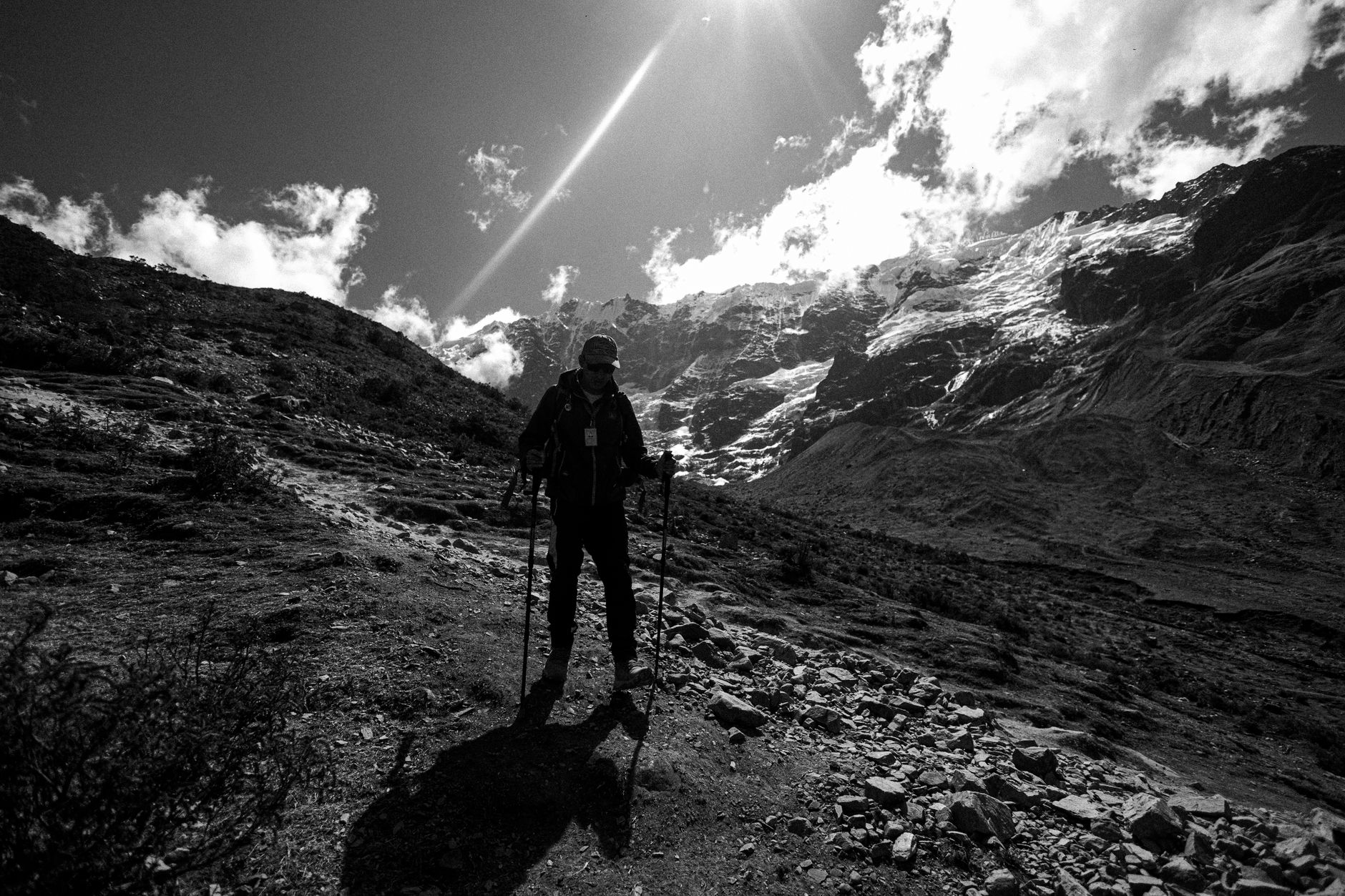
Correct pole length is the foundation of effective pole usage. Your poles should be set so that when your arm hangs at your side with your elbow bent 90 degrees, the pole comes up to your wrist. This relationship creates the optimal leverage for pushing uphill and braking downhill. Many hikers use poles that are too long, which forces their shoulders into an uncomfortable shrugging position, or too short, which requires hunching and reduces the mechanical advantage of the poles. On uphills, your technique should involve actively pushing the poles into the ground to propel yourself forward, not just using them as balance aids.
This requires engaging your shoulders and arms rather than passively holding them. Compare a hiker who lightly touches their poles while ascending to one who actively pushes with each step: the active user has lower heart rate and maintained leg strength for the descent because they’ve distributed effort across more muscle groups. On descents, use the poles to reduce the braking demand on your legs by pushing yourself downhill; this is the inverse of the uphill technique. Wrist straps deserve mention: they should be fitted snugly but not restrict blood flow. Many hikers make the mistake of gripping the pole handles tightly, which creates unnecessary forearm fatigue. Instead, the wrist strap does the work of keeping the pole connected to your hand, allowing your fingers to remain relaxed.
Common Mistakes and the Risk of Developing Compensatory Patterns
One frequent mistake is using poles on every hike regardless of terrain and fitness level. Beginning hikers or runners may become overly dependent on poles for balance, which can atrophy the stabilizer muscles in your ankles, hips, and core—the same muscles that keep you stable and injury-free during speed work on flat ground. If you use poles excessively, your body learns to offload balance demands, and removing poles later can feel unstable. The warning here is balance: poles should enhance your hiking practice, not replace the need to build and maintain lower-body stability. Another pitfall is poor descent technique with poles.
Inexperienced users often grip the poles tightly and lean into them excessively, which actually increases impact because they’re not using the poles to actively brake their descent. Instead, they’ve added upper body tension and created a rigid limb system. Proper descent technique is more active and nuanced—you’re using the poles as propulsion aids to control your speed, not as crutches to lean into. A final concern is impact on upper body structure. Hikers with existing shoulder or elbow issues, including tennis elbow or bursitis, can worsen these conditions if they increase pole usage without addressing the underlying imbalance or weakness. The repetitive pushing motion exacerbates inflammation in sensitive joints.

Cardiovascular and Recovery Benefits for Trail Athletes
For runners using hiking as active recovery or cross-training, trekking poles offer a legitimate way to maintain cardiovascular fitness without the pounding impact of running. A moderate-paced hike with poles can elevate your heart rate to 60 to 70 percent of maximum, which sits in the aerobic training zone for many runners. This is meaningful—you’re getting cardiovascular stimulus without the eccentric loading that running creates, which accelerates recovery.
The muscular engagement is also relevant for injury prevention. Runners who spend five or six days per week running the same movement patterns develop imbalances. A regular hiking practice with poles recruits different muscle groups—your shoulders, trapezius, and obliques—which builds resilience in areas that running neglects. A runner with chronic lower back pain related to core weakness and glute imbalance may find that consistent hiking with poles reduces their back pain over months because they’re building stability through novel movement patterns.
Integration Into a Comprehensive Training Plan and Long-Term Practice
For serious trail runners and mountain athletes, trekking poles should be part of an intentional training framework rather than an afterthought. A structured approach might include using poles during recovery hikes once weekly and occasionally during harder hill repeats to practice the technique. As your seasons progress, this builds familiarity and competence, so when you face a genuinely demanding multi-thousand-foot descent in the mountains, the technique is automatic rather than something you’re learning on the fly.
Looking ahead, the trail running community continues to evolve its relationship with poles. Ultramarathoners are increasingly adopting poles on specific terrain types—particularly at high altitudes or on technical descents where the injury risk is highest. As more data emerges about injury prevention and aging athletes’ performance, poles will likely become a more normalized part of trail training rather than viewed as optional gear.
Conclusion
Trekking poles meaningfully reduce impact on your knees and joints while engaging your upper body and improving stability on uneven terrain—benefits that make them valuable for runners and hikers, especially on steep descents or technical mountain trails. The key is using them with correct technique, appropriate to the terrain, without becoming overly dependent on them for balance and stability work that your own musculature should handle.
Start by using poles on one moderate hike per week, focus on proper technique, and pay attention to how your legs and joints feel in the days after. If you’re a runner with a history of knee pain on descents, this single intervention can meaningfully extend your hiking and trail running career.