
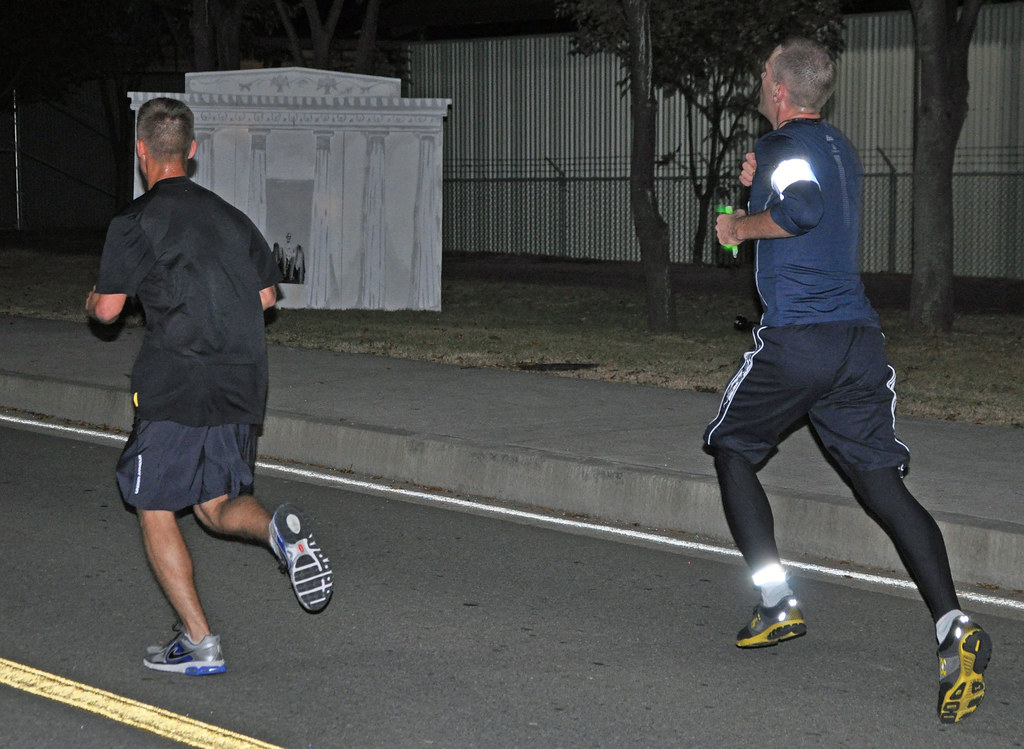
Starting to run with a weak core is possible, but it requires deliberate modifications to your training approach and progression. Rather than waiting to achieve perfect core strength before running, you can begin with low-impact running while simultaneously strengthening your core through targeted exercises. The key is running at a reduced intensity and volume while your stabilizer muscles develop, typically over 4–8 weeks before you increase distance or pace significantly.
A weak core doesn’t mean you can’t run—it means your midsection muscles that stabilize your pelvis, spine, and hips won’t provide the support your body needs for long or intense running. This forces other muscles, especially in your lower back and knees, to compensate. If you start running before addressing core weakness, compensation patterns settle in quickly, making injury more likely when you eventually do increase intensity. By starting conservatively and building core strength in parallel, you avoid developing these habits.
Table of Contents
- Why Does Core Strength Matter for Running?
- What Happens If You Ignore Core Weakness and Run Anyway?
- How Should You Modify Your Running When Starting with a Weak Core?
- Specific Core Exercises to Pair with Your Running Routine
- How Long Before You Can Run Without Modifications?
- Breathing and Posture During Running with Core Weakness
- Progression Beyond 6 Weeks—Avoiding the Re-injury Cycle
Why Does Core Strength Matter for Running?
Your core muscles—the rectus abdominis, transverse abdominis, obliques, and erector spinae—stabilize your torso during each stride. When you push off with one leg, your core keeps your pelvis level and prevents excessive rotation or side-to-side movement. A weak core forces your lower back, hip flexors, and knee muscles to work harder than they should. Over time, this imbalance causes repetitive strain injuries: lower-back pain, knee pain, hip impingement, or IT band syndrome.
Real-world example: A runner with core weakness often reports that their left knee starts hurting around mile 2, or their lower back feels tight after a 3-mile run. These aren’t usually form issues—they’re compensation injuries. Your body is working around a weak foundation, recruiting larger muscle groups to do stabilization work. Runners who address core strength first notice they can run longer distances with less joint pain and less muscle soreness the next day.
What Happens If You Ignore Core Weakness and Run Anyway?
starting running without addressing core weakness will feel fine for the first few weeks because your body is still fresh and compensating isn’t yet painful. But by week 3–4, you’ll notice subtle problems: your stride gets sloppy in the last mile of a run, your pace slows more than it should, or you feel a pinching sensation in your lower back. These are early warning signs that compensation patterns are starting. If you push past these warnings and continue building running volume without core work, you hit a wall around 20–30 miles per week.
Your body can’t sustain the compensation, and pain becomes constant rather than occasional. At this point, you have to stop running for 2–3 weeks to recover, losing all your fitness gains. This is the primary limitation of ignoring core weakness: you’ll plateau quickly and have to take longer breaks later than if you’d addressed it upfront. The time investment of 10–15 minutes of core work three times per week for 4–6 weeks now saves you from losing months of training later.
How Should You Modify Your Running When Starting with a Weak Core?
The first modification is distance: start with intervals or walk-run combinations instead of continuous running. A runner with core weakness should begin with 20–30 minute sessions of alternating 2 minutes of easy running with 1 minute of walking. This gives your core frequent breaks while you still develop aerobic fitness. After 2–3 weeks at this level, you can extend the running intervals to 3 minutes with 1 minute of walking.
The second modification is frequency: limit yourself to 3 running days per week, spaced by at least one rest day. This gives your core time to recover and adapt. A sample week looks like: Monday run-walk 30 minutes, Tuesday core work only, Wednesday run-walk 30 minutes, Thursday rest, Friday core work only, Saturday run-walk 30 minutes, Sunday rest. This structure prevents the cumulative fatigue that triggers compensation injuries while ensuring consistent stimulus for your core muscles.
Specific Core Exercises to Pair with Your Running Routine
The most effective core exercises for runners with weakness are planks, dead bugs, bird dogs, and Pallof presses—movements that emphasize stability under load rather than pure strength. A plank variation should feel challenging at 20–30 seconds for someone with a weak core, not several minutes. If you can hold a plank for 3 minutes, your core isn’t the limiting factor.
Your core routine should take 12–15 minutes and include: 3 sets of 20-second planks, 3 sets of 10 dead bugs per side, 3 sets of 8 Pallof presses per side using a resistance band, and 2 sets of 12 bird dogs per side. Do this routine 3 days per week, ideally on the same days as your running or the day after, not the day before a hard effort. One comparison: spending 15 minutes three times per week on core work is roughly equivalent to adding 45 minutes of supplemental training monthly, which is the same time commitment as adding 2–3 extra running sessions—but core work pays more dividends for injury prevention than extra running volume when you’re weak.
How Long Before You Can Run Without Modifications?
Most runners see meaningful improvement in 4–6 weeks of consistent core work paired with modified running. By week 4, your run-walk intervals can shift to 5 minutes running and 1 minute walking. By week 6–7, you’re likely ready for continuous easy running at 20–30 minutes without pain or compensation patterns. The warning here is that progress isn’t linear.
Some runners plateau around week 3 and need an extra 2–3 weeks of the same routine before progress resumes. This is normal—your nervous system is learning to engage your core muscles, and that learning curve isn’t always smooth. Don’t increase running volume during a plateau; maintain distance and intensity while your core continues adapting. Pushing harder during a plateau often triggers the exact compensation injuries you’re trying to avoid.
Breathing and Posture During Running with Core Weakness
Proper breathing helps engage your core during running. Many runners with weak cores tend to shallow-breathe, which prevents engagement of the diaphragm and transverse abdominis. Instead, focus on belly breathing: inhale through your nose for 3 steps, exhale through your mouth for 3 steps, letting your stomach expand on the inhale rather than restricting your breath to your chest. Posture also matters.
Your shoulders should stay relaxed and over your hips, not forward or hunched. A common compensation pattern is leaning forward at the torso to recruit momentum rather than core stability. Running with a slight forward lean is normal, but if you’re leaning from the waist rather than the ankles, your core is compensating. Practice running with a slightly tall, upright posture during your walk intervals to reinforce the correct pattern.
Progression Beyond 6 Weeks—Avoiding the Re-injury Cycle
Once you can run 30 minutes continuously without pain, the temptation is to quickly add distance and speed. This is where many runners re-trigger their compensation patterns. Instead, increase distance gradually: add no more than 1 mile per week to your longest run, and keep that increase to one run per week.
Your second and third runs of the week should stay shorter and easier than they were before the increase. Continue doing your core routine twice per week even after you’ve progressed to pain-free running. The work doesn’t end at week 6—core maintenance ensures that as your running volume increases, your stabilizer muscles develop alongside your aerobic fitness rather than falling behind. A runner with a history of core weakness who maintains this work is significantly less likely to develop the lower-back or knee pain that derails runners later in their training.
2 thoughts on “How to Start Running with Weak Core”
Comments are closed.