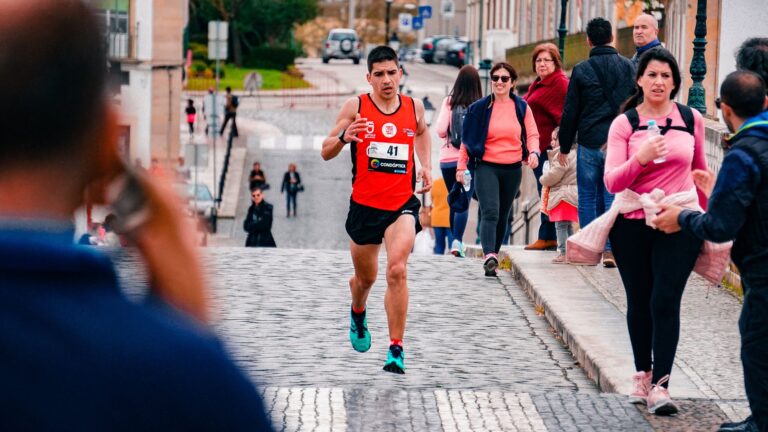
Your heart rate climbs higher on summer runs at the exact same effort level—and you should plan for it. This isn’t a sign of declining fitness or poor conditioning. When you run in heat, your cardiovascular system works harder to maintain the same pace because your body is juggling two competing demands: delivering oxygen to your muscles and cooling itself down by pumping blood to the skin. At moderate heat around 77°F, you’ll typically see a heart rate penalty of 5 to 10 beats per minute at the same pace compared to cooler conditions. But on a hot summer day—the kind you get on the East Coast in July with 80-degree dewpoints—the penalty can be much steeper.
Real runners experience this every summer. An elite runner recorded an average heart rate of 150 bpm on a cool 66°F morning run, but the same effort level on an 88°F day produced a 162 bpm average, with spikes reaching 177 bpm. That’s not because the runner got slower or weaker. The difference is entirely environmental. When you understand what’s actually happening in your body, you can stop interpreting the high heart rate as a weakness and start treating summer training as a distinct challenge that requires specific adjustments.
Table of Contents
- Why Does Your Heart Rate Spike in Summer Heat?
- How Much Does Summer Heat Actually Slow You Down?
- The Cascade of Summer Running Problems
- Adjusting Your Training Plan for Summer Heat
- Common Heat Training Mistakes
- The Sweat Rate and Dehydration Connection
- Building Resilience for Fall Racing
- Conclusion
Why Does Your Heart Rate Spike in Summer Heat?
Heat forces your body into a physiological conflict. Your working muscles need oxygen, but your overheating core needs your cardiovascular system to pump blood to the skin for cooling through sweat and radiative loss. Both processes demand blood flow, and your heart can only pump so much volume per minute. As core temperature rises—and even a 1°C increase in core body temperature reduces your VO2max by 16% and drops oxygen utilization significantly—your heart has to work harder to deliver the same amount of oxygen with less efficiency. The lactate accumulation also accelerates in heat.
You’ll cross your lactate threshold earlier, and at the same pace, lactate builds up faster in your bloodstream. This is why that “easy” pace in summer feels markedly harder than it should. Your aerobic system is being pushed closer to its ceiling, even though you intended to run comfortably. Additionally, dehydration compounds the problem. As you sweat and lose fluid, your blood volume decreases—studies show dehydration can reduce blood volume by up to 30% in athletes who don’t replace fluids. With less blood in circulation, your heart must beat faster to deliver the same amount of oxygen to working muscles, and each beat pumps less volume.

How Much Does Summer Heat Actually Slow You Down?
The performance penalty from summer heat is not subtle. An analysis of 1.8 million marathon results found that temperature was the single most important variable predicting race performance—more significant than course elevation, age group, or prior experience. The data showed approximately a 10% performance drop in hot weather compared to optimal conditions. On the East Coast, where summer temperatures and humidity create particularly challenging conditions, runners see a 12 to 15% performance drop compared to ideal circumstances. This translates directly to heart rate.
Runners consistently report a 10 to 20 bpm increase in hot weather compared to the same run in cool conditions. The variation depends on the specific temperature, humidity, solar radiation, and your individual sweat rate. A runner who typically maintains 150 bpm for marathon pace might find their heart rate climbing to 160 to 170 bpm to maintain that same speed in summer. What’s critical to understand is that this penalty is real and measurable—it’s not mental, and it’s not because your fitness declined in a week or two. The limiting factor has shifted from your aerobic capacity to your body’s ability to manage heat stress while still supplying oxygen to working muscles.
The Cascade of Summer Running Problems
Heat doesn’t just elevate heart rate—it creates a cascade of downstream problems that compound each other. As your core temperature rises and heart rate climbs, you start to experience heart rate drift, where your heart rate continues to creep upward over the course of a run even at a steady pace. Unaccustomed athletes experience continuous heart rate elevation throughout exercise in hot conditions, meaning a run that starts at 155 bpm might be at 165 bpm by 45 minutes in, even though you haven’t changed pace. Heat-adapted athletes show reduced heart rate drift, which is one of the physiological adaptations that comes with consistent heat exposure.
But most runners show up to summer without this adaptation. The combination of higher baseline heart rate, accelerated lactate accumulation, reduced oxygen utilization, and dehydration means that easy runs become moderately hard, and hard runs become nearly impossible to sustain. A runner might attempt to run 10 miles at marathon pace on a hot summer day and find their heart rate unsustainably high by mile three, forcing them to either slow down significantly or abandon the plan. This is why training through summer with traditional spring targets often fails—the body simply cannot deliver the same performance.

Adjusting Your Training Plan for Summer Heat
The most effective approach to summer training is to reframe your expectations and adjust your targets accordingly. Rather than trying to maintain spring paces, shift to heart rate-based training where you hold a consistent heart rate zone instead of a target pace. If you typically do easy runs at 65 to 70% of max heart rate, hold that zone regardless of pace. Your miles per hour will drop—this is normal and expected—but your cardiovascular adaptation will continue. Easy runs might slow by 45 to 90 seconds per mile, but the aerobic stimulus remains similar. Hydration is non-negotiable in summer training, and it requires a specific protocol.
Drink 500ml of fluid before exercise to start hydrated. During activity lasting over an hour, consume 500 to 750ml of fluid per hour, preferably a sports drink with carbohydrates and electrolytes. This isn’t optional if you want to minimize the dehydration-driven heart rate penalty. Many runners underestimate how much fluid they lose in summer; weigh yourself before and after a run in heat. A loss of more than 2% of body weight indicates significant dehydration. Some runners also shift their training times to the coolest parts of the day—early morning or late evening—for tempo and threshold work, reserving hotter times for easy runs when the absolute pace matters less.
Common Heat Training Mistakes
The most common mistake is pushing too hard too soon when temperatures rise. Runners often interpret the high heart rate as a sign of poor fitness and then compound the problem by running faster in an attempt to “get back in shape.” This leads to overtraining, heat illness, and burnout. Remember: the high heart rate isn’t a sign of weakness; it’s a sign of the environment. Respecting the heat penalty means accepting slower paces and lower intensity. Another frequent error is inadequate heat acclimation.
Most physiological adaptations to heat—including improved cardiovascular stability, more efficient sweating, and better plasma expansion to offset dehydration—occur within 7 to 14 days of consistent heat exposure. But these adaptations are fragile. Maintenance requires at least one heat session every 5 to 7 days. A runner who takes two weeks off in spring and then returns to training in summer won’t have heat adaptation, and those first few weeks will feel genuinely difficult. The fix is not to push harder but to gradually expose yourself to heat and allow your body to adapt over two weeks while keeping intensity moderate.

The Sweat Rate and Dehydration Connection
Individual sweat rates vary dramatically. A 150-pound runner might lose 1 to 2 liters of sweat per hour in summer heat, while another runner of similar size might lose only 0.5 to 1 liter. Knowing your sweat rate is essential for the hydration protocol. The easiest way to measure it: run for one hour in conditions similar to your summer training, drink a measured amount (or nothing), and weigh yourself before and after.
Each pound of weight loss equals roughly one pint of fluid loss. That’s your sweat rate for those conditions. Once you know your sweat rate, you can replace approximately 60 to 80% of it during exercise—full replacement is often impossible and might cause gastric distress. This targeted hydration strategy prevents the 30% blood volume reduction that can occur in dehydrated athletes, which directly translates to better cardiovascular stability and lower heart rates. A runner who’s properly hydrated might maintain 160 bpm for tempo work, while a dehydrated runner doing the same effort could spike to 175 bpm or higher.
Building Resilience for Fall Racing
Summer’s heat penalty isn’t permanent damage—it’s training in disguise. Runners who build heat adaptation over the summer are positioned perfectly for fall racing. Heat acclimation produces lasting physiological changes: expanded plasma volume, improved cardiovascular stability, more efficient thermoregulation, and reduced core temperature at a given intensity. When temperatures drop in September and October, these adaptations remain, but now they’re operating in cooler conditions.
That means better oxygen utilization, lower heart rates at race pace, and improved performance compared to runners who trained only in cool weather. The key is to train through summer strategically, accepting the performance penalty while prioritizing consistency and heat exposure. Those who fight summer and try to maintain spring paces often end up injured or overtrained. Those who adapt their targets, respect the heat penalty, and follow proper hydration protocols emerge in fall with stronger physiology and the confidence that comes from training under genuine stress.
Conclusion
The heat heart rate penalty in summer is real, measurable, and completely predictable. A 5 to 20 bpm increase in heart rate at the same pace is normal, and you should plan for a 10 to 15% performance drop in hot conditions. The underlying cause is straightforward: your body is managing two competing demands—oxygen delivery and heat dissipation—and those demands create a physiological trade-off that shows up immediately on your watch.
Your job as a summer runner is to respect this penalty, adjust your training targets accordingly, and use the summer months as an opportunity to build heat adaptation. Prioritize heart rate zones over pace targets, follow a strict hydration protocol, and train in the coolest times available. Within 7 to 14 days of consistent heat exposure, your body will begin adapting, and by fall, those adaptations will give you a significant edge over runners who trained only in cool weather. Summer is not the time to chase personal records—it’s the time to build the physiological resilience that will power them in fall.