Tight hip flexors fundamentally limit your running power because they prevent your hip from extending fully during the push-off phase of your stride. When your iliopsoas—the primary hip flexor muscle—is shortened and inflexible, it creates an anterior pelvic tilt that destabilizes your core, shortens your stride length, and forces your glutes to work inefficiently. A runner with restricted hip extension loses 10-15% of propulsive force compared to one with full range of motion, which compounds over thousands of strides.
If you’ve noticed your pace dropping despite consistent training, or your hip flexors feel perpetually tight, your hip extensors (glutes and hamstrings) are already compensating and working overtime. This problem is especially prevalent in modern runners because sitting shortens the hip flexors daily. An office worker who runs five days a week but sits eight hours a day is essentially training their hip flexors to be tight, then asking them to lengthen during running. The result isn’t just tightness—it’s a fundamental biomechanical mismatch that steals stride efficiency and power with every single step.
Table of Contents
- How Do Hip Flexors Limit Your Running Power?
- The Biomechanical Cascade: How Tightness Creates a Chain Reaction
- The Stride Length Penalty and Power Output
- Identifying Hip Flexor Tightness in Your Own Running
- How Modern Life Makes Hip Flexor Tightness Inevitable
- Practical Hip Flexor Mobility and Strengthening Work
- The Long-Term Running Performance and Injury Prevention Outlook
- Conclusion
- Frequently Asked Questions
How Do Hip Flexors Limit Your Running Power?
Your hip flexors include the iliopsoas, rectus femoris, and sartorius muscles. The iliopsoas is the primary concern for runners because it’s responsible for lifting your knee forward and, critically, for allowing your hip to extend back during the push-off phase. When these muscles are tight, they don’t lengthen fully, which prevents your hip from reaching full extension. this means your leg never travels completely behind your body during the drive phase, shortening your stride mechanically even if you’re not consciously taking shorter steps. The power loss happens in the push-off phase because your glutes and hamstrings—the true power generators for running—need to work through their full range of motion to produce maximum force.
When your hip flexors are tight and preventing extension, your glutes can’t fully activate and contract. Think of it like trying to throw a punch with your elbow bent—you lose leverage and force. A runner with a 20-degree hip extension limitation generates significantly less force through their hip extensors, which forces their quadriceps and smaller stabilizer muscles to compensate. Over a 10-mile run, this compensation pattern fatigues different muscle groups and creates inefficiency that would otherwise go to forward propulsion. Research shows that runners with restricted hip extension often increase their stride rate to maintain pace, essentially taking more rapid but shorter steps. While this can feel like maintaining speed, it’s energetically expensive and increases impact forces, which over time leads to repetitive strain injuries in the knees and shins.
The Biomechanical Cascade: How Tightness Creates a Chain Reaction
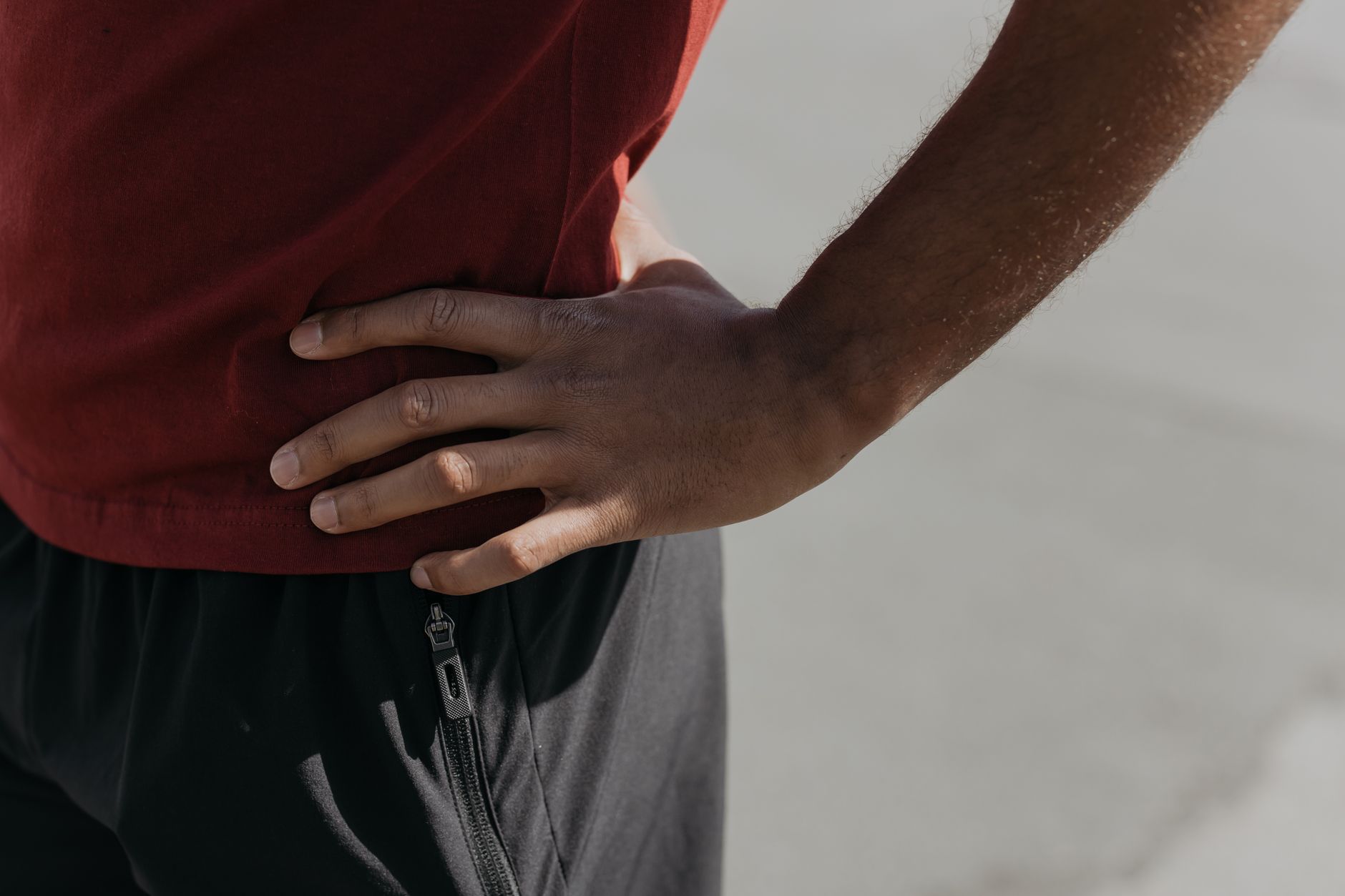
When your hip flexors are tight, the entire chain of movement is disrupted. Tight hip flexors cause anterior pelvic tilt, where your pelvis tilts forward excessively, and this is where the real problems begin. An anteriorly tilted pelvis flattens your natural lumbar curve and destabilizes your core during running. Your abdominal muscles have to work harder to stabilize your spine, which means less muscular energy available for propulsion. Your lower back compensates by working harder, increasing stress on the lumbar spine during the repetitive loading of running. This anterior tilt also changes how your gluteus maximus—your largest and most powerful muscle—can function.
Your glutes need proper pelvic positioning to generate force efficiently. When your pelvis is tilted forward due to tight hip flexors, your glutes are partially “pre-shortened,” which means they can’t contract through their full range and generate their maximum power. It’s like trying to run with your quads already partially flexed—you’ve limited your available force production from the start. One important limitation to understand: not all pelvic tilt is bad, and not all anterior tilt is caused by tight hip flexors alone. Weak glutes or abdominal muscles can also cause anterior pelvic tilt. This means that stretching your hip flexors won’t fix the problem if weakness is the primary driver. You need both mobility and strength work.
The Stride Length Penalty and Power Output
Your stride length is a critical variable in running performance because it directly relates to speed. Stride length multiplied by stride rate equals your pace. When your hip flexors limit hip extension, you lose stride length. A runner with 10 degrees less hip extension loses approximately 2-4 inches of stride length, which is significant. To compensate and maintain the same pace, you must increase your cadence (steps per minute), which feels harder and burns more energy for the same speed. This is particularly obvious in sprinting and tempo running, where stride length is maximized.
Elite sprinters have exceptional hip mobility and hip extension—their hip extensors can contract powerfully through a full range. Compare this to a runner with tight hip flexors who never gets their leg fully behind their body, and you can see the mechanical disadvantage immediately. The tight-hipped runner’s leg never accelerates as effectively during the hip extension phase because the range is compromised. The power loss isn’t just about stride length—it’s about force application. Your glutes generate peak force at the end of the extension phase, when your leg drives back the furthest. If hip flexor tightness prevents you from reaching full extension, you’re losing the most powerful part of the muscle contraction. It’s like stopping a weight-lifting rep halfway—you don’t get the full benefit of the movement.
Identifying Hip Flexor Tightness in Your Own Running
The easiest self-assessment is the Thomas test. Lie on your back on a bed or table with your knees bent and hanging off the edge. If your top thigh (the one hanging off the table) doesn’t rest flat and horizontal, your hip flexors are tight. If it points upward at an angle, that’s hip flexor tightness. The higher the angle, the tighter the muscles. This is a functional test that correlates directly with running performance because it shows whether your hip can actually extend during running.
Another practical assessment is your stride position during running. Film yourself running from the side, or have someone watch you. Look at whether your back leg fully extends behind your body at push-off. If your leg stops extending when your foot is still under your body, or if your glute doesn’t fully fire before you start the next stride, you likely have restricted hip extension. Compare this to watching an elite distance runner or sprinter—their leg travels noticeably further behind their center of mass during the drive phase. The limitation here is that these tests show mechanical restriction but don’t distinguish between muscle tightness, joint restriction, or neuromuscular control issues. A physical therapist or running coach can provide more specific diagnostics, but self-assessment gives you useful information to start addressing the problem.
How Modern Life Makes Hip Flexor Tightness Inevitable
Sitting is the primary culprit. When you sit, your hip flexors are shortened to about 80 degrees of hip flexion. Spend eight hours in that position daily, and your nervous system adapts by shortening the resting length of those muscles. It’s a form of neural adaptation—your body adjusts to the position you spend the most time in. A runner who sits for work and then runs after work is fighting against an eight-hour position that encouraged hip flexor shortening, trying to access a position (full hip extension) that the muscles have adapted against. The warning here is that hip flexor tightness can also be the sign of deeper issues.
Persistent or severe tightness, especially when accompanied by lower back pain, can indicate hip flexor tendinitis or iliopsoas strain. Aggressive stretching of an already-irritated tendon can make it worse. If stretching causes pain (as opposed to the mild discomfort of a muscle being stretched), back off and consider whether the issue is inflammation rather than tightness. Overtraining distance running also contributes. Repetitive hip flexion while running can create a strength imbalance where hip flexors become overactive while glutes become underactive, a pattern known as lower-crossed syndrome. This is different from sitting-induced tightness—it’s tightness caused by overuse and muscular imbalance from the running itself.
Practical Hip Flexor Mobility and Strengthening Work
Effective hip flexor stretching targets the iliopsoas specifically, not just the front of the hip. A proper low-lunge stretch is more effective than generic quad stretches because it specifically lengthens the iliopsoas. Get into a low lunge position with your back knee on the ground, and drive your hips forward until you feel a deep stretch in the front of your back hip. Hold for 30-60 seconds daily, and do this both as a static stretch and as a dynamic lunge during warm-ups before running. Equally important is strengthening your glutes and hip extensors through exercises like single-leg deadlifts, step-ups, and glute bridges. The problem is that stretching alone doesn’t fix the movement pattern.
You need to strengthen the antagonist muscles (glutes) so they can access their full range and power. A runner who stretches hip flexors but doesn’t strengthen glutes will find that the tightness returns quickly because the underlying strength imbalance hasn’t changed. The comparison is helpful: stretching is like unlocking a door, but strengthening is what lets you walk through it confidently. Consistency matters more than intensity. Daily 10-minute mobility sessions outperform occasional 30-minute stretching sessions because neural adaptations require consistent stimulus. If you’re sitting during the day, you need daily counteraction to change that adaptation pattern.
The Long-Term Running Performance and Injury Prevention Outlook
Addressing hip flexor tightness is one of the highest-return investments in running longevity. Runners who maintain hip mobility through their 30s and 40s consistently report feeling faster and fresher at equivalent intensities compared to peers with restricted mobility. This isn’t just because they can access their full power—it’s also because proper hip mechanics reduce injury risk. When your glutes work efficiently, stress on your knees and shins decreases.
When your core stabilizes properly, lower back issues become rare. The forward-looking reality is that many running injuries trace back to hip and pelvis mobility issues, not to the problem area where pain appears. A runner with knee pain who only treats the knee will likely continue having issues if the root cause is hip flexor tightness creating altered mechanics. This is why integrating hip mobility work into your routine now prevents problems later.
Conclusion
Tight hip flexors steal power from your running because they prevent full hip extension, shorten your stride, reduce glute activation, and destabilize your core—all of which compound with every stride. The power loss is both immediate and significant, ranging from 10-15% reduction in propulsive force compared to runners with full hip mobility. More importantly, the mechanical dysfunction creates a cascade of compensations that doesn’t just affect speed but also injury risk, stride efficiency, and long-term running sustainability.
Start with the Thomas test to assess your own hip flexor length, then commit to daily hip mobility work combined with glute strengthening. Stretching alone won’t solve the problem, but a combination of mobility and strength work, done consistently, can restore your natural stride mechanics and unlock power you didn’t know you were missing. The sooner you address hip flexor tightness, the sooner you’ll feel the difference in your pace and the confidence in your stride.
Frequently Asked Questions
How long does it take to improve hip flexor mobility?
You’ll notice small improvements in range of motion within 1-2 weeks with daily stretching, but meaningful changes to running mechanics typically take 4-6 weeks of consistent mobility and strengthening work. Neural adaptation is gradual, and your nervous system needs time to recognize the new range as “normal.”
Can I just run through hip flexor tightness?
Temporarily, yes, but you’ll sacrifice efficiency and increase injury risk. Running with restricted hip extension forces compensation patterns that eventually lead to overuse injuries in your knees, shins, or lower back. Address the tightness directly rather than powering through it.
Should I stretch my hip flexors before or after running?
Dynamic stretching (moving lunges, leg swings) works best before running to activate and lengthen the muscles. Save static stretching (holding a stretch for 30+ seconds) for after running when muscles are warm and more responsive. Static stretching immediately before running can reduce power output if held too long.
Is hip flexor tightness the same as hip flexor pain?
No. Tightness is reduced range of motion; pain indicates inflammation, strain, or tendinitis. If stretching causes pain, don’t push it. You may need rest, anti-inflammatory treatment, or professional assessment before resuming aggressive stretching.
Can strong glutes fix hip flexor tightness?
Strong glutes help compensate and restore some efficiency, but they don’t eliminate tightness. You need both—mobility work to lengthen the hip flexors and strength work to activate the glutes. One without the other is incomplete.
How do I know if my hip flexor tightness is limiting my pace?
If you’ve hit a speed plateau despite consistent training, and video analysis shows your leg doesn’t extend fully behind your body, hip flexor tightness is likely a limiting factor. Compare your stride to online videos of elite runners—the difference in hip extension is usually obvious.