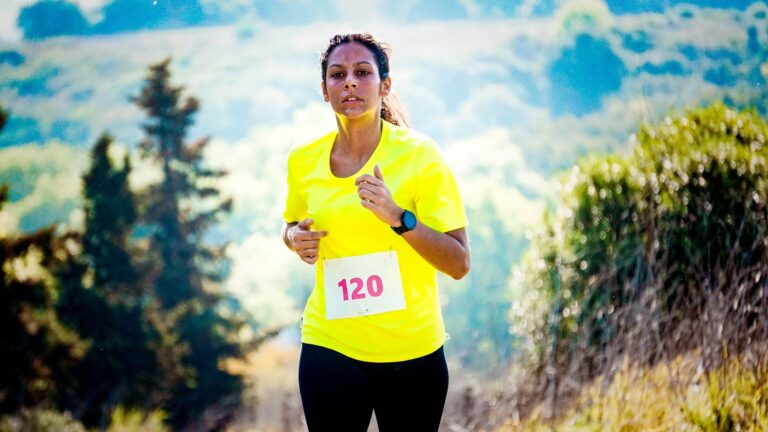
Your hands should be open while running because clenched fists create unnecessary tension that travels up your arms, shoulders, and neck, wasting energy and compromising your running form. When your hands are clenched, you’re engaging muscles that should remain relaxed, forcing your body to work harder throughout your entire upper body. This tension becomes particularly noticeable during the final miles of a long run or intense workout, when fatigue compounds the effect and makes your pace feel sluggish despite effort. Think of a runner you’ve seen near the finish line of a race—the ones with clenched fists often appear more strained and tired than those with relaxed, open hands.
That visible difference reflects a real physiological reality. Clenched fists activate your grip strength unnecessarily, which creates a ripple effect through your nervous system that increases overall muscular tension. This phenomenon, called neural irradiation, means that tightness in one area of your body signals other muscle groups to tighten as well. The simple act of keeping your hands open—fingers relaxed, not splayed, but not gripping—can actually improve your running economy, reduce fatigue in your upper body, and help you maintain better posture throughout your run. Many runners don’t realize this is adjustable, treating hand tension as inevitable rather than something they control.
Table of Contents
- How Hand Position Affects Your Running Form and Energy Use
- The Mechanics of Tension and How It Travels Through Your Body
- How Open Hands Support Better Arm Swing and Posture
- Practical Techniques for Relaxing Your Hands While Running
- Common Issues That Prevent Hand Relaxation
- Hand Position During Different Types of Runs
- Building a Sustainable Habit Around Hand Relaxation
- Conclusion
How Hand Position Affects Your Running Form and Energy Use
Your hands are connected to your running form through a continuous chain of muscles and neural pathways that extend from your fingertips through your arms, shoulders, and spine. When you clench your fists while running, you activate your forearm flexors and intrinsic hand muscles, all of which require blood flow and oxygen that could be directed toward your legs and cardiovascular system instead. This creates a measurable inefficiency—research on running economy shows that upper body tension correlates with increased oxygen consumption for the same pace. The tension from clenched fists has another consequence: it typically causes your shoulders to rise and tighten.
Your shoulders are responsible for counterbalancing the rotational forces your legs create when you run, and they work best when they’re relaxed and able to move freely. When they’re tense, they can’t function optimally, which forces your core to work harder to maintain stability. A runner with clenched fists might find their shoulders creeping up toward their ears by mile three, which compounds fatigue and can lead to neck pain. Comparing two runners on the same pace and terrain, the one with open hands will use roughly 2-3 percent less energy than the one gripping, which over a 10-mile run adds up to meaningful conservation of effort. That’s the equivalent of giving yourself a small advantage for free, simply by changing your hand position.

The Mechanics of Tension and How It Travels Through Your Body
Understanding how tension propagates through your body helps explain why hand position matters more than many runners assume. Your nervous system uses tension in one area as a signal to activate nearby muscle groups—this is why someone who grips a pen too tightly often tenses their shoulders without meaning to. In running, this same principle applies: tension in your hands signals your forearms to tighten, which signals your upper arms, which involves your shoulders, which affects your neck and upper back. The result is a chain reaction of unnecessary muscle activation from your fingertips to your head. The limitation here is that simply keeping your hands open won’t fix poor running form elsewhere in your body.
If your posture is already compromised—if you’re leaning forward too much or your core is weak—open hands are helpful but not a cure-all. However, open hands do make it easier to maintain good posture because you’re not fighting against upper body tension while trying to hold your torso upright. A runner whose form already breaks down in the latter stages of a run will find that keeping their hands relaxed helps them preserve form longer. One warning to keep in mind: if you have a habit of clenching your fists, consciously relaxing them requires mental effort at first. During the beginning of a run or a speed workout, you might need to take a few moments to notice your hands and consciously unclench them. This becomes automatic with practice, usually within a week or two, but it requires initial awareness.
How Open Hands Support Better Arm Swing and Posture
Your arm swing is fundamental to running economy and speed. When your hands are relaxed and open, your arms can swing more freely through their natural range of motion, which actually helps propel you forward more efficiently. Your arms work in counterbalance to your legs—as your right leg drives forward, your left arm swings forward—and this reciprocal motion depends on relaxation and fluidity in your upper body. Open hands encourage what’s called a “quiet upper body,” where your shoulders stay down, your arms stay loose, and your whole upper half works with your lower half rather than fighting against it. Watch elite distance runners and you’ll notice their hands are invariably open or nearly so, with their fingers loosely extended or naturally curved.
This isn’t an accident—it’s a learned habit that develops because it feels better and works better. The visual cue is easy to spot: a smooth, rhythmic arm swing with minimal wasted motion. When you contrast this with a runner whose fists are clenched, you see more shoulder elevation and often more arm cross-body movement—the arms rotating too far across the centerline of the body. This creates lateral forces that your core has to work harder to counteract. It also tends to come with a shorter, more choppy stride, as if the runner’s body is wound up too tightly to move efficiently.
Practical Techniques for Relaxing Your Hands While Running
The most straightforward approach to keeping your hands open is to use them as a relaxation checkpoint during your runs. Every few minutes, particularly during the warm-up phase, notice your hands and consciously relax them. Imagine that your hands are carrying something delicate—like a raw egg or a butterfly—and you want to hold it without crushing it. This mental image helps many runners find the right level of tension: present and engaged, but not gripping. Another practical technique is the “gravity method,” where you let your arms and hands hang naturally and swing as if they’re pendulums driven by your arm swing, not your hands.
Your hands should be almost passive participants in the motion, following along with whatever your arms are doing. Some runners find it helpful to imagine that their hands are slightly ahead of their body, almost as if they’re reaching forward but without tension—this encourages a forward-looking posture and prevents the fists from clenching. The tradeoff with this approach is that during very hard efforts or sprints, it requires more mental focus to maintain relaxed hands. When you’re pushing hard, your natural instinct is to clench up—it feels powerful, even though it’s actually counterproductive. During track workouts or intervals, you may need to consciously reset your hands between repetitions. Once you build the habit over several weeks, though, maintaining relaxed hands even during hard efforts becomes automatic.
Common Issues That Prevent Hand Relaxation
One of the biggest obstacles to keeping your hands open is underlying anxiety or stress. Runners who are nervous before a race or worried about their performance tend to unconsciously clench their fists as part of their fight-or-flight response. This is normal physiology, but it’s worth recognizing because you can address it by taking deep breaths and consciously relaxing your hands before and during the run. If you notice yourself clenching during a workout, check in with whether you’re feeling stressed about the pace or distance. Another common issue is wrist tension from excessive arm swing or from holding your arms too rigidly.
If your arms are held at too high an angle, your hands will naturally want to clench to stabilize them. The fix is to lower your arms slightly so that your elbows are bent at roughly 90 degrees and your hands are near your hips, not up by your chest. This more relaxed arm position makes open hands feel natural rather than awkward. A warning worth noting: if you have arthritis or prior hand injuries, consciously relaxing your hands might actually feel uncomfortable at first because the open position uses different hand muscles than a clenched position. In this case, you might find a middle ground where your hands are open but your fingers are loosely curled rather than fully extended. The goal is still to avoid the tension of a true clench, even if full extension isn’t comfortable for you.

Hand Position During Different Types of Runs
Your hand position can actually vary slightly depending on what type of run you’re doing. During easy, recovery runs, your hands can be almost completely relaxed, with fingers loosely extended or naturally curved. During tempo runs or sustained harder efforts, you might find a slightly more structured hand position helps you maintain form, though still not a clench. Your hands should feel like they’re following your arms, not leading them.
During sprints or short distance races, where maximum power output matters, some runners find that a very slightly firmer grip helps them feel more aggressive and controlled. This isn’t a full clench, but rather a conscious engagement. The key difference is intention: you’re choosing to add structure when you need power, rather than defaulting to tension out of habit or anxiety. This is a minor adjustment for experienced runners, not something beginners need to worry about implementing.
Building a Sustainable Habit Around Hand Relaxation
The best runners develop hand relaxation as an automatic habit rather than something they have to think about during every run. This usually takes two to three weeks of conscious practice. Start by making relaxed hands part of your warm-up routine—as you begin your easy jog, deliberately check your hands and relax them. Mentally note how it feels.
By the time you reach your warm-up mile, this should be automatic. As you build this habit, you’ll likely notice secondary benefits beyond just reduced upper body tension. Many runners report that maintaining relaxed hands also helps them stay mentally calm and focused during runs, because the physical state of relaxation influences your nervous system. The inverse is also true: if you notice your hands clenching, it’s often a sign that you’re pushing too hard or accumulating fatigue faster than expected. Your hands become a biofeedback tool that tells you something about your effort level and mental state.
Conclusion
Keeping your hands open while running is one of the simplest form adjustments you can make with one of the highest returns on effort. It requires no equipment, no complex coaching cues, and it’s accessible to every runner regardless of age, experience level, or fitness. The physiological benefits—reduced upper body tension, improved energy efficiency, better posture, and enhanced arm swing—combine to make a measurable difference in how your runs feel and perform, particularly in longer runs or high-mileage weeks.
Start by making relaxed hands part of your warm-up routine on your next few runs. Notice the difference in how your shoulders feel, how your breathing flows, and how your overall running feels. Within a few weeks, you’ll likely find that relaxed, open hands have become your default, and you’ll only clench your fists when you deliberately choose to during a final kick to the finish line.