Running on your toes—or more accurately, landing on your forefoot—is not inherently better or worse than running on your heels or midfoot. The ideal running stride depends on your individual biomechanics, fitness level, and running goals. Some runners naturally gravitate toward a forefoot strike and run efficiently that way for decades without injury, while others who attempt the same pattern develop calf and Achilles tendon problems within weeks. The real answer is that there is no universal “should”—only what works for your body.
The confusion around toe running often stems from popular books and running trends that oversimplified the science. In the mid-2000s, research suggesting that forefoot striking reduced impact forces sparked a movement toward minimalist shoes and conscious strike pattern modification. However, the research was more nuanced than the marketing suggested. Studies showed that forefoot strikers did experience lower initial impact peaks, but they often transferred that impact higher up the leg. For many recreational runners, the transition to forefoot striking created new problems rather than solving existing ones.
Table of Contents
- What Does Forefoot Running Actually Mean?
- The Injury Risk That Nobody Talks About
- What Elite Distance Runners Actually Do
- How to Safely Transition to Forefoot Running If You Choose To
- Common Misconceptions About Toe Running
- When Forefoot Striking Might Actually Help
- Finding Your Natural Stride and Building Running Economy
- Conclusion
- Frequently Asked Questions
What Does Forefoot Running Actually Mean?
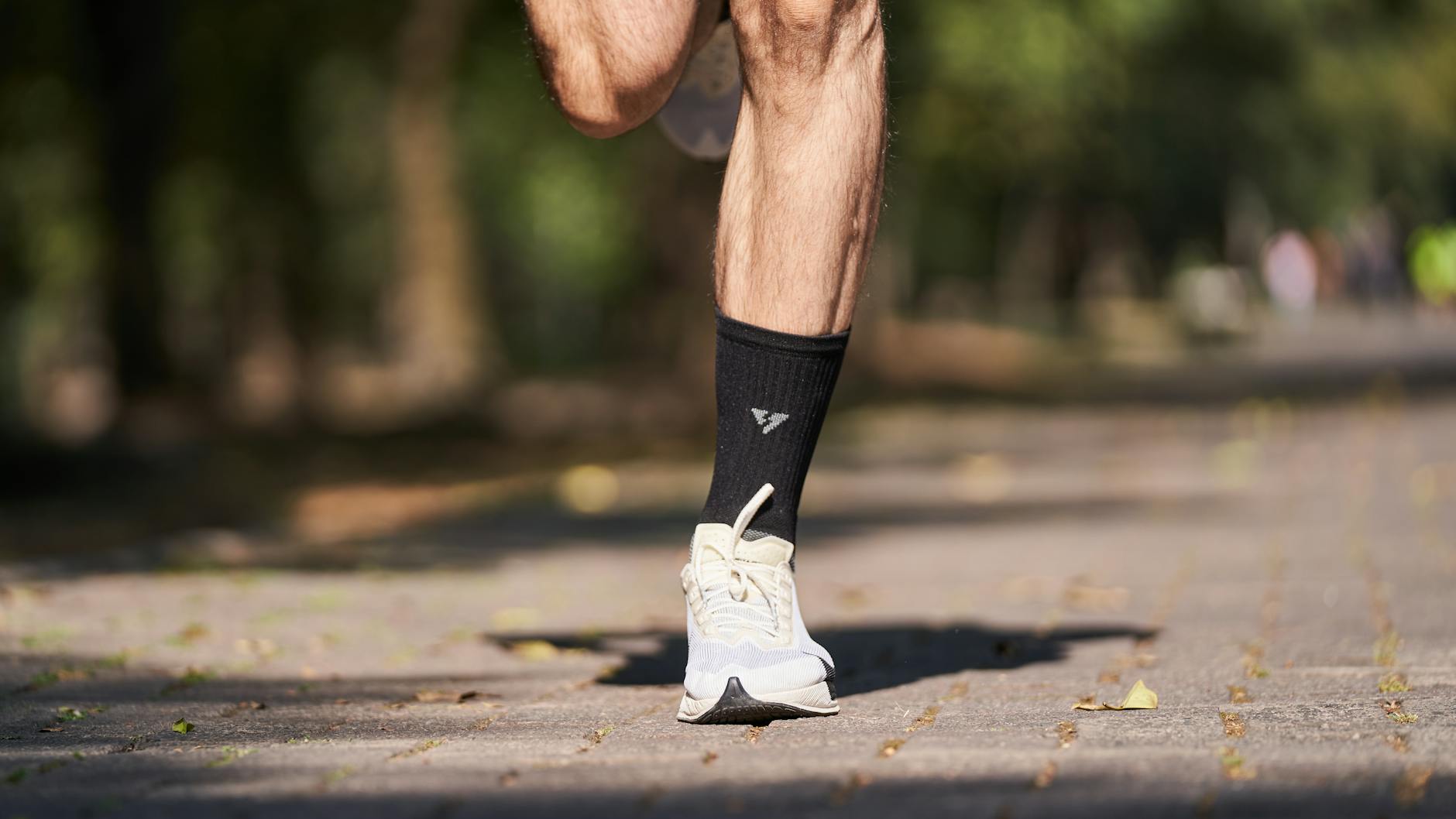
Forefoot running, or toe running, refers to landing on the ball of your foot first—the area just behind your toes—rather than on your heel. Your foot is more flexed in this position, and your calf muscles act as a spring to absorb and return energy. This is distinctly different from landing on your actual toes or the very tips of your forefoot, which is neither biomechanically sound nor practical for distance running. When runners consciously try to adopt this pattern, they often misunderstand what it entails.
The forefoot should make initial contact with the ground, but your heel should follow immediately after, making contact within milliseconds. If your heel never touches the ground during normal running, you’re either doing something unusual or you’ve misidentified your strike pattern. Elite sprinters, who run at very high speeds, often maintain a more pronounced forefoot strike throughout their stride because their ground contact time is so brief. A marathoner attempting the same pattern at marathon pace would be fighting against gravity and biomechanical efficiency.
The Injury Risk That Nobody Talks About
The most significant danger of forefoot running is the sudden demand it places on your calf muscles and Achilles tendon. These tissues are not accustomed to the workload if you’ve been a heel striker your entire running life. When you land on your forefoot, your calf is already partially contracted, ready to absorb impact and propel you forward. This is different from heel striking, where the calf begins in a more relaxed state.
Numerous runners have experienced calf strains, Achilles tendinopathy, and plantar fasciitis after attempting to transition to forefoot striking without a gradual adaptation period. The problem is that many people read about forefoot running and attempt to change their entire strike pattern in a single run, or over the course of a few weeks. Your calf and Achilles tendon need months of gradual conditioning to handle this demand safely. Even then, some people’s bodies simply don’t adapt well to sustained forefoot striking, and that’s not a sign of weakness or improper technique—it’s just individual variation. There is a real cost to forcing a change that your body isn’t built to accommodate.
What Elite Distance Runners Actually Do
The most telling evidence about running form comes from observing runners at the highest levels of competitive distance running. If forefoot striking were substantially superior, you would expect elite marathoners and ultramarathoners to predominantly use this pattern. Instead, the data shows something different. Most elite marathoners use a midfoot strike, landing somewhere between their heel and the ball of their foot, with significant variation among individuals. Some do land on their forefoot, but many don’t.
The fastest women’s marathon time in the world was run by a heel striker. Some of the fastest male marathoners employ different strike patterns. What these elite runners have in common is not their strike pattern, but rather efficient running form overall, adequate training volume, good biomechanical alignment, and bodies that are well-adapted to the specific demands of their training. When sports scientists study elite runners, they find that strike pattern is a less important variable than cadence, ground contact time, and consistency of movement. A runner with a higher cadence (more steps per minute) and shorter ground contact time will generally be more efficient, regardless of whether they’re technically striking on their forefoot or heel. This suggests that trying to consciously change your strike pattern to match an elite runner’s pattern is putting the cart before the horse.

How to Safely Transition to Forefoot Running If You Choose To
If you have a specific reason to transition toward forefoot striking—perhaps a coach has identified it as a beneficial change for your running style, or you’ve noticed a pattern of heel-strike-related injuries—the transition requires patience and a structured plan. Start by dedicating 10 percent of your weekly running volume to short, easy runs using a forefoot strike. This might mean one run per week, lasting only 15-20 minutes, where you consciously focus on landing on the ball of your foot with a midfoot strike. Week by week, increase the duration and frequency of forefoot-striking runs by roughly 10 percent of your previous volume.
This gives your calf muscles, Achilles tendon, and plantar fascia time to adapt to the new demand. Many running coaches recommend this gradual approach over 8 to 12 weeks before attempting to run primarily on your forefoot. During this transition, your legs will likely feel tired or sore, particularly in the calf. This is normal, but sharp pain or pain that worsens over successive runs is a sign to stop and return to your natural stride. Some runners find that they never feel comfortable or efficient with a forefoot strike, and that outcome should be accepted rather than forced.
Common Misconceptions About Toe Running
One of the most prevalent misconceptions is that heel striking is inherently “bad” or “natural” only to sedentary people who don’t know how to run. In reality, heel striking is a normal and efficient pattern for many runners, particularly those running at moderate to easy paces. Evolutionary biology suggests that humans are adapted for distance running, and there’s evidence that our ancestors were long-distance runners. However, this doesn’t tell us much about strike pattern, because strike pattern is highly dependent on running speed and cadence.
Runners naturally shift toward a more forefoot strike as they run faster, and that adaptation happens automatically without conscious thought. Another misconception is that minimalist or barefoot running is equivalent to forefoot running or that switching to minimal shoes will automatically improve your form. The relationship between shoes and strike pattern is complex. Some runners in minimal shoes naturally shift toward forefoot striking, while others maintain their previous pattern. If you do transition toward forefoot striking and want to experiment with shoes, be aware that lighter shoes alone won’t solve poor running mechanics, and transitioning shoes and strike pattern simultaneously is doubly risky from an injury perspective.

When Forefoot Striking Might Actually Help
There are specific situations where encouraging a slight shift toward a midfoot or forefoot strike can be beneficial. If you experience chronic knee pain that seems related to excessive braking forces from a pronounced heel strike, a coach might suggest moving toward a higher cadence and slightly more forward foot strike. This is not about completely adopting forefoot striking, but rather adjusting your natural pattern slightly.
Runners with excessively high arches sometimes find that a forefoot strike reduces stress on their plantar fascia compared to a heel strike, though this is highly individual. Similarly, some runners with certain biomechanical limitations find that a midfoot-to-forefoot strike feels more natural and efficient once they’ve addressed strength and flexibility issues in their hips and ankles. The key in all these scenarios is that the shift is gradual, supported by strengthening work and flexibility improvements, and responsive to how your body actually responds rather than adherence to a prescribed method.
Finding Your Natural Stride and Building Running Economy
Your most efficient running form is likely the one you naturally adopt when you’re running at a comfortable, sustainable pace with good posture. For many runners, this involves a slight heel strike followed by a midfoot push-off, but the specifics vary widely. Rather than starting with the question “Should I run on my toes?”, ask instead: “Do I have any running-related injuries or inefficiencies, and if so, what’s causing them?” If you’re running injury-free and enjoying your running, there is virtually no evidence that consciously changing your strike pattern will make you faster or more efficient.
The best use of your time and attention is to build running economy through consistent training, strength work, and attention to your overall biomechanical alignment. Many runners get faster and stronger while maintaining their exact same strike pattern throughout their careers. This is not a limitation—it’s evidence that strike pattern is much less important than many modern running trends suggest.
Conclusion
The definitive answer to whether you should run on your toes is this: if your body does it naturally and you’re running without pain, there’s no reason to change. If you’re struggling with injuries or performance and a coach has specifically suggested that adjusting your strike pattern might help, then a gradual, carefully monitored transition over months—not weeks—is the appropriate approach.
However, for most runners, the focus should be on building strength, consistency, and overall running fitness rather than chasing a particular foot strike pattern. Running form is individual, and the variation you see among successful runners is a feature, not a bug. The most important thing is to listen to your body, progress your training gradually, and recognize that efficient running comes from consistency and adequate training stress, not from adopting a specific technique that works for someone else.
Frequently Asked Questions
Are minimalist shoes better for developing a forefoot strike?
Minimalist shoes don’t automatically change your strike pattern, but they can encourage a shift because they provide less heel cushioning and proprioceptive feedback. However, transitioning to minimalist shoes and changing your strike pattern at the same time multiplies injury risk. If you want to experiment with either, do them sequentially with weeks in between to allow adaptation.
Can changing to forefoot running prevent injuries?
It can help with certain specific injuries related to heel striking, but it often creates new injuries, particularly in the calf and Achilles tendon, if done too quickly. Injury prevention comes primarily from gradually building training load, adequate recovery, and strength work—not from strike pattern alone.
Do sprinters run differently than distance runners?
Yes, sprinters maintain a much shorter ground contact time and more pronounced forefoot strike because they’re running at very high speeds for short distances. This doesn’t mean that distance runners should adopt a sprinter’s form; the demands are fundamentally different.
How do I know if my strike pattern is inefficient?
Look for consistent pain patterns or a feeling of repeated impact shock rather than smooth propulsion. However, getting video analysis from a running coach is more reliable than self-assessment, since most runners can’t accurately identify their own strike pattern by feel.
Will increasing my cadence improve my running form?
Yes, increasing cadence by 5 to 10 percent can reduce impact forces and often naturally shifts your strike pattern slightly forward without conscious effort. This is a more effective adjustment than trying to consciously change your strike pattern directly.
Should I change my strike pattern if I’m training for a marathon?
No, unless you have a very specific injury issue and many months before the race to adapt. Changing your running form during marathon training increases injury risk without enough time to adapt properly. Focus on building fitness with your current form.