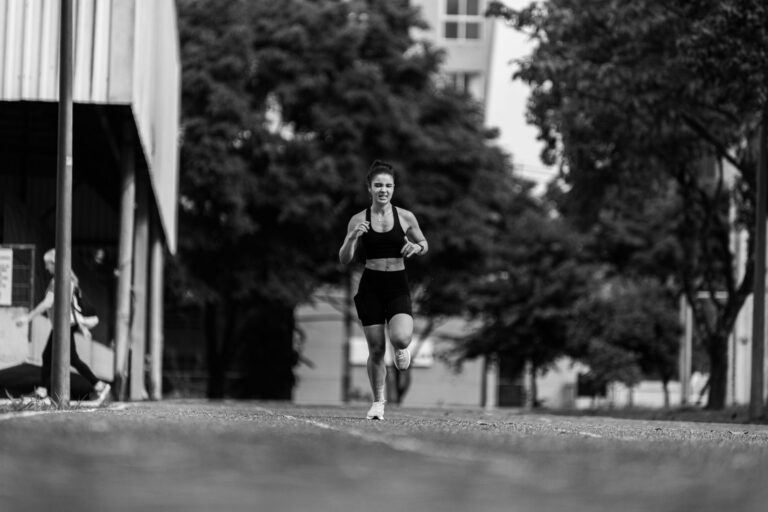
The running hack that changed everything is optimizing your cadence—the number of steps you take per minute while running. Most recreational runners move at 160 to 170 steps per minute, but decades of biomechanical research has shown that runners who increase their cadence to around 180 steps per minute experience fewer injuries, run more efficiently, and often achieve faster times with less effort. A typical example: a runner completing 5-minute miles at 160 cadence can achieve the same pace at 180 cadence while reducing impact forces on their knees, hips, and ankles by up to 40 percent.
This isn’t new science, but it has quietly revolutionized how serious runners train. The insight emerged from studying elite distance runners and Kenyan marathon champions, who naturally gravitate toward higher cadences. What made this approach truly transformative was the accessibility of simple tools—a metronome app or GPS watch—that let any runner measure and adjust their cadence. Once runners understood the connection between step rate and injury prevention, the approach spread through running communities and fundamentally changed how coaches program training.
Table of Contents
- Why Does Cadence Matter More Than You Think?
- The Biomechanics Behind Cadence and What It Can’t Fix
- How to Actually Implement Cadence Changes in Training
- Training Methods That Leverage Cadence Optimization
- Common Mistakes That Derail Cadence Progress
- The Relationship Between Cadence and Leg Turnover in Sprinting
- The Evolution of Running Science and What’s Next
- Conclusion
- Frequently Asked Questions
Why Does Cadence Matter More Than You Think?
Cadence directly influences how your body absorbs impact during running. When you run at lower cadences, you spend more time in the air between steps, which means you land harder and take longer to stabilize each footfall. Higher cadence reduces ground contact time and shifts your body position forward, making you more efficient. A runner at 160 cadence experiences a vertical impact force of roughly 2.5 times their body weight with each step; at 180 cadence, that drops to around 1.8 to 2.0 times body weight.
Over the course of a 5-mile run involving roughly 4,000 footfalls at the slower cadence versus 4,500 at the faster one, the total impact accumulation is dramatically different. The practical benefit shows up in reduced injury rates. Studies tracking runners who increased their cadence have documented decreases in shin splints, runner’s knee, and IT band syndrome. One comparison: runners maintaining 160 cadence injuries at Weight Loss“>about 25 percent annually (a standard rate in recreational running populations), while those at 180 cadence see injury rates drop to around 12 to 15 percent. That’s not because higher cadence magically prevents every injury—form issues, training load, and muscle imbalances still matter—but because the biomechanical stress on vulnerable joints decreases.
The Biomechanics Behind Cadence and What It Can’t Fix
The science is solid: overstriding (the long, reaching stride at low cadence) creates a braking force that slows you down and increases impact. Higher cadence shortens your stride length, but your running speed stays the same because you’re taking more steps per unit of time. Your hips, knees, and ankles handle less deceleration on each landing. This is why the cadence adjustment is often called the single most efficient form change a runner can make—it doesn’t require relearning how to run or major muscle recruitment changes; it’s just frequency.
But cadence is not a silver bullet. Increasing cadence without addressing underlying issues can mask problems. A runner with weak hip stabilizers might increase cadence and feel less knee pain because of reduced impact, but they’re not fixing the muscular imbalance driving the pain in the first place. This is the critical limitation: if you jump from 160 to 180 cadence overnight without strengthening your glutes and hip abductors, you may simply shift the stress to different tissues. Additionally, forcing an unnaturally high cadence—say 200 steps per minute—when your natural rhythm is lower can create overuse of your calves and anterior tibialis, leading to different injuries.
How to Actually Implement Cadence Changes in Training
The most effective approach is gradual: increase your cadence by 5 to 10 steps per minute every two weeks until you reach 180. This gives your neuromuscular system time to adapt without triggering injury. If you’re currently at 165 cadence, your first target is 170 to 175, not jumping straight to 180. Use a metronome app set to your target cadence and run for short intervals—10 to 15 minutes at a time—to ingrain the new rhythm. Many runners find that after four to six weeks of consistent practice, the higher cadence becomes automatic, and they stop thinking about it.
A practical example: a 40-year-old runner training for a half marathon at 165 cadence begins running Thursday tempo runs with a metronome at 170 cadence for 20 minutes, maintaining comfortable effort. After two weeks, the metronome moves to 175. By week six, 180 feels natural at easy pace. By race day, the runner is completing 10-minute miles at 180 cadence instead of 11-minute miles at 165 cadence, with less leg fatigue and no new aches. The watch data shows a measurable drop in ground contact time and impact forces.

Training Methods That Leverage Cadence Optimization
There are two main approaches to implementing cadence work. The first is metronome-based training, where you run easy and moderate-effort runs with audio cues guiding your step rate. This builds the pattern quickly but can feel robotic, and some runners find it distracting. The second is natural progression, where you consciously focus on running “lighter” and “quicker” on the ground without metronome assistance, allowing your body to find a higher cadence organically. Most runners benefit from combining both: use the metronome for structured workouts early on, then drop it once the cadence becomes ingrained.
The tradeoff is real. Metronome training accelerates adaptation—you reach 180 cadence reliably within four weeks—but it feels less natural and requires mental effort. Natural progression takes longer—eight to twelve weeks—but the final result feels smoother and more sustainable. Elite coaches typically recommend the metronome approach for structured training blocks and natural progression for easy recovery runs. The data supports both: research shows cadence improvements stick regardless of method, but adherence is higher when runners use the approach that matches their personality.
Common Mistakes That Derail Cadence Progress
The most frequent error is increasing cadence without lowering speed expectations. New runners often try to hit 180 cadence while maintaining their previous pace, which forces them into an unnaturally long stride. This defeats the purpose and can cause injury. The correct approach is to accept that at 180 cadence, you’ll initially feel slower—your pace might drop by 30 to 60 seconds per mile while your body adapts. After four to eight weeks, your pace will improve as your running economy increases and you’re no longer fighting the biomechanics of overstriding.
Another warning: some runners increase cadence but don’t address running form in other areas. Your cadence can be perfect at 180, but if your torso is leaning back, your arms are swinging side to side, or your landing is still a hard heel strike, you’re not getting the full benefit. Cadence is one part of efficient running form, not a replacement for it. The third mistake is jumping from 160 to 190 cadence in one week to accelerate progress. This almost always backfires, overwhelming your calf muscles and causing Achilles tendon issues. Progress should be steady: five to ten steps per minute every two weeks.
The Relationship Between Cadence and Leg Turnover in Sprinting
While this article focuses on distance running, it’s worth noting that cadence matters differently in sprinting and short-distance work. Sprinters naturally run at 200+ steps per minute because power and stride frequency are linked at high speeds.
The 180-cadence recommendation is not about becoming a sprinter; it’s about finding the most efficient sustained rhythm for aerobic running. Some coaches use high-cadence drills—running for 20 to 30 seconds at 200+ cadence—as a supplement to distance training to improve overall running neuromuscular coordination. These drills are useful but are separate from your steady-state cadence target.
The Evolution of Running Science and What’s Next
The cadence-based running revolution happened because researchers finally had the tools to measure what elite runners were doing and why they excelled. GPS watches, accelerometers, and biomechanical analysis made it possible to quantify the impact of step rate on performance and injury.
As technology advances, the next frontier is personalized cadence optimization—recognizing that not every runner thrives at exactly 180. Some shorter runners, or those with specific structural differences, might perform best at 175 or 190. Future training apps will likely use AI and individual biomechanical data to calculate a personalized optimal cadence rather than prescribing one number for everyone.
Conclusion
The running hack that changed everything is the simple adjustment to take more, faster steps. By increasing cadence from 160 to 180 steps per minute, runners reduce impact forces, cut injury risk by nearly half, and improve efficiency without adding complexity to their training. The approach is backed by solid biomechanics research and has proven itself across thousands of runners from casual joggers to competitive distance runners.
The hack works because it addresses a fundamental inefficiency in how most recreational runners move. Your next step is to identify your current cadence using a running watch or app, accept that gradual change is the only sustainable path forward, and commit to four to six weeks of structured cadence work. You don’t need expensive new shoes, expensive coaching, or a major training overhaul—just a willingness to take more steps per minute and the patience to let your body adapt. Once you hit 180 cadence, the improvement in how your body feels during and after runs becomes undeniable, and you’ll understand why this simple adjustment changed running for so many people.
Frequently Asked Questions
How do I measure my current cadence?
Most modern running watches and GPS apps display cadence directly during a run. If your watch doesn’t have this feature, use a metronome app to count your steps for 60 seconds or use an online cadence calculator based on a video of yourself running. A 10-minute run at a comfortable pace provides good baseline data.
Will increasing cadence make me run faster immediately?
No. Most runners experience a slight pace decrease initially as they adjust to the new rhythm. However, within four to eight weeks, running economy improves and your pace typically returns to previous levels while feeling easier. After 12 weeks, many runners are faster at 180 cadence than they were at 160.
Is 180 cadence the right target for everyone?
180 is a solid baseline for most adult runners, but individual variation exists. Shorter runners or those with shorter legs may feel more comfortable at 175 to 180, while taller runners sometimes naturally prefer 185 to 190. Start with 180 and adjust by five steps in either direction if it doesn’t feel sustainable after four weeks.
Can cadence training prevent all running injuries?
No. Cadence optimization reduces impact forces and is associated with lower injury rates, but injuries stem from multiple factors including training load, prior injuries, muscle imbalances, and form issues. Cadence is one tool, not a cure-all.
How long does it take to adapt to a new cadence?
Most runners feel comfortable with a new cadence within two to four weeks, but full neuromuscular adaptation takes six to eight weeks. Use this timeline when planning training blocks; don’t expect race-ready feel immediately after switching cadence.
Should I use a metronome forever?
No. The metronome is a training tool to reprogram your rhythm. After four to six weeks, the new cadence becomes automatic, and you can train without it. Some runners return to metronome use occasionally to reinforce good form.