Running modifications for obesity aren’t about waiting until weight loss happens—they’re about adjusting how, where, and how often you run right now, while carrying extra weight. The mechanics of running change substantially above a certain body mass, and ignoring that difference leads to injury rather than improvement. A 250-pound person running at the same stride rate and cadence as a 180-pound runner will experience two to three times more impact force through the knees, hips, and ankles with each footfall.
The primary modifications center on three variables: impact reduction, frequency management, and load tolerance. High-impact running (standard road running or trail running) creates forces that demand a stronger musculoskeletal system to absorb safely. Someone starting to run at a higher body weight needs to reduce that impact first, then gradually build capacity, rather than jumping into a standard training plan and hoping the body adapts quickly enough.
Table of Contents
- What Are the Core Impact-Reduction Modifications?
- Why Does Cadence Matter More at Higher Body Weight?
- How Does Load Management Shape a Practical Weekly Schedule?
- What Role Does Strength Training Play in Modifications?
- Which Modifications Address Pain or Inflammation That Emerges?
- How Do Shoe and Gear Choices Support Modifications?
- What Happens When Aerobic Fitness Improves but Weight Hasn’t Yet?
- Frequently Asked Questions
What Are the Core Impact-Reduction Modifications?
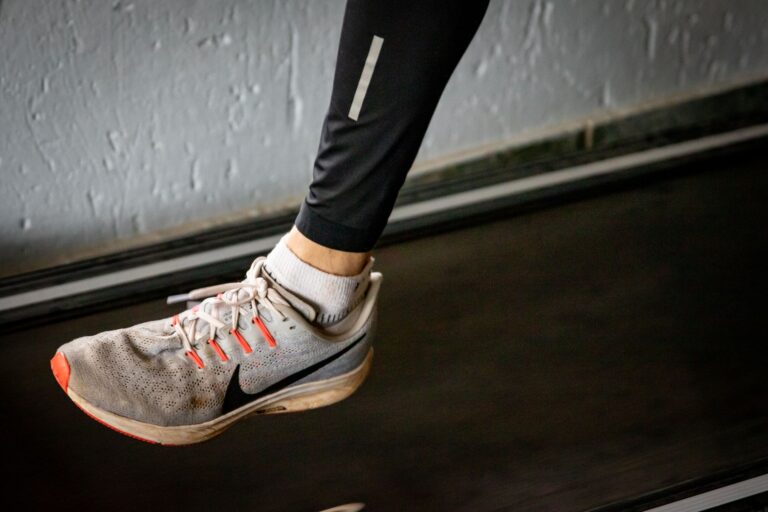
The most direct approach is switching surfaces and styles. Treadmill running absorbs roughly 40 percent of impact compared to concrete or asphalt, making it the standard first step for runners carrying extra weight. The belt’s cushioning and your ability to control speed precisely make it easier to stay in a sustainable zone without the joint stress that outdoor pavement creates. Water-based running—in pools or shallow water—removes almost all ground-reaction force and lets you build aerobic fitness without loading your joints at all.
A runner at 280 pounds will get the same cardiovascular stimulus from 20 minutes of deep-water running as from 12 minutes of land-based jogging, but with zero impact on the knees. Elliptical machines occupy a middle ground; they’re lower-impact than running but higher-intensity than walking, and they allow for actual speed variation and resistance adjustment. Switching between a treadmill for easy runs and an elliptical for tempo work lets you maintain running stimulus while managing joint load. Many runners starting from obesity use a walk-run model outdoors—30 seconds of running, two minutes of walking, repeated for 20 to 30 minutes—which delays the point at which cumulative impact becomes a problem.
Why Does Cadence Matter More at Higher Body Weight?
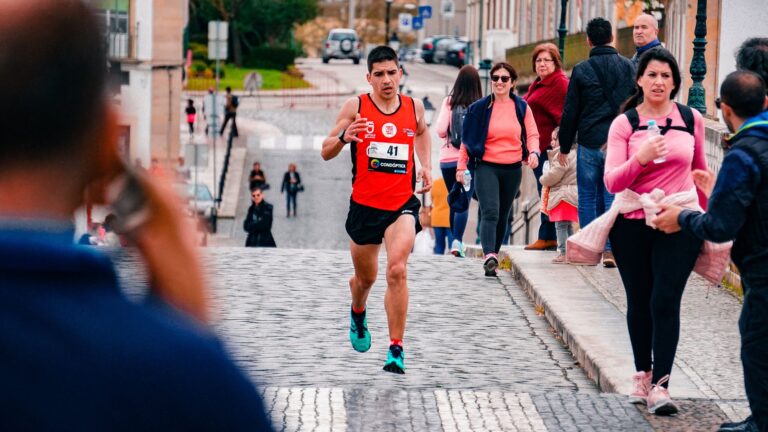
Cadence—the number of steps per minute—has outsized importance when you’re heavier. A person at 200+ pounds taking 160 steps per minute is landing with forces equivalent to a lighter person at 180 steps per minute, so increasing cadence to 170 or 180 spm can meaningfully reduce per-step impact without changing pace. The catch is that cadence work requires conscious effort and feels unnatural at first.
many people naturally fall into a slower, more “bounding” stride that maximizes impact per step; retraining yourself to land softer and faster takes several weeks and feels harder even though the actual effort is lower. There’s also a practical limit. You can’t sustainably run at 200 steps per minute on flat ground for a beginner—your aerobic system can’t keep up, and the muscular coordination isn’t there yet. The sweet spot for most runners starting from obesity is 165 to 175 spm, which is faster than their natural tendency but not so fast that it forces pace changes they can’t sustain.
How Does Load Management Shape a Practical Weekly Schedule?
Most runners at higher body weight need only two to three running days per week to see progress, compared to four to five for lighter runners. Injecting two to three rest days between runs gives tissue time to repair and prevents the cumulative fatigue that leads to overuse injury. A common schedule might be Monday elliptical, Wednesday treadmill, Saturday walk-run outdoors—with cross-training or pure rest filling the gaps. That structure allows for three separate stimuli while keeping total impact exposure manageable.
The mistake is trying to replicate standard training plans by frequency. A beginner at 280 pounds doesn’t need five running days per week; they need five movement days, which might include two to three runs, one to two swims or pool sessions, and one strength session. One runner documented her progression from complete inactivity: two treadmill sessions and one pool run in week one, then adding an elliptical session in week three. Within eight weeks, she could handle a walk-run cycle three times per week without pain or inflammation. Spreading activity across different modalities prevented the overuse injury that a “run three times per week” plan would have triggered.
What Role Does Strength Training Play in Modifications?
Strength work—particularly lower-body and core exercises—becomes mandatory rather than optional when running at higher body weight. Weak glutes, hip abductors, and core muscles force your knees and ankles to do stabilizing work they’re not designed for, multiplying injury risk. Two sessions per week of controlled squats, lunges, glute bridges, and planks can reduce knee pain during running by 30 to 40 percent, according to studies of heavier runners.
The trade-off is time: you’re either running less frequently to accommodate strength work, or running less intensely on the days you combine both. Many runners find that starting with pure strength and walking—zero running—for four to six weeks builds the foundational stability needed to tolerate running impact safely. After establishing that base, adding one short treadmill session (10 to 15 minutes) while maintaining two strength days creates a much safer progression than jumping straight into standard running.
Which Modifications Address Pain or Inflammation That Emerges?
Ankle and knee pain are the most common friction points for heavier runners. If pain appears during or immediately after running, it’s typically a sign that impact or load is beyond current tolerance. The modification isn’t “run through it” but rather: drop impact mode (treadmill to pool), reduce frequency, or shorten duration.
Running 10 minutes on a treadmill three times per week with zero pain is better progress than running 20 minutes twice per week with lingering soreness that takes 36 hours to fade. Another critical warning: if pain worsens over two to three weeks despite reducing mileage, stop running and see a physical therapist or doctor. Some heavier runners develop patellofemoral pain syndrome or plantar fasciitis that doesn’t respond to standard running modifications and needs specific rehab work. Ignoring that signal and trying to “adapt” leads to months out of activity rather than weeks of targeted treatment.
How Do Shoe and Gear Choices Support Modifications?
Footwear matters more when you’re heavier because impact forces are amplified. A neutral road shoe that works fine for a 160-pound runner may offer insufficient cushioning for a 260-pound runner. Structured cushioning shoes—particularly those designed for stability or pronation control—reduce the micro-movements that create ankle and knee strain.
Visiting a specialty running store for gait analysis rather than buying online is worth the effort; a shoe mismatch at higher body weight shows up as pain within two to three runs. Supportive socks and potentially compression sleeves or knee wraps provide psychological reassurance and some actual support, though they’re secondary to proper footwear and load management. Some runners find that an ankle or knee sleeve reduces pain enough to maintain consistency, and that consistency—even at lower intensity—builds the strength and conditioning that eventually allows load-free days.
What Happens When Aerobic Fitness Improves but Weight Hasn’t Yet?
One of the practical realities: cardiovascular fitness can improve substantially before weight drops significantly. A runner at 270 pounds who can run 15 minutes continuously on a treadmill has achieved real progress even if the scale has moved only 10 pounds. That early fitness gain is real—VO2 max improves, resting heart rate drops—but the impact forces on joints haven’t decreased proportionally.
This creates a mismatch where a runner feels stronger but still needs to protect joints as carefully as before. The modification to hold is maintaining the same impact-reduction strategy (treadmill, pool, walk-run) even as pace and duration improve, until body weight has dropped enough to materially change the load equation. That point is typically a 15 to 20 percent reduction in starting weight.
- —
Frequently Asked Questions
Can someone at 300+ pounds start running outdoors, or is treadmill mandatory?
Treadmill running is safer as a starting point because it controls impact and speed precisely. After building a base of 8 to 12 weeks on treadmill or pool, transitioning to walk-run cycles outdoors becomes an option. Pure running outdoors from the start at 300+ pounds carries substantial injury risk.
How long does it take before impact modifications aren’t needed anymore?
Body composition changes matter more than total weight loss. A 15 to 20 percent reduction in starting body weight typically shifts the force profile enough to tolerate standard running safely. That might be 40 to 50 pounds for someone at 250 pounds, but the timeline varies based on fitness gains and strength development—typically 3 to 6 months with consistent training.
Is walking a legitimate alternative to running modifications for weight loss?
Yes. Walking at higher body weight delivers cardio stimulus and weight-loss benefit without impact risk. Many runners starting from obesity achieve better results with consistent walking and cross-training than with running too frequently and getting injured.
Should interval training (tempo work, speed work) be part of early modifications?
No. Stick to steady, lower-intensity aerobic work until you’ve established a base of 8 to 12 weeks of pain-free activity. Adding intensity before your muscles and joints can handle steady running invites overuse injury.
What’s the best cross-training to pair with modified running?
Pool work (running or deep-water running), elliptical, cycling, and rowing all build aerobic fitness without impact. Rowing and cycling offer upper-body engagement, which many heavier runners need for balanced conditioning.