
Low-impact cardio exercises protect your joints while building the cardiovascular fitness that keeps you active and independent as you age. For older adults, swimming, brisk walking, stationary cycling, and water aerobics deliver the heart-strengthening benefits of cardio without the jarring impact of running or high-intensity activities.
A 70-year-old in reasonably good health might start with 30 minutes of steady-pace swimming three times a week, gradually building to the American Heart Association’s recommended 150 minutes of moderate-intensity aerobic activity each week—and low-impact options make that goal feel achievable rather than punishing. The key advantage of low-impact cardio is that it maintains your cardiovascular system, bone density, and muscular endurance without stressing joints that may be dealing with arthritis, previous injuries, or the natural wear of aging. Unlike running, which can aggravate knee pain or hip discomfort, these gentler options let you exercise consistently over time—and consistency matters far more than intensity for long-term health in older age.
Table of Contents
- What Makes Low-Impact Cardio Different from High-Impact Exercise?
- Top Low-Impact Cardio Options You Can Start Today
- Walking and Tai Chi—The Most Accessible Low-Impact Options
- Building a Low-Impact Cardio Program That Fits Your Life
- Joint and Health Considerations You Shouldn’t Ignore
- Elliptical Machines and Rowing—Often Overlooked Options
- The Future of Aging and Cardiovascular Fitness
- Conclusion
- Frequently Asked Questions
What Makes Low-Impact Cardio Different from High-Impact Exercise?
Impact refers to the force your joints absorb when your feet leave and return to the ground. Running, jump rope, and plyometric exercises create impact forces that can be two to three times your body weight with each landing. Low-impact cardio keeps at least one foot in contact with the ground or water at all times, dramatically reducing the stress on your knees, hips, ankles, and lower back. Swimming eliminates impact entirely because water supports your full body weight, which is why it’s often the first choice for people recovering from joint surgery or managing osteoarthritis. The cardiovascular benefits of low-impact work are real and measurable.
Your heart rate, breathing, and oxygen demand increase just as they do during higher-impact exercise, strengthening your cardiovascular system over time. The difference is that you can sustain low-impact exercise longer without pain or injury risk, so many people actually accumulate more total training volume—and therefore greater fitness gains—by choosing low-impact options. A person doing 45 minutes of swimming twice a week is likely getting more cardiovascular benefit than someone who runs sporadically because they’re injured. Age and existing conditions matter here. Someone in their 60s with healthy knees might handle running fine, while someone in their 70s or 80s, or anyone with joint issues, will find low-impact options far more sustainable. Many runners transition to low-impact cardio not because they want to, but because impact sports become too painful—and that’s a reasonable, evidence-based adaptation, not a step backward.

Top Low-Impact Cardio Options You Can Start Today
Swimming and water-based exercise are the gold standard for older adults because water provides buoyancy that supports 90 percent of your body weight at neck depth, allowing full-range motion without joint stress. Lap swimming, water walking, and water aerobics classes all build cardiovascular fitness while improving flexibility and balance. A significant limitation is access—not everyone has convenient access to a pool, and pool memberships can be expensive. Even communities with public pools may have limited lap-swim hours, which can make consistency difficult if you work or have other commitments. Stationary cycling offers low-impact cardio in a controlled environment where you can adjust resistance and speed minute by minute.
Upright stationary bikes and recumbent cycles are both good options; recumbent bikes are easier on your lower back if you have existing back pain or tight hip flexors. Outdoor cycling is possible, too, though it requires more balance and carries some fall risk, especially on uneven surfaces. The downside is equipment cost—a decent stationary bike runs $300 to $800, and many people find the monotony of indoor cycling harder to sustain than activities that involve changing scenery. Elliptical machines create a smooth, gliding motion without impact, and many older adults find them more intuitive than stationary bikes. Your feet stay on the pedals throughout the stride, eliminating the repetitive foot-strike that stresses joints during running or even walking on hard surfaces. Treadmill walking on a slight incline (no running) is also low-impact and familiar to most people, though it’s harder on joints than elliptical work due to the push-off required with each step.
Walking and Tai Chi—The Most Accessible Low-Impact Options
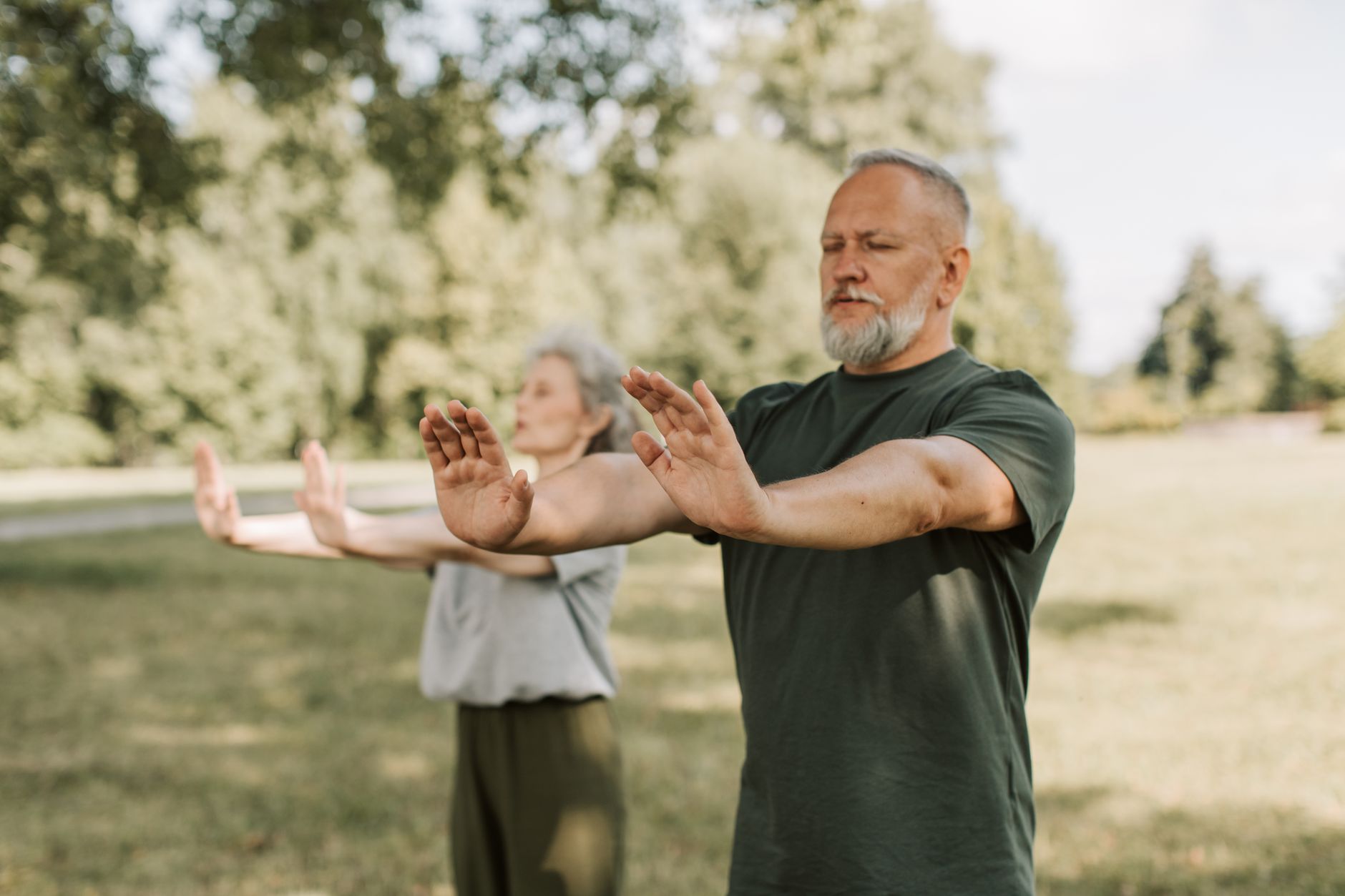
Brisk walking on soft surfaces—trails, treadmills at slow speeds, or indoor track walking—provides genuine cardiovascular benefit with minimal joint stress. “Brisk” typically means 3 to 4 miles per hour, which elevates your heart rate to 50 to 70 percent of your maximum, well within the moderate-intensity zone. Walking has the advantage of being free, requiring no special equipment or membership, and fitting naturally into daily life—you can walk to run errands, walk in parks, or walk with friends. The limitation is that walking alone, without additional resistance or intensity, provides less cardiovascular stimulus than activities like swimming or cycling, so some older adults find they need 45 to 60 minutes of walking to achieve the same fitness gains they’d get from 30 minutes of swimming. Tai chi is a traditional Chinese movement practice that improves balance, flexibility, and leg strength—all critical for fall prevention in older age. While tai chi is lower in cardiovascular intensity than activities like swimming or cycling, research shows it does elevate heart rate enough to provide aerobic benefit, especially for sedentary older adults starting from a very low fitness baseline.
The real value of tai chi is that it addresses multiple aging-related problems simultaneously: it improves your proprioception (awareness of where your body is in space), strengthens your stabilizer muscles, and reduces fall risk—all while being so gentle that even very frail older adults can participate. You can learn tai chi from online videos, in-person classes, or instructional books, making it one of the most accessible options. Water walking combines the accessibility of walking with the joint-protective benefits of buoyancy. Many pools offer water-walking classes, and you can also do it alone. Because water provides resistance in all directions, water walking builds leg strength alongside cardiovascular fitness—something regular walking on land doesn’t do as effectively. A specific example: an 78-year-old woman recovering from hip replacement might start with 15 minutes of water walking twice a week, progressing to 30 minutes three times a week over eight weeks, with minimal pain and consistent improvement in her function.
Building a Low-Impact Cardio Program That Fits Your Life
The best low-impact cardio program is one you’ll actually do. This means choosing activities you tolerate (or ideally enjoy) and scheduling them consistently. Most older adults benefit from mixing two or three different activities rather than doing the same thing every day—this prevents overuse injuries, keeps boredom at bay, and targets slightly different muscle groups. A practical approach might be: swimming on Monday, walking on Wednesday, and cycling on Friday, with flexibility to swap days or skip one if you’re tired or have other commitments. Intensity and duration matter more than which specific activity you choose. The American Heart Association recommends 150 minutes of moderate-intensity cardio per week, or 75 minutes of vigorous-intensity cardio, for older adults. Moderate intensity means you can talk but not sing during exercise; vigorous intensity means you’re breathing hard and can only speak a few words.
Most older adults should aim for moderate intensity to start—swimming at a steady pace that raises your heart rate, brisk walking, or easy cycling. The tradeoff is that reaching 150 minutes requires real consistency: 30 minutes five days a week, or 50 minutes three days a week, which means you need activities that are accessible and tolerable enough to sustain long-term. Starting slowly is critical if you’ve been sedentary. Begin with 15 to 20 minutes of activity at an easy pace, twice a week, and progress by adding 5 minutes every week or two until you reach 30 minutes per session. Listen to your body—next-day soreness is normal, but sharp pain, swelling, or pain that lingers for days suggests you need to reduce intensity or take an extra rest day. Many older adults make the mistake of starting too hard, getting sore, and then quitting altogether. A slower progression builds consistency and long-term compliance.
Joint and Health Considerations You Shouldn’t Ignore
Arthritis is common in older age, and while low-impact cardio is generally safe even with arthritic joints, certain activities can aggravate symptoms in specific people. Someone with knee arthritis may find that walking aggravates pain while swimming feels fine. Someone with shoulder arthritis might struggle with swimming strokes but tolerate cycling well. The key is to try an activity for two to three weeks at a conservative intensity before deciding it doesn’t work for you—initial soreness often improves as your body adapts, but sharp or increasing pain is a warning sign to stop or modify. Osteoporosis and bone health deserve attention because low-impact cardio doesn’t provide the bone-stress stimulus that weight-bearing exercise does. While cardio is essential for heart health and circulation, older adults—especially women over 65—need some weight-bearing or resistance work to maintain bone density.
This doesn’t mean you need to run; walking (which is low-impact but still weight-bearing), resistance training with bands or light weights, and tai chi all provide bone-stress benefits. A comprehensive program combines low-impact cardio for heart health with some weight-bearing or strengthening work two or three times per week. Medication interactions and medical conditions also matter. Certain blood pressure medications can affect exercise tolerance or heart rate response, so your perceived exertion might not match your actual heart rate. If you’re on beta-blockers, for instance, you won’t see your heart rate rise as much during exercise, but you’ll still get cardiovascular benefits. Talk to your doctor about how your medications affect exercise before starting any new program, and always report new or unusual symptoms—chest discomfort, excessive shortness of breath, dizziness, or irregular heartbeats—to your healthcare provider.
Elliptical Machines and Rowing—Often Overlooked Options
Elliptical machines provide one of the lowest-impact full-body cardiovascular workouts available. Your upper body doesn’t move much on most ellipticals, which limits the muscle involvement compared to rowing, but the smooth, gliding motion is genuinely joint-protective and easy to sustain for 30 to 45 minutes. The learning curve is minimal—most people feel comfortable on an elliptical within a few minutes—and you can vary intensity by adjusting resistance and speed without stopping. The downside is boredom; many people find elliptical work monotonous, which is why treadmills with scenery or TV might feel more engaging, even though they’re slightly higher impact.
Rowing machines engage your legs, core, and upper back while providing low-impact cardio, making them one of the most efficient choices for total-body fitness. The catch is that rowing requires good form to protect your lower back, and poor technique can cause injury. If you’re interested in rowing, start with instruction—either from a certified trainer or from a rowing club if you have access to water—to learn proper form. Once you’ve mastered the technique, rowing provides excellent cardiovascular benefit in a relatively short time; many people get sufficient aerobic stimulus from 20 to 30 minutes of steady rowing. For older adults with existing lower-back issues, however, rowing may not be a good choice without professional guidance.
The Future of Aging and Cardiovascular Fitness
The relationship between aging and cardiovascular fitness is becoming clearer: consistent aerobic exercise doesn’t just prevent heart disease, it helps maintain cognitive function, mood, mobility, and independence into very old age. Research in centenarians shows that people who maintain cardiovascular fitness in their 60s and 70s are dramatically more likely to remain cognitively sharp and physically capable in their 80s and 90s. Low-impact cardio makes that lifelong fitness goal achievable without sacrificing joint health.
As fitness technology improves, more older adults are using wearable devices, virtual fitness classes, and home equipment to maintain consistency. Virtual classes let you exercise from home with real-time instruction, which removes transportation barriers and weather concerns. If you’re considering a low-impact program, you’ve never had more options for finding activities that fit your preferences, schedule, and access.
Conclusion
Low-impact cardio options—swimming, cycling, walking, water aerobics, tai chi, elliptical work, and rowing—deliver genuine cardiovascular fitness without the joint stress of high-impact exercise. Choosing activities you can sustain consistently over years and decades matters more than chasing intensity, and the protective effect on your joints means you’re more likely to stay active long-term when you prioritize low-impact work.
Start with an activity that interests you, commit to a conservative pace and duration for the first few weeks, and add a second or third activity once your first one feels routine. Talk to your doctor if you have existing joint pain, arthritis, or cardiovascular concerns. The goal isn’t to replicate your running or athletic days—it’s to build a sustainable practice that keeps your heart strong, your body capable, and your independence intact as you age.
Frequently Asked Questions
Is low-impact cardio really enough to improve my cardiovascular fitness?
Yes. Any activity that elevates your heart rate to 50 to 70 percent of maximum for sustained periods strengthens your cardiovascular system. Swimming, cycling, and brisk walking all do this. Consistency and duration matter more than intensity for most older adults.
How long does it take to see fitness improvements from low-impact cardio?
Most people notice improved endurance and easier breathing within three to four weeks of consistent activity. Measurable changes in resting heart rate or blood pressure typically appear after six to eight weeks.
Can I do low-impact cardio if I have arthritis?
Usually yes. Swimming and water aerobics are especially good for arthritic joints. Some individuals with specific joint problems may need to avoid certain activities; if an activity causes sharp pain (rather than muscle soreness), stop and try something different.
Do I need to belong to a gym to do low-impact cardio?
No. Walking, tai chi, and many online fitness classes require no equipment or membership. A gym membership provides access to pools, bikes, and ellipticals, but it’s not required.
Is walking enough on its own, or do I need other activities?
Walking is excellent and provides real cardiovascular benefit. Mixing it with swimming or cycling targets different muscles and prevents overuse injuries. If you prefer walking alone, that’s fine—consistency matters most.
How often should I do low-impact cardio?
Most older adults should aim for at least 150 minutes of moderate-intensity aerobic activity per week, spread across at least three days. This could be 30 minutes five days a week, or 50 minutes three days a week, whatever fits your schedule.


