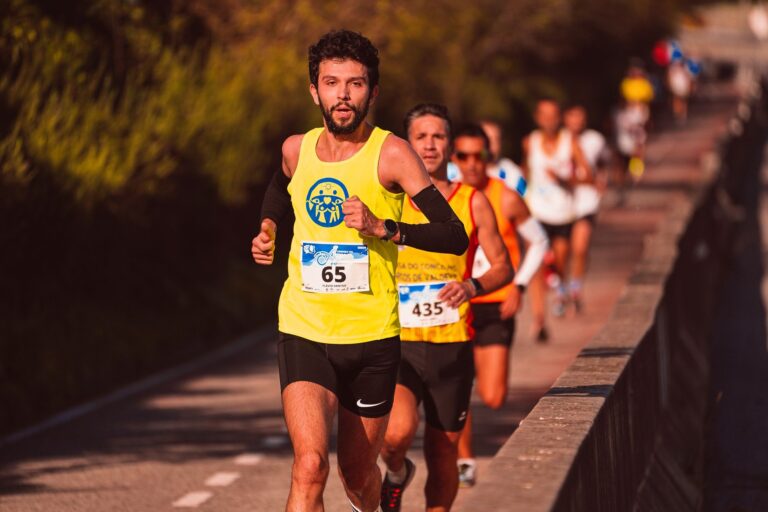
To train for a marathon, build running volume gradually, complete regular long runs, practice fueling, and protect recovery. A marathon is a 42.195-kilometer road race under World Athletics Technical Rules. Choose a plan that fits your current fitness, schedule, injury history, and goal. Consistent, manageable training matters more than chasing an arbitrary mileage target.
Medical information disclaimer: This article is for general educational purposes only and does not provide medical advice, diagnosis, or treatment. Always consult a physician or other qualified health professional about symptoms, medications, tests, or treatment decisions.
Table of Contents
- Are you ready to begin?
- What should a training week include?
- How quickly should training increase?
- Practice fueling before race day
- Set a completion plan and safety limits
Are you ready to begin?
Start from a stable routine rather than jumping directly into marathon mileage. The CDC's adult activity guideline calls for 150–300 minutes of moderate aerobic activity, or 75–150 minutes of vigorous activity, each week. It also recommends major-muscle strengthening on two days.
that guideline is a health baseline, not a marathon plan. Preparation must eventually exceed it, but runners should build from what they can already sustain without persistent symptoms or excessive fatigue. Seek clinical assessment before sustained vigorous training if you have: These are screening triggers identified in an ACSM-based analysis, not a requirement that every healthy runner obtain blanket medical clearance.
- Exertional chest pain
- Dizziness or unexplained fainting
- Unusual breathlessness
- Known cardiovascular, metabolic, or renal disease
What should a training week include?
Build the week around several easy runs, one long run, recovery time, and two strength sessions. Add faster running only when the basic schedule feels repeatable. A practical week might include: The long run develops the ability to spend extended time moving.
It should progress across the training block, with easier weeks inserted when fatigue accumulates. A 2020 meta-analysis found that greater weekly distance, running frequency, longest-run distance, and total training time were associated with faster marathon finishes. However, the studies were observational, so the findings do not prove that simply adding more running will improve every runner's result in the Journal of Science and Medicine in Sport.
- Two or three easy runs at a conversational effort
- One longer run performed more slowly than an all-out effort
- One optional session with controlled faster segments
- Two short strength sessions covering the major muscle groups
- At least one day without running
How quickly should training increase?
Do not treat the popular 10% rule as a safety guarantee. Research has not established a universal weekly mileage increase that prevents injury, so progression should respond to the individual runner. Change one major demand at a time when possible.
For example, extend the long run while keeping the remaining runs easy, rather than increasing distance, speed, and frequency together. Track how your body responds between sessions: Reduce or pause the aggravating load when symptoms persist or worsen. Previous training, injury history, running frequency, and recovery capacity differ, so two runners may need different progressions even when preparing for the same event.
- Does ordinary soreness settle before the next run?
- Is fatigue disrupting sleep, work, or normal activity?
- Are you changing your stride to protect a painful area?
- Can you complete easy runs at the intended easy effort?
Practice fueling before race day
Use long runs to test what you will eat and drink before and during the marathon. Record the product, amount, timing, weather, and any stomach problems so you can adjust the next attempt. The joint position statement from the American College of Sports Medicine, the Academy of Nutrition and Dietetics, and Dietitians of Canada recommends individualized food-and-fluid strategies for performance and recovery.
It also supports practicing race fueling during training and seeking personalized help from a sports dietitian when needed in the ACSM statement. Avoid introducing an unfamiliar fueling plan on race morning. Rehearse breakfast timing, carried supplies, and planned intake during several long runs instead.
Set a completion plan and safety limits
Choose a primary goal that reflects your preparation, such as finishing comfortably or maintaining a conservative pace. Add a fallback plan for unexpected fatigue, stomach trouble, pain, or difficult weather. Before the race, decide what would make you slow down, switch to walking, seek medical help, or stop.
A finish is never more important than responding to confusion, collapse, seizure, severe pain, fainting, chest pain, or unusual breathlessness. In hot conditions, shorten or modify training when necessary and know the emergency signs. Confusion, collapse, seizure, or a very high body temperature requires emergency care and rapid cooling.