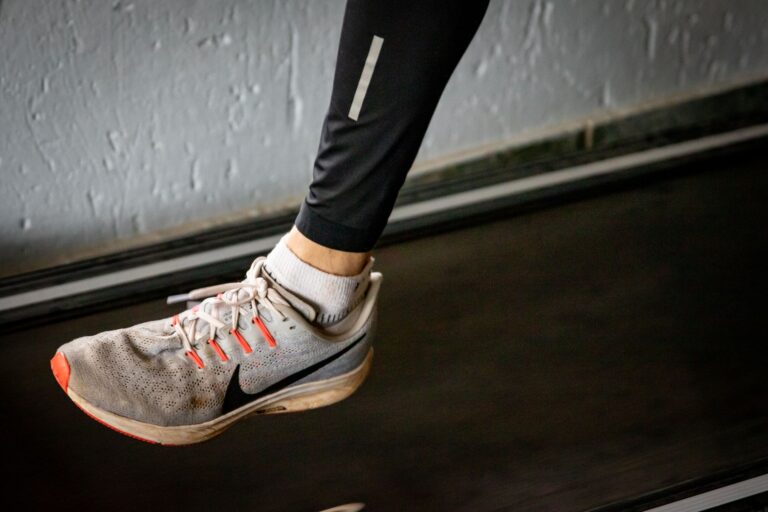
Stability running shoes control overpronation through a combination of medial posts, dual-density midsoles, and structured support systems that prevent the foot from rolling excessively inward during the gait cycle. The most effective models””such as the Brooks Adrenaline GTS, ASICS Gel-Kayano, Saucony Guide, and New Balance 860″”use firm foam or plastic reinforcement along the inner arch to slow and limit the pronation motion without completely stopping it. This mechanical intervention distributes impact forces more evenly and reduces the compensatory stress that travels up the kinetic chain to the knees, hips, and lower back. A runner with moderate overpronation who switches from a neutral shoe to a properly fitted stability model often notices an immediate difference in how their foot lands and pushes off.
The correction is subtle but meaningful””the ankle doesn’t collapse as far inward, and the arch maintains better integrity through midstance. However, stability shoes are not a universal solution. Runners with severe overpronation may need motion control shoes or custom orthotics, while those with only mild pronation issues might find that stability features feel restrictive or unnecessary. This article examines how stability shoe technology actually works, which models perform best for different levels of overpronation, how to identify whether you need stability features in the first place, and the potential downsides of choosing the wrong level of support. We’ll also cover how foot strength training can reduce dependence on external stability over time.
Table of Contents
- How Do Stability Shoes Correct Overpronation During the Running Gait?
- Which Level of Stability Support Matches Different Overpronation Severities?
- What Role Does Midsole Geometry Play in Modern Stability Design?
- How to Choose Between Major Stability Shoe Models
- When Stability Shoes Fail to Solve Overpronation Problems
- The Role of Foot Strengthening in Reducing Stability Dependence
- How to Prepare
- How to Apply This
- Expert Tips
- Conclusion
- Frequently Asked Questions
How Do Stability Shoes Correct Overpronation During the Running Gait?
Stability shoes intervene during the pronation phase of running””specifically between heel strike and toe-off when the foot naturally rolls inward to absorb shock. In runners who overpronate, this inward roll exceeds the normal 10-15 degrees and continues past the point where the foot should begin supinating for push-off. Stability technology addresses this by placing firmer materials along the medial (inner) side of the midsole, creating resistance that slows the rate and extent of inward roll without eliminating the pronation motion entirely. The medial post is the most common stability mechanism. This wedge of denser foam””typically 15-25% firmer than the surrounding midsole””sits beneath the arch and extends toward the heel. When the foot begins to roll inward, it encounters this firmer zone and meets resistance.
Brooks uses what they call “GuideRails” technology, which takes a different approach by placing support higher on the shoe to guide the entire foot rather than just the arch. ASICS employs “Dynamic DuoMax,” a combination of different foam densities that creates graduated support. Comparing these approaches reveals meaningful differences for runners. Medial post systems tend to feel more direct and pronounced””you can often sense the firm zone underfoot. GuideRails and similar holistic systems feel less intrusive during normal gait but still engage when the foot begins to deviate. Neither approach is objectively superior; the right choice depends on how much correction you need and how sensitive you are to feeling support structures underfoot. Runners who find traditional medial posts uncomfortable often do better with newer geometry-based stability systems.

Which Level of Stability Support Matches Different Overpronation Severities?
Stability shoes exist on a spectrum from mild support to maximum motion control, and matching the right level to your pronation pattern is critical for both comfort and injury prevention. Light stability shoes like the Saucony Guide or Brooks Launch GTS provide gentle correction suitable for runners whose overpronation is minor””perhaps 5-10 degrees beyond neutral. Moderate stability models including the ASICS Gel-Kayano, New Balance Fresh Foam 860, and Brooks Adrenaline GTS address more pronounced overpronation with firmer, more extensive medial support. Motion control shoes like the Brooks Beast or ASICS Gel-Foundation represent the maximum intervention for severe overpronation or heavier runners. The matching process isn’t always intuitive.
A runner with moderate overpronation who chooses a motion control shoe will likely find the excessive correction uncomfortable and may develop issues on the opposite side of the kinetic chain””supination-related problems like lateral ankle stress or IT band irritation. Conversely, someone with significant overpronation who selects a light stability shoe won’t receive adequate support and will continue experiencing the knee pain or shin splints that prompted the search for stability features. However, if you fall between categories or your pronation varies depending on fatigue and pace, err toward lighter support rather than heavier. Overly aggressive correction creates its own problems, and your body has some capacity to adapt to minor pronation issues. Runners training for longer distances often find their pronation worsens as muscles fatigue, which may justify moving up one support level for marathon training even if a lighter stability shoe works fine for shorter runs.
What Role Does Midsole Geometry Play in Modern Stability Design?
Traditional stability shoes relied almost entirely on material density differences to control pronation, but recent designs increasingly use geometry””the physical shape of the midsole””to achieve similar results with less perceived stiffness. This shift represents one of the most significant changes in running shoe technology over the past decade and has made stability shoes feel considerably more like their neutral counterparts. The concept centers on how a wider base and strategic shaping can prevent excessive inward roll mechanically rather than through material resistance. Hoka’s J-Frame technology places firm foam only where it contacts the ground rather than throughout the midsole. New Balance’s “medial post-free” stability in the FuelCell Prism uses geometric shaping alone.
These approaches allow the midsole to compress more uniformly while still limiting pronation, resulting in a smoother ride that doesn’t feel like running on two different surfaces. Consider the difference between running on flat ground versus a cambered road surface. The road’s shape naturally encourages your foot to roll toward the lower side, regardless of what shoes you’re wearing. Modern stability geometry creates the opposite effect””the midsole shape gently steers the foot toward a more neutral position. The ASICS GT-2000 exemplifies this evolution, maintaining its stability classification while reducing the perceived harshness that characterized earlier versions. For runners who’ve avoided stability shoes because they felt clunky or unnatural, geometry-based designs offer a compelling alternative.

How to Choose Between Major Stability Shoe Models
Selecting among the dozen-plus mainstream stability shoes requires evaluating not just support level but also cushioning, weight, durability, and fit characteristics that vary significantly between brands. The Brooks Adrenaline GTS and ASICS Gel-Kayano represent the market’s two most popular options and illustrate the tradeoffs nicely. The Adrenaline uses softer DNA Loft foam throughout with GuideRails support, producing a shoe that feels closer to neutral while still providing meaningful correction. The Kayano employs firmer Gel cushioning combined with more pronounced medial support, offering greater stability at the cost of some ride comfort. Weight and responsiveness trade off against cushioning and support in predictable ways. The Saucony Guide at around 9 ounces provides lighter stability for faster training runs, while the New Balance 860 at 11+ ounces delivers more substantial cushioning and support for longer efforts.
Runners who prioritize performance often gravitate toward the Guide or Nike Structure, accepting reduced cushioning for improved ground feel and efficiency. Those focused on comfort and injury prevention during high-mileage training blocks typically prefer the Kayano, 860, or Adrenaline despite the weight penalty. Durability varies more than marketing materials suggest. The Kayano’s firmer midsole typically holds its support characteristics for 400-500 miles, while softer options like the Adrenaline may begin losing stability effectiveness around 350-400 miles even if the outsole shows minimal wear. Heavier runners accelerate this timeline regardless of model. Replacing stability shoes before they lose their supportive properties””rather than when they simply look worn””helps maintain the correction that justified choosing them initially.
When Stability Shoes Fail to Solve Overpronation Problems
Stability shoes have real limitations that marketing rarely acknowledges. They cannot correct structural issues like significant leg length discrepancies, rigid flat feet, or tibial torsion””all of which produce pronation patterns that footwear alone cannot adequately address. Runners who try multiple stability models without finding relief from pronation-related pain often need evaluation from a sports medicine physician or podiatrist to identify underlying causes that shoes cannot fix. The timing of stability shoe introduction matters more than many runners realize. Switching abruptly from neutral shoes to stability models after years of running can cause new problems even as it addresses old ones. The muscles and tendons that have adapted to functioning without medial support now face a different mechanical environment.
Transition gradually””alternating between your old neutral shoes and new stability shoes over several weeks””to allow tissues to adapt without excessive stress. One significant limitation: stability shoes provide support only when you’re wearing them. The foot strength deficits that often contribute to overpronation remain unchanged inside the shoe. Runners who depend heavily on stability features sometimes find their natural foot mechanics have actually deteriorated because the intrinsic foot muscles haven’t needed to work. This creates a cycle of increasing dependency. Combining stability shoes during runs with foot strengthening exercises and occasional barefoot activities can prevent this progressive weakening while still providing the support needed to run comfortably.
The Role of Foot Strengthening in Reducing Stability Dependence
Stability shoes manage overpronation symptoms rather than addressing root causes, which often include weakness in the posterior tibialis, intrinsic foot muscles, and hip stabilizers. Targeted strengthening can reduce the degree of correction needed over time, potentially allowing runners to transition to lighter stability or even neutral shoes. This isn’t guaranteed for everyone””some pronation patterns stem from skeletal structure that no amount of strength training will change””but many runners find meaningful improvement.
Short foot exercises, single-leg balance work, and towel scrunches strengthen the muscles that maintain the arch during the gait cycle. A runner who consistently performs these exercises three to four times per week often notices improved arch control within two to three months. One example: a masters runner with moderate overpronation who added daily short foot exercises and eccentric calf raises found she could switch from the Kayano (maximum stability) to the GT-2000 (moderate stability) after six months, preferring the lighter weight while maintaining comfortable, pain-free running. This isn’t possible for everyone, but it’s worth exploring for runners who dislike feeling dependent on specific footwear.
How to Prepare
- **Analyze your current wear patterns** – Examine your existing running shoes for wear indicators. Excessive wear along the inner heel and forefoot suggests overpronation, while even wear across the outsole indicates neutral mechanics. Uneven wear alone doesn’t confirm you need stability shoes, but it provides useful preliminary information.
- **Get a professional gait analysis** – Visit a specialty running store with video analysis capability. Treadmill assessment that captures rear-foot motion provides more useful information than static arch measurements. Request slow-motion playback and ask specific questions about the degree of pronation observed.
- **Consider contributing factors** – Evaluate whether recent training changes, weight fluctuations, or specific shoe model switches correlate with any pronation-related symptoms. Sometimes apparent overpronation issues stem from external factors rather than inherent gait mechanics.
- **Start with moderate support** – Unless analysis indicates severe overpronation, begin with a moderate stability shoe rather than maximum motion control. Over-correction causes its own problems, and you can always move to more supportive options if needed.
- **Plan a transition period** – If switching from neutral shoes, alternate between old and new shoes for two to three weeks before running exclusively in the stability model.
How to Apply This
- **Begin with shorter runs** – Use new stability shoes for runs of 3-5 miles initially, regardless of your typical training distance. This allows you to assess comfort and identify any pressure points or fit issues before they cause blisters or injuries on longer efforts.
- **Monitor for asymmetric sensations** – Pay attention to whether the stability features feel appropriate on both feet. Many runners have slightly different pronation patterns between left and right, and pronounced asymmetry may warrant different support solutions for each foot.
- **Evaluate at different paces** – Run at your easy pace and at threshold pace during the trial period. Stability needs often differ at various speeds, and a shoe that works well for slow recovery runs may feel inadequate during faster workouts when ground contact time decreases.
- **Reassess after 100 miles** – The break-in period for stability shoes typically runs 50-100 miles. Make final judgments about support adequacy after the midsole has compressed slightly and stabilized, not during the first few stiff runs.
Expert Tips
- **Rotate between two stability shoes** rather than wearing one model exclusively. This allows midsole foam to recover between runs and extends the effective support lifespan of both pairs.
- **Don’t size up for stability shoes** unless the last is notably narrow. The additional structure requires a snug fit to function properly; excess space allows the foot to move inside the shoe and partially negates the support mechanisms.
- **Replace based on support loss, not outsole wear.** If your pronation-related symptoms return before the shoe looks worn out, the midsole has likely lost its corrective properties.
- **Do not use stability shoes for speed workouts** if you find the support interferes with natural push-off mechanics. Some runners benefit from lighter, more flexible shoes for intervals and tempo runs, reserving stability models for easy and long runs where fatigue increases pronation.
- **Consider separate shoes for road and trail.** Trail stability shoes exist, but many runners find the uneven surfaces of trails actually improve their gait mechanics, making heavy stability features unnecessary off-road.
Conclusion
Stability running shoes offer genuine solutions for overpronation when properly matched to individual needs, but they’re tools with specific applications rather than universal remedies. The technology has improved substantially””modern stability models feel closer to neutral shoes while still providing meaningful correction through geometric design and refined medial support systems.
Choosing the right level of support, transitioning gradually, and understanding the limitations of footwear-based correction all contribute to successful outcomes. The path forward involves honest assessment of your pronation severity, thoughtful model selection based on your specific requirements, and recognition that shoes alone may not fully address underlying weakness or structural factors. Combining appropriate stability footwear with targeted strengthening exercises offers the most complete approach to managing overpronation while working toward reduced dependence on external support over time.
Frequently Asked Questions
How long does it typically take to see results?
Results vary depending on individual circumstances, but most people begin to see meaningful progress within 4-8 weeks of consistent effort. Patience and persistence are key factors in achieving lasting outcomes.
Is this approach suitable for beginners?
Yes, this approach works well for beginners when implemented gradually. Starting with the fundamentals and building up over time leads to better long-term results than trying to do everything at once.
What are the most common mistakes to avoid?
The most common mistakes include rushing the process, skipping foundational steps, and failing to track progress. Taking a methodical approach and learning from both successes and setbacks leads to better outcomes.
How can I measure my progress effectively?
Set specific, measurable goals at the outset and track relevant metrics regularly. Keep a journal or log to document your journey, and periodically review your progress against your initial objectives.
When should I seek professional help?
Consider consulting a professional if you encounter persistent challenges, need specialized expertise, or want to accelerate your progress. Professional guidance can provide valuable insights and help you avoid costly mistakes.
What resources do you recommend for further learning?
Look for reputable sources in the field, including industry publications, expert blogs, and educational courses. Joining communities of practitioners can also provide valuable peer support and knowledge sharing.