Bodyweight exercises that truly count are those that improve functional strength, cardiovascular endurance, and injury prevention—the three pillars that actually matter for runners and active individuals. Not every movement you do with just your body weight delivers results; the ones that count build real muscle engagement, translate to running performance, and prevent common injuries like knee pain and IT band syndrome. If you’re doing 100 pushups with poor form or endless crunches that don’t engage your core properly, you’re wasting time. The exercises that count are compound movements like pull-ups, single-leg squats, and planks—exercises where your entire body is under tension and working to stabilize and move against gravity.
Running specifically demands that your stabilizer muscles work harder than they do in casual daily life. A runner’s glutes need to fire to propel you forward; your core needs to stay rigid to prevent wasted rotational energy; and your legs need eccentric strength to handle the impact of landing. Bodyweight exercises like Bulgarian split squats, single-leg deadlift holds, and pike pushups directly strengthen these running-specific muscle groups without requiring any equipment. These are the exercises that transfer to better pace, fewer injuries, and improved race performance.
Table of Contents
- Which Bodyweight Exercises Actually Improve Running Performance?
- How to Distinguish Exercises That Build Strength Versus Just Movement
- The Core Exercises That Transfer Directly to Running Improvement
- Designing a Bodyweight Routine That Actually Delivers Results
- Common Mistakes That Make Bodyweight Exercise Ineffective
- Bodyweight Exercises for Injury Prevention Specifically
- Building Long-Term Progression in Bodyweight Training
- Conclusion
- Frequently Asked Questions
Which Bodyweight Exercises Actually Improve Running Performance?
The bodyweight exercises that best support running performance are those that build unilateral strength and stability—meaning strength on one side of your body at a time. Single-leg squats, Bulgarian split squats, and single-leg calf raises force each leg to work independently, which mirrors the demands of running much better than bilateral movements. When you run, you land on one leg at a time and push off from one leg; during those split seconds of single-leg support, your glutes, hamstrings, and stabilizer muscles have to control your body weight and generate power. A runner who can do 8-10 single-leg squats per side has the leg strength and stability that actually protects against injuries; a runner who can do 50 regular squats might still have weak stabilizers and be more prone to knee issues.
Pull-ups and chin-ups count because they build pulling strength and shoulder stability, which improves posture and can reduce shoulder pain that some distance runners develop from overuse. Core work matters, but not the way most people think—situps and crunches won’t prevent lower back injury during running. Instead, exercises like dead bugs, hollow holds, and anti-rotation chops teach your core to stabilize your spine against the rotational and compressive forces that occur when running. A runner doing three sets of 30-second hollow holds will see better results than someone doing 100 crunches, because hollow holds create whole-body tension and teach your body to stay rigid under load, which is exactly what you need when your feet are leaving the ground.
How to Distinguish Exercises That Build Strength Versus Just Movement
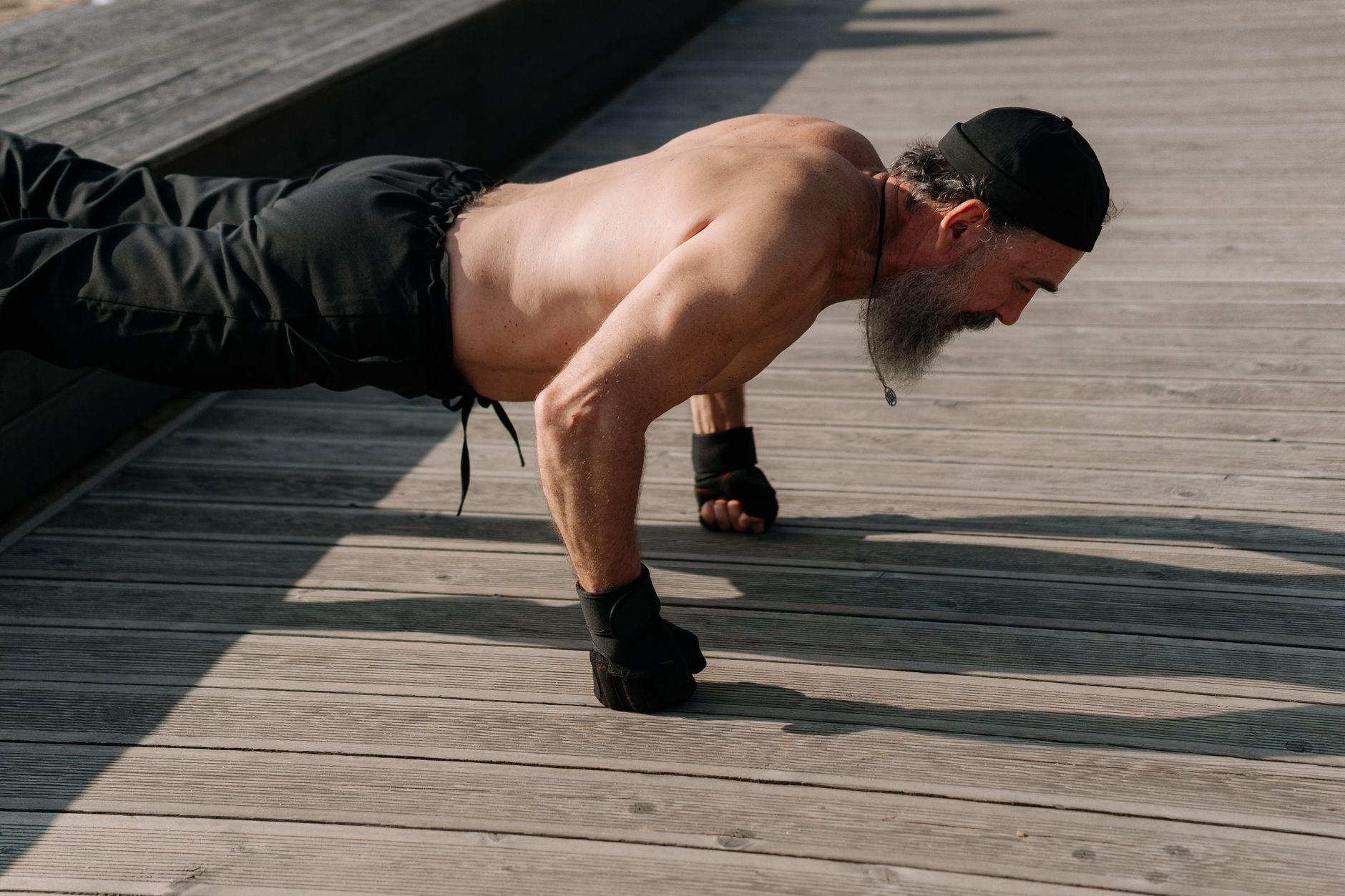
One major limitation people face is confusing movement with strength-building. you can do 200 bodyweight squats and leave your quads feeling pumped but your glutes untouched if your form is poor; you can do pushups for years and never significantly strengthen your chest if you’re not going deep enough or keeping tension throughout the movement. The difference between an exercise that counts and one that doesn’t is time under tension and true range of motion. A true pushup where you lower yourself until your elbows are at 90 degrees or lower, pause for a moment, and press back up builds far more strength than 30 fast, shallow reps where your elbows barely bend.
A warning: many people find bodyweight exercises “too easy” and stop doing them, but the problem usually isn’t that the exercise doesn’t work—it’s that the variation isn’t challenging enough. Once regular pushups become easy, switching to archer pushups, pseudo-planche pushups, or deficit pushups (hands elevated on a bench) immediately increases the difficulty and continues building strength. Similarly, if bodyweight squats feel too simple, doing them on one leg, pausing at the bottom for three seconds, or doing them in a slow 5-second descent and 5-second ascent dramatically changes the stimulus. The exercise that counts is the one that still requires effort and focus when done correctly.
The Core Exercises That Transfer Directly to Running Improvement
Planks and their variations count because they build endurance-strength in your anterior core and teach spinal stability. However, the standard plank is the starting point—what counts for serious runners is the 2-minute+ plank done with perfect form, or better yet, variations like side planks with hip dips, plank-to-downward dog flows, or stir-the-pot planks (small circles with your hips while holding a plank). A runner holding a solid 3-minute side plank on each side will have the anti-rotation stability that keeps their pelvis level when fatigued, which is when most running injuries happen. Single-leg deadlift holds build tremendous glute and hamstring strength while also improving balance and proprioception, which are often weak in runners.
The movement is simple: stand on one leg, hinge forward at the hip while extending your other leg behind you for counterbalance, and hold. Most runners can barely hold this for 10 seconds on one leg when they first try it, which reveals a critical weakness. After four weeks of practice, adding 20-30 seconds per side to your routine, runners report improved single-leg stability, better glute activation during running, and reduced knee pain. This exercise directly translates because it’s essentially the loading position your leg enters during the stance phase of running.

Designing a Bodyweight Routine That Actually Delivers Results
The bodyweight exercises that count require a real routine, not random movements thrown together. A three-day-per-week bodyweight program for runners might look like this: Day One focuses on lower-body strength with single-leg squats, Bulgarian split squats, and single-leg calf raises done for 3-4 sets of 6-10 repetitions per leg; Day Two focuses on upper-body pulling and core stability with pull-ups or assisted pull-ups, rows using a suspended strap or bar, and dead bugs for 3 sets of 10 reps; Day Three mixes explosive movements like jump squats and burpees with isometric holds like planks and hollow holds. The comparison to a random daily 10-minute pushup session is stark—someone following a structured routine will see measurable strength gains in 4-6 weeks, while random movements might feel good but won’t build meaningful strength. Time efficiency is the tradeoff.
A bodyweight routine that counts requires intentional rest periods and proper form, which means you’re spending 45-60 minutes per session, not 15. However, you get measurable progress without any equipment or gym membership. The challenge for many people is that social media showcases 5-minute bodyweight workouts and 10-minute HIIT sessions, which create a false expectation that meaningful strength building happens fast. Real strength takes time, but bodyweight exercise is one of the most accessible ways to build it.
Common Mistakes That Make Bodyweight Exercise Ineffective
The biggest mistake is not increasing difficulty progressively. You can do bodyweight squats every day and plateau within two weeks if you don’t make the movement harder. Once an exercise becomes relatively easy, whether it’s regular pushups, pullups, or lunges, the stimulus needed for continued adaptation diminishes. This is why bodyweight training requires constant variation—progressing to harder variations, increasing time under tension, reducing rest periods, or adding isometric holds.
Skipping this progression step is why people do bodyweight exercises for months and see no change. Another warning: bodyweight exercises require honest assessment of movement quality, which most people lack without a coach or video feedback. A “full range of motion” pullup looks different depending on your body structure and shoulder mobility, but too many people do half-reps and believe they’re building strength. Recording your sets on video and comparing them to proper form demonstrations is free and critically important. Additionally, some people’s body structures or previous injuries make certain bodyweight exercises unsuitable or require modifications—a person with a rotator cuff injury might not be able to do pushups safely, but can progress to wall pushups or resisted band work instead.

Bodyweight Exercises for Injury Prevention Specifically
Hip mobility and glute strength are the two most important factors in preventing knee injury for runners, and bodyweight movements can address both. Fire hydrants, clamshells, and donkey kicks build hip abductor strength with no equipment and in under 10 minutes, but only if done with controlled movement and high glute engagement—fast, sloppy reps don’t count. An example: a runner doing three sets of 20 clamshells per side, holding a one-second squeeze at the top of each rep, sees measurable improvements in knee pain within 2-3 weeks, because knee pain in runners often stems from weak hip stabilizers rather than a knee problem itself.
Eccentric step-downs and eccentric single-leg squats specifically strengthen the muscles that control the deceleration phase of running, which is when most impact-related injuries happen. These movements feel awkward and are humbling even for strong runners, but they build the exact type of strength that prevents injuries. A runner strengthening with eccentric work sees reduced knee pain, especially on downhill sections.
Building Long-Term Progression in Bodyweight Training
Bodyweight exercise has one major advantage over weighted training: you can continue progressing indefinitely through lever progressions. A beginner can’t do a pullup, so they start with assisted pullups or negatives; once they achieve a single pullup, they work toward five, then ten, then add weight with a dip belt; eventually, they’re doing one-arm pullup progressions or planche work. This progression path means you’ll never truly plateau if you understand how to scale movements.
The limitation is that at advanced levels, you’ll need minimal equipment (like a pullup bar and a weight belt) to continue meaningful progression, but for the first two years of training, pure bodyweight can deliver remarkable results. The forward-looking insight is that bodyweight training emphasizes bodyweight mastery and efficiency, which has real value for runners who want to avoid constant gym memberships or reliance on equipment. As running becomes increasingly merged with strength and conditioning, runners who understand how to progress with bodyweight movements have an advantage—they can train anywhere, they understand movement patterns deeply, and they don’t depend on access to specialized facilities.
Conclusion
Bodyweight exercises that count are those that build functional strength for running, require progressive difficulty increases, and demand proper form and full range of motion. The exercises that truly matter—single-leg squats, pull-ups, planks with variations, deadlift holds, and glute-activation movements—directly transfer to better running performance and injury prevention. Random bodyweight work and easy-rep exercises don’t count; structured progression, honest form assessment, and appropriate difficulty increases do.
If you’re currently doing bodyweight exercises but haven’t seen progress in 4-6 weeks, the issue is likely that you haven’t increased difficulty or you’re not maintaining proper form. Start with one of the lower-body, upper-body, and core movements mentioned above, commit to a three-day-per-week routine for 6-8 weeks, and assess your strength gains with specific benchmarks—how many single-leg squats you can do per side, how long you can hold a dead bug, how many pullups you can achieve. These metrics matter more than total daily movement volume, and they’re what will actually improve your running.
Frequently Asked Questions
Can I get stronger as a runner using only bodyweight exercises?
Yes, absolutely. Bodyweight exercises build meaningful strength for at least the first 1-2 years of training. Once you plateau, minimal equipment like a pullup bar, resistance bands, or a weight vest can extend progression indefinitely.
How often should I do bodyweight strength training for running?
Three days per week is optimal for most runners. More frequent sessions risk overtraining without additional benefit; less frequent sessions slow progress. Keep these sessions on non-consecutive days.
Do I need to do bodyweight training or can I just run?
Running alone doesn’t develop the stabilizer muscle strength that prevents injuries. Adding 2-3 structured strength sessions per week reduces injury risk and improves performance significantly.
What’s the biggest difference between bodyweight exercises that work and those that don’t?
Progressive overload. Exercises that count get harder over time through variation, increased range of motion, reduced rest periods, or added difficulty. Exercises that don’t progress plateau quickly and stop building strength.
Should beginners do the same bodyweight exercises as advanced runners?
No. Beginners should master foundational movements first—regular pushups, assisted pullups, standard squats, lunges, and planks. Advanced runners progress to single-leg variations, explosive movements, and lever progressions.
How do I know if my form is good enough for bodyweight exercises to count?
Record your sets on video and compare to proper form demonstrations. Movement should be controlled, full range of motion should be achieved, and no compensations should appear. When in doubt, reduce the difficulty until form is solid.