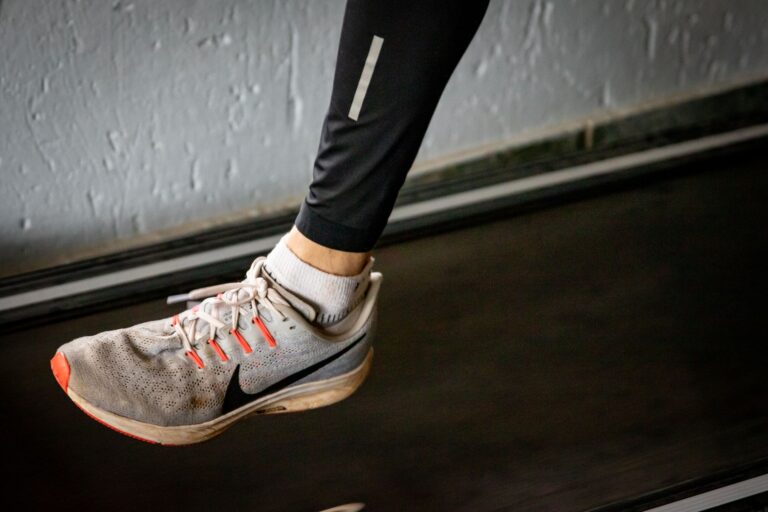
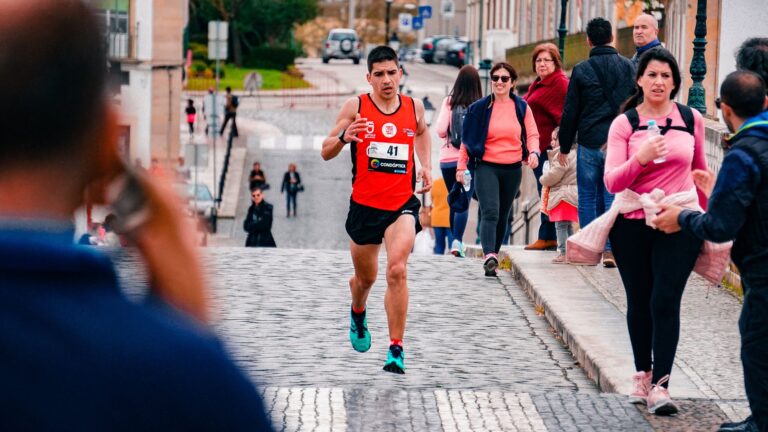
Tight hamstrings limit your running stride and increase injury risk, but strategic modifications to your running form, pace, and route selection can reduce strain on the affected muscles while you work on flexibility. Rather than stopping running entirely, adjusting how you run—through shorter strides, lower intensity, and terrain changes—allows you to maintain fitness while protecting the hamstring from further tightening or damage.
A runner with hamstring tightness who switches to a treadmill with a slight incline, shortens their stride by about 15%, and reduces weekly mileage by 20% often notices improvement within two to three weeks without losing the aerobic benefit of regular running. The key is understanding that tight hamstrings respond poorly to aggressive running loads. The muscle becomes less elastic and more prone to micro-tears, so modifications focus on reducing the eccentric (lengthening) phase of the hamstring contraction during running, which is where most strain occurs during landing and push-off.
Table of Contents
- What Happens to Your Hamstrings During Running?
- Why Stride Length and Cadence Changes Work
- Terrain and Gradient Modifications for Hamstring Relief
- Intensity, Volume, and the Recovery Trade-off
- The Cross-Training Alternative and Its Limitations
- Stretching and Strength Work Within a Modified Running Plan
- When Modified Running Isn’t Enough
What Happens to Your Hamstrings During Running?
The hamstring works in two main ways while you run: it decelerates your leg during the swing phase (when your leg comes forward) and then accelerates it backward during push-off. Tight hamstrings lose elasticity in both movements, but the deceleration phase—right after your foot leaves the ground and your leg swings forward—is the most damaging. A tight hamstring that’s stretched rapidly during this phase can tear or develop micro-injuries that compound with repeated running strides.
This is why runners with tight hamstrings often feel pain not during the run itself, but hours afterward or the next morning. The repeated, high-speed stretching during the swing phase causes inflammation that builds up over the course of a run. For comparison, a runner doing 50 strides at an easy pace creates less cumulative hamstring stress than the same runner doing 20 strides at a hard tempo effort—the intensity matters more than the distance.
Why Stride Length and Cadence Changes Work
Shortening your stride forces your leg to do less radical swinging motion, which means less dramatic stretching of the hamstring during the swing phase. A runner who normally has a 5-foot stride (common for runners of average height at a moderate pace) can reduce to a 4.2-foot stride by focusing on quicker, lower-amplitude leg movement. This doesn’t mean shuffle-running; it means a snappier turnover with less reach.
One limitation of shortened-stride running is that you’ll initially feel slower and less efficient—your body has developed neuromuscular patterns over years of running at a certain stride, and changing that pattern feels awkward for at least 2-3 weeks. Some runners also find that extremely short strides demand more calf work, which can create new pain if you’re not careful about the transition. The goal is a modest reduction (10-15%) rather than a dramatic overhaul that shifts injury risk to other muscles.
Terrain and Gradient Modifications for Hamstring Relief
Running uphill drastically reduces hamstring strain because the incline shortens the muscle’s effective range during the swing phase and shifts more load to the quadriceps and glutes. A runner with tight hamstrings who moves 50% of their weekly mileage to hilly terrain or a treadmill with a 2-3% incline often sees rapid improvement. The trade-off is that hill running is harder cardiovascularly and burns more energy per mile, so you can’t do as much volume at the same effort level.
Flat trails and grass also modify the loading pattern compared to pavement. Softer surfaces require more muscle stabilization, which increases overall hamstring activation, so they’re not always ideal during acute tightness. Hard, smooth surfaces like roads and treadmills distribute impact more consistently and allow the hamstring to work in a more predictable pattern, making them the better choice when you’re modifying for a tight hamstring.
Intensity, Volume, and the Recovery Trade-off
Most runners instinctively reduce mileage when dealing with hamstring tightness, but the form of mileage matters more. Replacing one 8-mile run at moderate pace with two 3-mile runs at the same pace distributes the hamstring stress across more recovery windows, which often works better than simply running fewer total miles in bigger chunks.
The downside is that doubling your session frequency demands better overall recovery—more meals, sleep, and foam rolling—and some runners can’t accommodate this schedule. Speed work (tempo runs, intervals) should be eliminated entirely or moved to the pool during hamstring tightness phases. A runner doing a 5×2-minute hard interval session generates more hamstring stress in 15 minutes than 60 minutes of easy running, so cutting these sessions buys time for the muscle to recover without sacrificing too much aerobic fitness.
The Cross-Training Alternative and Its Limitations
Pool running and cycling maintain cardiovascular fitness with zero hamstring loading, making them valuable complements to modified running. A runner with tight hamstrings can sustain or even build aerobic capacity by replacing 40% of running volume with 45-minute easy-effort cycling or 30-minute pool sessions.
However, these activities don’t fully replace running—they don’t trigger the same neuromusculature adaptations, bone-loading stimulus, or running-specific muscle recruitment that regular running does. Many runners who switch entirely to cycling or pool running for more than 3-4 weeks report a noticeable loss of running-specific fitness and find that returning to full-volume running requires a longer buildup than expected. This is why cross-training works best as a supplement to modified running (say, 70% reduced running volume plus 30% cycling) rather than as a complete replacement.
Stretching and Strength Work Within a Modified Running Plan
Static stretching immediately before running worsens tight hamstrings because cold, tight muscles don’t respond well to aggressive lengthening—you’re asking the already-tight muscle to stretch further, which increases injury risk. Saving stretching for after runs or separate sessions, when the muscle is warm, is safer and more effective.
A 90-second hamstring stretch held after an easy run (not before) gradually restores range while the muscle is primed to adapt. Strengthening the hamstring through exercises like Nordic curls, single-leg deadlifts, or glute-ham raise machines is essential parallel work but requires a 2-3 week lead time before you see improvements in running-induced tightness. These exercises should be done in sessions separate from running when possible, since they create additional hamstring fatigue that compounds running stress if done the same day.
When Modified Running Isn’t Enough
If you’ve reduced mileage by 30%, shortened your stride, eliminated intensity, and added cross-training for two weeks without improvement, the tightness likely has a deeper cause—muscular imbalance (weak glutes or hip flexors pulling the hamstring out of position), a nerve irritation, or even a small partial tear that needs actual rest rather than just modification. At this point, continuing to run, even with modifications, can slow healing.
Two weeks of near-complete running rest, combined with daily stretching and strengthening, often resolves what modified running alone cannot fix. The distinction between “tight from running recently” and “tight from an underlying issue” matters because the solutions are opposite: the first responds to reduced running load, the second responds to complete rest followed by slow return.
- —