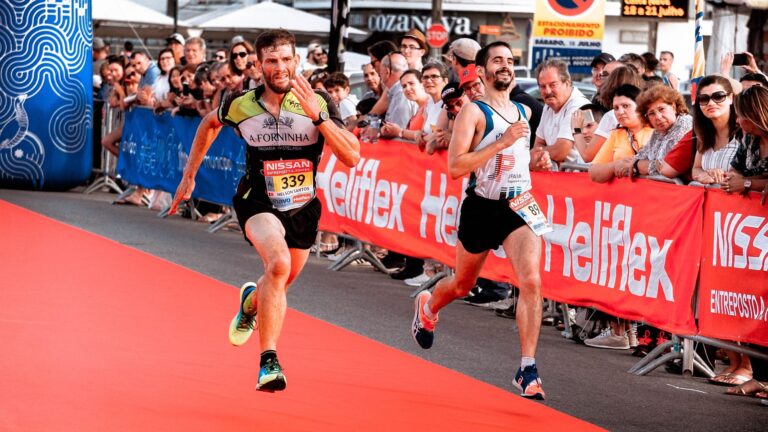
Yes, your heart rate does respond differently on a treadmill than it does when you run outside, and the difference is significant enough that many runners should adjust how they interpret their heart rate data across these surfaces. Research shows that at faster paces, your heart rate will climb 5 to 8 beats per minute higher on a treadmill at the same speed and incline compared to outdoor running. For example, a runner maintaining a 7-minute-mile pace might see a heart rate of 165 BPM outdoors but 172 BPM on the treadmill—a meaningful physiological difference that shouldn’t be ignored when training.
This difference isn’t simply a quirk of the machine or an error in how we perceive effort. It reflects genuine changes in how your body responds to the treadmill environment, particularly at higher intensities. Understanding these differences helps you train more intelligently, interpret your data accurately, and make better decisions about when to use each surface for different training goals.
Table of Contents
- Why Does Treadmill Running Create Higher Heart Rates at Faster Paces?
- The Pace-Dependent Pattern: When Treadmill and Outdoor Heart Rates Converge
- Understanding the Physiological Implications of These Heart Rate Shifts
- Adjusting Your Training Strategy Across Running Surfaces
- The Variable Treadmill Factor: Non-Motorized Machines and Their Unique Demands
- Using Fans and Environmental Modifications to Normalize Heart Rate Response
- Making Intelligent Choices About Training Surface Selection
- Conclusion
Why Does Treadmill Running Create Higher Heart Rates at Faster Paces?
The primary culprit behind elevated treadmill heart rates is thermoregulation—or more specifically, the lack of natural air cooling on a motorized treadmill. When you run outside, wind continuously flows across your body, helping dissipate heat. On a treadmill, you’re essentially running in place within a relatively still environment. At moderate speeds, this isn’t much of a problem.
But as your pace quickens and your body generates more heat, the treadmill’s enclosed environment becomes a significant disadvantage. Your cardiovascular system responds by working harder to send blood to the skin for cooling purposes. This thermoregulatory demand is why your heart rate climbs higher on the treadmill—your heart is literally working overtime to manage body temperature, not just to power your legs. It’s an elegant illustration of how running isn’t purely about leg mechanics; it’s a whole-body system where temperature management directly impacts cardiovascular load. One practical consequence of this mechanism is why using a fan during treadmill sessions can effectively close the heart rate gap—even modest air movement helps restore some of the cooling effect you get outside.

The Pace-Dependent Pattern: When Treadmill and Outdoor Heart Rates Converge
The relationship between treadmill and outdoor heart rates isn’t uniform across all paces—it depends heavily on how fast you’re running. At moderate speeds, roughly equivalent to a 6:50 to 8:45 mile pace, heart rate and perceived effort are nearly equal between treadmill and outdoor running. You’ll see little to no meaningful difference in your heart rate data at these speeds. However, as you accelerate beyond moderate pace, the gap widens noticeably.
Faster intervals, tempo runs, and high-intensity efforts will all show elevated heart rates on the treadmill compared to the same pace outside. Conversely, at slower paces—think easy recovery runs—your heart rate actually drops on the treadmill. A runner doing a 10-minute-mile recovery run outdoors might see a heart rate of 135 BPM, but the same pace indoors might only reach 125 BPM. This inverse relationship at slow speeds is still attributed to thermoregulation: your body isn’t generating enough heat to overwhelm the treadmill’s cooler environment, so it doesn’t need to push as hard cardiovascularly.
Understanding the Physiological Implications of These Heart Rate Shifts
The heart rate differences between treadmill and outdoor running have real implications for how you interpret your training data. If you’re accustomed to outdoor running and suddenly switch to treadmill workouts, your heart rate zones will effectively shift upward. A workout that felt like moderate-intensity outdoor running—say, heart rate in the 140-150 BPM range—might appear much harder on the treadmill because your heart rate will be elevated relative to the perceived effort. This mismatch between heart rate and perceived effort can be confusing, and it’s why some runners report that treadmill running “feels harder” even at the same pace.
Your perception isn’t wrong—your body is actually working a bit harder cardiovascularly, even if the leg workout itself is identical. One important caveat: this doesn’t mean treadmill training is less effective. A 2019 meta-analysis found that despite heart rate differences, oxygen consumption was equal between treadmill and outdoor running, even at 0% incline and speeds as fast as six minutes per mile. Your aerobic system is getting the same stimulus; it’s just being delivered with a different heart rate signature.

Adjusting Your Training Strategy Across Running Surfaces
If you’re training with heart rate zones or specific heart rate targets, you’ll need different numbers for treadmill versus outdoor running. Rather than trying to hit the same absolute heart rate on both surfaces, a more nuanced approach is to match perceived effort or training stress. A conversation-pace run should feel like a conversation pace whether you’re inside or outside, even if your heart rate numbers differ by several beats per minute.
For high-intensity work, consider that your treadmill intervals will naturally feel harder in terms of cardiac load. If you’ve historically done your track repeats outdoors and are switching them to the treadmill, expect your heart rate to climb into slightly higher ranges. This is normal and doesn’t indicate that you’re overtraining—it’s simply the thermoregulatory response to the indoor environment. A practical solution many runners adopt is to intentionally reduce treadmill pace slightly to match outdoor heart rate targets, though this introduces a trade-off: you’ll be doing less mechanical work at that lower pace, even if the cardiovascular demand is similar.
The Variable Treadmill Factor: Non-Motorized Machines and Their Unique Demands
Not all treadmills are created equal when it comes to heart rate response. Non-motorized treadmills, which require you to power the belt yourself, create dramatically different cardiovascular demands compared to motorized machines. Research shows that non-motorized treadmill running produces heart rate increases of 25 ± 9 beats per minute higher than outdoor running—far beyond the 5-8 BPM difference seen with motorized treadmills.
This substantial difference means non-motorized treadmills are an entirely different training stimulus and shouldn’t be mixed into regular heart rate–based training without careful consideration. If you’ve completed heart rate testing on a motorized treadmill and then do a workout on a non-motorized machine, your data will be meaningless for comparison purposes. The practical warning here is to know which type of treadmill you’re using and to treat them as distinct training tools rather than interchangeable alternatives.
Using Fans and Environmental Modifications to Normalize Heart Rate Response
One of the simplest ways to reduce the treadmill heart rate penalty is to introduce air movement. Using a fan during treadmill sessions effectively closes the heart rate difference gap, bringing your treadmill heart rate much closer to what you’d see outdoors at the same pace. This isn’t a marginal improvement—it’s a genuine physiological adjustment that makes a measurable difference in your data.
The mechanism is straightforward: by creating the air cooling effect that outdoor running naturally provides, a fan reduces the thermoregulatory demand on your cardiovascular system. Many runners find that adding a fan transforms their treadmill experience, making their heart rate data more consistent with outdoor runs and making the perceived effort feel more aligned with the heart rate reading. It’s a low-cost intervention that addresses the root cause of the heart rate elevation.
Making Intelligent Choices About Training Surface Selection
The heart rate differences between treadmill and outdoor running should inform but not dictate your training surface choices. Both environments have legitimate roles in a well-rounded training plan. Treadmills offer controlled conditions, precise pacing, and convenience that outdoor running can’t match. Outdoor running provides natural variability, mental health benefits, and the authentic running stimulus that many runners value.
Rather than viewing one surface as superior, consider the heart rate differences as additional data that helps you train more intelligently. If you’re doing base-building runs, the treadmill’s elevated heart rate at faster paces might actually make it a valuable tool for building aerobic capacity without the impact variability of road running. Conversely, if you’re training for a road race where you’ll encounter real wind, variable terrain, and outdoor conditions, outdoor running provides the specific stimulus you need. The key is being conscious of the differences so you can leverage each surface strategically.
Conclusion
The heart rate differences between treadmill and outdoor running are real, measurable, and primarily driven by thermoregulation challenges in the treadmill environment. At faster paces, expect your heart rate to climb 5-8 BPM higher on the treadmill; at moderate paces, the differences largely disappear; and at slow paces, you’ll actually see lower heart rates indoors. These differences don’t indicate that one surface is better or worse—they reflect genuine physiological responses that inform how you should interpret your training data.
Your takeaway should be straightforward: know your numbers for each surface, adjust your expectations accordingly, and don’t be alarmed if your treadmill workouts show higher heart rates at the same pace as your outdoor runs. Use a fan to minimize the gap if treadmill training is a regular part of your routine, and remember that despite the heart rate differences, both surfaces deliver equivalent aerobic stimulus. The best training surface is ultimately the one you’ll use consistently, but understanding the heart rate dynamics gives you the knowledge to train smarter on both.