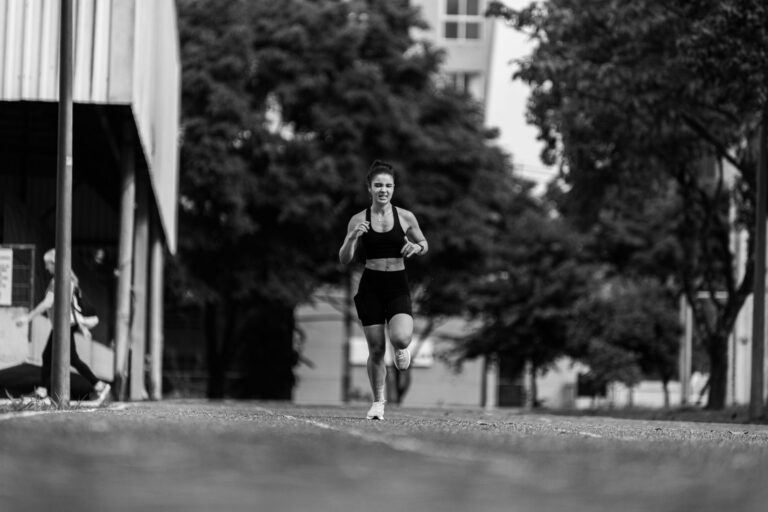
Mouth taping at night has gained attention as a potential tool for improving running performance, but the evidence is more nuanced than the hype suggests. While some runners report better breathing efficiency during daytime training after adopting nighttime mouth taping, the scientific support for this specific claim remains limited. The theory is straightforward: if you train your nasal breathing overnight, your body might default to nasal breathing during running, which could improve oxygen filtration and potentially enhance endurance performance. However, most research on mouth taping examines sleep quality and respiratory mechanics rather than its downstream effects on athletic breathing patterns.
For distance runners looking for an edge, mouth taping represents an interesting but unproven intervention. A runner might spend two weeks taping their mouth at night, notice they’re more conscious of breathing through their nose during morning runs, and attribute improved splits to the practice. What they may not recognize is that the increased awareness itself—the conscious focus on nasal breathing—might be doing more work than the habit formation from nighttime taping. The promise of better daytime running breath through passive nighttime habit-building appeals to runners seeking low-effort performance gains, but the reality check is that individual variation is enormous and placebo effects are powerful in endurance sports.
Table of Contents
- Does Mouth Taping Actually Improve Running Breathing?
- The Science of Nasal Breathing and Sleep Quality
- How Breathing Efficiency Impacts Running Performance
- Practical Implementation and Realistic Expectations
- Potential Risks and When to Avoid Mouth Taping
- Alternative Breathing Techniques That Have More Evidence
- The Future of Breathing Optimization in Running
- Conclusion
- Frequently Asked Questions
Does Mouth Taping Actually Improve Running Breathing?
The relationship between mouth taping and running performance isn’t direct. Mouth taping at night theoretically promotes nasal breathing during sleep, but whether this translates to better breathing during daytime running depends on several unstudied variables. A runner who naturally mouth-breathes during exercise may not suddenly switch to nasal breathing just because they slept with their mouth taped. Breathing patterns during running are driven by oxygen demand, habit, and learned technique—not necessarily by overnight training effects.
Research on nasal breathing in athletes shows advantages like better oxygen saturation and reduced airway irritation, but these studies typically involve runners who were already practicing nasal breathing deliberately, not discovering it passively through mouth taping. One significant limitation is that most runners who try mouth taping also become more conscious of their breathing during running. This heightened awareness itself may improve breathing mechanics and running economy, making it difficult to isolate the actual contribution of the nighttime taping habit. A competitive trail runner might tape their mouth for two weeks, start consciously practicing nasal breathing during runs out of curiosity, and then credit the tape rather than the intentional practice. The placebo effect in running is substantial—athletes who believe a strategy will help them often do run better, regardless of the mechanism’s physiological reality.

The Science of Nasal Breathing and Sleep Quality
Mouth taping’s origins come from sleep medicine research, not running performance studies. The theory behind mouth taping is that it encourages nasal breathing during sleep, which researchers have linked to better sleep quality, improved oxygen saturation, and reduced sleep apnea symptoms. Nasal breathing filters air, humidifies it, and allows the nasal passages to produce nitric oxide, a molecule that supports vasodilation and oxygen uptake. If these benefits occur consistently during sleep, the thinking goes, might they improve baseline respiratory function throughout the day? The logic is reasonable, but the leap from better sleep breathing to better running breathing is unproven.
A critical limitation emerges when runners ignore sleep quality in favor of chasing the running benefit. Mouth taping can be uncomfortable, disrupt sleep, cause skin irritation around the lips, and even trigger anxiety if someone feels claustrophobic or fears they cannot breathe. A runner whose sleep is degraded by the tape—even slightly—will see worse daytime running performance than someone who slept better without the tape. This is a concrete tradeoff that often gets overlooked in discussions about the practice. Some runners also discover they have nasal obstruction that prevented nasal breathing all along, making mouth taping unhelpful until the underlying congestion is addressed.
How Breathing Efficiency Impacts Running Performance
Breathing mechanics do matter for runners, particularly in endurance events. The more efficiently a runner’s body can extract and utilize oxygen, the better their aerobic capacity and endurance. Nasal breathing offers documented advantages: it warms and humidifies air, reduces water loss from the respiratory tract, and improves oxygen diffusion through the alveoli. A marathoner who can maintain nasal breathing throughout a race might have less airway irritation and better respiratory stability than one who mouth-breathes from mile five onward. However, whether nighttime mouth taping creates this efficiency or whether deliberate daytime breathing practice does is not established by research.
During intense running, most athletes—even those trained in nasal breathing—will shift to mouth breathing as ventilation demands increase. The body’s respiratory system is smart enough to adapt to oxygen needs, and trying to force nasal breathing during a hard interval workout can feel restrictive and counterproductive. An experienced runner knows that breathing feels easy and automatic during moderate-intensity runs but requires more attention during tempo work. The mouth-taping intervention might help with moderate-pace runs where nasal breathing is actually feasible, but it’s unlikely to change breathing patterns during the high-intensity efforts where most running fitness is built. This limitation is important for runners expecting the tape to unlock major performance gains.

Practical Implementation and Realistic Expectations
If a runner decides to try mouth taping, the practical approach matters. Most runners use surgical tape, medical tape, or specialized mouth taping strips designed for this purpose. The placement should be gentle, covering the lips without pulling skin taut or causing discomfort. Starting with one night per week and gradually increasing frequency reduces the adjustment period and allows someone to notice any negative effects on sleep quality. A runner might tape three nights a week for two weeks, maintain a sleep log noting sleep quality and morning alertness, and then add conscious nasal breathing focus during daytime runs to test whether the combination yields changes.
Realistic expectations are that if mouth taping helps, the effect will be subtle and individual. One runner might notice slightly easier breathing during easy runs within a week, while another might see no difference after a month. Unlike a new shoe or a structured training block, mouth taping is a low-cost experiment (tape costs a few dollars), but it’s also low-evidence. The tradeoff is minimal if it doesn’t disrupt sleep, but it becomes counterproductive immediately if it causes nightmares, anxiety, or reduced sleep depth. A pragmatic approach is to try it for 2-3 weeks while tracking variables like resting heart rate, running pace at effort level, and subjective breathing ease, but not to expect transformative results or to continue if sleep suffers.
Potential Risks and When to Avoid Mouth Taping
Mouth taping carries genuine risks that are often downplayed in popular discussions. Runners with sleep apnea, asthma, or severe nasal obstruction should consult a physician before attempting it—the practice could be harmful. Even for healthy runners, skin sensitivity varies: some people develop irritation, rashes, or reactions to tape adhesive around the mouth. One runner might tolerate the tape beautifully while their partner breaks out in a rash after a single night. There’s also a psychological component: some people experience anxiety when their mouth is taped, a feeling of restriction that overrides any potential benefit.
A specific warning applies to runners who snore or have undiagnosed sleep apnea. Mouth taping can exacerbate sleep apnea by reducing breathing flexibility, leading to longer apnea events and worse sleep quality. This might paradoxically harm running performance the next day despite intentions to improve it. Another limitation is that mouth taping does nothing to address the actual cause of poor breathing efficiency in many runners: weak respiratory muscles, poor posture, or inadequate cardiovascular fitness. A runner with weak respiratory muscles and poor running economy might blame mouth breathing for their struggles, tape their mouth, and see no improvement because the root issue remains unaddressed. In these cases, focused breathing exercises and strength training would be more effective.
Alternative Breathing Techniques That Have More Evidence
Rather than relying on passive nighttime mouth taping, runners with breathing concerns might explore deliberate daytime strategies with more research support. Nasal breathing drills during easy runs—where the intensity is low enough to breathe through the nose comfortably—help build the habit and teach the body that nasal breathing is viable for running. A runner practicing nasal breathing during three easy runs per week for four weeks often finds it becomes more automatic. Rhythmic breathing patterns, where running cadence syncs with breathing (for example, inhaling for three steps, exhaling for three steps), reduce overthinking and improve breathing flow.
Some runners benefit from simple breathing awareness meditation, which sharpens the ability to notice breathing patterns and shift them during runs. Buteyko breathing, a method that involves specific breathing exercises to improve CO2 tolerance and breathing efficiency, has advocates among distance runners, though the scientific evidence is mixed. The technique emphasizes smaller breaths through the nose, building a tolerance for slightly higher CO2 levels that can enhance endurance capacity. Unlike mouth taping, it requires intentional practice and learning, but it’s active and measurable rather than passive. A runner interested in breathing optimization might gain more from spending fifteen minutes per week on deliberate breathing practice than from six weeks of nighttime mouth taping, but the mouth taping requires no conscious effort—which is why it appeals despite limited evidence.
The Future of Breathing Optimization in Running
As sports science evolves, researchers are paying more attention to breathing mechanics in endurance athletes, but most studies still focus on voluntary breathing techniques and respiratory muscle training rather than passive interventions like mouth taping. Future research might clarify whether overnight nasal breathing promotes lasting changes in daytime breathing patterns, or whether the effects are primarily placebo and awareness-based. Technology could help: wearable sensors that track breathing patterns during sleep and running might eventually show whether individuals who mouth-tape experience measurable changes in their running oxygen saturation or ventilation efficiency. The broader trend in running science is toward personalized interventions and acknowledging individual variation.
One runner might thrive with nasal breathing focus while another performs better with the flexibility of mouth breathing when needed. One runner’s sleep might improve with mouth taping while another’s suffers. As the sport moves away from one-size-fits-all recommendations, mouth taping will likely remain a niche tool—worth trying for some runners but not a replacement for stronger evidence-based practices like structured training, strength work, and deliberate breathing practice. The future of breathing optimization will probably emphasize active training methods and individual assessment over passive interventions.
Conclusion
Mouth taping at night is an interesting practice rooted in legitimate sleep science, but its specific promise to improve daytime running breath remains unproven. Some runners will try it, notice changes in their breathing awareness, and find that more conscious nasal breathing during runs feels beneficial—but this is often a product of increased attention rather than the overnight taping itself. The potential benefits are subtle and highly individual, and the practice carries genuine risks for people with certain respiratory conditions or sleep concerns. Before adopting mouth taping, a runner should honestly assess whether they’re solving a real problem or chasing marginal gains through a low-evidence method.
A more evidence-backed approach to better running breath involves deliberate daytime practice: nasal breathing drills during easy runs, rhythmic breathing patterns, and potentially respiratory muscle training. These active strategies put the runner in control of the adaptation process and provide feedback about what’s working. If a runner does choose to try mouth taping, the experiment should be brief (2-3 weeks), monitored for effects on sleep quality, and abandoned if it causes disruption. Ultimately, improving running breath matters less through overnight passive interventions and more through the foundation of good fitness, intentional practice, and the patience to discover what works for your individual physiology.
Frequently Asked Questions
Can mouth taping cause sleep apnea?
Mouth taping does not cause sleep apnea in people without it, but it can worsen sleep apnea in people who already have it. If you snore or experience daytime drowsiness, consult a doctor before trying mouth taping.
How long does it take to see results from mouth taping?
If results occur, some runners report noticing changes in breathing awareness within days, while others see no difference after weeks. Most research suggests waiting at least 2-3 weeks before deciding whether the practice helps you.
Should I tape my mouth every night?
No. Most runners who experiment with mouth taping start with 2-3 nights per week, allowing their body to adjust gradually and making it easier to notice whether sleep quality changes.
Is mouth taping better than breathing exercises?
Not necessarily. Deliberate breathing exercises like nasal breathing drills during runs have more research support than mouth taping for improving running performance. Mouth taping is passive; exercises are active and give you more feedback.
What kind of tape should I use?
Medical-grade tape or specialized mouth tape designed for this purpose is safer than duct tape or masking tape. Look for hypoallergenic options if you have sensitive skin. Apply gently without pulling skin taut.
Can mouth taping help with running performance during races?
Probably not directly. Mouth taping is designed to influence nighttime breathing, not running breathing. During a race, your breathing will be driven by intensity and demand, and taping your mouth beforehand provides no immediate advantage.