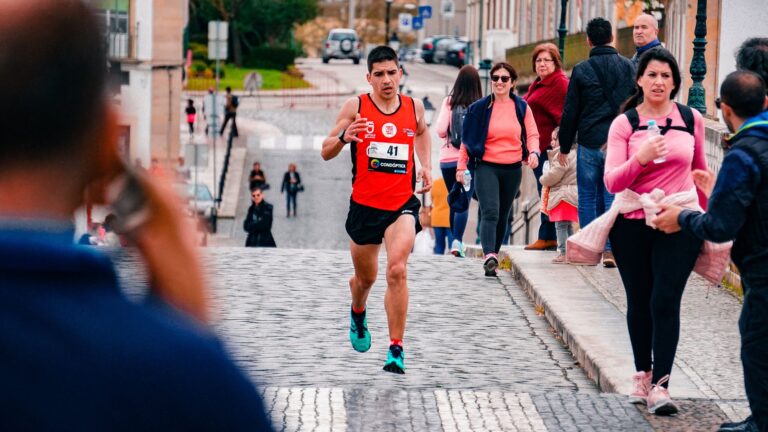
Most runners round their shoulders without realizing it happens because fatigue causes the upper body to break down in predictable ways. As you tire during a run, your shoulders naturally lift up toward your ears, your arms stop moving smoothly through their intended range, and your entire upper body tightens. This isn’t a flaw in your running form that exists from mile one—it’s a biomechanical response that develops as your muscles fatigue and your body works harder to manage the demands of sustained running. You might not notice it’s happening until you catch your reflection in a store window at mile eight, or worse, until a training partner points out that you’re hunched forward like you’re protecting yourself from the wind.
The real problem is that most runners assume rounded shoulders are just an uncomfortable side effect of getting tired, not realizing the mechanical consequences of this postural breakdown. When your shoulders collapse forward, your entire running economy changes. Your breathing becomes shallower because hunched shoulders put pressure on your chest and respiratory system, making it harder to breathe and utilize oxygen when you need it most. Your energy efficiency drops because your arm swing stops working in its proper forward-and-back pattern and instead swings across your body, creating wasteful side-to-side motion that throws off your core alignment. You’re essentially running with the brakes partly engaged without understanding why you feel so much slower and heavier in the later miles.
Table of Contents
- What Happens to Your Posture When Fatigue Sets In
- How Rounded Shoulders Drain Your Energy and Oxygen
- The Spine and Structural Stress You’re Not Feeling Yet
- Why Weak Back Muscles Are the Root Cause Most Runners Miss
- The Compensation Pattern That Creates Instability
- The Real-World Impact on Your Running Performance
- Building Better Shoulder Stability for Lasting Running Performance
- Conclusion
What Happens to Your Posture When Fatigue Sets In
The shoulder collapse in running follows a predictable chain reaction that begins well before you consciously feel tired. When your legs start fatiguing, they require more mental focus and muscular coordination to keep moving forward efficiently. Your brain, prioritizing forward propulsion, essentially deprioritizes upper body stability. This is where your core and back muscles become crucial—they’re supposed to maintain spinal alignment and shoulder stability even as your legs are working hard. If these muscles aren’t strong enough, your shoulders will round forward as compensation.
The process accelerates when you hit mile four or five on a longer run, which is exactly when many runners report feeling like they’ve “fallen apart” without understanding the biomechanical reason why. One common example of this happens during tempo runs. You might start with perfect posture for the first mile, but as the pace intensity increases and your body becomes more taxed, you notice your shoulders creeping up toward your ears. This happens because your upper trapezius muscles are overworking to compensate for fatigue in your larger stabilizing muscles. Meanwhile, your arms are no longer swinging smoothly forward and back—they’re drifting inward, crossing your body’s midline, which creates rotational stress on your spine that your core has to work overtime to control.

How Rounded Shoulders Drain Your Energy and Oxygen
When your shoulders round forward, the structural consequences cascade through your entire running system. Your chest compresses, which directly impacts your lung capacity and the efficiency of your oxygen utilization. During the exact moment when your body needs maximum oxygen availability, your hunched posture is making it harder for your lungs to fully expand. This creates a painful irony—as you fatigue and need oxygen most, your posture is actively reducing how much oxygen you can access. The effect is measurable: runners who maintain better shoulder position report feeling less winded at the same pace compared to runs where they allowed their shoulders to collapse.
The energy waste compounds beyond just breathing issues. Your arm swing is one of your body’s most efficient mechanisms for propelling you forward—when your arms swing correctly in a forward-and-back pattern, they work in harmony with your legs and core to create a unified movement pattern. When your shoulders round and your arms swing across your body instead, you’re creating side-to-side motion that works against your forward momentum. This is particularly problematic because your core muscles have to activate more intensely to prevent the excessive spinal rotation that follows, burning additional energy that should be reserved for actually running forward. A runner in poor shoulder position is essentially forcing their stabilizer muscles to do work that should be handled by their primary movers.
The Spine and Structural Stress You’re Not Feeling Yet
Rounded shoulders and a hunched upper back increase stress throughout your spine, hips, and cervical region in ways that might not hurt immediately but accumulate into injury over time. Your neck becomes a particular vulnerability—forward shoulder posture pulls your head forward as well, creating a posture biomechanists call “anterior head carriage.” This position puts constant tension on your neck and upper trapezius muscles, and during a 10-mile run, this tension compounds. You might not feel neck pain during the run itself, but you’ll notice it the next morning when turning your head feels stiff or when you have a dull ache across the tops of your shoulders. The spine itself bears increased load with rounded shoulders because your natural spinal curves become exaggerated.
Your thoracic spine rounds more than it should, your lumbar spine compensates by arching differently, and the coordination between these segments breaks down. This is particularly concerning because your spine is supposed to be a stable pillar that allows your limbs to move powerfully around it. When this pillar becomes compromised by poor upper body posture, the impact radiates down to your hips and knees, which then have to work harder to stabilize you with every stride. Many runners who develop hip pain or knee issues are actually suffering from an upper body stability problem that originated in their shoulders.

Why Weak Back Muscles Are the Root Cause Most Runners Miss
The primary reason runners develop rounded shoulders is upper body weakness, specifically in the muscles responsible for shoulder stability and spinal support. Your rhomboids, trapezius, posterior deltoids, glutes, and core muscles are the muscles that keep your shoulders back and your spine stable. When these muscles are underdeveloped, they fatigue faster during running, and your postural muscles give up earlier than they should. This isn’t about weakness you’d notice during everyday activities—you might be strong enough to carry groceries or lift weights fine. The weakness becomes apparent specifically during the sustained muscular demand of running, when these stabilizing muscles need to maintain your posture for miles on end.
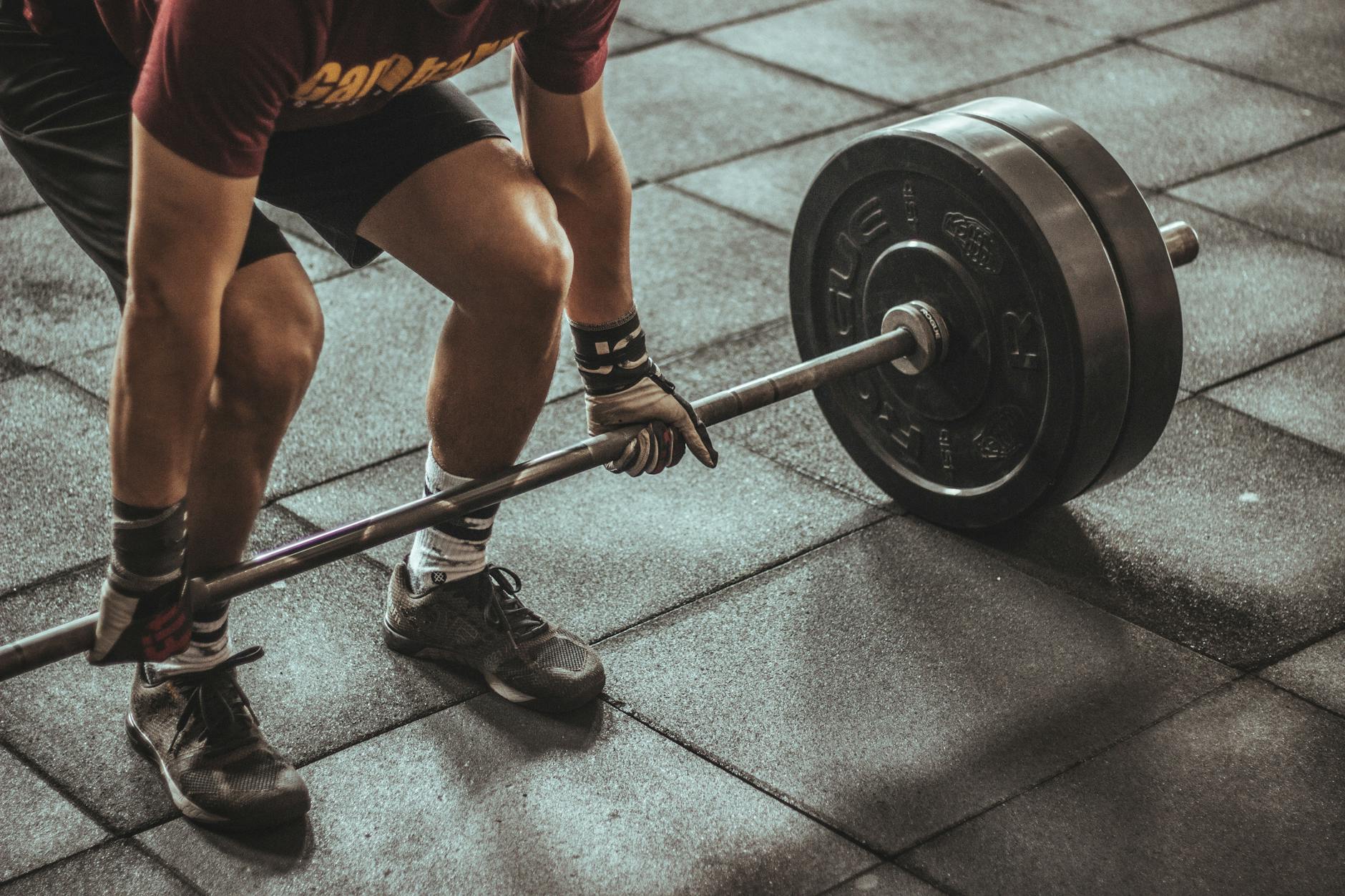
Compare two runners with identical leg strength: the one who does strength training for their posterior chain will maintain better shoulder position throughout their run, breathe more efficiently, and waste less energy on stabilization. The runner without that upper body work will see their form deteriorate around mile five or six. The difference in their finishing times and perceived effort won’t be huge on a 5K, but on a half-marathon or longer, the compounding effect of poor upper body mechanics becomes significant. A practical limitation to understand is that you can’t fix rounded shoulders by just running more. You need dedicated strength work—rowing movements, pull-ups, face pulls, and core exercises—to build the muscular endurance needed to maintain posture when fatigued.
The Compensation Pattern That Creates Instability
When your shoulders round and your arm swing deteriorates, your torso rotates excessively with each stride—a compensation pattern your core muscles have to fight against to keep you moving forward. This excessive rotation is invisible to you but exhausting for your muscles. Your obliques and deep core muscles activate harder to prevent you from twisting too much with each step, burning energy that should be dedicated to forward propulsion. Over multiple miles, this compensation pattern becomes a significant source of fatigue.
A warning to understand: if you have poor shoulder stability and you also have weak glutes, this compensation pattern becomes even more exaggerated. Your glutes are crucial for hip stability and proper pelvic positioning. Without strong glutes, your pelvis tilts excessively, which increases spinal rotation demand, which forces your core to work even harder to compensate for unstable shoulders. You end up with a cascade of instability problems originating from your upper body that your entire core has to fight against. This is why runners who focus only on leg strength and ignore upper body development often hit a plateau in their injury-free running or find themselves constantly dealing with new aches.
The Real-World Impact on Your Running Performance
The practical result of rounded shoulders is that you feel slower and more labored in the second half of your runs, even if your legs feel relatively fine. This sensation—where your breathing is heavier, your pace is dropping, and everything feels harder than it should—is often attributed to aerobic fitness when it’s actually a posture problem. A runner might think they need to do more aerobic threshold work when what they actually need is better shoulder stability and arm swing mechanics. You see this especially in recreational marathoners who train their legs extensively but never touch a pull-up bar or do any horizontal pulling exercises.
By mile 18 of a marathon, their form has completely fallen apart from an upper body perspective, and they’re essentially power-hiking the last 8 miles because their shoulders and core have checked out. The silver lining is that correcting this is entirely within your control. Unlike genetic factors that affect your VO2 max or running economy, shoulder stability is a direct result of the strength work you do or don’t do. A runner who adds just 15 minutes of upper body strength work twice a week will see measurable improvements in their shoulder position during runs and often experience faster marathon times or find themselves less fatigued at the finish line.
Building Better Shoulder Stability for Lasting Running Performance
The path forward is straightforward but requires consistency: you need to strengthen your posterior chain and build your core’s ability to stabilize your spine during the repetitive demands of running. This means rowing variations, pull-ups or assisted pull-ups, face pulls, and core exercises that specifically target rotational stability. The goal isn’t to add bulk or become a strength athlete—it’s to build the muscular endurance and stability that allows you to maintain good posture for the duration of your runs.
Looking ahead, the most successful long-distance runners understand that running isn’t just about leg fitness. It’s an entire body activity that demands stability, strength, and efficiency throughout your kinetic chain. Runners who treat strength training as something separate from running—something they might do once a week if they remember—will continue to see their form deteriorate as they fatigue. Those who integrate upper body work as a fundamental part of their training will maintain better mechanics, breathe more efficiently, run more economically, and finish feeling stronger rather than falling apart in the final miles.
Conclusion
Most runners round their shoulders without knowing it because fatigue triggers a natural breakdown in upper body stability and posture that happens incrementally over the course of a run. By the time you notice you’re slouching, the damage is already affecting your breathing, your energy efficiency, and the stress load on your spine. Understanding that this isn’t just a matter of “trying to sit up straighter” but rather a consequence of underdeveloped stabilizing muscles changes how you should approach your training.
The solution is integrating regular upper body and core strength work into your training program, treating it with the same consistency and importance you give to your running miles. Start with basic horizontal pulling exercises and core stability work twice a week, and you’ll notice your shoulder position improving within a few weeks. Your breathing will feel easier, your pace will feel more effortless in the later miles, and you’ll cross finish lines feeling like you still have something left in the tank—because you actually will.