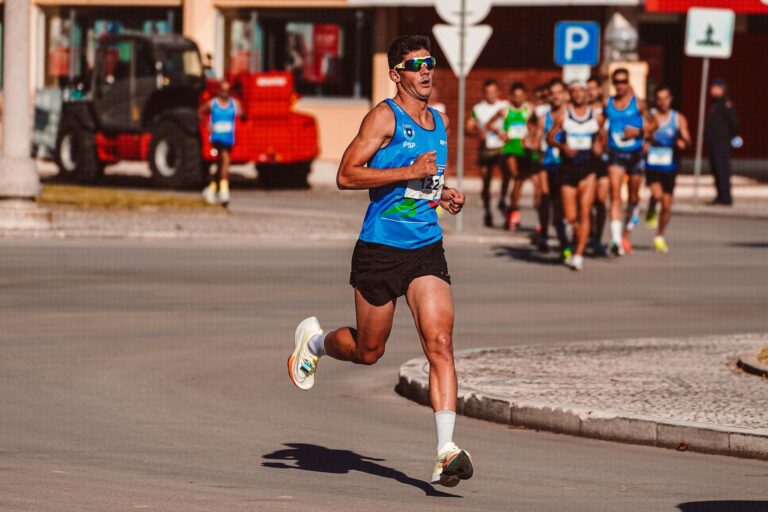
Running your first race without embarrassment comes down to three things: knowing what to expect, training appropriately for your current fitness level, and letting go of the fantasy that everyone around you is judging your performance. The truth is simpler than you think. Most people at the starting line are worried about their own race, not yours. The real embarrassment comes from showing up unprepared or holding yourself to standards that don’t match your training. If you’ve trained consistently for the distance, shown up race morning ready to run at your own pace, and accepted that this is about finishing—not winning—you’re already set up to cross that finish line without a moment of shame. Your first race is fundamentally different from the fantasy version in your head.
You’re not competing against the fast runners. You’re competing against the course, the weather, and your own doubts. A specific example: if you’re running a 5K and you’ve trained to run it in 35 minutes but the person next to you finishes in 22 minutes, neither of you has anything to do with the other’s success or failure. You ran your race. They ran theirs. The embarrassment trap happens when people compare their mile-one pace to someone else’s mile-three pace and feel like they’re “doing it wrong.” The path to an un-embarrassed first race starts weeks before race day and relies on honest preparation, realistic expectations, and a fundamental shift in how you think about what racing actually means.
Table of Contents
- How to Train Smart and Avoid Looking Out of Place on Race Day
- Understanding Race Day Logistics and Avoiding Common Mistakes
- Pacing Strategy and Why Your Speed Doesn’t Matter
- What to Wear and How to Avoid Gear-Related Disasters
- Managing Pre-Race Anxiety and Mental Challenges
- The Role of Fueling and Hydration During Your Race
- Embracing the Experience and Moving Forward
- Conclusion
- Frequently Asked Questions
How to Train Smart and Avoid Looking Out of Place on Race Day
Training for your first race is straightforward, but most people either train too much or too little. Too little, and you’ll hit mile two and realize you’re in genuine physical distress—that’s where embarrassment lives. Too much, and you risk injury right before the event, which defeats the purpose. The sweet spot is eight to twelve weeks of consistent training, building from wherever you’re starting. If you can currently run three miles, you’re ready to race a 5K. If you can run six miles, you’re ready for a 10K. If you can run thirteen, a half-marathon is achievable. The number of training sessions per week matters less than consistency.
Three runs per week, every week, beats five runs per week with two weeks off in the middle. Here’s the limitation: you cannot out-train a bad race strategy. Even runners who’ve trained perfectly have embarrassing moments because they went out too fast, didn’t hydrate, or wore shoes they’d never tested. The difference between a good first race and a difficult one often comes down to these tactical decisions on race day, not whether you logged all your training miles. A real-world example is the runner who trained beautifully for a half-marathon but wore brand-new compression socks that caused blisters by mile four. They had to stop, take off the socks, and finish in bare feet. Was it embarrassing? Only if they decided it was. They finished the race and got the medal, which is exactly what they set out to do.

Understanding Race Day Logistics and Avoiding Common Mistakes
Race day logistics are where first-timers often stumble, not because they’re unprepared but because they don’t know what to anticipate. Arrive early—this means at least 45 minutes before the start, longer if it’s a large event. You’ll need time to find parking, locate your corral, use the porta-potty line (which is always longer than it looks), and settle your nerves. Knowing where the water stations are, where the finish line is, and where you’ll collect your medal keeps you from looking lost and confused on race morning. Get familiar with the course map beforehand. Most races publish their route online. Knowing where the hills are, where the turnaround point is, and what the final stretch looks like removes a huge chunk of race-day stress.
The warning here is that no amount of preparation eliminates the unexpected. You might misjudge your pace and hit a wall at mile 2.5. You might feel fine and then suddenly feel terrible. Your stomach might rebel at mile one even though you’ve never had stomach issues in training. These things happen to runners of every level, and when they happen to you, you’re not embarrassing yourself—you’re having a normal human experience that happens to be taking place in front of other people. The real downside of a bad first race experience is not that others are judging you; it’s that you might lose confidence and decide you’re “not a racing person.” That’s the real cost. Don’t let a tough race convince you that you don’t belong there.
Pacing Strategy and Why Your Speed Doesn’t Matter
Your pace is irrelevant to whether you have a successful race. Let that sink in. Whether you run a 5K in 24 minutes or 45 minutes, you completed the same distance. One runner gets a better time, sure, but both get a finisher’s medal, both get the experience of crossing the finish line, and both have every right to say they ran a race. The embarrassment people feel comes from internal comparison—they expected to be faster, or they see someone younger cruising past and feel left behind. That’s not an external judgment; it’s a story you’re telling yourself. A practical approach is to run by effort, not by time. Go out at a pace you can sustain comfortably for about 70 percent of the race.
If you’ve trained properly, you know what this feels like. It’s the pace where you can talk in short sentences but not carry on a full conversation. You should feel a little challenged but not desperate. Most people ruin their first race by going too fast in the first mile because the adrenaline, the crowd, and the group of runners around them push them to move faster than they trained. By mile 1.5, they’re struggling, and the mental game becomes about survival instead of enjoyment. The comparison: a runner who sticks to their trained pace and feels strong throughout versus a runner who burns out at the midpoint and has to slow to a walk. The first person feels accomplished. The second person feels embarrassed. The difference isn’t talent or fitness—it’s strategy.

What to Wear and How to Avoid Gear-Related Disasters
Wear exactly what you’ve trained in. Not 90 percent of what you’ve trained in. Exactly. The shorts, the shirt, the shoes, the sports bra if applicable, the socks—all of it should be items you’ve run in multiple times. Race day is the worst possible time to discover that a new shirt causes chafing or that socks from a different brand bunch up inside your shoe. These aren’t character flaws; they’re just gear choices, but they can make your race unnecessarily miserable. The specificity matters. If you’ve trained in Nike shoes, don’t switch to Brooks because they were on sale. If you’ve run in cotton socks, don’t buy wool ones the day before the race.
A comparison to illustrate: Runner A wears exactly what she wore on her longest training runs. Miles 1-5 feel good, mile 6 gets hard, but she finishes strong. Runner B wears a shirt he bought the day before because he wanted something “fresh.” By mile 2.5, the shirt is rubbing his nipples raw. The physical discomfort is real, but more importantly, the mental weight of that discomfort makes him feel like he’s doing something wrong. He’s not. He just made a gear choice that didn’t serve him. The warning: moisture-wicking is essential. Cotton absorbs sweat, stays wet, and causes chafing. Test everything, and use it in training at least three times before race day.
Managing Pre-Race Anxiety and Mental Challenges
The night before a race, almost every first-time runner experiences a moment of doubt. What if I’m too slow? What if I can’t finish? What if I embarrass myself out there? This is normal. It’s also usually completely disconnected from reality. The people who typically have the most doubt are the ones who trained properly, because they’re thoughtful and self-aware. The people who undertrained often go in overconfident. Manage the anxiety by reminding yourself why you signed up, remembering that you’ve trained for this, and accepting that emotions on race morning are not predictions about how the race will go. You’ve done the preparation. Everything else is just the experience of running.
The limitation here is that mental toughness can’t be trained the same way aerobic fitness can. Some people are naturally calmer in competitive situations. Others will be nervous no matter how many times they remind themselves that they belong there. That’s okay. You don’t need to be calm; you just need to run. The warning: if you’re feeling genuinely ill or injured the morning of the race, it’s acceptable to withdraw or run a conservative pace. Pushing through real illness isn’t brave; it’s just adding misery to your experience. If you’re healthy, though, the nerves are just nerves, and they usually fade about a quarter-mile into the race.

The Role of Fueling and Hydration During Your Race
Most 5K races don’t require any fueling or hydration during the race—they’re typically over before your energy or hydration becomes a real problem if you’ve eaten and hydrated properly beforehand. For 10Ks and longer, water stations are essential. Your job is simple: drink something at every water station, whether you feel thirsty or not. Thirst is not a reliable indicator of when you actually need fluids. Take small sips. Walking a few steps at the water station is not cheating or embarrassing. Elite runners do it too. A specific example: a first-time 10K runner trained beautifully, hit mile 4, and felt fine. No thirst. He skipped the water station.
By mile 5.5, dehydration kicked in, his legs felt heavy, and he had to slow significantly to finish. His training was perfect. His race strategy was not. Eat something small 2-3 hours before the race. A banana, some oatmeal, toast with honey—something your stomach knows. Skip the fancy pre-race meal at a restaurant. Your digestive system doesn’t need surprises. Bring some fuel for after the race as well. You’ll likely feel dizzy or emotional in the first few minutes after finishing if you don’t eat something with carbs and protein. This is normal and happens to most runners, but it feels less dramatic when you expect it and know what to do about it.
Embracing the Experience and Moving Forward
Your first race is not a performance evaluation. It’s an experience. The finish line doesn’t care how fast you ran. The medal doesn’t weigh more or less based on your pace. What matters is that you showed up, trained, and completed something you set out to do. This is actually worth something—not something you should downplay. People who run races have a different relationship with their bodies and their capacity than people who don’t. You’ll understand that you can do hard things. You can keep moving when it gets uncomfortable. You can deal with disappointment or surprise or pain and still move forward.
That’s the real value, and it has nothing to do with embarrassment. Looking forward, your first race is likely not your last. You’ll learn from this one. Maybe you’ll run a better race next time. Maybe you’ll run slower but enjoy it more. Maybe you’ll decide racing isn’t your thing and you’d rather just run for fun. All of these are valid outcomes. The only real failure is letting fear of embarrassment keep you from trying in the first place. You’re not embarrassing yourself by running. You’re doing something most people never do.
Conclusion
Running your first race without embarrassment is less about talent or speed and more about showing up prepared, thinking strategically on race day, and releasing the idea that performance equals worth. You’ve trained. You know the distance. You know what to wear and how to pace. You understand that water stations exist, that people around you are focused on their own races, and that your speed doesn’t matter as long as you cross the finish line.
The embarrassment trap is a mental construct, not a real outcome. What’s real is the accomplishment of finishing, the medal, the sense that you did something hard and you did it. The next step is simple: register for your race, follow a training plan appropriate for your current fitness level, do exactly what you’ve trained for on race day, and accept whatever happens as part of the experience. You belong at that starting line. You’ll belong at that finish line too.
Frequently Asked Questions
What if I have to stop and walk during my race?
You’ll be in good company. Many runners walk parts of their races, especially if they’re new to racing or running longer distances. Walking is not failure; it’s pacing. You’ll see people walk at every race—fast people, slow people, experienced people. Take the walk if you need it. You’re still finishing the race.
How do I know if I’m going too fast?
If you can’t speak in short sentences at your race pace, you’re going too fast. If you’re struggling to breathe, you’re going too fast. If you feel great through mile 1 and want to speed up, don’t—stick to your plan. Most first-race mistakes involve going too fast early because of adrenaline and the energy of other runners. Your goal is to feel strong at mile 4 or 5, not mile 1.
What happens if I feel sick during the race?
Stop at a medical tent if you feel faint, dizzy, or seriously ill. Walk if you need to. If you’re nauseous but feeling okay otherwise, slow down and take some water. These feelings often pass. If they don’t, dropping out is always an option, and it doesn’t make you a quitter—it makes you sensible.
Should I look at my watch during the race?
Not obsessively. Check it at mile markers to see how you’re pacing, but don’t let the numbers dictate your effort. If you’re running faster than you trained, intentionally slow down. If you’re running slower, check in with how you feel. If you feel fine, you’re pacing correctly.
What should I do right after I finish?
Keep walking. Don’t stop and stand still immediately—you might feel faint. Walk for a few minutes, accept your medal, drink some fluid, eat something with carbs and protein. You might feel emotional or shaky. This is normal. Your body has just worked hard. Take some time to settle before you attempt stairs or driving.
How do I prevent chafing?
Wear only things you’ve trained in. Use body glide or a similar anti-chafe product on any areas that have caused problems in training. Common spots are under sports bras, between thighs, and on the nipples for men. Test the product in training first. Moisture-wicking fabrics help too—avoid cotton.