Pacing yourself when running means finding and maintaining a sustainable speed that allows you to complete your run without burning out too early or damaging your body. The foundation of good pacing is understanding your own fitness level, knowing the difference between various run intensities, and being willing to run slower than your ego wants you to. Most runners improve faster and stay injury-free when they follow a simple rule: keep 80 percent of your weekly running at an easy, conversational pace—slow enough that you could hold a full sentence without gasping.
Consider a beginner runner who can complete 3 miles at a 10-minute-per-mile pace on their best day. If they try to run that same pace for a 5-mile run, they’ll likely hit mile 3.5 completely exhausted, forced to walk the rest, and potentially injured from overexertion. That same runner, moving at an 11 or 12-minute-per-mile pace on the same 5-mile route, finishes feeling strong and wanting to run again the next week. The difference is pacing—knowing what speed works for the distance and fitness level you actually have right now.
Table of Contents
- What Does Running Pace Actually Mean for Your Body?
- How Heart Rate Zones Help You Pace Correctly
- The Role of Perceived Effort in Finding Your Right Pace
- How to Adjust Pace Based on Distance and Goals
- The Danger of Comparing Your Pace to Others
- Using Technology Wisely for Pacing
- Long-Term Pacing Strategy and Progression
- Conclusion
What Does Running Pace Actually Mean for Your Body?
running pace is simply the amount of time it takes you to cover one mile or one kilometer. But the importance of pace goes far beyond the numbers on your watch. When you run too fast for your current fitness level, your aerobic system—the way your body uses oxygen—can’t keep up with the demand. Your body shifts into anaerobic metabolism, burning glucose instead of fat, producing lactate buildup that causes that heavy-leg feeling, and depleting your glycogen stores rapidly. This is why runners often describe “hitting the wall” around mile 18 or 20 of a marathon; they started too fast and ran out of fuel.
The aerobic system is also where your body gets stronger. Running at a pace that keeps you in your aerobic zone—typically 60 to 70 percent of your maximum heart rate for easy runs—builds the mitochondria in your muscle cells, increases capillary density, and teaches your body to burn fat more efficiently. A runner who spends months doing slow runs at the right pace will eventually find that their “fast” pace gets faster almost automatically, because their aerobic base is now stronger. The comparison is stark: a runner doing all their miles at a hard effort might see improvement for 4-6 weeks, then stall or get injured. A runner doing 80 percent easy and 20 percent hard typically sees continuous improvement for months or years.
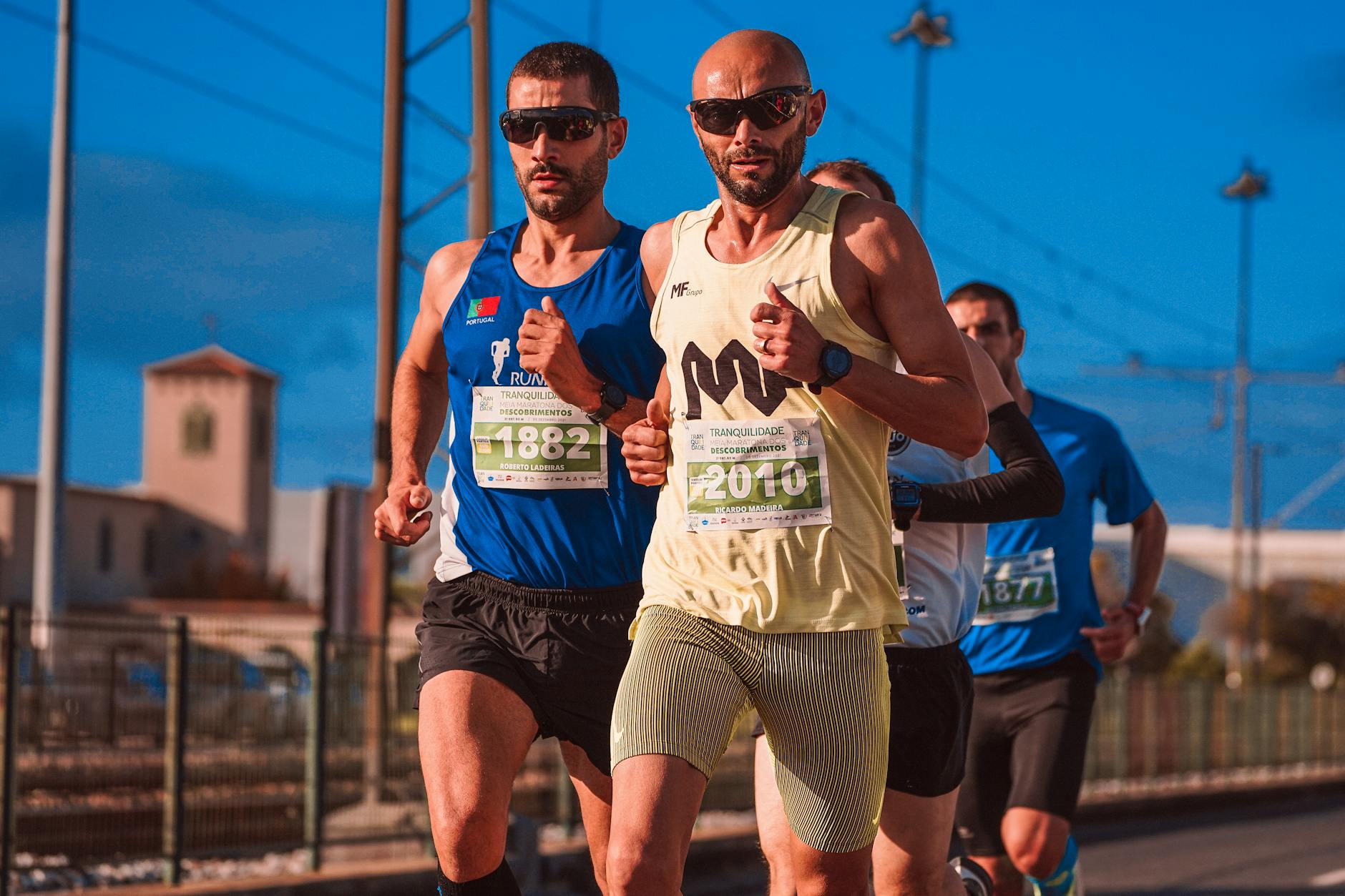
How Heart Rate Zones Help You Pace Correctly
Using heart rate to determine your running pace removes the guesswork and the ego. Your maximum heart rate is roughly 220 minus your age, though individual variation is significant. Easy runs should keep you at 60 to 70 percent of max heart rate—a pace where you’re breathing hard enough to feel like you’re working, but not so hard that you can’t speak in complete sentences. If you can’t talk on your run, you’re going too fast. Many runners are shocked to discover their “easy” pace is actually much slower than they thought, sometimes 2 to 3 Intensity Minutes Improve Real-World Independence”>minutes per mile slower than their racing pace.
One limitation of heart rate training is that it takes time to stabilize. When you first start paying attention to your heart rate, you’ll notice it fluctuates based on hydration, sleep, caffeine, heat, and your menstrual cycle if applicable. A pace that feels easy one day might put you at 75 percent of max heart rate the next day, just from dehydration. Also, if you’re new to running, your heart rate will drop significantly in your first 4 to 6 weeks as your cardiovascular system adapts, which means your training zones need to be recalculated regularly. Many running watches now calculate these zones automatically, but they’re estimates—your actual physiology may differ.
The Role of Perceived Effort in Finding Your Right Pace
Beyond numbers on a watch or heart rate monitor, your body sends constant signals about effort level. Perceived effort—what the run feels like—is actually a reliable pacing tool once you learn to listen to it. On an easy run, you should feel like you could continue for much longer, you’re not breathing heavily, and your legs feel relatively fresh. On a tempo run (a moderately hard effort), you feel challenged, breathing harder, but still able to speak short sentences. On a hard effort or race pace, you’re operating near your limit; you can only manage single words or short phrases.
A practical example: a runner training for a half-marathon typically does one easy run during the week, one workout at tempo pace, one at race pace or faster, and one long slow run on the weekend. If the runner goes too hard on the easy run, they can’t recover in time for the tempo workout, and that tempo workout—which is supposed to build aerobic power—becomes ineffective. They get tired instead of stronger. The tradeoff is that holding back on easy days requires discipline, especially when you’re feeling good or running with faster friends. The reward is that your hard workouts actually become productive.

How to Adjust Pace Based on Distance and Goals
A 5K pace is not a 10K pace, which is not a half-marathon pace, which is not a marathon pace. Generally, as distance increases, sustainable pace decreases. A runner might be capable of a 7-minute-per-mile 5K, a 7:30 10K, an 8-minute half-marathon, and a 8:45 marathon. The difference comes down to energy systems. A 5K is primarily fueled by your aerobic system with some contribution from anaerobic metabolism. A marathon, run over 2+ hours, must be fueled almost entirely aerobically—you cannot maintain an anaerobic pace for that long.
Many runners damage their marathons by running the early miles at their aerobic threshold pace instead of 30 to 60 seconds per mile slower. For long runs, the rule is simple: run slowly enough that you could do it again the next day. If your long run leaves you exhausted and sore for days, you ran too fast. Long runs should feel almost easy, with the main challenge being the duration and the mental stamina of being out there for 90 minutes, two hours, or more. The paradox is that your long run should feel easier than your tempo workouts, even though it covers much more distance. That’s because tempo and speed work are designed to stress your aerobic system and teach your body to work efficiently at higher intensities. Long runs teach your body to fuel itself over time.
The Danger of Comparing Your Pace to Others
One of the biggest pacing mistakes runners make is comparing themselves to other people. If you run with a friend who is faster, you might be tempted to match their pace—but their fitness level, training background, age, genetics, and goals are different from yours. Running someone else’s pace instead of your own pace leads to burnout, injury, or worse: the death of the enjoyment you once had in running. Many runners quit the sport not because they lack ability, but because they pushed too hard too soon and either got injured or hated every run. This is especially problematic in group runs or clubs.
The group dynamic can push you to run faster than you should. A warning: if you’re consistently unable to finish group runs at the designated pace without significant suffering, that group’s pace is not your pace right now. You can build up to it, but forcing it accelerates the path to injury or frustration. Instead, start at the pace that feels right for you, even if it means running with a different group or running alone temporarily. Your fitness will improve, and your pace will naturally get faster—but only if you’re healthy enough to keep running.

Using Technology Wisely for Pacing
Running watches and apps can be incredibly useful for pacing, but they can also become obsessive tools. A GPS watch gives you real-time feedback on your pace, helping you stay even and avoid going out too fast. For beginners, this can be valuable. However, some runners become so focused on hitting exact paces—9:15 per mile, no variation—that they lose the ability to run by feel. The watch also measures stress, sleep, and recovery, which is useful context, but it can create an illusion of precision around biology that is actually quite variable.
One practical approach: wear your watch, use it to gather data, but don’t stare at it every 30 seconds. Take glances every 5 to 10 minutes to check that you’re in the right ballpark. For easy runs, aiming for a pace within a 30-second range is good enough—9:30 to 10:00 per mile instead of obsessing over 9:45. This removes the stress while still giving you useful information. Many experienced runners occasionally run without a watch entirely, relying on feel and time rather than mile-by-mile splits. They often discover that their perceived pace is surprisingly accurate.
Long-Term Pacing Strategy and Progression
Over weeks and months, proper pacing leads to measurable improvement without the need to increase mileage or intensity drastically. A runner who follows a consistent training plan with the right mix of easy, moderate, and hard efforts typically sees their easy pace get faster naturally. What used to be an 11-minute-per-mile easy pace becomes 10:30, then 10:00. This happens because your aerobic system is genuinely more efficient, not because you decided to run faster on easy days.
The forward-looking insight is that running fitness is built in layers. You cannot skip the base-building phase where most of your running is slow. Elite marathoners run thousands of miles at easy paces for every one marathon they race. Amateur runners often try to jump to the racing phase without building the foundation, and they either plateau quickly or get injured. If you can shift your mindset to see slow running not as a compromise or a limitation, but as the actual training method that builds championship fitness, you stop fighting your pace and start trusting the process.
Conclusion
Pacing yourself properly when running is the single biggest factor in staying healthy, improving steadily, and actually enjoying the sport. The answer is fundamentally simple: run easy most of the time, run hard strategically, and know that the easy pace that feels uncomfortably slow at first will eventually feel like your natural comfortable speed. Your ego might push back, and you might see faster runners pass you on the trail, but over months and years, the runner who paces themselves correctly will be the one still running, still improving, and still happy. Start where you are now. Find a pace that lets you finish your run feeling like you could do it again.
Check your breathing and your ability to talk. If you have a heart rate monitor, aim for 60 to 70 percent of your maximum heart rate on easy days. Don’t compare your pace to anyone else’s; compare it to your own fitness level and goals. Give this approach at least 8 to 12 weeks of consistent training before judging whether it’s working. You’ll be surprised at how quickly your fitness improves when you’re not spending all your energy recovering from overexertion.