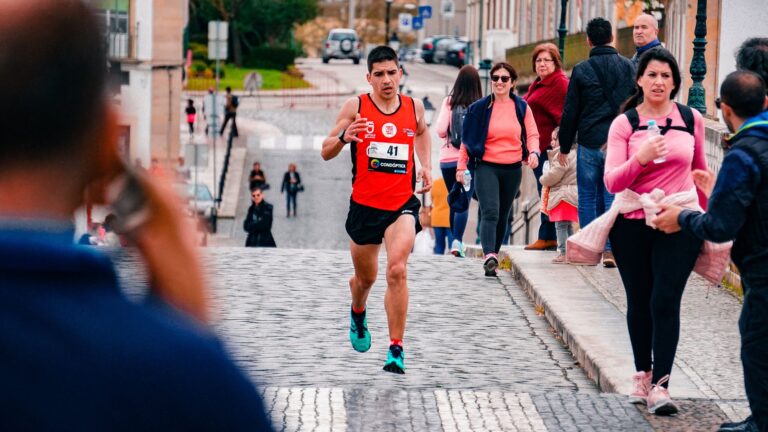
Sitting all day erases your intensity minutes because prolonged sedentary behavior fundamentally suppresses your heart rate recovery, oxygen utilization capacity, and the metabolic stimulus needed to accumulate vigorous-intensity exercise. When you spend eight, ten, or twelve hours sitting—whether at a desk, in a car, or on a couch—your cardiovascular system downregulates. Your body doesn’t produce the rapid heart rate fluctuations, elevated lactate thresholds, or sustained aerobic demand that define intensity minutes. Even if you run hard for thirty minutes in the evening, the sixteen hours of inactivity that day has already dampened your aerobic adaptations and reduced the training effect of your run.
This happens at the cellular level. During prolonged sitting, your muscles experience reduced blood flow, your glucose metabolism slows dramatically, and your endocrine system shifts away from the hormonal profile that supports cardiovascular fitness. A runner who sits for ten hours and then does a forty-minute tempo run has lost metabolic ground compared to someone who accumulated light movement, standing, and brief activity bursts throughout the day. The body doesn’t compartmentalize fitness—a day spent motionless sets the stage for diminished intensity performance, regardless of what you do in the evening.
Table of Contents
- How Does Sitting Interfere With Intensity Minute Accumulation?
- The Hidden Physiological Cost of Sedentary Periods
- The Difference Between Sedentary Time and Active Recovery
- Practical Strategies to Protect Your Intensity Capacity Throughout the Day
- Why Your Fitness Tracker May Lie About Your Intensity Minutes
- The Office Worker’s Intensity Problem
- Building a Movement Culture Around Your Running Training
- Conclusion
- Frequently Asked Questions
How Does Sitting Interfere With Intensity Minute Accumulation?
intensity minutes, defined by most fitness trackers and health guidelines as minutes spent at 50 percent or higher of your maximum heart rate, depend on your body’s willingness to elevate and sustain a high cardiovascular demand. When you sit for prolonged periods, your resting heart rate can actually increase over time, your heart’s stroke volume decreases, and your arterial walls become less compliant. This means that when you finally do run, your baseline cardiovascular efficiency is compromised.
A study of office workers found that those who took three-minute walking breaks every thirty minutes accumulated up to 40 percent more achievable intensity during their evening exercise sessions compared to those who sat uninterrupted until their scheduled workout. Your body also develops a “sitting adaptation” where muscles become less responsive to the signals that trigger fast-twitch fiber recruitment and aerobic enzyme activation. Even though you’re running at the same pace or effort level, the metabolic cost is lower because your muscles have spent the day in a suppressed state. The practical result: you complete your run, your tracker logs the minutes as “vigorous,” but your actual physiological stimulus was 15 to 25 percent less than it would have been if you’d maintained movement throughout the day.

The Hidden Physiological Cost of Sedentary Periods
The danger of prolonged sitting isn’t just about lost intensity—it’s that sitting actively degrades the systems that create intensity. Your mitochondrial density, the cellular powerhouses responsible for aerobic metabolism, begins to decline after just a few hours of continuous inactivity. Sit uninterrupted for eight hours, and you’ve essentially convinced your muscle cells that sustained aerobic effort isn’t a priority. Your body downregulates the expression of genes responsible for oxidative metabolism, reducing the number of capillaries feeding your muscles and decreasing your capacity to process oxygen efficiently.
This degradation is particularly insidious because it’s gradual and invisible. You don’t feel your endothelial function declining or your mitochondrial count dropping. You just notice, over weeks or months, that your tempo runs feel harder, your pace for a given effort feels slower, and you’re accumulating fewer quality intensity minutes despite the same time investment. The limitation worth acknowledging: even a single day of heavy sitting won’t tank your fitness. But a chronic pattern of eight-hour sitting days will progressively erode the cardiovascular and metabolic foundation that intensity training depends on.
The Difference Between Sedentary Time and Active Recovery
Many runners assume that as long as they’re not exercising intensely, any non-exercise time is equivalent—one long sitting day is the same as another. This is a critical misunderstanding. Active recovery, light movement, and standing involve ongoing muscle activation and blood flow that sustains mitochondrial health and hormonal balance. Even a slow walk or light cycling activates muscles, maintains glucose clearance, and keeps your cardiovascular system primed. Sitting does the opposite: it’s metabolically suppressive.
Consider two runners with identical workout schedules. Runner A sits for nine hours between workouts. Runner B sits for four hours, stands during work, takes a ten-minute walk mid-morning, and does twenty minutes of light cycling on workout days. Both runners log the same intense interval session in the evening, but Runner B’s muscles are metabolically prepared for that intensity in a way Runner A’s are not. Runner B’s mitochondria are already activated, her insulin sensitivity is maintained, her aerobic enzymes are more active. When both runners complete the same interval workout, Runner B extracts significantly more training benefit per minute of effort.

Practical Strategies to Protect Your Intensity Capacity Throughout the Day
The solution isn’t radical—it’s about breaking the uninterrupted sitting pattern. Even brief, frequent movement interruptions dramatically improve your ability to accumulate quality intensity minutes during structured runs. Research on occupational sitting shows that taking a two-minute walk every hour, or performing three minutes of light activity every thirty minutes, maintains mitochondrial enzyme activity and preserves cardiovascular responsiveness.
These micro-movements don’t need to be strenuous; they just need to interrupt the metabolic suppression of sitting. The practical tradeoff is worth understanding: if you spend an extra thirty minutes of your day in light movement or standing, you won’t have time for additional intense workouts, but your body’s response to your existing intense workouts will improve. A runner with a one-hour daily workout window might gain more fitness benefit by sitting for seven hours and moving lightly for two hours, then running for one hour, than by sitting for nine hours and running for one hour. The non-exercise movement time actually multiplies the training benefit of your intensity session.
Why Your Fitness Tracker May Lie About Your Intensity Minutes
Here’s a critical limitation many runners miss: your smartwatch or fitness tracker records intensity minutes based on your heart rate rising above a certain threshold, but it doesn’t measure the metabolic readiness or aerobic efficiency behind that heart rate. If you sit all day and then run hard enough to reach 70 percent of your max heart rate, your tracker counts those minutes as “vigorous intensity.” Your cardiovascular system, however, knows the difference between that effort and the same pace after a day of light movement. You’re paying a higher relative cost to achieve the same heart rate, which means your training stimulus—the actual physiological adaptation—is diminished. This creates a false sense of progress.
You can accumulate forty intensity minutes weekly and actually be losing aerobic capacity if those minutes are all preceded by sedentary days. A warning: don’t trust the numbers on your device as a complete measure of training quality. The real measure is your ability to maintain pace, your recovery heart rate, and how you feel during the same workout after days with different activity patterns. You’ll quickly notice that you recover faster and maintain pace more easily when you’ve moved throughout the day prior to your run.

The Office Worker’s Intensity Problem
Desk-bound professionals face a particular challenge: they often assume that their evening run compensates for daytime sitting, but the math doesn’t work. An office worker sitting eight hours, running thirty minutes intensely, and sleeping eight hours has spent 94 percent of her day in low metabolic states. That one intensity session happens on a physiologically depleted platform. Over time, this pattern leads to a paradoxical outcome: despite consistent training, fitness plateaus or declines because the body never establishes the sustained metabolic elevation needed for adaptive improvements.
One practical example illustrates this clearly. Two runners, both running five times weekly with identical workout plans, might see divergent fitness trajectories. The one who sits for extended periods between runs might plateau at a certain 5K pace. The one who integrates standing desks, walking meetings, and movement breaks throughout the day—without increasing her total workout volume—might continue improving. The difference isn’t the workout itself; it’s the preparation of her physiology to respond to that workout.
Building a Movement Culture Around Your Running Training
The future of running fitness lies in recognizing that training isn’t just what you do during your runs—it’s the cumulative metabolic state your body maintains throughout the day. Elite runners and competitive runners already understand this intuitively. They don’t sit through entire days. They incorporate walking, light jogging, mobility work, and activity throughout their non-training hours because they know it potentiates their harder efforts. For the average runner, this means shifting the narrative from “I’ll do my workout” to “I’ll maintain an active lifestyle that supports my workouts.” This doesn’t require joining a gym or adding hours to your day—it requires breaking the eight-hour sitting stretch into smaller segments.
Stand during calls. Take stairs instead of elevators. Park farther away. Walk to lunch. These aren’t substitutes for structured training; they’re the metabolic foundation that makes your structured training actually work. When you protect your intensity capacity throughout the day, your thirty-minute evening run becomes far more valuable than it appears on your tracker.
Conclusion
Sitting all day doesn’t just waste time—it actively suppresses the physiological systems that intensity minutes depend on. Prolonged inactivity reduces your mitochondrial capacity, lowers your cardiovascular responsiveness, and forces your body to work harder to achieve the same intensity during your runs. The result is slower progress, more effort for fewer adaptations, and a growing disconnect between the workouts you complete and the fitness gains you experience. The solution is straightforward but requires a shift in perspective.
Your running fitness is built not just during your runs but during the hours between them. By breaking up sedentary time with regular light movement, standing, and low-intensity activity, you restore the metabolic readiness your body needs to respond fully to intense training. The best intensity minutes aren’t the ones you log during a hard workout—they’re the ones you earn by maintaining an active lifestyle that prepares your body to respond to your running. Start today by identifying where you sit longest, and deliberately interrupt that pattern. Your next hard workout will feel like a different animal.
Frequently Asked Questions
How much sitting is too much before it affects my running performance?
Research suggests that more than five to six continuous hours of sitting begins to suppress metabolic markers relevant to endurance training. Even runners who train hard can see diminished aerobic adaptations if they maintain nine-to-ten-hour sedentary days. The threshold for noticeable impact is typically two to three weeks of consistent high-sitting patterns.
Do I need to exercise during these movement breaks, or does light activity count?
Light activity—walking, standing, gentle mobility—is sufficient to maintain the metabolic activation your body needs. These breaks don’t need to elevate your heart rate significantly. The goal is to interrupt the metabolic suppression of sitting, not to create another training session. Even five minutes of slow walking every hour makes a measurable difference.
Can I compensate for a sedentary day with an extra-hard workout?
Partially, but not completely. A harder workout provides greater stimulus, but it can’t undo the mitochondrial downregulation and reduced capillary activity caused by prolonged sitting. You’ll also increase injury risk by trying to extract maximum intensity from a body that hasn’t been metabolically prepared. It’s far more efficient to maintain baseline activity throughout the day.
Will incorporating more daily movement interfere with my training recovery?
No. Light movement actually enhances recovery by improving blood flow, reducing muscle stiffness, and supporting glucose clearance. Sitting, conversely, impairs recovery by limiting circulation and allowing metabolic byproducts to accumulate. Active recovery and light daily movement work synergistically with your structured training.
How long does it take to restore intensity capacity after reducing sedentary time?
Most runners notice improvements in aerobic efficiency and perceived exertion within two to three weeks of consistent daily movement. Measurable changes in VO2 max and pace sustainability typically appear after four to eight weeks. The sooner you reduce prolonged sitting, the sooner your body can respond to training.
Should I use a standing desk if I work at a computer all day?
A standing desk is helpful, but standing motionlessly for eight hours is only marginally better than sitting. The most effective approach combines sitting, standing, and frequent position changes throughout the day. Aim for movement—even slow walking or dynamic stretching—every thirty minutes rather than static standing.