
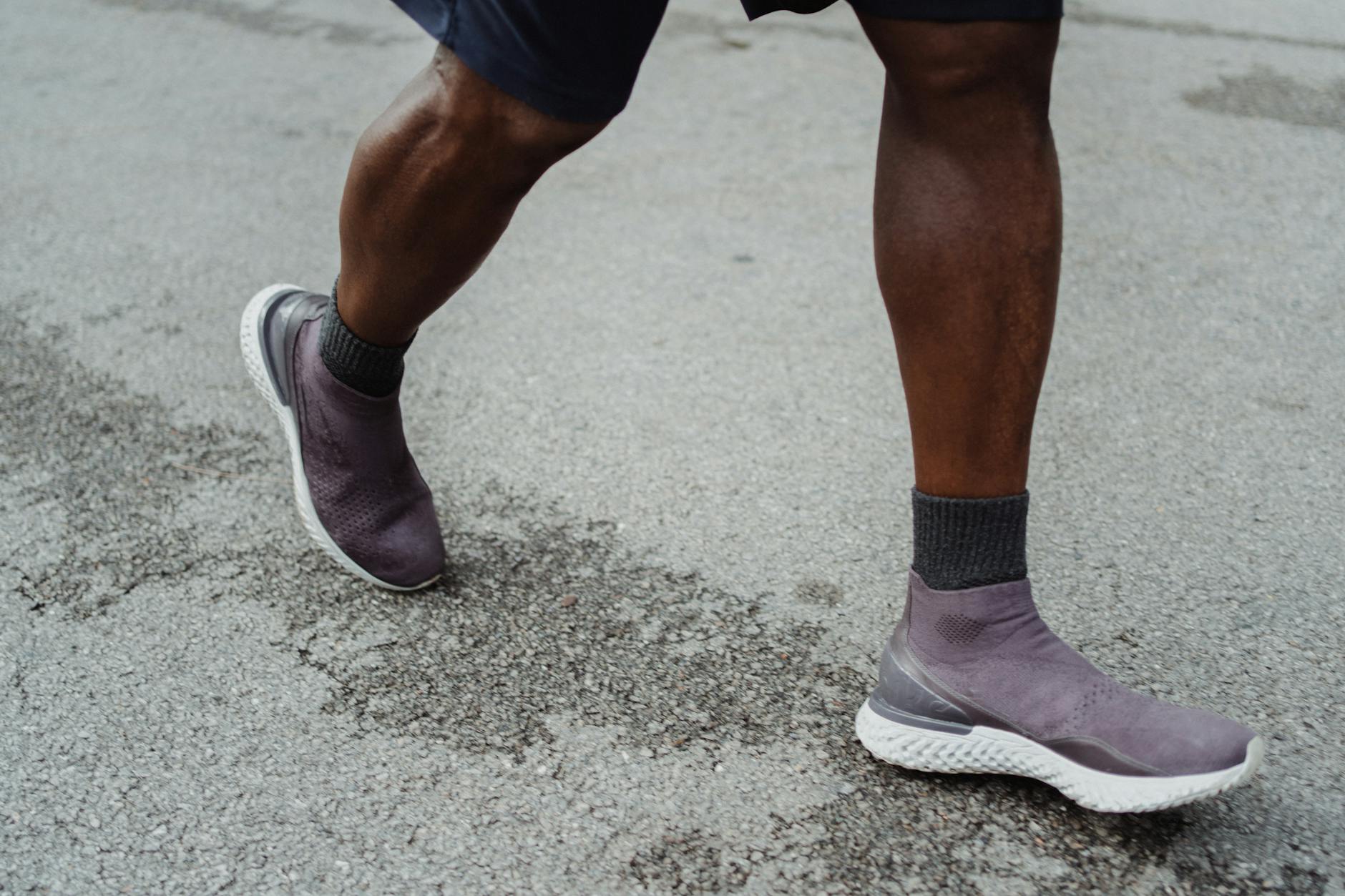
Seasonal running shoes can improve your performance because the materials in your footwear behave dramatically differently depending on the weather, and wearing the wrong shoe at the wrong time of year means you are leaving measurable gains on the table. Consider this: a standard EVA-foam running shoe stiffens by 62.5 percent after just twenty minutes in freezing conditions, according to testing by RunRepeat. That means the cushioning system you rely on for energy return and joint protection is barely functioning by the time you finish your winter warm-up. Meanwhile, a summer shoe with a waterproof membrane and aggressive lugs will overheat your feet and weigh you down on a hot July road run. Matching your shoes to the season is not a marketing gimmick — it is a basic equipment decision backed by material science.
The performance difference goes beyond comfort. Research published in Frontiers in Sports and Active Living found that carbon-plated super shoes deliver 2 to 6 percent improvements in running economy during 80-minute trials, and advanced footwear technology overall provides roughly a 4 percent improvement in running economy and about a 2 percent improvement in race performance. But those numbers assume the shoe is performing as designed. When temperature changes compromise foam responsiveness or when slick roads force you to shorten your stride, those gains disappear. This article breaks down exactly how temperature affects your shoe materials, what winter and summer-specific features actually matter, and how the latest 2026 shoe technology trends are making seasonal performance easier to achieve. The practical upshot is straightforward: owning at least two pairs of running shoes — one optimized for cold and wet conditions, one for heat and dry roads — is one of the cheapest per-mile performance upgrades available to any runner.
Table of Contents
- How Does Cold Weather Change Your Running Shoe Performance?
- Winter Running Shoes — Traction, Waterproofing, and Their Tradeoffs
- Why Summer Breathability Is a Performance Factor, Not Just a Comfort Feature
- How to Choose Between Seasonal and All-Weather Running Shoes
- The Injury Risk Factor Most Runners Overlook in Seasonal Shoe Selection
- How Advanced Shoe Technology Gains Vary by Runner
- 2026 Trends — Dynamic Adaptability and Democratized Performance
- Conclusion
- Frequently Asked Questions
How Does Cold Weather Change Your Running Shoe Performance?
Most runners understand that cold weather affects their muscles and joints, but few realize it fundamentally alters the shoe itself. Over 60 percent of running shoes on the market use EVA foam in the midsole, and EVA is the worst performer in cold temperatures. RunRepeat’s controlled testing showed that a Nike React Infinity Run 3, which uses a standard EVA compound, became 62.5 percent firmer after 20 minutes at 0°F. For comparison, the Nike ZoomX Invincible Run 3, built with PEBA foam, stiffened by only 10.3 percent under the same conditions. That gap means the EVA shoe has essentially turned into a rigid platform while the PEBA shoe is still providing meaningful cushioning and energy return. This matters for performance in two ways.
First, firmer foam absorbs less impact, which increases the cumulative load on your legs and accelerates fatigue over distance. Second, energy return drops when foam cannot compress and rebound properly, so each stride costs you more effort. If you are running a winter half marathon in EVA shoes, you are working harder per mile than the same effort in the same shoes on a warm fall day. The runner next to you in PEBA-based shoes is not dealing with that penalty. The takeaway is not that EVA shoes are bad — they are often more affordable and perfectly adequate in moderate temperatures. But if you regularly run in conditions below freezing, choosing a shoe with PEBA or A-TPU foam for your cold-weather rotation is a material science decision, not a fashion one. Carbon-plated super shoes, which predominantly use these advanced foams, retain their cushioning properties significantly better in freezing temperatures, making them a strong seasonal choice even for training runs in winter.

Winter Running Shoes — Traction, Waterproofing, and Their Tradeoffs
Beyond foam stiffness, winter running demands specific outsole and upper features that warm-weather shoes simply do not provide. Traction is the most critical. Outsoles designed for wet and icy surfaces use deep, well-spaced lugs combined with sticky rubber compounds, and the tread patterns often feature channels and grooves that function similarly to car tire treads, displacing water to maintain contact with the road surface. For true ice, however, metal spikes or screw-in studs remain the only foolproof method for reliable traction. No rubber compound alone will keep you upright on black ice. Gore-Tex linings and similar waterproof membranes help isolate your feet from humidity and cold moisture, keeping them drier and warmer over the course of a run. This is valuable on slushy roads and during freezing rain.
However, waterproof shoes come with a significant limitation: they trap heat and moisture from your sweat inside the shoe. If you are running hard enough to generate substantial foot perspiration, a Gore-Tex-lined shoe can leave your socks soaked from the inside, which defeats the purpose on longer efforts. Waterproof shoes work best for easy to moderate winter runs, not for high-intensity sessions where breathability matters more than weather protection. The practical warning here is that no single winter shoe handles every condition. A Gore-Tex road shoe with moderate lugs is excellent for cold rain and light snow. A studded trail shoe is necessary for ice. And a well-cushioned PEBA-foam shoe without waterproofing may actually be your best option for dry, cold days where the roads are clear but the temperature is brutal. Runners who treat winter shoes as a single category tend to end up with a compromise that does nothing particularly well.
Why Summer Breathability Is a Performance Factor, Not Just a Comfort Feature
Breathability is the key seasonal factor for warm-weather running, and it affects performance more directly than most runners appreciate. Engineered mesh uppers with high air permeability and moisture-wicking properties keep feet cool and reduce overheating, which matters because elevated foot temperature contributes to swelling, increased friction, and blister formation — all of which degrade your stride over distance. Single-layer and zoned mesh designs allow strategic airflow while maintaining structural support, directing ventilation where heat buildup is greatest without sacrificing the fit and lockdown you need at speed. The foam story also shifts in summer.
High temperatures can soften some foam compounds excessively, making the midsole feel mushy and reducing the snap you get from each stride. Foam compounds like Nike ZoomX and Asics Flytefoam maintain their cushioning properties better in heat than some alternatives, which is why shoe selection in summer is not just about the upper. A shoe that feels perfectly tuned at 50°F may feel dead and unresponsive at 90°F if the foam compound is sensitive to heat, and conversely, a shoe that feels stiff in moderate weather may actually come alive in warm conditions. One specific example: many runners who train in thick, cushioned daily trainers during winter find that those same shoes feel sluggish and overheated in July. Switching to a lighter, more breathable shoe with a heat-stable foam for summer training runs can restore the responsiveness they enjoyed in cooler months without changing anything else about their training.
How to Choose Between Seasonal and All-Weather Running Shoes
The practical question most runners face is whether seasonal shoes are worth the investment compared to running in a single pair year-round. The comparison comes down to how much performance you are willing to leave on the table and how harsh your local climate actually is. If you live somewhere with mild winters and moderate summers, a versatile daily trainer with decent breathability and a non-EVA foam may cover you adequately across seasons. The loss in cold-weather cushioning will be modest, and you will not need aggressive traction features. For runners in climates with genuine winters — temperatures regularly below freezing, ice, or persistent wet conditions — the tradeoff shifts heavily in favor of seasonal shoes. The 62.5 percent stiffness increase in EVA foam at 0°F is not a marginal difference; it fundamentally changes how the shoe performs.
Pairing a winter shoe with appropriate traction and cold-resistant foam alongside a breathable, lightweight summer trainer gives you something closer to the designed performance of each shoe across the full year. The cost of a second pair of shoes is modest compared to the cumulative impact on training quality over months of compromised cushioning or traction. The key tradeoff to consider is rotation complexity versus performance consistency. Running in multiple shoes requires tracking mileage on each pair, adjusting to slightly different fits and stack heights, and potentially owning three or four shoes if you also have a race-day option. For competitive runners chasing specific times, this complexity is easily worth it. For recreational runners focused on general fitness, a single high-quality shoe with advanced foam and reasonable breathability may be the simpler, more practical choice.
The Injury Risk Factor Most Runners Overlook in Seasonal Shoe Selection
A 2025 study published in Scientific Reports by Nature found that technologically advanced running shoes reduce biomechanical risk factors for running-related injuries by combining stiff embedded plates, curved geometry, and lightweight resilient foam. This finding adds an injury-prevention dimension to the seasonal shoe conversation that goes beyond pure performance. When your shoe foam stiffens dramatically in cold weather, you lose not only energy return but also the impact absorption that protects your joints and connective tissue from the repetitive loading of distance running. The limitation to acknowledge here is that advanced shoe technology is not a substitute for proper training load management, strength work, or biomechanical efficiency. A runner who increases mileage too quickly in winter will get hurt regardless of their foam compound.
But all else being equal, a shoe that maintains its designed cushioning properties in the conditions you actually run in provides a meaningful layer of protection that a seasonally compromised shoe does not. This is particularly relevant for older runners and those returning from injury, where the margin for error on impact loading is smaller. One warning: some runners assume that maximum cushioning equals maximum protection and default to the thickest, softest shoe they can find for winter. But excessive softness — especially in a shoe that becomes unpredictable on cold surfaces — can introduce instability. A moderately cushioned shoe with cold-resistant foam and good traction may actually reduce injury risk more effectively than an ultra-cushioned shoe that wobbles on icy pavement.

How Advanced Shoe Technology Gains Vary by Runner
The performance gains from advanced footwear technology are real but not uniform across all runners. Research tracking elite athletes found that female competitors saw 1.7 to 2.3 percent decreases in seasonal best times between 2016 and 2019 with advanced shoe technology, while male counterparts saw 0.6 to 1.5 percent improvements over the same period. This suggests that the magnitude of benefit from shoe technology may vary by biomechanics, body weight, running economy baseline, and other individual factors.
For everyday runners, the overall research consensus of roughly 4 percent improvement in running economy and 2 percent improvement in race performance is a useful benchmark, but it is an average. Some runners respond more to plate stiffness, others to foam resilience, and the seasonal dimension adds another variable. The practical lesson is to test your seasonal shoes in training before racing in them, and to pay attention to how different foam types feel in the specific temperatures you encounter, rather than assuming that any advanced shoe will automatically deliver its lab-tested gains in all conditions.
2026 Trends — Dynamic Adaptability and Democratized Performance
The major 2026 shoe technology trend is “Dynamic Adaptability” — midsoles engineered to be softer on landing and firmer on push-off, adapting in real time to foot biomechanics. This approach represents a potential shift in the seasonal shoe conversation because adaptive foam could theoretically respond to temperature-induced changes as well as stride-phase changes, narrowing the performance gap between seasons within a single shoe.
Equally significant, brands are democratizing elite materials by bringing PEBA super-foams to non-racing shoes while removing the aggressive carbon plates that make race-day models too stiff for everyday training. This means that cold-weather foam resilience, previously available mainly in expensive carbon-plated racers, is filtering into daily trainers and long-run shoes. If this trend continues, the argument for seasonal shoes may eventually shift from foam performance to traction and breathability features alone — but for now, most runners are still lacing up EVA-based trainers that lose the majority of their cushioning when the temperature drops.
Conclusion
The case for seasonal running shoes rests on material science, not marketing. EVA foam loses over 60 percent of its cushioning in freezing conditions, winter surfaces demand traction features that summer shoes lack, and summer heat requires breathability that waterproof winter shoes cannot provide. Advanced footwear technology delivers measurable performance and injury-prevention benefits, but only when the shoe is functioning as designed — which means matching it to the conditions you actually run in. The next step for most runners is honest assessment.
Look at your local climate, your training intensity, and the foam type in your current shoes. If you are running through genuine winters in EVA-foam trainers, you are absorbing a significant and unnecessary performance penalty on every run. A single seasonal addition — a cold-weather shoe with PEBA or A-TPU foam and appropriate traction — may be the most cost-effective upgrade available to you. Test it in training, compare your perceived effort and pace, and let the data from your own legs make the decision.
Frequently Asked Questions
Do I really need different running shoes for winter and summer?
If you run in a climate with freezing winters, yes. The foam stiffness changes alone — up to 62.5 percent in EVA shoes at 0°F — are significant enough to alter cushioning, energy return, and injury risk. In mild climates, a single versatile shoe with advanced foam may suffice.
Are carbon-plated shoes better for winter running?
Carbon-plated shoes tend to use PEBA foam, which retains cushioning far better in cold temperatures (only 10.3 percent stiffness increase versus 62.5 percent for EVA). However, they are designed for racing, not daily training, and their outsoles are typically not built for winter traction. They are a good cold-weather race option, not an everyday winter shoe.
How much faster can seasonal shoes actually make me?
Advanced footwear technology delivers roughly 4 percent improvement in running economy and about 2 percent improvement in race performance on average. The seasonal component adds to this by ensuring you get those gains year-round rather than losing them when foam stiffens in cold weather or softens excessively in heat.
Is Gore-Tex worth it in winter running shoes?
Gore-Tex is valuable for wet, cold conditions like slush and freezing rain, but it traps internal moisture from sweat. It works best for easy to moderate efforts. For intense winter runs on dry, cold days, a non-waterproof shoe with cold-resistant foam may actually perform better.
What foam type should I look for in a winter running shoe?
PEBA and A-TPU foams retain their cushioning properties significantly better in freezing temperatures compared to EVA. Since over 60 percent of shoes on the market use EVA, you will need to specifically seek out models with these advanced foams for cold-weather running.