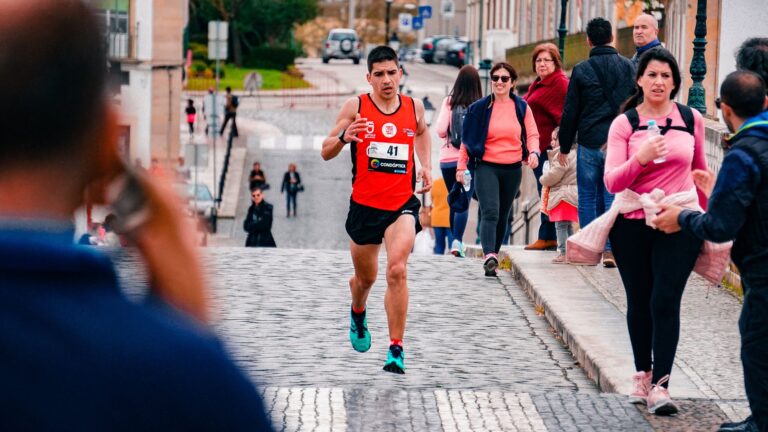
Running earns intensity minutes faster than cycling primarily because running demands greater cardiovascular effort and engages more muscle groups simultaneously. When you run, your heart rate elevates more rapidly to support the full-body exertion—your legs drive upward against gravity, your core stabilizes each impact, and your arms swing to maintain momentum. A cyclist, by contrast, benefits from mechanical efficiency: the bike’s frame absorbs weight, momentum carries you forward more easily, and the pedaling motion isolates your lower body in a smooth, repetitive pattern. For example, a 150-pound person running at a moderate 6 miles per hour typically elevates their heart rate to 140-150 beats per minute within minutes, while the same person cycling at 12-14 miles per hour (a similar difficulty level) might only reach 120-130 beats per minute. This difference in cardiovascular demand is why fitness trackers and smartwatches consistently award intensity minutes faster to runners than cyclists during comparable workout durations.
The reason boils down to physics and physiology. Running is fundamentally less efficient than cycling—your body works harder to move the same distance. That inefficiency is actually the point: intensity minutes are designed to measure cardiovascular work, not miles covered. Since most wearables define intensity as time spent in elevated heart rate zones (typically 70-85 percent of maximum heart rate), the activity that pushes your heart harder in less time generates more intensity credits. Running forces your body into those zones faster because it’s working against gravity, impact, and a constant need to decelerate and re-accelerate with every stride.
Table of Contents
- What Determines How Quickly You Earn Intensity Minutes?
- How Muscle Engagement Affects Heart Rate Response
- How Impact and Ground Reaction Forces Drive Intensity
- Tailoring Your Activity Choice Based on Intensity Goals
- Why Intensity Minute Calculations Vary Between Devices
- Environmental and Practical Considerations
- Long-Term Training Implications and Balancing Modalities
- Conclusion
- Frequently Asked Questions
What Determines How Quickly You Earn Intensity Minutes?
Intensity minutes are awarded based on heart rate duration and elevation, not speed or distance. Your smartwatch or fitness tracker measures how long your heart rate stays in what it considers the “intense” zone—a threshold typically set at 70 percent of your age-predicted maximum heart rate. running crosses this threshold faster than cycling because running generates a higher absolute heart rate at any given speed or effort level.
A runner maintains that elevated zone more consistently throughout the workout, while a cyclist can coast, shift gears downward, and recover without stopping. A 150-pound 40-year-old running at 7 miles per hour might sustain 145 beats per minute for 30 continuous minutes, earning 30 intensity minutes. That same person cycling at 14 miles per hour (double the mechanical speed but similar effort) might dip below the intensity threshold every few minutes during gear shifts or slight descents, only earning 18-22 intensity minutes over the same half-hour. The consistency of cardiovascular demand during running is what accelerates the intensity minute accumulation.

How Muscle Engagement Affects Heart Rate Response
running involves far more muscular recruitment than cycling. When you run, you’re engaging your glutes, quadriceps, hamstrings, calves, core, hip flexors, obliques, and stabilizer muscles across your entire posterior chain—all firing rapidly in sequence. Your cardiovascular system must deliver oxygen to all these working muscles simultaneously, demanding higher cardiac output. Cycling, by design, isolates the lower body into a smooth, repetitive motion that’s mechanically efficient; your heart rate climbs, but it doesn’t have to work as hard because fewer muscle groups are competing for oxygen.
A limitation to remember: this muscular efficiency advantage of cycling is also why cyclists can sustain longer workouts. Running’s higher intensity comes at a metabolic cost. If you’re an untrained person who wants to accumulate high intensity minutes safely, cycling allows longer recovery between intense efforts. A cyclist can sprint for 30 seconds, recover for a minute at low effort, and repeat this pattern for 45 minutes. A runner attempting the same interval strategy on tired legs faces higher injury risk because the repetitive impact stress compounds with fatigue.
How Impact and Ground Reaction Forces Drive Intensity
The most overlooked factor in intensity minute differences is impact. Every time your foot strikes the ground while running, your body absorbs and redirects a force equal to 1.5 to 2.5 times your body weight. Your muscles must instantly stabilize your joints, control deceleration, and launch you forward again. This cyclical impact forces your heart to work harder because every system in your body is under constant stress—there’s no coasting, no mechanical advantage, nowhere to hide from the workload. Cycling has no such impact component.
Your legs push a pedal downward, and physics and the bike’s gearing do much of the rest. A concrete example: a 180-pound runner at a 6.5 miles per hour pace lands approximately 1,700 times per mile. Each landing is a muscular stabilization event. Over a 3-mile run, that’s 5,100 muscular bracing moments. A 180-pound cyclist pedaling at 13 miles per hour makes approximately 5,400 pedal rotations over 3 miles—similar repetition count, but without the impact stress or the need for continuous whole-body stabilization.

Tailoring Your Activity Choice Based on Intensity Goals
If your primary goal is accumulating intensity minutes quickly, running is objectively more efficient. A 30-minute run typically generates 20-28 intensity minutes, while 30 minutes of recreational cycling generates 10-15. However, this isn’t a blanket endorsement of running for everyone. The tradeoff is sustainability and injury risk. Running is high-impact and demands more recovery.
Someone with knee issues, shin splints, or a history of impact-related injuries should not abandon cycling to chase intensity minutes faster—they should instead modify their cycling intensity. Cycling intensity can be increased by adding hill repeats, reducing recovery between efforts, or maintaining a higher cadence (pedal revolutions per minute) with lower gearing. A 45-year-old cyclist who shifts their workout from flat, leisurely cycling to rolling hills with 90+ RPM hill intervals can earn similar intensity minutes to running while preserving joints. The practical choice depends on your baseline fitness, injury history, and lifestyle. A runner already accumulating 8-12 intensity hours per week faces burnout and injury risk if they push harder. A cyclist interested in increasing intensity should first try intensity-focused cycling before adding running.
Why Intensity Minute Calculations Vary Between Devices
Different fitness trackers use different algorithms to calculate intensity minutes, which explains why your Apple Watch, Fitbit, and Garmin might award different intensity totals for identical workouts. Apple Watch uses a more conservative heart rate threshold and accounts for individual heart rate variability better than older Fitbit models. Garmin considers not just heart rate but also elevation and pace data. A warning: don’t assume your wearable’s intensity minute calculation is medically accurate or representative of true cardiovascular work.
These calculations are estimates based on age-predicted maximum heart rate, which can be off by 10-15 beats per minute for any individual. Someone with a naturally low resting heart rate and high aerobic capacity might cross into an intensity zone easier than the formula predicts, or vice versa. If you’re training for health reasons or preparing for an event, actual measured fitness (VO2 max tests, lactate threshold measurements) provides more meaningful feedback than intensity minutes alone. Intensity minutes are useful for motivation and consistency tracking, but they shouldn’t become your only metric of fitness progress.

Environmental and Practical Considerations
Weather and terrain impact intensity minute accumulation differently for running and cycling. A runner faces headwind as a direct intensity multiplier—running into a 10-mile-per-hour headwind increases heart rate by 5-8 beats per minute compared to calm conditions.
A cyclist, despite moving faster and catching more wind, can mitigate headwind effects through drafting or by simply shifting to lower gears and accepting a lower speed. Conversely, a hilly cycling route generates more intensity minutes than hilly running because cyclists must power uphill against gravity with pedal pressure, while runners can control intensity by running downhill at reduced effort. Over a rolling 10-mile route, a cyclist might earn 25-30 intensity minutes while a runner on the same route earns 18-24, simply because the cyclist must maintain power output uphill while the runner can tactically recover on descents.
Long-Term Training Implications and Balancing Modalities
Elite endurance athletes—marathoners, Ironman competitors, and ultrarunners—often use cycling as a high-volume, low-impact training complement precisely because cycling generates fewer intensity minutes despite being aerobically demanding. This allows them to build aerobic capacity without accumulating the injury stress of daily running. The future of fitness tracking is moving toward more sophisticated metrics: power output (watts), efficiency (distance per calorie), and zone time at specific intensities rather than simple heart rate thresholds.
Understanding why running generates intensity minutes faster than cycling helps you make strategic training decisions. If you’re young, healthy, and want rapid fitness gains, running’s intensity efficiency is an asset. If you’re managing injuries, seeking sustainable long-term fitness, or want to preserve your joints into your 60s and 70s, cycling’s lower impact despite lower intensity minute output is the smarter choice.
Conclusion
Running earns intensity minutes faster than cycling because it demands greater absolute cardiovascular effort, engages more muscle groups simultaneously, and involves impact forces that cycling eliminates through mechanical efficiency. The efficiency gap is real and measurable: a runner typically accumulates 50-80 percent more intensity minutes than a cyclist in the same time period at similar perceived effort. This advantage makes running appealing for people short on time or focused on maximizing cardiovascular training stimulus.
However, intensity minutes are just one metric of fitness. The best workout is the one you’ll do consistently and that doesn’t injure you. If running causes persistent pain or you’re simply not a runner, cycling can still build endurance and cardiovascular fitness—it just won’t ring the intensity minute bells as quickly. Choose your primary activity based on longevity and enjoyment; cross-train with the other to keep training fresh and balanced.
Frequently Asked Questions
Can I earn the same intensity minutes on a bike as a run if I go harder?
Possibly, but with caveats. A cyclist working at their maximum sustainable effort might eventually reach similar intensity minute accumulation as a runner at moderate effort. However, this requires higher absolute effort, shorter sustainable duration, and greater fatigue afterward. Most cyclists won’t sustain this longer than 45-60 minutes; most runners can sustain moderate intensity for 60-90 minutes.
Does cycling at high cadence (100+ RPM) help earn intensity minutes faster?
Yes. Higher cadence with appropriate resistance elevates heart rate more than low cadence with high resistance. A cyclist who increases cadence from 80 RPM to 100 RPM typically sees a 5-8 beat-per-minute heart rate increase at the same power output. This does translate to faster intensity minute accumulation, though typically not to running levels.
If I run one day and cycle the next, should I expect different intensity minute totals?
Almost certainly. The same person will accumulate intensity minutes faster on the running day. This is why alternating running and cycling days is useful for balancing high-impact stimulus (running) with high-volume, low-impact training (cycling) in the same training week.
Are intensity minutes a good measure of fitness improvement?
They’re one useful measure, not the only one. Intensity minutes track consistency in reaching elevated heart rate zones but don’t measure power output, efficiency, or speed gains. Track intensity minutes alongside pace improvements, distance increases, and how you feel to get the full picture.
Does my age affect how quickly I earn intensity minutes?
Yes. As you age, your maximum heart rate declines, which shifts the intensity minute threshold downward. A 25-year-old with a max heart rate of 195 needs to hit 137 BPM for intensity. A 55-year-old with a max heart rate of 165 needs to hit 116 BPM. This means older athletes might accumulate intensity minutes faster at a given perceived effort, though absolute fitness capacity still declines with age.
Can I train for a race using only cycling if I want high intensity minutes?
Not for running races. Sport-specific training matters. If you’re training for a cycling race, high intensity minutes on the bike make sense. If you’re training for a running event, you must train by running, regardless of intensity minute output on other activities. The neuromuscular patterns, impact adaptation, and mental toughness of running don’t transfer fully from cycling.