A well-paced 6-mile treadmill run represents one of the most satisfying achievements in recreational distance running-long enough to challenge your aerobic system, short enough to complete without elaborate fueling strategies, and perfectly suited to the controlled environment of indoor training. Yet many runners struggle to find that sweet spot where effort feels sustainable, breathing stays rhythmic, and the miles pass without the desperate clock-watching that characterizes poorly executed sessions. The difference between a run that leaves you energized and one that leaves you depleted often comes down to pacing decisions made in the first half-mile. This matters because treadmill running removes the natural pace variations that outdoor terrain provides. Without hills, wind resistance, or visual landmarks breaking up the monotony, every pacing mistake becomes magnified.
Start too fast, and you’ll spend miles four through six in a grinding battle against accumulated fatigue. Start too slow, and you’ll finish feeling like you left potential on the belt. The 6-mile distance sits in a challenging middle ground-too long for pure speed work, too short to settle into the meditative rhythm of longer efforts-which makes proper pacing essential rather than optional. By the end of this article, you’ll understand exactly what each mile of a well-executed 6-mile treadmill run should feel like, from the initial warm-up sensation through the midpoint mental challenges to the final push toward completion. You’ll learn how to set appropriate speeds based on your fitness level, recognize the physical and mental cues that indicate proper pacing, and troubleshoot common problems that derail indoor distance runs. This isn’t about chasing arbitrary time goals-it’s about developing the internal awareness that transforms treadmill running from a chore into a skill you can execute with confidence every time you step onto the belt.
Table of Contents
- What Does a Well-Paced 6-Mile Treadmill Run Actually Feel Like Mile by Mile?
- Setting Your 6-Mile Treadmill Pace Without Guesswork
- The Mental Experience of Sustained Treadmill Running
- Practical Treadmill Settings for Your 6-Mile Run
- Common Pacing Mistakes and How to Avoid Them During 6-Mile Treadmill Runs
- Recovery Expectations After a Well-Paced Treadmill Run
- How to Prepare
- How to Apply This
- Expert Tips
- Conclusion
- Frequently Asked Questions
What Does a Well-Paced 6-Mile Treadmill Run Actually Feel Like Mile by Mile?
The opening mile of a properly paced 6-mile treadmill run should feel almost disappointingly easy. Your breathing remains conversational, your legs feel fresh, and there’s a persistent temptation to bump up the speed because surely this can’t be challenging enough. This sensation isn’t a sign that you’ve chosen the wrong pace-it’s confirmation that you’ve chosen the right one. During this first mile, your cardiovascular system is transitioning from rest to steady-state work, blood flow is redistributing to working muscles, and your body temperature is gradually rising. Patience here pays compound interest later. Miles two and three mark the transition into what runners call the “working zone.” Your breathing deepens and becomes more rhythmic, settling into a pattern that matches your footstrike cadence. You’re aware of the effort now, but it feels manageable and sustainable. Your heart rate stabilizes at roughly 70-80% of maximum for most recreational runners, and there’s a growing sense of rhythm as your body finds its groove.
Mental engagement shifts from monitoring physical sensations to simply maintaining form and letting the miles accumulate. Time perception often improves during this phase-the minutes pass more quickly as you settle into the work. Miles four through six bring the real test of proper pacing. If you’ve held back appropriately, mile four feels challenging but not desperate. Your legs carry a pleasant heaviness that signals work being done, not the burning sensation of accumulated lactate that signals you’ve overreached. Mile five often brings a second wind-a psychological boost from knowing you’re on the home stretch combined with endorphins finally reaching meaningful levels. The final mile requires concentration to maintain form, but the finish feels achievable rather than desperate. You step off the belt tired but not depleted, ready to recover rather than collapse.
- **Mile 1:** Breathing easy, legs springy, temptation to speed up, heart rate climbing gradually toward target zone
- **Mile 2-3:** Effort becomes noticeable but sustainable, breathing rhythmic, mental state calm, body temperature regulated through sweating
- **Mile 4:** First significant mental challenge, slight fatigue in legs, breathing steady but definitely working, awareness of distance remaining

Setting Your 6-Mile Treadmill Pace Without Guesswork
Determining your ideal 6-mile treadmill pace requires understanding the relationship between effort levels and running speeds-and this relationship is highly individual. A pace that feels comfortable for one runner might be anaerobic threshold territory for another. The most reliable method starts with your current easy run pace and works from there. If you typically run easy outdoor miles at 9:30 pace, your 6-mile treadmill pace should fall somewhere between 9:00 and 9:45, depending on your goals for the session and your current fatigue levels. The treadmill offers a unique advantage here: precise pace control that outdoor running cannot match. Use this to your benefit by starting conservatively and making small adjustments.
Set your initial speed 10-15 seconds per mile slower than your target pace for the first half-mile, then gradually increase to target pace by the one-mile mark. This negative split approach-running the second half faster than the first-aligns with how your body naturally warms up and prevents the common mistake of front-loading effort that you’ll pay for later. Heart rate monitoring provides objective feedback that perceived effort cannot. During a well-paced 6-mile run, your heart rate should climb during the first 8-10 minutes, stabilize during the middle miles, and remain relatively flat with perhaps a slight increase in the final mile due to cardiovascular drift. If your heart rate climbs continuously throughout the run, you’ve started too fast. If it spikes dramatically in the final two miles, you may be dehydrated or under-fueled. These patterns give you actionable data for adjusting future sessions.
- **Recovery/Easy Effort:** 60-70% max heart rate, can speak in full sentences, suitable when fatigue is high or you’re building base fitness
- **Moderate/Steady Effort:** 70-80% max heart rate, can speak in short phrases, ideal for most 6-mile training runs
- **Tempo/Threshold Effort:** 80-88% max heart rate, can speak only a few words, appropriate for experienced runners doing quality sessions
- **Speed Conversions:** 1% treadmill incline roughly equals the wind resistance of outdoor running; factor this into pace comparisons
The Mental Experience of Sustained Treadmill Running
Treadmill running presents unique psychological challenges that don’t exist outdoors, and understanding these mental patterns helps you prepare for them rather than being ambushed. The lack of changing scenery, the constant visual reminder of your stats, and the absence of natural pace variation all create a mental environment that requires specific coping strategies. Runners who thrive on treadmills have typically developed systematic approaches to managing attention and expectation throughout longer efforts. The mental arc of a 6-mile treadmill run follows a predictable pattern for most runners. The first mile brings novelty and energy. Miles two and three often feel like the easiest psychologically-you’ve settled in but aren’t yet dealing with fatigue.
Mile four typically represents the mental low point: far enough in to feel tired, far enough from the finish to feel daunting. This is where inadequate pacing reveals itself most brutally. Mile five brings renewed motivation as the end becomes tangible, and mile six often passes surprisingly quickly as finish-line psychology takes over. Successful treadmill runners develop what sports psychologists call “comfort with discomfort.” This doesn’t mean ignoring pain or pushing through injury-it means accepting that moderate discomfort is part of the experience and doesn’t signal that anything is wrong. The well-paced 6-mile run never feels easy throughout, but the difficulty remains consistent and manageable. Learning to distinguish between productive discomfort and problematic pain takes practice, but it’s a skill that transfers directly to race-day performance.
- **Attention Management:** Breaking the run into smaller segments (warm-up mile, middle four, finish mile) makes the total distance feel more manageable
- **Distraction vs. Association:** Some runners do better focusing on external entertainment; others perform better monitoring internal cues-experiment to find your preference
- **The “Mile Four Wall”:** Expecting this challenging point prevents it from derailing your run; prepare specific mental strategies for this segment
Practical Treadmill Settings for Your 6-Mile Run
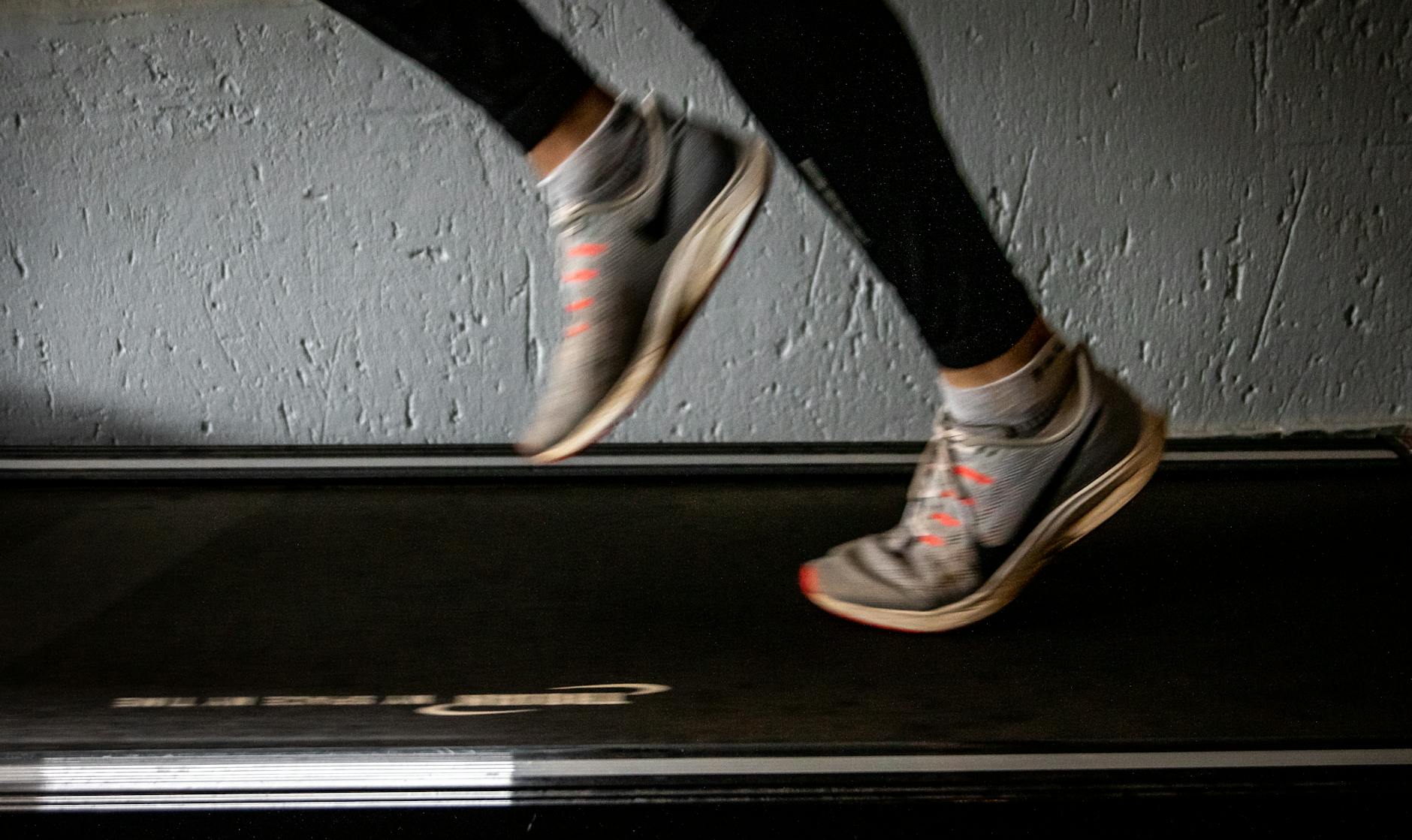
Treadmill setup significantly impacts how your 6-mile run feels, and small adjustments can mean the difference between a smooth session and a frustrating one. The 1% incline rule-often cited as necessary to simulate outdoor running resistance-has been debated in recent research, but most coaches still recommend it as a reasonable starting point. More important than this specific number is consistency: pick a setting and stick with it so you can accurately track progress over time. Speed management deserves careful attention during longer treadmill runs. The impulse to constantly adjust pace based on momentary feelings leads to erratic effort levels that undermine steady-state training benefits. Instead, establish your pace by the end of mile one and commit to holding it through at least mile four before considering adjustments.
If you must change speed, do so in 0.1 mph increments and give your body 2-3 minutes to adapt before evaluating the change. This disciplined approach develops the pacing instincts that serve you in races. The belt surface matters more than most runners realize. Worn treadmill belts can create inconsistent footing that increases injury risk and disrupts rhythm. If your gym’s treadmills vary in condition, identify the best-maintained machines and arrive early enough to claim them. For home treadmill users, following the manufacturer’s lubrication schedule keeps the belt running smoothly and extends both machine life and running comfort.
- **Fan Positioning:** Cooling is crucial for treadmill running; position a fan to blow directly on your upper body, as stationary running eliminates the natural airflow of forward movement
- **Display Management:** Some runners perform better covering the display to prevent obsessive time-checking; others need the feedback for pacing-know your preference
- **Safety Features:** Always clip the safety cord during longer runs when fatigue might affect coordination
- **Towel and Hydration Placement:** Arrange these before starting so you can access them without breaking stride or losing focus
Common Pacing Mistakes and How to Avoid Them During 6-Mile Treadmill Runs
The most prevalent pacing mistake on treadmills is starting at goal race pace rather than training pace. A 6-mile training run should feel noticeably easier than a 6-mile race effort-typically 30-60 seconds per mile slower, depending on your experience level. Training runs build aerobic capacity through time at moderate effort, not through maximum effort every session. Runners who consistently push too hard in training accumulate fatigue that undermines both performance and enjoyment. Another common error involves ignoring environmental factors that affect sustainable pace. Treadmill rooms in gyms are often poorly ventilated and warmer than ideal running conditions.
Every 5-degree increase in ambient temperature above 60 degreesF (15 degreesC) reduces sustainable pace by roughly 1-2% for most runners. If the treadmill room feels stuffy, start at the conservative end of your pace range and only increase speed if you feel genuinely comfortable after the first two miles. The final common mistake is insufficient warm-up. Jumping directly from standing to your target 6-mile pace shocks your cardiovascular system and makes the first mile feel harder than it should. Spend 3-5 minutes walking or jogging slowly before accelerating to your working pace. This investment in warm-up time pays off through smoother transitions and more consistent effort throughout the run.
- **Front-Loading Effort:** Trying to “bank time” early always backfires; the physiological cost of early speed exceeds any time savings
- **Competitive Pacing:** Matching the speed of the runner on the next treadmill leads to paces based on ego rather than fitness
- **Ignoring Cumulative Fatigue:** Your appropriate pace varies based on sleep quality, stress levels, and recent training load-adjust accordingly
- **Rigid Pace Attachment:** Refusing to slow down when clear warning signs appear (gasping, form breakdown, dizziness) risks injury and ruins the session

Recovery Expectations After a Well-Paced Treadmill Run
How you feel immediately after stepping off the treadmill provides valuable feedback about your pacing execution. A well-paced 6-mile run should leave you breathing heavily for 2-3 minutes post-run, with heart rate returning to below 100 beats per minute within 5-10 minutes for most recreational runners. You should feel tired but not exhausted, accomplished but not depleted. The desire to sit down is normal; the inability to stand without support suggests you’ve overdone it.
The 24-48 hours following the run tell the rest of the story. Mild muscle fatigue that resolves with normal daily activity indicates appropriate effort. Excessive soreness, persistent fatigue, or disrupted sleep patterns suggest you pushed harder than your current fitness level supports. Track these recovery patterns over multiple sessions to identify your personal sustainable effort range. This data proves far more valuable than any pace chart or heart rate calculator because it reflects your unique physiology and recovery capacity.
How to Prepare
- **Hydrate strategically starting 2-3 hours before the run.** Consume 16-20 ounces of water in the hours leading up to your session, stopping about 30 minutes before to allow for bathroom needs. Adequate hydration affects both performance and perceived effort-even mild dehydration increases heart rate and makes the same pace feel significantly harder.
- **Eat appropriately 2-4 hours before running.** A light meal containing easily digestible carbohydrates provides fuel without causing GI distress. Avoid high-fiber and high-fat foods that take longer to digest. For early morning runners, a small snack like a banana or piece of toast 30-60 minutes before can provide enough fuel without requiring a full meal.
- **Prepare your treadmill environment before starting.** Position a fan for airflow, place water and a towel within reach, queue your entertainment if you use it, and verify the treadmill is functioning properly. Handling these logistics mid-run disrupts rhythm and wastes mental energy.
- **Complete a proper warm-up of 5-10 minutes.** Begin with 2-3 minutes of walking, progress to easy jogging, and gradually increase to your planned pace by the end of the warm-up period. Include dynamic stretches like leg swings if you tend toward stiffness.
- **Set your mental intention for the session.** Decide in advance whether this is a purely aerobic maintenance run, a moderately challenging steady-state effort, or a harder tempo session. This clarity prevents mid-run second-guessing about appropriate effort levels.
How to Apply This
- **Start your first mile 10-15 seconds per mile slower than your target pace** and gradually build to goal pace by the one-mile mark. Resist the temptation to speed up because you feel good-save that energy for the final two miles.
- **Monitor your breathing pattern rather than obsessing over pace or heart rate.** Rhythmic, controlled breathing that aligns with your footstrike indicates sustainable effort. Gasping, erratic breathing, or the inability to speak short phrases signals you’ve exceeded appropriate intensity.
- **Break the run into mental segments** to make the total distance feel manageable. Think of it as three 2-mile runs: warm-up miles, working miles, and finish miles. Celebrate reaching each checkpoint rather than focusing on total remaining distance.
- **Adjust based on feedback, not ego.** If mile four feels significantly harder than expected, reduce pace by 0.2-0.3 mph rather than grinding through. A slightly slower finish beats a failed workout, and your body will thank you during recovery.
Expert Tips
- **Use the treadmill’s slight bounce to reduce impact.** Treadmill belts provide more give than pavement, but only if you’re not overstriding. Focus on landing with your foot beneath your hips rather than reaching forward, which lets you benefit from the cushioned surface.
- **Cover the display after establishing pace if you’re a chronic clock-watcher.** Constantly checking elapsed time makes runs feel longer and encourages pace-fiddling. A draped towel removes the temptation while still allowing access if needed.
- **Schedule your treadmill runs during off-peak hours when possible.** Cooler, less crowded gym conditions improve both physical comfort and mental focus. Early morning or late evening sessions often provide better environments for longer efforts.
- **Vary your incline by 0.5-1% every mile to simulate outdoor terrain changes.** This slight variation prevents repetitive stress on identical muscles and joints while adding subtle interest to the session. Alternate between 0.5%, 1%, and 1.5% throughout the run.
- **Practice your race-day hydration strategy during training runs.** If you plan to drink during races, get comfortable drinking while running on the treadmill. Grabbing water from the cup holder without breaking stride is a skill worth developing before it matters.
Conclusion
A well-paced 6-mile treadmill run combines physical fitness, mental discipline, and strategic planning into a single repeatable skill. The sensations you experience-from the easy opening mile through the challenging middle section to the satisfying finish-follow predictable patterns that become increasingly familiar with practice. Understanding these patterns removes the guesswork and transforms treadmill running from an uncertain endeavor into a reliable training tool. Each successful session builds not just aerobic fitness but the pacing intuition that transfers to outdoor running and racing.
The key insight is that proper pacing feels counterintuitive at first. Starting slower than you want to, holding back when you feel good, and trusting the process even when the display shows modest numbers all require discipline that runs against competitive instincts. But runners who master this patience consistently finish stronger, recover faster, and build sustainable fitness over time. The 6-mile treadmill run, executed with appropriate pacing, becomes a cornerstone workout that fits into nearly any training schedule and delivers reliable results. Your next session is an opportunity to put these principles into practice-start conservative, trust your preparation, and let the miles unfold.
Frequently Asked Questions
How long does it typically take to see results?
Results vary depending on individual circumstances, but most people begin to see meaningful progress within 4-8 weeks of consistent effort. Patience and persistence are key factors in achieving lasting outcomes.
Is this approach suitable for beginners?
Yes, this approach works well for beginners when implemented gradually. Starting with the fundamentals and building up over time leads to better long-term results than trying to do everything at once.
What are the most common mistakes to avoid?
The most common mistakes include rushing the process, skipping foundational steps, and failing to track progress. Taking a methodical approach and learning from both successes and setbacks leads to better outcomes.
How can I measure my progress effectively?
Set specific, measurable goals at the outset and track relevant metrics regularly. Keep a journal or log to document your journey, and periodically review your progress against your initial objectives.
When should I seek professional help?
Consider consulting a professional if you encounter persistent challenges, need specialized expertise, or want to accelerate your progress. Professional guidance can provide valuable insights and help you avoid costly mistakes.
What resources do you recommend for further learning?
Look for reputable sources in the field, including industry publications, expert blogs, and educational courses. Joining communities of practitioners can also provide valuable peer support and knowledge sharing.
Related Reading
- Comfortable or Challenging? The Right Feel for a 5-6 Mile Treadmill Run
- What Your Breathing, Legs, and Mind Should Feel During a Long Treadmill Run
- If Your 5-6 Mile Treadmill Run Feels Like This, You’re Doing It Right
- From Mile 1 to Mile 6: How a Proper Treadmill Run Feels
- The Physical and Mental Signals of a Healthy 6-Mile Treadmill Run