Walking shoes built with structured arch support, firm heel counters, and mild rocker soles are among the most effective everyday tools for improving posture over time. Shoes like the Brooks Addiction Walker, New Balance 928v3, and ASICS Gel-Foundation each use a combination of medial posting and wide stability platforms to keep the foot from rolling inward, which in turn aligns the ankles, knees, hips, and lower back into a more neutral chain. A physical therapist working with a patient who had chronic lower-back pain from overpronation might start by recommending one of these stability walking shoes before progressing to any corrective exercise program, because the foundation has to be right before everything above it can follow.
This article goes well beyond a simple shoe list. It explains what actually happens inside your body when your shoes lack postural support, breaks down the specific shoe features that matter most, compares stability shoes to motion-control shoes and minimalist options, covers when orthotics might be a better solution than a shoe swap alone, and addresses common mistakes people make when choosing walking shoes for posture correction. Whether you are dealing with mild slouching that worsens on long walks or a diagnosed gait issue contributing to back or hip pain, the information here will help you make a more informed choice.
Table of Contents
- How Do Walking Shoes Actually Affect Your Posture?
- Key Shoe Features That Support Better Alignment While Walking
- Stability Shoes vs. Motion-Control Shoes vs. Minimalist Options for Posture
- How to Choose the Right Posture-Correcting Walking Shoe for Your Foot Type
- Common Mistakes That Undermine Posture Benefits from Walking Shoes
- When Custom Orthotics Make More Sense Than a Shoe Upgrade
- Where Walking Shoe Technology Is Heading for Posture Support
- Conclusion
- Frequently Asked Questions
How Do Walking Shoes Actually Affect Your Posture?
The connection between footwear and posture starts at ground contact. When your foot strikes the ground, force travels upward through your ankle, tibia, knee joint, femur, pelvis, and into the spine. If your foot collapses inward excessively — a common pattern called overpronation — the tibia rotates internally, the knee tracks inward, the hip drops on the opposite side, and the lumbar spine compensates with lateral flexion or increased curvature. Over thousands of steps per day, this chain reaction pulls the entire body out of alignment. A well-designed walking shoe interrupts this cascade at the very first link by controlling how the foot loads and transitions through the gait cycle.
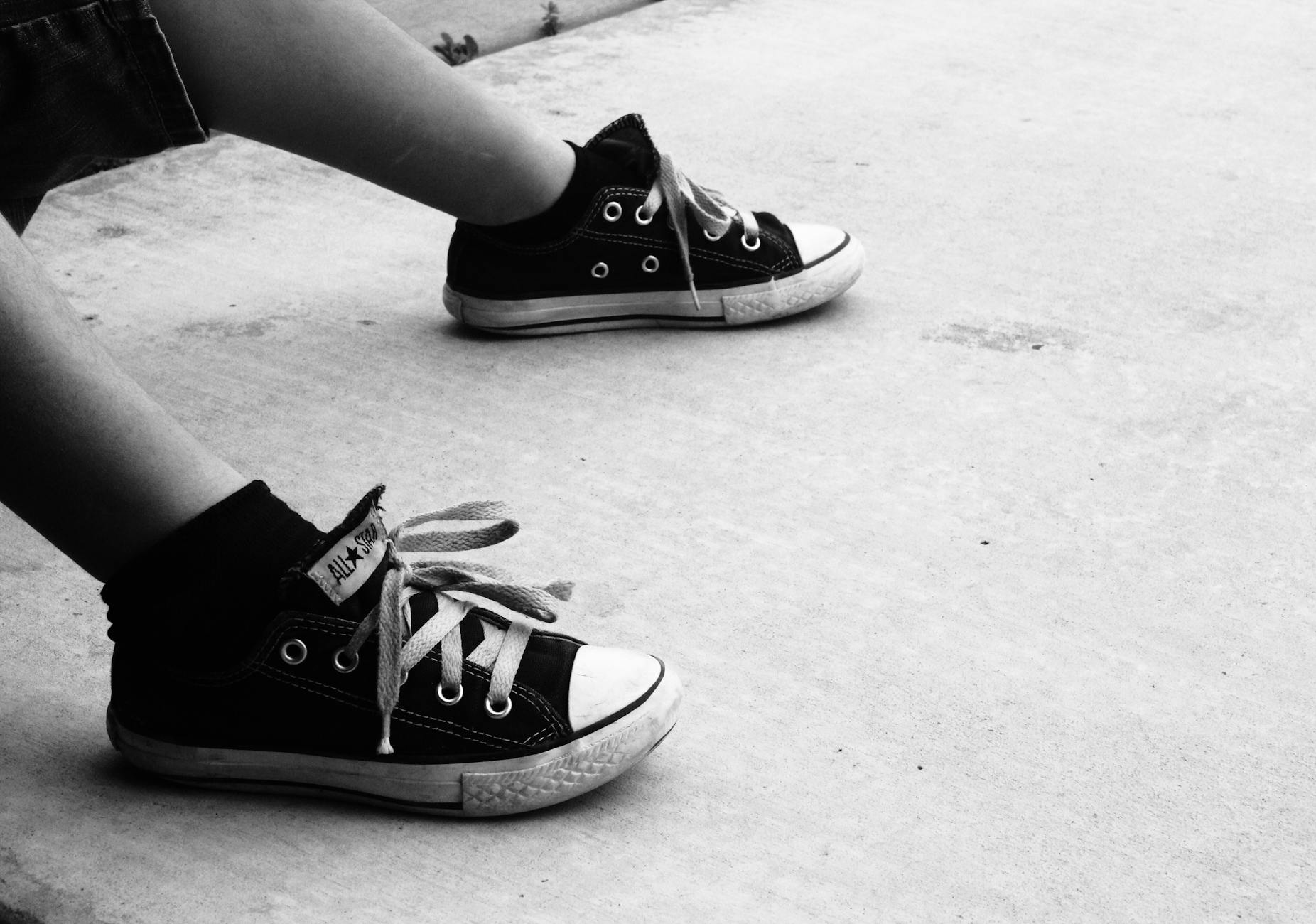
Stability walking shoes accomplish this primarily through denser foam or plastic on the medial side of the midsole, a reinforced heel counter that cups and steadies the rearfoot, and a last shape that prevents the midfoot from collapsing. Compare this to a flat, flexible casual shoe like a basic canvas sneaker: there is no rearfoot control, no arch structure, and the foot is free to pronate without resistance. A 2019 study published in the Journal of Foot and Ankle Research found that participants wearing structured supportive footwear showed measurably less medial knee displacement during walking compared to those in flexible flat shoes, which directly corresponds to improved lower-limb and pelvic alignment. It is worth noting, however, that shoes alone do not fix posture caused by muscular weakness or neurological conditions. If your anterior pelvic tilt is driven by weak glutes and tight hip flexors, even the best walking shoe will only partially compensate. The shoe addresses the mechanical input from the ground up, but the muscular and skeletal drivers from the core down still need direct attention through exercise or therapy.
Key Shoe Features That Support Better Alignment While Walking
Not every shoe marketed as a “posture shoe” actually delivers meaningful support. The features that matter most are the heel counter stiffness, midsole density and medial posting, the outsole geometry, and the heel-to-toe drop. A firm heel counter — you can test this by squeezing the back of the shoe and seeing if it resists collapse — keeps the calcaneus stable at heel strike, which sets the tone for the rest of the gait cycle. Medial posting, which is a wedge of denser material on the inner side of the midsole, resists the inward roll that pulls the kinetic chain out of line. Outsole geometry matters more than most buyers realize.
A mild rocker sole, like the one found on the Hoka Bondi or certain models from Dansko, encourages a smooth heel-to-toe transition that reduces the jarring impact at heel strike and propels the foot forward without requiring excessive push-off from the big toe. This is particularly useful for people with limited ankle dorsiflexion, because the rocker does some of the work that a stiff ankle cannot. Heel-to-toe drop — the height difference between the heel and forefoot — generally works best in the 8 to 12 millimeter range for posture-focused walking shoes, as this modest drop supports a natural heel-strike gait without forcing the Achilles and calf into an overly shortened position. However, if you have a naturally supinated foot — meaning your foot rolls outward rather than inward — a heavily posted stability shoe can actually make your alignment worse by pushing you further toward the outside edge. This is one reason why getting a proper gait analysis, even an informal one at a specialty running store, matters before you invest in posture-focused footwear. The wrong correction applied to the wrong foot type creates new problems rather than solving existing ones.
Stability Shoes vs. Motion-Control Shoes vs. Minimalist Options for Posture
The walking shoe market breaks roughly into three categories relevant to posture, and each serves a different population. Stability shoes occupy the middle ground: they offer moderate pronation control and structured cushioning without being rigid or heavy. The Brooks Addiction Walker and New Balance 928v3 are textbook examples. They suit the majority of walkers who overpronate mildly to moderately and want posture support without feeling like they are wearing a medical device. Motion-control shoes take the concept further. They use rigid medial posts, stiffer midsole materials throughout, and straighter lasts to aggressively limit foot motion.
These shoes — like the Brooks Beast or the ASICS Gel-Foundation Workplace — are built for severe overpronators or heavier walkers whose body weight amplifies pronation forces. A 250-pound walker with flat feet and chronic knee pain may find that a stability shoe simply is not enough, and the added rigidity of a motion-control shoe prevents the breakdown that lighter-duty options cannot handle. The tradeoff is weight, bulk, and a less natural feel underfoot. On the other end of the spectrum, minimalist shoes like Vivobarefoot or Xero Shoes argue that posture improves when the foot is allowed to strengthen naturally without external support. There is legitimate research supporting this idea for people with healthy feet and strong intrinsic foot muscles. But the transition period is long — often six months to a year of gradual adaptation — and attempting it with an already dysfunctional gait can accelerate injury rather than prevent it. For most people dealing with posture issues right now, a structured shoe provides faster and more reliable improvement while strengthening exercises are introduced separately.
How to Choose the Right Posture-Correcting Walking Shoe for Your Foot Type
Start with an honest assessment of your arch type and gait pattern. The wet footprint test — stepping on a piece of brown paper with a wet foot — gives a rough indication of arch height. A full footprint with little to no curve along the inside edge suggests flat feet and likely overpronation. A very narrow band connecting the heel and forefoot suggests high arches and possible supination. A moderate curve is typical of a neutral arch. This is not a substitute for professional analysis, but it narrows the field before you start trying shoes on. Once you know your general foot type, match it to the appropriate shoe category. Flat or low arches with overpronation pair best with stability or motion-control walking shoes.
Neutral arches do well with supportive neutral shoes that have a firm heel counter but without aggressive medial posting. High arches with supination need cushioned neutral shoes with flexibility — not stability shoes, which would exacerbate the outward roll. If you are between categories, lean toward less correction rather than more. You can always add a custom or over-the-counter orthotic insert to a neutral shoe for fine-tuned support, but you cannot subtract built-in medial posting from a stability shoe that turns out to be too aggressive. The tradeoff between immediate comfort and long-term postural benefit is real. A heavily cushioned, soft shoe may feel wonderful in the store but offer so little structural control that your foot moves freely inside it, negating any alignment benefit. Conversely, a stiff motion-control shoe may feel restrictive at first but deliver measurably better knee and hip alignment after a few weeks of adaptation. Try shoes at the end of the day when your feet are slightly swollen, walk around the store for at least ten minutes, and pay attention to whether the heel slips, whether the arch support hits the right spot, and whether your toes have enough room in the toe box without sliding forward.
Common Mistakes That Undermine Posture Benefits from Walking Shoes
The most frequent error is wearing the right shoe well past its functional lifespan. Walking shoe midsoles begin to break down after roughly 300 to 500 miles of use, depending on the walker’s weight and the terrain. The outsole might still look fine, but the internal foam that provides stability and cushioning has compressed and lost its ability to control pronation. A walker covering three miles per day hits 300 miles in about three and a half months. Continuing to walk in a dead shoe negates its posture benefits entirely, and many people unknowingly do this for six months or longer because the shoe still looks intact from the outside. Another common mistake is assuming that a posture shoe replaces the need for any other intervention.
Walking shoes correct the ground-up mechanics, but if you sit eight hours a day at a desk with poor ergonomics, or if you have significant muscle imbalances in the hip complex, the shoe can only do so much. The best outcomes happen when a posture-supportive shoe is combined with targeted strengthening — particularly for the glutes, core, and foot intrinsic muscles — and with attention to daily habits like standing posture and workstation setup. A less obvious pitfall is buying based on brand reputation rather than individual fit. Brooks makes excellent stability shoes, but a Brooks Addiction Walker in the wrong width or half-size too long will not provide the heel and midfoot lockdown needed for postural control. Every brand uses slightly different lasts, and your foot shape may simply match one manufacturer better than another. A New Balance in 2E width may serve a wide-footed walker far better than a Brooks in standard D width, regardless of which shoe gets better reviews online.

When Custom Orthotics Make More Sense Than a Shoe Upgrade
For people with structural abnormalities — leg length discrepancies, rigid flat feet, or post-surgical changes in foot mechanics — no off-the-shelf walking shoe fully addresses the postural chain. A podiatrist or pedorthist can create custom orthotics molded to the individual foot that correct specific imbalances a shoe alone cannot handle. For example, a runner with a five-millimeter leg length discrepancy might need a heel lift built into one orthotic to level the pelvis, something no retail shoe provides.
Custom orthotics are expensive, typically running between $300 and $600 without insurance, and they require breaking in over several weeks. But they can be transferred between shoes and last two to three years with proper care. The practical approach for many walkers is to start with a well-fitted stability shoe and an over-the-counter insole like Superfeet Green or Powerstep Pinnacle, and escalate to custom orthotics only if symptoms persist after four to six weeks of consistent use.
Where Walking Shoe Technology Is Heading for Posture Support
Shoe companies are beginning to integrate sensor technology and 3D-printed midsoles that adapt to individual gait patterns. New Balance and Adidas have both experimented with 3D-printed lattice midsoles that can vary density across zones, theoretically allowing a single shoe to provide more support where an individual foot needs it without the bulk of traditional medial posts. Carbon-plated walking shoes, borrowing from the running world, are also emerging as a way to provide a rigid lever through the midfoot that stabilizes the arch without heavy foam wedges.
The practical takeaway for today is that the fundamentals have not changed: a firm heel counter, appropriate medial support, and a shape that matches your foot are still what matter most. Newer technologies may refine the delivery, but no amount of advanced materials compensates for a poor fit or the wrong category of shoe for your gait. As sensor-equipped insoles become more affordable, the ability to get precise gait data outside of a clinical setting will make it easier for everyday walkers to match themselves to the right shoe and track whether their alignment actually improves over time.
Conclusion
Walking shoes designed with structured support can meaningfully improve posture by controlling how force travels from the ground through your lower limbs and into your spine. The key features to look for are a stiff heel counter, appropriate medial posting for your pronation level, a supportive midsole that has not been walked flat, and a fit that locks the heel and midfoot without cramming the toes.
Stability shoes suit the majority of walkers with mild to moderate overpronation, while motion-control options serve those with more severe biomechanical needs, and minimalist shoes remain a viable long-term project for people willing to invest months in gradual adaptation. The most important step you can take is to get an honest assessment of your gait — whether through a specialty store analysis, a physical therapist evaluation, or even a slow-motion video of yourself walking — and then match your shoe choice to what your feet actually do, not what a marketing label promises. Replace your shoes on schedule, strengthen the muscles that support alignment from above, and treat the shoe as one part of a broader posture strategy rather than a standalone fix.
Frequently Asked Questions
Can walking shoes alone fix bad posture?
Walking shoes can correct the ground-up portion of your postural chain by controlling foot mechanics, but they cannot address muscular weakness, spinal curvature, or habits like prolonged slouching. They work best as part of a combined approach that includes strengthening exercises and ergonomic awareness.
How long does it take to notice posture improvements from new walking shoes?
Most people notice reduced foot and knee fatigue within the first week, but measurable changes in hip and lower-back alignment typically take three to six weeks of consistent daily walking in the shoes. If you notice no change after six weeks, the shoe category or fit may not be right for your foot type.
Are rocker-sole shoes good for posture?
Mild rocker soles can improve posture by encouraging a smoother gait transition and reducing impact at heel strike, which helps maintain alignment through the kinetic chain. Aggressive rocker soles, like those on some therapeutic footwear, can feel unstable and may not be appropriate for everyone, particularly those with balance concerns.
Should I buy walking shoes with the highest arch support I can find?
No. Arch support should match your actual arch height and flexibility. Excessively high arch support in a shoe worn by someone with flat, flexible feet can cause pain along the arch and push the foot into an unnatural position. Conversely, too little support for a collapsing arch does nothing to help alignment.
Is there a difference between walking shoes and running shoes for posture?
Yes. Walking shoes are generally built with stiffer soles, lower heel-to-toe drops, and more durable outsole rubber suited to the heel-strike-dominant pattern of walking. Running shoes prioritize cushioning and energy return for faster paces and higher impact. A stability running shoe can work for walking, but a purpose-built walking shoe typically offers better postural control at walking speeds.
Do expensive walking shoes work better for posture than budget options?
Not necessarily. Price often reflects materials, brand positioning, and cosmetic design rather than biomechanical effectiveness. A $90 New Balance stability walker may provide equal or better postural support than a $160 fashion-forward shoe with minimal internal structure. Focus on the features — heel counter, medial post, midsole firmness — rather than the price tag.