The math behind your daily intensity minutes is straightforward: every full minute of movement that equals or exceeds the intensity of a brisk walk counts toward your exercise goals, adjusted for your individual cardio fitness level. If you run at 6 miles per hour on a treadmill for 30 minutes, you’re not automatically getting 30 intensity minutes—what matters is whether that pace qualifies as brisk or vigorous for your fitness level. Your maximum heart rate (estimated as 220 minus your age) establishes the threshold, meaning a 40-year-old with a max heart rate of 180 might reach vigorous intensity above 82% of that rate, roughly 148 beats per minute. A 60-year-old with a max heart rate of 160 would hit the same intensity threshold at 131 beats per minute, despite running a slower pace.
The intensity calculation also depends on your resting heart rate and aerobic capacity. Two runners of the same age can accumulate intensity minutes at completely different paces because their cardiovascular systems respond differently to effort. This is why generic fitness formulas often miss the mark—your body’s physiology, not a standardized chart, determines what counts as brisk for you. Understanding these variables is essential if you want to make sense of the data your treadmill or smartwatch is feeding you.
Table of Contents
- HOW TREADMILL SPEED TRANSLATES TO MEASURED INTENSITY
- THE CALORIE BURN EQUATION AND WHAT IT REALLY TELLS YOU
- TREADMILL PHYSICS AND THE INCLINE ADVANTAGE
- HEART RATE ZONES AND VO2 MAX CALCULATIONS
- DEVICE ACCURACY AND APPLE WATCH CALIBRATION
- THE 80/20 PRINCIPLE AND YOUR WEEKLY STRUCTURE
- SMART TREADMILL TECHNOLOGY AND THE FUTURE OF PERSONALIZED TRAINING
- Conclusion
HOW TREADMILL SPEED TRANSLATES TO MEASURED INTENSITY
Your treadmill‘s displayed speed doesn’t directly equal the intensity your body experiences. A 6.0 mph run feels dramatically different at zero incline versus 5% incline because the treadmill’s belt does some of the work for you outdoors that you have to provide yourself. Research by Jones and Doust in 1996 established that each 1% of treadmill incline adds approximately 3% to the energetic cost of running, making the exertion substantially harder without changing the speed number. A 6.0 mph run at 0% incline is physiologically closer to a 5.5 mph outdoor run; at 5% incline, that same 6.0 mph treadmill effort approaches a 6.5 mph outdoor pace in terms of energy expenditure.
For recreational runners, a comfortable training pace falls between 5.0 and 7.0 mph, or roughly 8:30 to 12:00 minutes per mile. Most runners spend about 80% of their weekly time in this low-intensity zone (zones 1–2), which builds aerobic base without excessive fatigue. The remaining 20% of training should occur at higher intensities—lactate threshold work at 82–90% of max heart rate, tempo runs at marathon pace (80–88% max heart rate), or VO2 max intervals at 92–95% max heart rate. This 80/20 split is grounded in sports science and produces better long-term results than attempting high-intensity work every session.
THE CALORIE BURN EQUATION AND WHAT IT REALLY TELLS YOU
The calorie burn during treadmill running follows a specific formula: (MET × 3.5 × weight in kilograms × time in minutes) / 200. MET stands for Metabolic Equivalent of the task—a unit describing how much energy an activity requires relative to rest. A 150-pound person (approximately 68 kg) walking at 3.5 mph burns about 320 calories per hour, while that same person running at 8.0 mph burns up to 860 calories per hour. The range for treadmill running generally falls between 8–12 calories per minute depending on intensity and body weight, though heavier runners burn more calories at the same pace due to the extra mass their bodies move.
Here’s the catch: calorie data from treadmills and fitness trackers is frequently inaccurate by 10–20%. The formulas assume average physiology and don’t account for individual differences in metabolism, muscle composition, or mechanical efficiency. A runner with high muscle mass and poor running economy (inefficient stride) might burn 15 calories per minute at 7.0 mph, while a lighter, more efficient runner burns only 10. The treadmill has no way to know which category you fall into, so it applies a population average that may not reflect your actual expenditure. For practical purposes, use these numbers as a relative guide—did today’s run burn more than yesterday’s because it was longer or faster?—rather than as absolute truth for dietary calculations.
TREADMILL PHYSICS AND THE INCLINE ADVANTAGE
Adding incline to your treadmill workout increases intensity without increasing speed, a strategic advantage for runners managing injuries or training for hill-heavy courses. The outdoor equivalent formula quantifies this relationship: outdoor equivalent speed = treadmill speed × (1 + 0.03 × grade%). Running at 6.0 mph with 5% incline is energetically equivalent to running 6.9 mph on flat ground. This means if you’re training for a hilly race, treadmill incline work at modest speeds can generate the necessary adaptation without the joint stress of running fast on flat ground.
The downside is that treadmill inclines don’t perfectly mimic outdoor hill running. The treadmill belt moves beneath you, reducing the need to generate forward propulsion the way a real hill demands. Outdoor running on an actual slope requires more glute and hamstring engagement than a motorized incline can replicate. Experienced runners often recommend mixing treadmill incline work with outdoor hill repeats to develop both the aerobic fitness and the muscular strength that real terrain demands. For base-building phases or recovery weeks, treadmill inclines work well; for peak training, outdoor hills provide irreplaceable stimulus.
HEART RATE ZONES AND VO2 MAX CALCULATIONS
Your maximum heart rate, calculated as 220 minus your age, establishes the framework for all intensity-based training. However, individual variation is real—some people have a true max heart rate 5–10 beats higher or lower than the formula predicts. A more accurate approach involves field testing: run at maximum effort and measure your highest heart rate. Once you know your max, divide it into zones: zone 1–2 (low intensity, 50–70% max heart rate) for recovery and base building; zone 3 (moderate intensity, 70–80% max heart rate) for steady-state endurance; zone 4 (lactate threshold, 82–90% max heart rate) for sustained hard efforts; and zone 5 (VO2 max, 92–95% max heart rate) for interval training.
VO2 max estimation improves significantly with better data. The basic formula, VO2 max = 15 × (HRmax/HRrest), provides a rough starting point, but a submaximal treadmill test offers better accuracy. The submaximal formula—VO2max = 15.1 + 21.8 × speed (mph) − 0.327 × heart rate (bpm) − 0.263 × speed × age + 0.00504 × heart rate × age + 5.98 × gender—requires running at a steady state (usually 5 mph for 3 minutes) and recording your heart rate at the end, accounting for age and biological sex. A 40-year-old male running at 6.0 mph with a heart rate of 145 bpm would calculate a VO2 max around 46, placing him in the “excellent” category for cardiovascular fitness.
DEVICE ACCURACY AND APPLE WATCH CALIBRATION
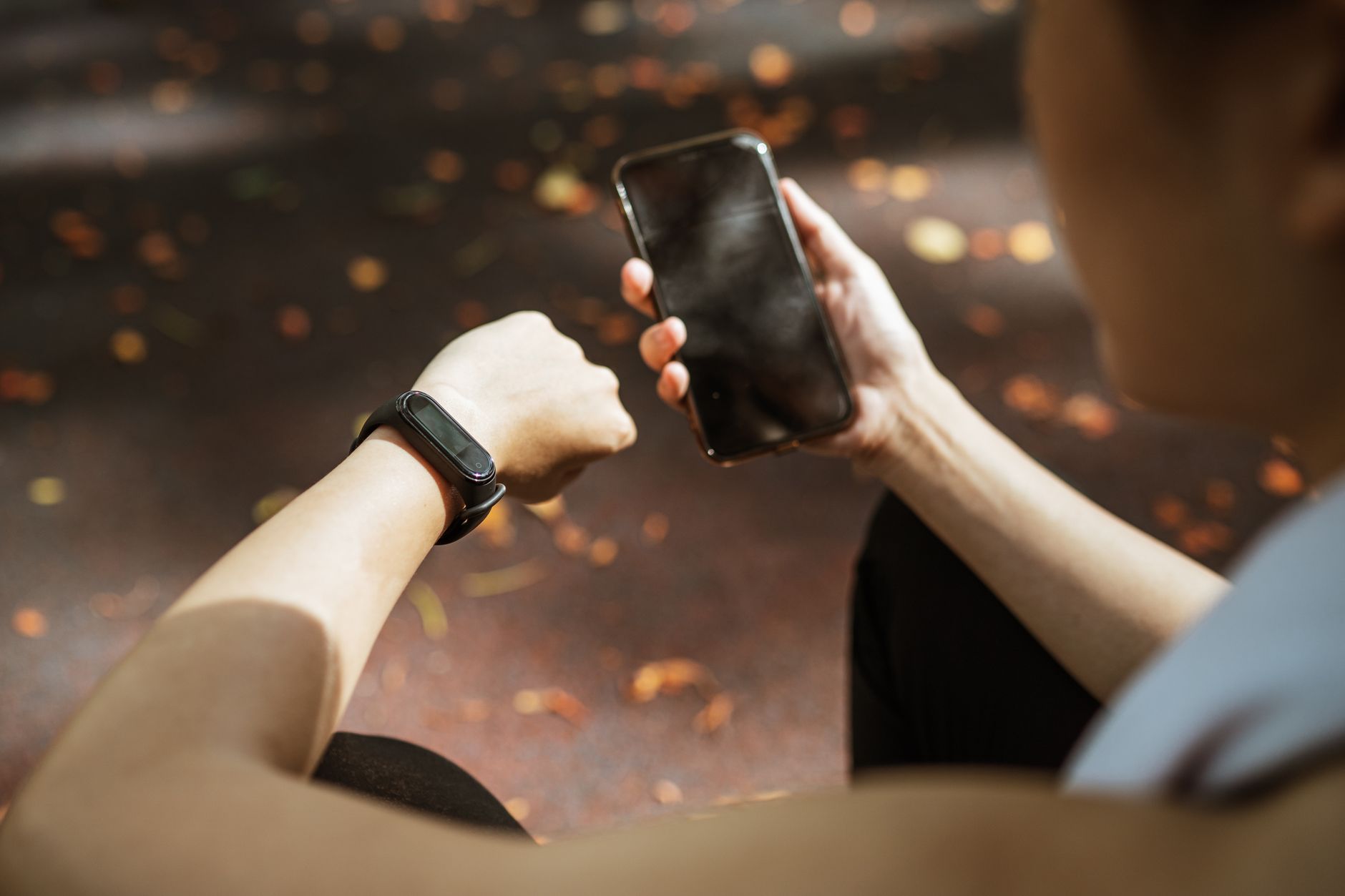
All running watches, including the Apple Watch, struggle with treadmill accuracy compared to outdoor GPS-based runs. Without satellite positioning, the watch must estimate distance and pace using accelerometer data, which introduces systematic errors. Indoor treadmill tracking relies on your phone’s motion sensors or direct input from compatible equipment, neither of which achieves outdoor GPS precision. Apple Watch’s built-in calibration feature can improve this accuracy by up to 10–15%, but it requires consistent effort. To calibrate your Apple Watch for treadmill running, run outdoors at your normal pace for at least 20 minutes, allowing the watch to record accurate GPS data paired with your motion patterns.
The watch learns the relationship between your stride and the distance GPS records, then applies that calibration indoors. After calibration, your treadmill distance, pace, and calorie estimates should improve substantially. However, even with calibration, expect a 5–8% margin of error on treadmill metrics. The watch cannot compensate for individual stride variations, changes in running economy over time, or the fact that your treadmill’s calibration might be off. If precision matters—such as when tracking weekly mileage or validating training paces—supplement treadmill data with occasional outdoor runs where GPS provides ground truth.
THE 80/20 PRINCIPLE AND YOUR WEEKLY STRUCTURE
The 80/20 training principle states that roughly 80% of your weekly training volume should occur at low intensity (zones 1–2) and only 20% at higher intensities (zones 3–5). This split maximizes aerobic development and recovery capacity while minimizing overtraining risk. For a runner logging 30 miles per week, this means 24 miles at easy, conversational pace and 6 miles at harder efforts. A treadmill excels at this structure because you can dial in precise zones without worrying about traffic or terrain variation.
Apply the principle by designating most treadmill runs as easy-pace sessions. If you run four treadmill sessions per week, make three of them relaxed aerobic work at 60–70% max heart rate, where you can maintain a conversation. Reserve one session per week for higher-intensity work—either a lactate threshold run at 82–90% max heart rate, a VO2 max interval session, or a tempo run at marathon pace. This approach builds fitness sustainably; runners who reverse the ratio and do 80% hard work and 20% easy work typically plateau after 8–12 weeks and accumulate injuries. The treadmill’s controlled environment makes it easier to stick to the intended intensity because you’re not distracted by scenery or influenced by how you feel on a particular day.
SMART TREADMILL TECHNOLOGY AND THE FUTURE OF PERSONALIZED TRAINING
The treadmill market has transformed dramatically. As of 2026, the global treadmill market is valued at over 6 billion dollars and projected to reach 10.18 billion by 2034, with smart treadmills accounting for 35% of new installations. The shift toward connected equipment reflects user demand: 52% of fitness enthusiasts now prefer personalized digital workout solutions over generic programs. Residential treadmills dominate the market, holding 74.55% of global share, meaning most growth comes from home gyms rather than commercial facilities. These smart treadmills integrate AI coaching, virtual environments, and real-time feedback that adjust difficulty based on your heart rate and performance data.
North America leads adoption with 39.60% of the global market share, followed by Europe at 20.26%. The appeal is obvious: algorithmic coaching can automatically manage your intensity distribution, suggest when to dial back effort for recovery, and recommend intensity levels for tomorrow’s session based on today’s data. However, the technology is still learning individual variation. An algorithm trained on thousands of users will miss your personal quirks—how your body responds to specific intensities, your injury history, your schedule constraints. These smart tools work best as supplements to personal knowledge, not replacements for it.
Conclusion
The math behind your daily intensity minutes combines multiple factors: your maximum heart rate (determined by age and individual variation), your resting heart rate, the actual speed and incline you run, and the energetic cost measured in metabolic equivalents. None of these numbers exist in isolation. A 6.0 mph run on a 3% incline at your lactate threshold is physiologically distinct from a 6.0 mph flat run in the easy zone, even though the treadmill display shows the same speed.
Understanding these relationships transforms treadmill running from following arbitrary numbers to purposeful training grounded in physiology. Moving forward, focus on two things: first, know your actual heart rate zones rather than relying on age-predicted formulas; second, calibrate your tracking devices and accept their limitations rather than treating their numbers as absolute truth. Use the 80/20 principle to structure your weekly treadmill work—most sessions easy, one session hard—and you’ll build fitness more reliably than constant moderate-intensity grinding. The future of treadmill training lies in smarter devices that learn your individual response to stimulus, but the fundamental math of intensity minutes hasn’t changed: brisk pace for you, accumulated minute by minute, adding up to meaningful fitness progress.