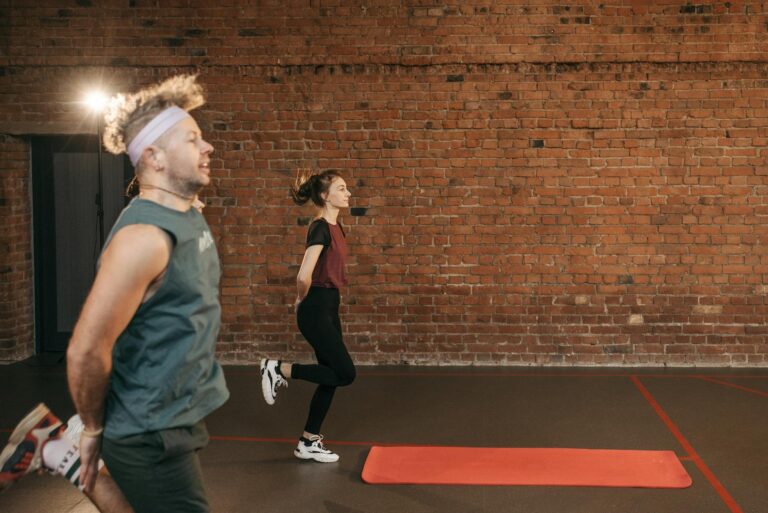
Relaxed hands while running do far more than just look smooth. When your hands are tense, that tension travels up your arms and into your shoulders, neck, and core, consuming energy that should fuel your forward motion. Runners who keep their hands loose throughout their stride sacrifice nothing in efficiency—they gain it. A runner fighting against clenched fists is fighting against their own biomechanics, losing minutes over the course of a long run without understanding why. The principle is straightforward but often overlooked in training advice focused on leg turnover and breathing. Your hands affect your running economy the same way a clenched jaw affects your sleep.
Studies on muscle tension patterns show that hand and forearm tightness creates compensation throughout the upper body, forcing your legs to work harder to maintain pace. One runner in a local 10K training group noticed an immediate drop in heart rate during tempo runs simply by consciously relaxing her hands during the hardest efforts—her pace stayed the same, but her effort felt dramatically easier. The quiet power lies in what doesn’t happen. You don’t feel your hands relax. You won’t see it in a split time. But over three miles, five miles, or a half marathon, the accumulated cost of tension adds up into actual minutes lost, or worse, into an injury that emerges weeks later because the compensation patterns had nowhere else to go.
Table of Contents
- Why Hand Tension Disrupts Your Running Form
- The Relationship Between Hand Position and Breathing
- What Happens to Your Legs When Your Hands Are Relaxed
- How to Actually Develop Relaxed Hand Running Form
- The Overachiever’s Trap: When “Relaxed” Becomes Sloppy
- Hand Tension During Different Running Paces
- The Broader Picture of Running Efficiency and Mental Endurance
- Conclusion
- Frequently Asked Questions
Why Hand Tension Disrupts Your Running Form
When your hands are clenched, they’re not just wasting energy in isolation. Tension in your hands and forearms sends a signal throughout your nervous system that something is wrong—that you’re under threat or under extreme effort. Your body responds by bracing. Your shoulders creep up toward your ears. Your chest tightens. Your stride shortens slightly as your core becomes defensive rather than dynamic. This happens even if your conscious mind doesn’t notice it. Biomechanically, your hands should swing freely from the elbow, not from the shoulder.
A relaxed hand with slightly bent fingers is the default position for an efficient running arm swing. A clenched fist pulls the whole arm out of alignment. The shoulder has to work harder to move a tense arm through its full range of motion, and the extra work compounds across thousands of arm swings. A runner completing a 10-mile run executes roughly 15,000 arm swings at a moderate pace—each one slightly less efficient when the hands are tight. The warning here is subtle but real: many runners unconsciously increase hand tension as effort increases. This is exactly backwards. During the hardest workout or the final miles of a race, when your body is screaming for efficiency, tense hands make everything harder. The runners who maintain relaxed hands through a tempo run or the closing miles of a marathon are the ones who have trained themselves to do it deliberately, because the instinct is to clench.

The Relationship Between Hand Position and Breathing
Hand and forearm tension connects directly to breathing patterns in ways that aren’t immediately obvious. When your hands are relaxed, your shoulders naturally sit lower and looser, which gives your rib cage more freedom to expand. When your hands are clenched, your shoulders creep upward in a protective posture, slightly restricting your upper chest. The restriction is small, but during hard efforts when you’re already pushing your aerobic system, that small loss matters. Many runners who struggle with shallow breathing during speed work or racing are actually fighting against their own upper body tension. They interpret the sensation as needing to “breathe better” and focus on their breath, when the real issue is that their clenched hands and raised shoulders are mechanically limiting how much air they can take in.
A simple fix—relaxing the hands—can change the whole experience of that workout. The breathing becomes easier because the mechanical restriction is gone, not because the runner suddenly learned a new breathing technique. this becomes especially important during the middle miles of a race, where mental fatigue combines with physical fatigue and runners often unconsciously tighten everything. Your hands are a lever point you can control without disrupting your pace or thought pattern. The limitation to keep in mind is that this fix only works if it becomes habitual. Noticing mid-race that your hands are tight and consciously relaxing them helps, but runners who have practiced relaxed hand position through their training will maintain it automatically when it matters most.
What Happens to Your Legs When Your Hands Are Relaxed
There’s a direct relationship between upper body tension and leg fatigue. When your shoulders and arms are tight, your core has to stabilize not just your torso but also compensate for the tension above it. This means your glutes and hip stabilizers are doing extra work that should be handled by better upper body positioning. The result feels like leg fatigue, but the source is actually poor upper body mechanics. Runners who focus exclusively on leg strength and leg form while ignoring upper body tension are leaving efficiency on the table.
A runner might do all the right glute activation exercises and hill repeats, but if she spends every run with clenched fists and tight shoulders, her legs are inherently working harder than they should be. The reverse is also true: a runner with relaxed hands and shoulders can run with less leg fatigue at the same pace, simply because the load is distributed properly across the body instead of being unevenly dumped on the legs. One practical example is the difference between running with clenched fists versus running with what coaches call “relaxed fingers.” Imagine carrying a penny between your thumb and forefinger with just enough pressure to hold it, but not so much that you’d break it. This mental image helps runners find the middle ground—hands engaged enough to maintain arm swing structure, but relaxed enough that they’re not consuming energy. The tradeoff is that it takes practice to maintain this position, especially when fatigue sets in and the instinct to tighten returns.

How to Actually Develop Relaxed Hand Running Form
The most effective way to train relaxed hands is through deliberate practice during easy runs, not by trying to fix it during hard efforts when your nervous system is in self-preservation mode. Pick one easy run per week as your “relaxation run” where hand tension awareness becomes the focus. Periodically during the run, deliberately shake out your hands for a few seconds while still running, then return to relaxed running. This teaches your neuromuscular system what relaxed feels like at running cadence. Another practical technique is the hand check: every few minutes during a run, quickly scan from your hands up through your shoulders and neck. Where is tension hiding? Often runners find that their hands aren’t the problem—the problem is tension that started in the neck or shoulders and they’re just noticing their hands are tight as a symptom.
Once you identify where your tension originates, you can address it. Some runners are prone to shoulder tension first, others to jaw clenching, others to fist clenching. Your pattern is individual. The comparison worth making is between this approach and the much less effective approach of trying to fix hand tension during a race or hard workout. It won’t work because your nervous system has more pressing concerns than listening to your conscious intention to relax. By contrast, building the habit during easy runs means the relaxed position becomes the default, and your nervous system maintains it even under stress. The tradeoff is that this requires consistency—one easy run with relaxed hands per week probably won’t change your pattern, but four weeks of consistent practice will noticeably change how your body defaults to tension or relaxation.
The Overachiever’s Trap: When “Relaxed” Becomes Sloppy
There’s a distinction that matters between relaxed and loose. Relaxed hands still have structure and still contribute to an efficient arm swing. Sloppy hands that flail or cross the body centerline are overcorrecting in the other direction and create their own inefficiencies. Some runners, in their effort to avoid clenching, end up with such loose arm carriage that they lose propulsion and their arm swing does nothing useful. The warning here is that you can’t relax your way into poor form. The goal is relaxed tension—enough engagement to maintain structure, not enough tension to waste energy.
This is harder to teach than “relax your hands” or “tighten your core,” because it requires nuance and feel. A video of your running form, taken from the front or side, can reveal whether you’re in that sweet spot or whether you’ve swung too far toward either clenching or flopping. The limitation is that this is partially individual. Heavier runners, taller runners, and runners with different arm lengths may find their efficient hand and arm position in slightly different places. What looks relaxed for one runner might look too loose for another. The principle is consistency with efficiency—your hands and arms should swing in a way that feels smooth and sustainable over distance, not jangly or bouncy or held like a statue.
Hand Tension During Different Running Paces
Easy runs and relaxed hands are a natural match. During harder efforts, it gets trickier. During a tempo run, a runner’s natural instinct is to tense everything, including the hands. But this is the workout where maintaining relaxed hands becomes most valuable, because the effort is high enough that efficiency losses are magnified.
A 5-minute tempo run mile with clenched hands might feel 30 seconds harder than the same mile with relaxed hands. During a sprint interval or 400-meter repeat, the situation is different. These short, all-out efforts don’t last long enough for hand tension to accumulate fatigue, and for some runners, a small amount of tension actually helps with power output during these brief, maximal efforts. The practical tradeoff is that for 5K and longer races or runs, maintaining relaxed hands is clearly beneficial. For 800-meter or shorter efforts, the benefit is less clear and individual variation is higher.
The Broader Picture of Running Efficiency and Mental Endurance
Relaxed hands are one piece of a larger puzzle around running efficiency and mental resilience. Runners who can maintain relaxation in their hands can usually maintain it elsewhere in their bodies, which becomes increasingly valuable in the later miles of a long run or race. The hand relaxation practice carries over. Once you’ve trained yourself to consciously relax during easy runs, the skill extends to relaxing your jaw, your shoulders, your neck—basically anywhere tension likes to hide under fatigue.
This is also partly a mental endurance skill. The runners who finish strong in the final miles of a 10K are often the ones who actively managed tension throughout the run. They didn’t spend the first three miles with clenched fists creating a fatigue debt that came due in the closing miles. This forward-thinking approach to managing your own physiology is less talked about than interval training or mileage, but it’s genuinely part of what separates runners who feel strong late in races from runners who fall apart.
Conclusion
Relaxed hands while running are a small thing that affects everything. They’re a point of leverage where you can improve your running economy, reduce compensatory strain, and extend how far you can run at a given effort. The best part is that this improvement costs nothing—no equipment, no special shoes, no expensive coaching session. It costs attention and deliberate practice, but the payoff in how your body feels during runs and races is noticeable within a few weeks.
Start with one easy run per week where relaxed hands become the focus. Notice where your tension lives. Build the habit slowly so that relaxation becomes your default, not something you have to think about. By the time you’re lining up for your next race, maintaining relaxed hands through the effort won’t be another thing you have to manage—it’ll just be part of how you run.
Frequently Asked Questions
How do I know if my hands are too tense while running?
Common signs include clenched fists, fingernails digging into your palms, tension that radiates up your forearms, or shoulders that creep toward your ears. Some runners don’t feel the tension until they consciously check, which is why periodic hand awareness checks during easy runs are useful.
Can hand tension actually make me run slower?
Yes. Studies on running economy show that unnecessary tension increases oxygen consumption at a given pace. A runner with clenched hands uses more energy to maintain the same speed compared to a runner with relaxed hands, which means slower pace at maximum effort or faster fatigue at a target pace.
Should my hands be completely limp or should they have some position?
There’s a middle ground called relaxed tension. Your hands should swing freely from the elbow with fingers slightly bent or in a light fist, but not gripping. The movement should feel smooth and gravity-assisted, not floppy or controlled.
How long does it take to change my hand tension habit?
Most runners notice a difference within 2-4 weeks of conscious practice during easy runs. Full integration—where relaxed hands become automatic even during hard efforts—usually takes 4-8 weeks of consistent attention.
Is relaxed hand position the same for sprinting as for distance running?
For distance running (5K and longer), relaxed hands are clearly beneficial. For short sprints (400 meters or less), some tension is natural and may even help with power. The benefit of relaxed hands increases with distance and duration of effort.
Can tight hands cause injuries?
Indirectly, yes. Chronic upper body tension creates compensation patterns that can lead to shoulder, neck, or lower back issues over time. Runners who maintain relaxed form have fewer compensatory injuries, though hand tension alone rarely causes acute injury.