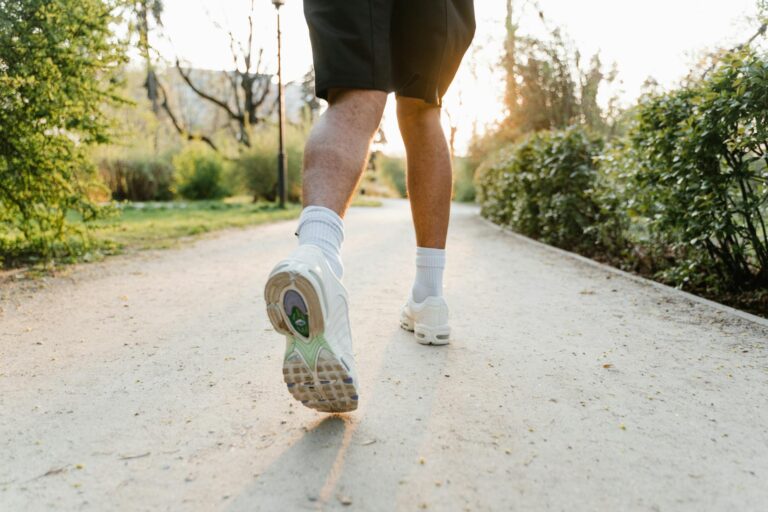
The best LISS workout for fat loss is walking, and it is not particularly close. Whether you prefer a treadmill set to an incline or a long loop through your neighborhood, sustained walking at a moderate pace — roughly 50 to 65 percent of your maximum heart rate — taps directly into your body’s stored fat for fuel in a way that more intense exercise simply does not prioritize. The popular 12/3/30 method, which involves walking at 3 mph on a 12 percent incline for 30 minutes, has become a go-to protocol for exactly this reason: it is simple, repeatable, and effective enough that a University of Bath study found LISS can match HIIT for total weight loss over the same training period.
But walking is not the only option worth your time, and choosing the right LISS workout depends on your joints, your schedule, and how easily you get bored. Rowing, cycling, swimming, and even hiking all qualify when you keep the intensity low and the duration long — at least 30 minutes, ideally closer to 60. This article breaks down why LISS burns fat so effectively at the physiological level, compares the best exercise options head to head, lays out a realistic weekly schedule, and addresses the persistent LISS-versus-HIIT debate with actual research rather than gym folklore.
Table of Contents
- Why Is LISS Cardio So Effective for Burning Fat?
- The Top LISS Exercises Ranked for Fat Loss and Joint Health
- What the Research Says About LISS Versus HIIT for Fat Loss
- How to Build a Weekly LISS Schedule That Actually Sticks
- Common Mistakes That Undermine LISS Fat Loss
- The Health Benefits Beyond the Scale
- Where LISS Fits in the Future of Fat-Loss Training
- Conclusion
- Frequently Asked Questions
Why Is LISS Cardio So Effective for Burning Fat?
The short answer is oxygen. During low-intensity steady-state cardio, your body stays in an aerobic zone where oxygen supply comfortably meets demand. That matters because your body needs oxygen to break down stored fat into usable energy. Push the intensity higher — into the anaerobic territory of HIIT or sprint intervals — and your system shifts to burning glycogen, the carbohydrates stored in your muscles and liver, because glycogen can be converted to energy faster when oxygen is scarce. liss keeps you in the narrow band where fat is the preferred fuel source for the entire session. Duration amplifies this effect. Sessions of 30 minutes or longer burn more total calories and boost fat oxidation significantly more than shorter cardio bouts, even when those shorter sessions are performed at higher intensities.
This is counterintuitive for people who have been told that a brutal 20-minute HIIT session is superior to an easy 45-minute walk. The calorie burn per minute is lower during LISS, yes, but the percentage of those calories coming from fat is substantially higher, and the total volume of fat burned over a longer session adds up. For someone walking briskly for 50 minutes versus sprinting in intervals for 20, the fat-loss math often favors the walker. There is a catch, though. LISS only works for fat loss if the calorie deficit exists. You cannot out-walk a bad diet, and the relatively modest calorie burn of a 40-minute walk — typically somewhere between 200 and 350 calories depending on body weight and terrain — can be wiped out by a single post-workout smoothie. LISS supports fat loss by boosting your total daily energy expenditure, but it is a partner to dietary discipline, not a replacement for it.

The Top LISS Exercises Ranked for Fat Loss and Joint Health
Walking remains the most accessible and sustainable option for the majority of people. It requires no equipment beyond shoes, carries almost zero injury risk, and scales easily — you can increase incline, speed, or duration as fitness improves. The 12/3/30 treadmill protocol works well as a structured starting point, but a 45-minute walk on hilly terrain accomplishes roughly the same thing without a gym membership. Rowing deserves special attention as a LISS option that most people overlook. Unlike walking or cycling, rowing engages the arms, legs, and core simultaneously, making it a full-body movement that burns more calories per minute at the same perceived effort level. A 40-minute rowing session at a conversational pace is one of the most efficient LISS workouts available.
The limitation is access — not every gym has rowers, and home rowing machines are a significant investment. Cycling and swimming are strong alternatives. Cycling is exceptionally easy on the knees and hips, making it a better choice than walking for anyone dealing with lower-body joint issues. Swimming adds upper-body engagement similar to rowing but requires pool access and at least basic technique to maintain for 30 to 60 minutes without stopping. However, if you have significant mobility restrictions or are returning from a lower-body injury, the elliptical trainer is probably your best starting point. It eliminates ground impact entirely while still allowing you to hit the 50-to-65-percent heart rate zone that defines LISS. The tradeoff is that elliptical work tends to feel monotonous faster than outdoor options, which can hurt long-term adherence — and adherence is ultimately what determines whether any fat-loss program works.
What the Research Says About LISS Versus HIIT for Fat Loss
The fitness industry has spent the last decade framing LISS and hiit as rivals, but the research tells a more boring story: they produce comparable fat-loss results when total exercise volume is matched. A University of Bath study tracked participants exercising five times per week at either high or moderate intensities over a three-week period. Both groups lost the same amount of weight. Other research has confirmed this pattern — people who meet general exercise recommendations lose weight at similar rates regardless of whether they choose steady-state or interval-based training. Where the two approaches diverge is not in outcomes but in sustainability. HIIT places substantially more stress on joints, connective tissue, and the central nervous system.
Performing true high-intensity intervals five days per week is a recipe for overtraining, nagging injuries, and eventual burnout for most recreational exercisers. LISS, by contrast, can realistically be performed daily without accumulating significant fatigue. A 45-minute walk does not require a recovery day. A 30-minute spin on a stationary bike does not leave your knees aching the next morning. This lower recovery demand means LISS is more likely to become a consistent habit, and consistency over months matters far more than intensity on any single day. The practical takeaway for most people is not to choose one over the other but to use LISS as the foundation of weekly cardio and add one or two HIIT sessions if time is limited and fitness allows. Treating HIIT as a supplement to LISS rather than a replacement protects your joints while still providing the cardiovascular and metabolic benefits of occasional high-intensity work.

How to Build a Weekly LISS Schedule That Actually Sticks
The general recommendation is three to five LISS sessions per week, each lasting 30 to 60 minutes. For someone new to consistent exercise, starting at three sessions of 30 minutes and building toward five sessions of 45 minutes over six to eight weeks is a realistic progression. Zone 2 cardio — moderate effort sustained for 20 to 50 minutes, two to three times per week — has been specifically linked to improvements in health markers and longevity, so even on the lower end of that frequency range, you are getting meaningful returns. A sample week might look like this: Monday and Thursday, 40-minute brisk walks on an incline or hilly route. Wednesday, 30 minutes on the rower at a conversational pace. Saturday, a 60-minute hike or easy bike ride.
That is four sessions totaling just under three hours, which is manageable for most schedules and sufficient to meaningfully increase total daily energy expenditure across the week. The tradeoff with higher frequency — say, five or six sessions — is time commitment. If adding a fifth session means you skip it half the time because life gets in the way, you are better off with a reliable four-session schedule. One underrated strategy is stacking LISS with activities you already do. Walking to the grocery store, cycling to work, or taking a long phone call while pacing outside all count. The body does not distinguish between “exercise” and “movement” when it comes to fat oxidation. What matters is heart rate, duration, and consistency.
Common Mistakes That Undermine LISS Fat Loss
The most frequent mistake is going too hard. If you are breathing heavily or unable to hold a conversation, you have drifted out of the LISS zone and into moderate or high intensity territory. This matters because exceeding roughly 65 percent of your max heart rate shifts your fuel source from fat toward glycogen. A heart rate monitor — even a basic wrist-based one — is worth using for the first few weeks until you develop a reliable sense of what the right effort level feels like. Many people, especially former athletes or competitive personalities, instinctively push harder than LISS requires and then wonder why the approach feels no different from their usual workouts. The second mistake is expecting fast results. LISS fat loss is a slow-burn strategy.
You might not notice meaningful changes in body composition for four to six weeks, especially if your diet is not dialed in. This is where people bail and switch to aggressive HIIT programs or crash diets, both of which tend to produce faster initial results that are harder to maintain. LISS paired with a modest caloric deficit — 300 to 500 calories per day below maintenance — is less dramatic but far more sustainable across months and years. A third and less obvious mistake is neglecting progressive overload. Walking the same flat, 30-minute route at the same speed for six months will eventually stop producing adaptations. Your body becomes more efficient at that specific workload and burns fewer calories doing it. Gradually increasing duration, adding incline, switching to a more demanding modality like rowing, or wearing a light weighted vest keeps the stimulus productive over time.

The Health Benefits Beyond the Scale
Fat loss gets the headlines, but the secondary benefits of regular LISS cardio are arguably more important. Consistent Zone 2 training improves insulin sensitivity and metabolic flexibility, meaning your body becomes better at switching between fat and carbohydrate as fuel sources throughout the day — not just during exercise. It increases mitochondrial density, which translates to more available energy for everything from work to weekend activities.
Resting heart rate and blood pressure both tend to drop with regular LISS training, reducing long-term cardiovascular disease risk. Brain function also benefits. Sustained low-intensity movement increases blood flow to the brain during and after exercise, and regular aerobic activity has been consistently linked to improved cognitive performance and reduced risk of age-related cognitive decline. For older adults or anyone returning from injury, LISS offers these benefits with a fraction of the injury risk that comes with higher-intensity alternatives — making it one of the few exercise modalities that genuinely works for nearly every population.
Where LISS Fits in the Future of Fat-Loss Training
The pendulum in fitness culture is slowly swinging back toward lower-intensity, higher-volume training after a decade dominated by HIIT marketing. The rise of Zone 2 training in the endurance and longevity communities — popularized by researchers and physicians focused on metabolic health — has given LISS new credibility among audiences who previously dismissed it as “not hard enough to work.” As wearable heart rate monitors become cheaper and more accurate, more people are discovering that they have been exercising too hard for their goals, not too easy.
The most effective fat-loss programs of the next few years will likely look a lot like what smart coaches have prescribed for decades: a base of regular, low-intensity movement supplemented by occasional higher-intensity work, supported by reasonable nutrition. LISS is not glamorous, it does not make for exciting social media content, and nobody has ever gone viral doing it. That is precisely why it works — it is boring enough to do every day, gentle enough to recover from overnight, and effective enough to change your body composition if you give it the months it requires.
Conclusion
Walking is the best LISS workout for fat loss for most people, with rowing as the strongest alternative for those who want a full-body option. The science is clear that LISS performed at 50 to 65 percent of max heart rate, for 30 to 60 minutes, three to five times per week, burns fat effectively and produces weight-loss results comparable to HIIT over the same time frame — with far less joint stress and recovery demand. The key variables are consistency, duration, and pairing your training with a sustainable caloric deficit. Start with whatever LISS modality you are most likely to actually do three times next week.
If that is walking, walk. If that is cycling or rowing, do that. Use a heart rate monitor for the first few sessions to calibrate your effort, then let perceived exertion guide you. Build gradually toward longer and more frequent sessions, resist the temptation to push harder than conversational pace, and give the process at least six weeks before evaluating results. LISS is a long game, and the people who win it are the ones who stop looking for shortcuts.
Frequently Asked Questions
How long should a LISS workout be to burn fat?
Sessions of at least 30 minutes are needed to meaningfully boost fat oxidation, with 45 to 60 minutes being the sweet spot for most people. Shorter sessions still have cardiovascular benefits but are less effective specifically for fat burning.
Can I do LISS every day?
Yes, for most people. Because LISS places minimal stress on joints and the nervous system, daily sessions are sustainable without risk of overtraining. However, three to five sessions per week is sufficient for fat-loss results, so daily training is optional rather than necessary.
What heart rate should I target during LISS?
Aim for 50 to 65 percent of your maximum heart rate. A rough estimate of max heart rate is 220 minus your age. At this intensity, you should be able to hold a full conversation without gasping between words.
Is the 12/3/30 treadmill workout considered LISS?
Yes. Walking at 3 mph on a 12 percent incline for 30 minutes falls squarely within LISS parameters for most people, though very deconditioned individuals may find it pushes them into moderate intensity. Monitor your heart rate to confirm you are staying in the right zone.
Will LISS cause muscle loss?
LISS is far less likely to cause muscle loss than prolonged high-intensity cardio or extreme caloric restriction. Pairing LISS with adequate protein intake and some form of resistance training two to three times per week effectively preserves muscle mass during a fat-loss phase.