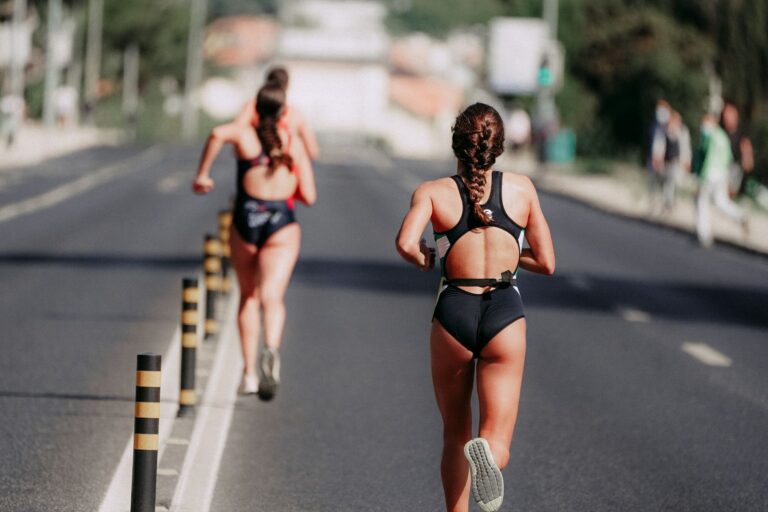
The best HIIT workout for fat loss is a sprint interval protocol — short, maximal-effort bursts of 20 to 30 seconds followed by one to two minutes of active recovery, repeated six to ten times, performed three days per week for at least eight weeks. That is the straightforward answer backed by the current body of research. A runner doing 30-second hill sprints with 90 seconds of walking recovery, for instance, can expect to lose roughly 2 kg of body fat and trim about 3 cm from their waist over a 10-week training block, according to a meta-analysis of 63 studies examining HIIT and body composition. But here is the part that most fitness content leaves out: HIIT does not burn dramatically more fat than steady-state cardio when total energy expenditure is the same.
A 2023 meta-analysis found no significant difference in body fat reduction between HIIT and continuous aerobic training. The real advantage of HIIT is time efficiency — it achieves equivalent fat loss results in up to 40 percent less training time compared to moderate-intensity continuous training. That distinction matters, and it should shape how you program HIIT into your running schedule rather than treating it as a magic bullet. This article breaks down the specific protocols that research supports, explains which exercises and interval structures work best for runners, addresses the overhyped afterburn effect, and lays out a practical weekly schedule that pairs HIIT with your existing cardio and strength work.
Table of Contents
- What Is the Most Effective HIIT Workout for Burning Fat?
- Why HIIT Burns Fat — and Where the Claims Get Exaggerated
- How Exercise Mode and Age Affect Your Results
- Building a Weekly HIIT Schedule Around Your Running
- Common Mistakes That Stall Fat Loss With HIIT
- The Compound Movement Advantage
- What the Research Trajectory Suggests for HIIT and Fat Loss
- Conclusion
- Frequently Asked Questions
What Is the Most Effective HIIT Workout for Burning Fat?
The most effective hiit protocols for fat loss share a few common traits: work intervals under 60 seconds, rest periods of 90 seconds or less, and a preference for active recovery over standing still. Among the well-studied options, Sprint Interval Training stands out for runners. SIT involves 20 to 30 second sprints at 90 to 100 percent effort with one to two minutes of light jogging between rounds, repeated six to ten times. The total session runs about 20 to 25 minutes including a warm-up and cool-down. Compare that to a standard 45-minute tempo run, and the time savings become obvious. The Tabata protocol gets enormous attention online, and for good reason — it is brutally efficient. Developed by Dr.
Izumi Tabata in 1996, the original study used 20 seconds of all-out cycling at 170 percent of VO2max followed by 10 seconds of rest, repeated for eight rounds. That is four minutes of work. However, most people performing “Tabata” at a commercial gym are not reaching anywhere near 170 percent of their VO2max, which means they are doing a generic interval workout and calling it Tabata. The protocol works, but only if the intensity is genuinely maximal. For most runners, sprint intervals on a track or hill are a more practical way to hit the required effort levels. A third option, standard HIIT, uses a 2:1 work-to-rest ratio — typically 30 to 40 seconds of hard effort followed by 15 to 20 seconds of recovery, repeated until fatigue. This format works well with bodyweight exercises like burpees, squat jumps, and mountain climbers, and it can serve as a useful cross-training day for runners who want to build full-body power without additional impact on their joints.

Why HIIT Burns Fat — and Where the Claims Get Exaggerated
The physiological case for HIIT and fat loss rests on a few mechanisms. High-intensity efforts deplete muscle glycogen rapidly, which shifts the body toward greater fat oxidation during the recovery period. HIIT also elevates excess post-exercise oxygen consumption, commonly called the afterburn effect or EPOC, meaning your metabolism stays elevated after the session ends. These are real, measurable effects. However, the practical significance of EPOC has been overstated in popular fitness media. While your metabolic rate does remain elevated after a HIIT session, the additional calorie burn is modest — not the hundreds of extra calories that some sources suggest.
The often-cited claim that HIIT burns nine times more fat than steady-state cardio originates from a single 1994 study and has not been replicated in broader research. If you are choosing HIIT specifically because you believe it torches fat at a dramatically higher rate than your regular runs, you are operating on outdated and unreliable data. What HIIT does reliably improve, beyond fat loss, is VO2max, total cholesterol, and fasting blood glucose. For runners, the VO2max benefit alone is worth the training time. A higher aerobic ceiling translates to faster race paces and more comfortable easy runs. So even if the fat loss advantage over steady-state cardio is negligible when calories are matched, the cardiovascular and metabolic benefits make HIIT a valuable tool in your program for reasons that extend well beyond the scale.
How Exercise Mode and Age Affect Your Results
Not all HIIT is created equal when it comes to body composition outcomes, and the research points to some important distinctions based on how you train and how old you are. A systematic review examining different HIIT modalities found that overground running may be more effective for reducing body fat percentage, while cycling-based HIIT may be better for increasing fat-free mass. For runners, this is encouraging news — your sport-specific training already aligns with the mode that appears most effective for pure fat loss. Age also plays a role. The available evidence suggests that HIIT is most effective for fat oxidation and muscle retention in adults aged 18 to 30 years.
That does not mean HIIT is useless for older adults — far from it. But if you are over 30, managing expectations and paying closer attention to recovery becomes more important. Older runners may need longer rest intervals, fewer weekly sessions, or a shift toward lower-impact HIIT formats like cycling or rowing to protect joints while still getting the metabolic stimulus. A practical example: a 25-year-old competitive 5K runner doing track repeats three times per week will likely see faster and more pronounced body composition changes than a 45-year-old recreational runner doing the same program. The older runner still benefits, but the timeline stretches and the recovery demands increase. This is not a reason to skip HIIT — it is a reason to program it intelligently and pair it with adequate nutrition and sleep.

Building a Weekly HIIT Schedule Around Your Running
The research consensus points to two to three HIIT sessions per week combined with strength training and low-intensity cardio on other days. For runners, this means HIIT should not replace your easy runs or long runs — it should replace or augment your existing speed work. A sample week might look like this: Monday, easy run. Tuesday, HIIT sprint intervals on a track or hill. Wednesday, strength training. Thursday, easy run. Friday, a second HIIT session using bodyweight compound movements. Saturday, long run at conversational pace.
Sunday, rest or a light walk. The tradeoff between sprint intervals and bodyweight HIIT is worth considering. Sprint intervals — whether on a track, hill, or trail — are specific to running and build neuromuscular efficiency that carries over directly to your race performance. Bodyweight HIIT using movements like squat jumps, kettlebell swings, and mountain climbers develops full-body power and muscular endurance but with less direct carryover to running speed. The ideal approach for most runners is one sprint-based session and one cross-training HIIT session per week, which keeps the total impact load manageable while covering both bases. Avoid daily HIIT. Recovery is essential to prevent overtraining and injury, and this is especially true for runners who already accumulate significant musculoskeletal stress from their weekly mileage. If you are running four or more days per week and adding three HIIT sessions on top of that, something needs to give. Two HIIT sessions per week is the sweet spot for most recreational runners chasing fat loss without running themselves into the ground.
Common Mistakes That Stall Fat Loss With HIIT
The most common mistake is not going hard enough during the work intervals. HIIT demands near-maximal effort — 85 to 100 percent of your capacity during the work phase. If you can hold a conversation during a sprint interval, you are not doing HIIT. You are doing moderately hard cardio with rest breaks, and while that is fine for general fitness, it will not deliver the metabolic and hormonal responses that distinguish HIIT from a standard run. The second mistake is relying on HIIT alone without addressing nutrition. A meta-analysis of 63 studies showed that both HIIT and steady-state cardio reduced body fat by approximately 2 kg over roughly 10 weeks. That is meaningful but modest.
No amount of interval training will overcome a significant calorie surplus. Runners who add HIIT and then eat more because they feel hungrier or believe they have “earned” extra food often find themselves spinning their wheels. A subtler issue is passive rest between intervals. Research indicates that active rest — light jogging, walking, or easy movement — is preferred over standing still between work bouts. Active recovery helps clear lactate, maintains blood flow, and may improve the overall training stimulus. For runners doing track repeats, this means jogging the recovery rather than stopping to bend over with hands on knees. It feels harder in the moment, but the data supports it.

The Compound Movement Advantage
When you move HIIT off the track and into a gym or park setting, exercise selection matters. Compound, multi-joint movements — burpees, squat jumps, kettlebell swings, and mountain climbers — recruit more muscle mass per repetition than isolation exercises, which drives greater energy expenditure and hormonal response within the same time frame. A runner who replaces a treadmill sprint session with a circuit of kettlebell swings, squat jumps, and mountain climbers using a 30-seconds-on, 15-seconds-off format gets a full-body stimulus that their running alone does not provide.
This cross-training approach also addresses a common limitation of running-only programs: upper body and posterior chain underdevelopment. Kettlebell swings in particular build hip extension power and glute strength, which translates directly to a stronger running stride and better uphill performance. The fat loss benefit is a bonus on top of the functional strength gains.
What the Research Trajectory Suggests for HIIT and Fat Loss
The scientific conversation around HIIT has matured considerably over the past decade. Early studies generated enormous enthusiasm by suggesting HIIT was categorically superior to traditional cardio for fat loss. More recent and more rigorous meta-analyses have tempered that claim, showing that the fat loss outcomes are similar when energy expenditure is equated.
What has held up is the time efficiency advantage and the broader metabolic benefits — improvements in VO2max, insulin sensitivity, and blood lipid profiles that make HIIT a worthwhile investment for health beyond body composition. For runners, the future of HIIT programming likely involves more individualized approaches based on training history, age, and goals. The blanket recommendation of “do Tabata three times a week” is giving way to more nuanced programming that accounts for your total training load, recovery capacity, and the specific type of fat loss or body composition change you are after. The best approach right now is to start with two sessions per week of running-specific sprint intervals, track your body composition over eight or more weeks, and adjust frequency and format based on what you actually observe — not what a headline promised.
Conclusion
The best HIIT workout for fat loss is one you can sustain consistently for at least eight weeks at genuine high intensity, performed two to three times per week alongside your existing running program. Sprint intervals of 20 to 30 seconds with active recovery periods of 60 to 90 seconds, repeated six to ten times, represent the most well-supported protocol for runners. Expect roughly 2 kg of fat loss and 3 cm of waist reduction over a 10-week block when combined with appropriate nutrition — results that are equivalent to what steady-state cardio delivers, just in significantly less time.
Do not fall for the exaggerated claims about afterburn effects or ninefold fat-burning advantages. The honest case for HIIT is strong enough without the hype: it saves time, improves your VO2max, enhances metabolic health markers, and fits neatly into a running-focused training week. Start with two sprint sessions per week, keep your rest intervals active, go genuinely hard during the work phases, and give the protocol at least two months before evaluating results.
Frequently Asked Questions
How long does it take to see fat loss results from HIIT?
Research consistently shows that a minimum of eight weeks of training, at least three sessions per week, is needed for measurable changes in body fat. Expecting visible results in two or three weeks is unrealistic for most people.
Is HIIT better than running at a steady pace for losing fat?
No — a 2023 meta-analysis found no significant difference in body fat reduction between HIIT and continuous aerobic training when total energy expenditure was matched. HIIT achieves similar results in up to 40 percent less training time, which is its primary advantage.
Can I do HIIT every day?
You should not. Recovery is essential to prevent overtraining and injury. Two to three HIIT sessions per week, combined with lower-intensity training on other days, is the recommended approach.
Does the afterburn effect from HIIT make a big difference for fat loss?
The afterburn effect, or EPOC, is real but modest. It is unlikely to be practically meaningful for fat loss on its own. The claim that HIIT burns nine times more fat comes from a single 1994 study that has not been replicated.
Should I do sprints or bodyweight exercises for HIIT?
Both work. Overground running may be more effective for reducing body fat percentage, while bodyweight compound movements offer full-body conditioning. For runners, a mix of one sprint session and one bodyweight session per week covers both bases.
Is HIIT less effective as I get older?
The evidence suggests HIIT is most effective for fat oxidation and muscle retention in adults aged 18 to 30. Older adults still benefit but may need longer recovery periods and fewer weekly sessions.