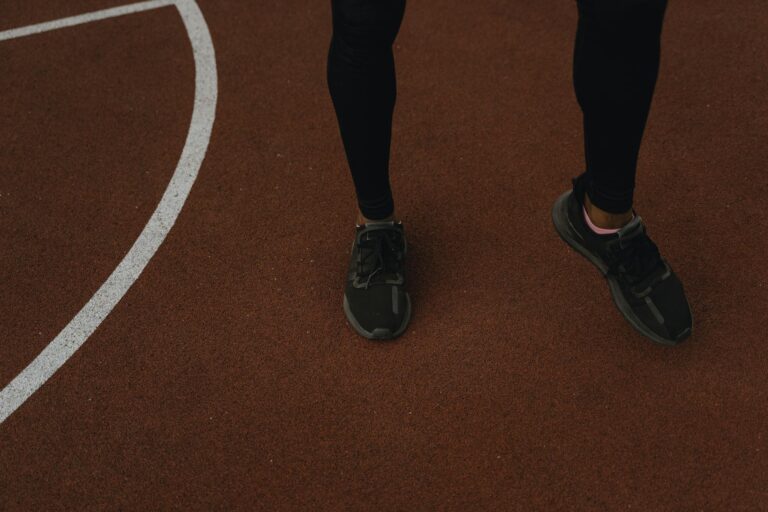
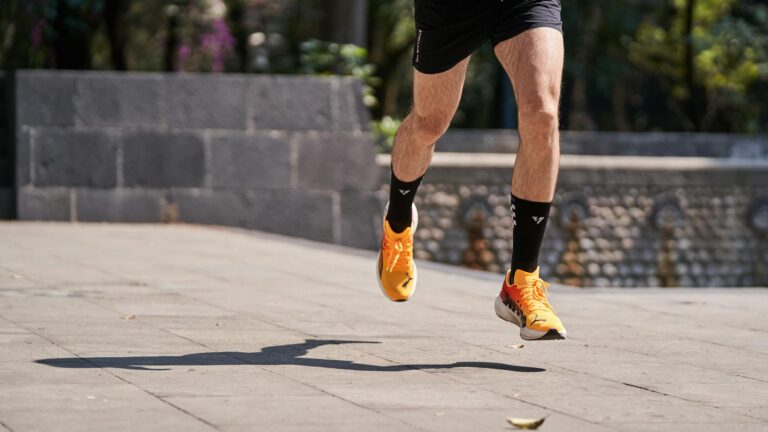
The footwear that keeps you moving fast on tempo days sits in a specific category: lightweight trainers with responsive midsoles that offer enough cushioning for sustained effort but enough snap to reward your turnover. These shoes typically weigh between 7 and 9 ounces, feature carbon-fiber plates or high-rebound foams like Pebax or TPU compounds, and maintain a lower heel-to-toe drop than traditional trainers. A runner doing threshold intervals in the Nike Pegasus Turbo or Saucony Kinvara, for instance, gets the ground feel needed for pace awareness while avoiding the dead, sluggish sensation that comes from maximalist cushioning.
Tempo runs occupy a demanding middle ground in training””faster than easy days but not quite race effort””and the wrong shoe can turn a productive workout into a slog. Too much cushion absorbs the energy you’re trying to generate; too little protection beats up your legs before the real training stimulus takes hold. The ideal tempo shoe encourages a quick cadence, responds to forefoot loading during faster turnover, and still provides enough structure to handle 6 to 10 miles without leaving you sore the next day. This article breaks down exactly what distinguishes tempo-day footwear from racing flats and daily trainers, how to evaluate responsiveness versus protection, which features matter most for different tempo formats, and how to integrate specialty shoes into your rotation without destroying your budget or your body.
Table of Contents
- What Makes Tempo-Day Footwear Different from Racing Flats and Daily Trainers?
- Understanding Midsole Responsiveness and Energy Return
- The Role of Weight in Sustained Fast Running
- Choosing the Right Stack Height and Drop for Tempo Efforts
- Common Fit Issues That Slow You Down
- Breaking In Performance Footwear Without Breaking Yourself
- How to Prepare
- How to Apply This
- Expert Tips
- Conclusion
- Frequently Asked Questions
What Makes Tempo-Day Footwear Different from Racing Flats and Daily Trainers?
Tempo shoes occupy a narrow but critical space between two extremes. Racing flats prioritize weight savings and energy return above all else, often sacrificing durability and cushioning to shave seconds off race times. Daily trainers emphasize protection, durability, and versatility, but their heavier builds and softer foams can dampen the responsiveness you need when running at lactate threshold. Tempo footwear borrows the propulsive characteristics of racers while retaining enough substance to handle repeated hard efforts week after week. The distinction becomes clearer when you examine stack heights and foam densities. A racing flat like the Nike Vaporfly might use 40mm of ultralight ZoomX foam with a full carbon plate, optimized for one-time performances but prone to compression after 100 to 150 miles.
A daily trainer like the Brooks Ghost offers 35mm of softer DNA Loft foam designed to last 400 to 500 miles but absorbs energy rather than returning it. Tempo shoes split the difference””the Hoka Mach series, for example, uses 35mm of firmer Profly foam that feels snappy without the fragility of race-day designs. However, the category boundaries have blurred considerably as foam technology improves. Several shoes marketed as daily trainers, including the New Balance FuelCell Rebel and Asics Novablast, perform admirably for tempo work. The key is evaluating how a shoe feels at goal pace rather than trusting marketing categories. If a shoe makes threshold pace feel harder than it should, it’s wrong for tempo days regardless of what the box says.

Understanding Midsole Responsiveness and Energy Return
Energy return has become the dominant performance metric in running footwear, but the numbers require context. When manufacturers claim 85 percent energy return, they’re measuring foam behavior under controlled laboratory conditions that don’t perfectly replicate running mechanics. Real-world responsiveness depends on how the foam interacts with your specific gait, body weight, footstrike pattern, and pace. A 180-pound heel striker and a 130-pound forefoot runner will experience the same midsole very differently. The most responsive tempo foams share certain characteristics: they compress under load and spring back quickly, they maintain their properties across temperature ranges, and they resist permanent deformation over hundreds of miles.
Pebax-based foams like Saucony’s Pwrrun PB and Nike’s ZoomX lead the industry in raw energy return figures, while TPU-based compounds like Adidas Boost and On Cloudtec offer more consistent performance across temperatures but slightly lower peak responsiveness. EVA-based foams, once standard across the industry, now appear primarily in budget models and typically feel dead in comparison. There’s an important limitation to consider: maximum energy return isn’t always optimal for tempo training. Some coaches and sports scientists argue that slightly less responsive footwear during training creates a muscular stimulus that makes race-day shoes feel even faster. If every workout happens in super-shoes, your legs may not develop the intrinsic strength that comes from working against moderate resistance. Many elite programs reserve the most responsive footwear for races and key workouts, using moderately responsive options for standard tempo sessions.
The Role of Weight in Sustained Fast Running
shoe weight affects running economy through simple physics””every ounce on your feet requires energy to accelerate and decelerate with each stride. Research consistently shows that adding 100 grams per shoe increases oxygen consumption by roughly 1 percent. For a runner targeting 7-minute miles during tempo work, that translates to approximately 4 to 5 seconds per mile of additional effort. Across a 6-mile tempo run, heavy shoes can make the difference between hitting target pace and struggling. The Saucony Endorphin Speed illustrates how modern construction achieves low weight without sacrificing function. At 7.5 ounces for a men’s size 9, it weighs less than many racing flats from a decade ago while providing more cushioning and a nylon plate for propulsion.
The weight savings come from engineered mesh uppers, minimal overlays, reduced outsole rubber coverage, and advanced foam formulations. Similarly, the Asics Magic Speed uses a combination of FlyteFoam and FF Blast foams with a carbon plate to hit 7.8 ounces while maintaining enough structure for repeated hard efforts. Weight obsession has limits, though. Stripping a shoe below 6 ounces typically requires sacrificing durability, protection, or both. Runners who log high mileage often find that ultra-minimal tempo shoes wear out within 150 to 200 miles, making them poor value despite their performance benefits. Additionally, lighter shoes provide less protection on rough surfaces””a consideration for anyone running tempos on trails or poorly maintained roads. The sweet spot for most runners falls between 7 and 9 ounces, where weight savings remain meaningful but construction stays robust enough for training purposes.
Choosing the Right Stack Height and Drop for Tempo Efforts
Stack height””the total thickness of material between your foot and the ground””influences both cushioning and proprioception. Higher stacks provide more protection from impact forces but can create a disconnected feeling that makes pace judgment difficult. Lower stacks offer better ground feel and a more natural gait but transmit more impact stress to bones and soft tissues. For tempo running, where pace awareness matters and efforts last long enough to accumulate stress, moderate stack heights between 28 and 36 millimeters typically work best. Heel-to-toe drop affects how your foot loads during the gait cycle. Traditional running shoes feature drops of 10 to 12 millimeters, encouraging a heel-first landing pattern. Lower drops of 4 to 8 millimeters promote midfoot striking and may improve running efficiency for some athletes, though the research remains mixed.
Zero-drop shoes require significant adaptation and aren’t appropriate for high-intensity tempo work unless you’ve spent months building tolerance. A runner transitioning from 12mm trainers to 4mm tempo shoes risks Achilles tendinopathy, calf strains, and metatarsal stress reactions. The interaction between stack height and drop creates distinct ride characteristics. A high-stack, low-drop shoe like the Hoka Rocket X produces a rolling, propulsive sensation that some runners love and others find unstable. A moderate-stack, moderate-drop option like the Brooks Hyperion Tempo feels more traditional while still providing adequate responsiveness. Personal preference matters enormously here””there’s no objectively correct specification. The most useful approach involves testing multiple configurations during easy runs before committing to one for demanding tempo sessions.
Common Fit Issues That Slow You Down
Even the most technologically advanced shoe fails if it doesn’t fit properly. Tempo-day footwear requires a precise fit because the faster turnover and longer duration of these sessions amplify any problems. A heel that slips slightly feels barely noticeable during easy running but causes blisters and instability at threshold pace. A toe box that pinches creates discomfort that builds from tolerable to excruciating across 40 minutes of hard effort. Width presents particular challenges because most performance-oriented shoes run narrow. Brands optimize for weight and lockdown, often at the expense of roominess. Runners with wider feet frequently find that their preferred tempo shoes don’t exist in appropriate widths, forcing compromises between fit and performance.
Some solutions include heat-molding mesh uppers, using thinner insoles to create more internal volume, or accepting a half-size larger than ideal and compensating with tighter lacing. New Balance and Altra offer wider options in some performance models, though their selections remain limited compared to daily trainer lines. The timing of fit testing matters too. Feet swell during running, particularly during longer or faster efforts when blood flow to the extremities increases. A shoe that fits perfectly in the store at 9 AM may feel constraining by mile four of an afternoon tempo run. Testing shoes during or immediately after a run provides more reliable information than fresh-footed morning assessments. Also consider the socks you’ll actually wear during workouts””a thick cushioned sock paired with a shoe fitted using thin liners creates immediate problems.

Breaking In Performance Footwear Without Breaking Yourself
Modern running shoes require less break-in than older leather and rubber designs, but the transition period still matters. Most foam compounds need 20 to 30 miles before reaching their optimal performance characteristics. Fresh out of the box, some midsoles feel stiff and unresponsive; others feel overly soft and haven’t settled into their intended density. Running a key tempo session in brand-new shoes risks both suboptimal performance and unexpected discomfort. The Adidas Adizero Adios Pro series provides a useful example. These shoes use LightstrikePro foam that many runners describe as feeling “dead” for the first several runs before the foam breaks in and the responsiveness emerges.
Rushing an important workout in new Adios Pros often leads to disappointment. The same applies to carbon-plated shoes generally””the plate needs to work in conjunction with adequately softened foam, and that interaction improves as the shoe accumulates miles. The practical approach involves wearing new tempo shoes for easy runs and strides first. Three to four easy sessions totaling 25 miles typically suffice for most modern designs. During this period, pay attention to any hot spots, pressure points, or stability concerns. Problems that persist after break-in won’t magically resolve; they indicate fit incompatibility. Better to discover this during recovery runs than midway through a race-specific workout.
How to Prepare
- **Assess your current shoe inventory.** Catalog what you already own, noting the mileage on each pair, how the cushioning feels now versus when new, and which shoes you instinctively grab for faster sessions. Often runners already own suitable tempo footwear but haven’t identified it as such.
- **Define your tempo workout types.** Classic steady-state tempos, cruise intervals, progression runs, and lactate threshold repeats place different demands on footwear. A 20-minute continuous tempo benefits from slightly more cushion than 4×1-mile repeats with recovery jogs.
- **Identify your fit profile.** Measure both feet late in the day, note any asymmetries, and determine whether you run narrow, standard, or wide. This information eliminates many options before you even enter a store.
- **Research current models.** Read reviews from runners with similar builds and training styles to yours. Manufacturer claims mean less than real-world reports. Pay attention to durability feedback””a shoe that loses responsiveness after 100 miles isn’t economical regardless of purchase price.
- **Budget for rotation.** Plan to maintain at least two pairs of tempo-capable shoes simultaneously. Rotating extends the life of both pairs and allows foam to fully decompress between sessions. Warning: buying multiple pairs of the same model in the same size when you find a shoe that works is wise, but beware that manufacturers often change formulations between production runs or model years, so even “the same shoe” may not be identical.
How to Apply This
- **Match shoes to session intensity.** Reserve your most responsive tempo footwear for workouts where time-at-pace matters””threshold runs, tempo intervals, race simulations. Use moderately responsive options for fartlek sessions and progression runs where you’re building into faster paces.
- **Track mileage religiously.** Log which shoes you wear for every run. When tempo sessions start feeling harder than your fitness suggests, check the mileage on your primary tempo shoes. Foam degradation is gradual enough that you might not notice it happening.
- **Calibrate paces to footwear.** If your tempo runs happen in shoes significantly different from your race flats, expect race-day paces to feel easier. Some runners run tempos 5 to 10 seconds per mile slower than equivalent effort would produce in race shoes, then find free speed on competition day.
- **Cycle shoes seasonally.** Performance foam behaves differently in cold weather””most compounds stiffen and lose responsiveness below 40 degrees Fahrenheit. Consider firmer-compound shoes for winter tempo work, switching to maximum-responsiveness options in warmer months.
Expert Tips
- Rotate between at least two pairs of tempo shoes to extend foam life; midsoles that rest 48 hours between uses maintain their properties significantly longer than those worn on consecutive days.
- Do not run tempos in racing flats unless you’re specifically simulating race conditions within 3 weeks of a goal event; the durability cost and injury risk outweigh marginal performance benefits during standard training.
- Test new shoes with strides before committing to full tempo workouts; 6 to 8 accelerations at the end of an easy run reveal how a shoe handles faster turnover without the risk of a blown session.
- Consider outsole rubber placement for your typical tempo routes; exposed foam on the forefoot wears quickly on concrete and provides minimal grip on wet surfaces.
- Weight-match shoes across your rotation when possible; dramatic weight differences between training and racing shoes create proprioceptive confusion and inconsistent pace judgment.
Conclusion
Tempo-day footwear occupies a demanding middle ground that rewards thoughtful selection. The right shoes respond to your effort without absorbing it, protect your legs without deadening your stride, and survive enough training miles to justify their cost. Finding this balance requires understanding how midsole foams behave, how weight affects economy, how fit issues multiply at faster paces, and how your personal biomechanics interact with different designs.
The practical path forward involves honest assessment of your current shoes, research into models that match your needs and anatomy, patience during break-in periods, and disciplined rotation practices that extend the usable life of each pair. No single shoe works optimally for every runner or every tempo format. Building a small rotation of complementary options””perhaps one maximally responsive shoe for key sessions and one more moderate choice for standard tempo work””provides flexibility while managing costs. The time invested in understanding footwear pays dividends across every hard session of your training cycle.
Frequently Asked Questions
How long does it typically take to see results?
Results vary depending on individual circumstances, but most people begin to see meaningful progress within 4-8 weeks of consistent effort. Patience and persistence are key factors in achieving lasting outcomes.
Is this approach suitable for beginners?
Yes, this approach works well for beginners when implemented gradually. Starting with the fundamentals and building up over time leads to better long-term results than trying to do everything at once.
What are the most common mistakes to avoid?
The most common mistakes include rushing the process, skipping foundational steps, and failing to track progress. Taking a methodical approach and learning from both successes and setbacks leads to better outcomes.
How can I measure my progress effectively?
Set specific, measurable goals at the outset and track relevant metrics regularly. Keep a journal or log to document your journey, and periodically review your progress against your initial objectives.
When should I seek professional help?
Consider consulting a professional if you encounter persistent challenges, need specialized expertise, or want to accelerate your progress. Professional guidance can provide valuable insights and help you avoid costly mistakes.
What resources do you recommend for further learning?
Look for reputable sources in the field, including industry publications, expert blogs, and educational courses. Joining communities of practitioners can also provide valuable peer support and knowledge sharing.