Speed is the primary driver of cardiovascular intensity when skiing, but not by as wide a margin as most people assume. Research on alpine skiing shows that high-speed descents on groomed runs can push heart rates to 80-90% of maximum, while technically demanding terrain at moderate speeds consistently produces heart rates in the 70-85% range. The difference comes down to muscle fiber recruitment: speed activates fast-twitch fibers for explosive reactions and stabilization, while control-focused skiing engages sustained isometric contractions that accumulate fatigue differently. A skier bombing down a blue run at 40 mph will typically burn more calories per minute than someone carefully navigating moguls at 15 mph, but the mogul skier often reports higher perceived exertion because of the constant muscular tension required.
Consider a 160-pound intermediate skier making ten runs over two hours. On fast, sweeping turns down moderate terrain, they might average 8-10 calories per minute during active descent. The same skier working through challenging steeps with controlled, precise turns might only hit 7-9 calories per minute, but the sustained muscular engagement means less recovery between movements. The net effect on total cardiovascular load across a ski day often balances out, though the physiological stress presents differently in each case. This article breaks down exactly how speed and technical control each contribute to skiing’s workout value, examines the specific demands on your heart and muscles in different conditions, and provides practical guidance for skiers who want to maximize their time on the mountain for fitness purposes.
Table of Contents
- Does Skiing Speed or Technical Control Demand More From Your Cardiovascular System?
- The Physiological Demands of High-Speed Descents
- How Terrain and Snow Conditions Affect Skiing Intensity
- Balancing Speed and Control for Optimal Cardiovascular Training
- Common Mistakes That Reduce Skiing’s Cardiovascular Benefits
- Cross-Training Benefits for Runners and Endurance Athletes
- How to Prepare
- How to Apply This
- Expert Tips
- Conclusion
- Frequently Asked Questions
Does Skiing Speed or Technical Control Demand More From Your Cardiovascular System?
Pure speed creates the highest peak cardiovascular demands in skiing, primarily because of the body’s emergency-response systems kicking in. When you’re moving fast down a slope, your sympathetic nervous system elevates heart rate not just from physical exertion but from the anticipatory stress of potential hazards. Studies using portable heart rate monitors on recreational skiers found that the fastest portions of runs produced heart rate spikes 15-20 beats per minute higher than the same terrain skied cautiously, even when controlling for actual muscular work performed. However, technical control skiing produces a different but substantial cardiovascular load through accumulated isometric stress. Holding an athletic stance through variable terrain requires your quadriceps, glutes, and core to maintain constant tension, which restricts blood flow through compressed muscles and forces your heart to work harder to maintain circulation.
Mogul skiing, for example, has been measured to produce average heart rates of 165-175 bpm in fit recreational skiers, comparable to running at threshold pace, despite the relatively slow forward progress. The comparison becomes more nuanced when you factor in rest periods. Speed skiing on groomed runs typically involves short, intense efforts followed by chairlift recovery. Control-intensive skiing in challenging terrain often means continuous work with minimal rest, similar to the interval versus steady-state debate in running. A skier doing six fast groomers per hour might accumulate 15 minutes of high-intensity work, while someone in the bumps might accumulate 25 minutes of moderate-to-high intensity work over the same period.
The Physiological Demands of High-Speed Descents
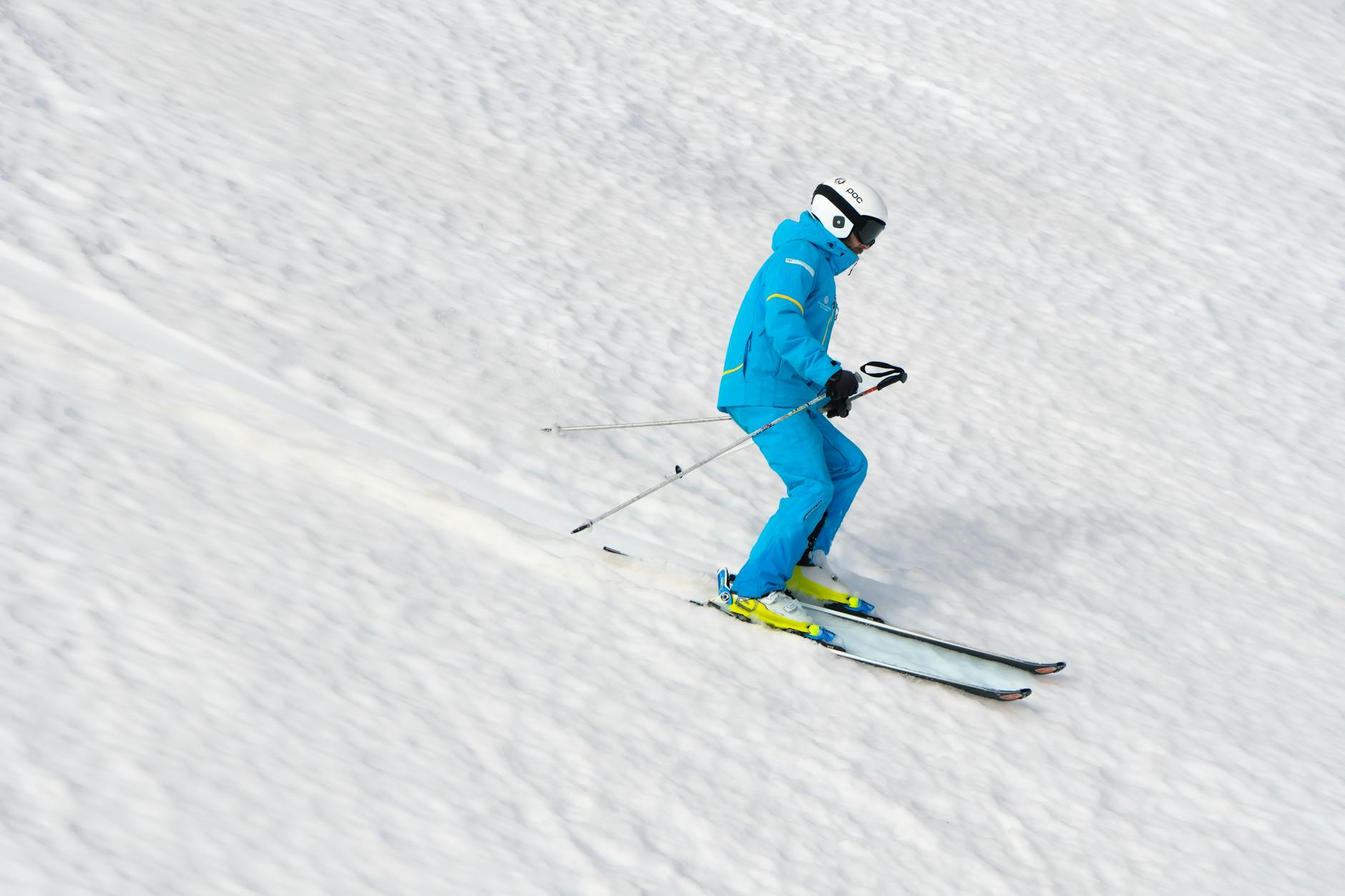
Fast skiing taxes the cardiovascular system through a combination of actual muscular work and neurological stress. At speeds above 30 mph, the body must make split-second adjustments to terrain changes, requiring rapid-fire signals from the brain to the muscles. This creates a metabolic cost beyond what the movements themselves would require at slower speeds. Elite downhill racers have recorded heart rates exceeding 200 bpm during competitive runs, driven partly by the adrenaline response to perceived danger. The muscular demands shift as well. High-speed turns generate significant G-forces that must be absorbed by the legs, with forces reaching 2-3 times body weight on aggressive carved turns.
Your quadriceps act as shock absorbers while simultaneously directing the skis, requiring both strength and power. This combination of eccentric loading and explosive force production is highly energy-expensive and creates the burning sensation familiar to anyone who has skied hard and fast. However, if you’re skiing fast on easy terrain without much turning or active engagement, the cardiovascular benefit drops substantially. Simply pointing your skis downhill in a tuck position on a moderate pitch requires surprisingly little effort once you’re moving. The intensity comes from active skiing, meaning turning, adjusting, and managing speed through technique. A skier who straightlines a run may feel the rush of speed but gets less workout benefit than someone making active turns at the same velocity.
How Terrain and Snow Conditions Affect Skiing Intensity
Snow conditions often matter more than either speed or technical difficulty for determining actual workout intensity. Skiing in heavy, wet snow requires substantially more force to initiate and complete turns, increasing muscular work by an estimated 20-40% compared to groomed conditions. Powder skiing, while often done at moderate speeds, demands constant adjustments and a more athletic stance that keeps heart rates elevated throughout each run. Variable conditions present the highest combined demands. A run that transitions from groomed to chopped-up snow to ice patches requires constant adaptation, engaging more muscle groups and forcing your cardiovascular system to respond to rapidly changing work requirements.
This is similar to trail running versus road running, where the unpredictability itself becomes a training stimulus. Consider a specific example: skiing at a resort after a storm when the mountain has been partially groomed. The groomed sections allow speed, while the untracked areas demand control, and the transitions between them require explosive adjustments. This combination often produces the highest overall calorie burns and heart rate averages because there’s no opportunity to settle into an efficient rhythm. Skiers report feeling more exhausted after days with mixed conditions than after days of consistently challenging terrain.
Balancing Speed and Control for Optimal Cardiovascular Training
For skiers specifically interested in fitness benefits, the most effective approach combines moderate speed with active, engaged skiing rather than maximizing either variable independently. This means choosing terrain that allows you to ski continuously without excessive fear or excessive ease, terrain where you’re working but not surviving. The tradeoff between speed and control mirrors the intensity-duration relationship in other cardiovascular activities. Going all-out burns more calories per minute but limits how long you can sustain the effort and increases injury risk. Skiing at 70-80% of your maximum comfortable speed, while maintaining excellent technique, allows for longer sessions with higher total energy expenditure.
A three-hour day of moderate skiing typically burns 1,500-2,000 calories, while a two-hour day of aggressive skiing might only hit 1,200-1,500 despite the higher per-minute rate. The comparison to running is instructive here. Most runners don’t train by sprinting every run, even though sprinting burns more calories per minute. They recognize that sustainable paces allow for greater volume and consistency. Similarly, ski fitness is maximized by finding your “tempo skiing” intensity, fast enough to challenge your system, controlled enough to maintain throughout the day, varied enough to prevent adaptation to any single movement pattern.
Common Mistakes That Reduce Skiing’s Cardiovascular Benefits
Many skiers unconsciously minimize their workout by taking too many breaks or skiing passively. The average recreational skier spends only 15-20% of their time on the mountain actually skiing, with the rest consumed by lift rides, breaks, adjusting gear, and waiting for companions. Compare this to running, where nearly all of your time out is spent exercising. Maximizing ski fitness requires deliberate attention to minimizing downtime. Another common issue is skiing below your technical ability in ways that reduce engagement. Many skiers develop habits of minimal turning, using wide, sweeping arcs that require little active input.
While this conserves energy and may feel relaxing, it sacrifices most of the cardiovascular benefit. Actively carving turns, even on easy terrain, maintains heart rate elevation and muscular engagement. A significant warning: pushing for intensity beyond your technical skill level dramatically increases injury risk. Skiing at high speeds without the ability to control those speeds, or tackling technical terrain beyond your capability, shifts the equation from workout to survival. Injuries from skiing can sideline runners and fitness enthusiasts for months. The intensity gains from aggressive skiing must always be weighed against the recovery time from potential falls. Conservative skiers who stay healthy ski more days per season than aggressive skiers who blow out a knee in January.

Cross-Training Benefits for Runners and Endurance Athletes
Skiing offers runners and endurance athletes a valuable off-season training stimulus that emphasizes different movement patterns than forward locomotion. The lateral movements, rotational forces, and eccentric muscle contractions provide what exercise physiologists call “movement variability,” challenging tissues and neurological patterns that running alone neglects. Many running injuries stem from the repetitive, linear nature of the sport, and skiing’s three-dimensional demands can help address these imbalances.
A practical example: a marathoner who skis 15-20 days between December and March often reports improved hip stability and quad strength when returning to running in spring. The isometric demands of maintaining an athletic skiing stance translate directly to better running posture during the late miles of long efforts. The key is viewing skiing as complementary training rather than vacation from fitness, approaching each day with intention about effort and engagement rather than simply enjoying the scenery.
How to Prepare
- **Build leg strength and endurance in the months before ski season**, focusing on squats, lunges, and single-leg exercises that mimic skiing’s demands. Wall sits and isometric holds are particularly valuable for preparing your quads for sustained tension.
- **Develop cardiovascular base fitness through running, cycling, or other aerobic activities** before ski season begins. Arriving at the mountain already fit allows you to ski harder and longer without excessive fatigue.
- **Warm up before your first run each day** with dynamic movements like leg swings, bodyweight squats, and lateral shuffles. Cold muscles work less efficiently and fatigue faster.
- **Plan your ski day to maximize active time**, including which lifts to ride, which runs to ski, and how long to break for lunch. Having a plan reduces wasted time and increases total skiing.
- **Fuel and hydrate properly**, as altitude and cold both increase metabolic demands while suppressing appetite and thirst cues. Dehydrated and under-fueled skiers fatigue quickly and ski passively.
How to Apply This
- **Choose terrain that matches your fitness goals for the day**. If you want high-intensity intervals, ski steep groomers with speed. If you want sustained moderate effort, spend time in the bumps or variable terrain where continuous engagement is required.
- **Monitor your effort levels using perceived exertion or a heart rate monitor** to ensure you’re actually working at your intended intensity. Many skiers overestimate how hard they’re working because of the cold air and outdoor environment.
- **Vary your speed and terrain throughout the day** to prevent your body from adapting to a single stimulus. Mix fast runs with technical runs, and easy recovery runs with challenging efforts.
- **Track your vertical feet and active ski time** rather than just hours at the resort to get an accurate picture of your actual workout volume. Many fitness watches and ski apps provide this data automatically.
Expert Tips
- Skiing in the morning when snow is firmer typically requires more effort per turn than afternoon slush, making early runs more productive for fitness.
- Do not push for speed on crowded runs, as the stop-and-go pattern and stress of avoiding other skiers negates any cardiovascular benefit and increases accident risk.
- Ski with partners of similar ability who want similar terrain to avoid spending your day waiting or being waited for.
- Take shorter breaks more frequently rather than one long lunch, keeping your muscles warm and your metabolism elevated throughout the day.
- Practice pole plants and active upper body engagement to increase total muscular involvement and add an incremental cardio boost that passive upper body skiing misses.
Conclusion
Speed drives peak cardiovascular intensity in skiing, but control-focused skiing on challenging terrain produces substantial and sustained heart rate elevation through different mechanisms. The practical reality for most recreational skiers seeking fitness benefits is that the best approach combines moderate speed with active, engaged skiing on terrain that demands continuous attention without inducing fear. This sustainable intensity allows for longer ski days and higher total training volume.
For runners and endurance athletes, skiing represents a valuable cross-training opportunity that challenges different movement patterns while providing legitimate cardiovascular work. The key is approaching ski days with intention, choosing appropriate terrain, minimizing downtime, and skiing actively rather than passively. A well-planned ski day can deliver a workout comparable to a long run while sparing joints from impact and building strength through novel movement patterns.
Frequently Asked Questions
How long does it typically take to see results?
Results vary depending on individual circumstances, but most people begin to see meaningful progress within 4-8 weeks of consistent effort. Patience and persistence are key factors in achieving lasting outcomes.
Is this approach suitable for beginners?
Yes, this approach works well for beginners when implemented gradually. Starting with the fundamentals and building up over time leads to better long-term results than trying to do everything at once.
What are the most common mistakes to avoid?
The most common mistakes include rushing the process, skipping foundational steps, and failing to track progress. Taking a methodical approach and learning from both successes and setbacks leads to better outcomes.
How can I measure my progress effectively?
Set specific, measurable goals at the outset and track relevant metrics regularly. Keep a journal or log to document your journey, and periodically review your progress against your initial objectives.
When should I seek professional help?
Consider consulting a professional if you encounter persistent challenges, need specialized expertise, or want to accelerate your progress. Professional guidance can provide valuable insights and help you avoid costly mistakes.
What resources do you recommend for further learning?
Look for reputable sources in the field, including industry publications, expert blogs, and educational courses. Joining communities of practitioners can also provide valuable peer support and knowledge sharing.