Long treadmill runs expose bad shoes faster than outdoor running due to the relentless consistency of the belt surface, the unchanging biomechanical demands, and the accumulated stress of repetitive identical footstrikes. While outdoor runners benefit from natural terrain variations that distribute impact forces across different parts of the foot and leg, treadmill runners hammer the same anatomical structures stride after stride, revealing footwear deficiencies that might take months to surface on varied outdoor surfaces. The relationship between running shoes and injury prevention remains one of the most discussed topics in the running community, yet the specific challenges posed by treadmill running often go overlooked.
Many runners purchase shoes based on outdoor testing or short in-store trials, only to discover during extended treadmill sessions that their footwear lacks adequate cushioning, stability, or durability. The controlled environment of treadmill running, while offering convenience and climate independence, creates a stress test that few shoes can pass without revealing their weaknesses. By the end of this article, readers will understand the biomechanical reasons why treadmill running accelerates shoe wear, learn to identify the warning signs of inadequate footwear during indoor runs, and gain practical strategies for selecting and maintaining shoes that can withstand the unique demands of belt running. Whether training for a marathon through winter months or simply preferring the gym environment, understanding how treadmill running interacts with shoe performance can prevent injuries and extend the useful life of running footwear.
Table of Contents
- Why Do Treadmill Runs Reveal Shoe Problems Faster Than Running Outside?
- The Biomechanics of Treadmill Running and Shoe Stress
- Warning Signs Your Running Shoes Are Failing on the Treadmill
- How to Select Running Shoes That Withstand Long Treadmill Sessions
- Common Mistakes That Accelerate Shoe Breakdown During Treadmill Runs
- Extending Shoe Lifespan Through Strategic Rotation and Recovery
- How to Prepare
- How to Apply This
- Expert Tips
- Conclusion
- Frequently Asked Questions
Why Do Treadmill Runs Reveal Shoe Problems Faster Than Running Outside?
The fundamental difference between runningcardio.com/how-treadmill-heat-changes-the-way-your-running-shoes-feel/” title=”How Treadmill Heat Changes the Way Your Running Shoes Feel”>treadmill and outdoor running lies in surface variability. Outdoor running naturally incorporates micro-adjustments with every step””slight changes in terrain angle, surface hardness, and ground texture force the foot to land differently each time. These variations distribute stress across multiple muscle groups and shoe components, effectively spreading the wear across the entire system.
Treadmill running eliminates this protective variability, forcing both the runner and the shoe to absorb identical forces in identical patterns thousands of times per session. Research from biomechanics laboratories has documented that treadmill runners exhibit approximately 3-5% less stride variability compared to overground runners. This reduction might seem minor, but over a 10-mile run comprising roughly 15,000 footstrikes, those identical impact patterns compound dramatically. A shoe with marginal cushioning or slight stability issues will telegraph its inadequacies far sooner when every step replicates the exact same stress rather than distributing that stress across different landing patterns and surface responses.
- **Consistent belt speed** creates uniform impact timing that highlights cushioning inadequacies in specific zones
- **Flat, predictable surface** eliminates the natural proprioceptive feedback that helps runners unconsciously adjust their gait
- **Temperature buildup** from friction between shoe and belt accelerates midsole compression and foam degradation
- **Absence of directional changes** concentrates wear on heel and forefoot areas without relief from lateral movements
The Biomechanics of Treadmill Running and Shoe Stress
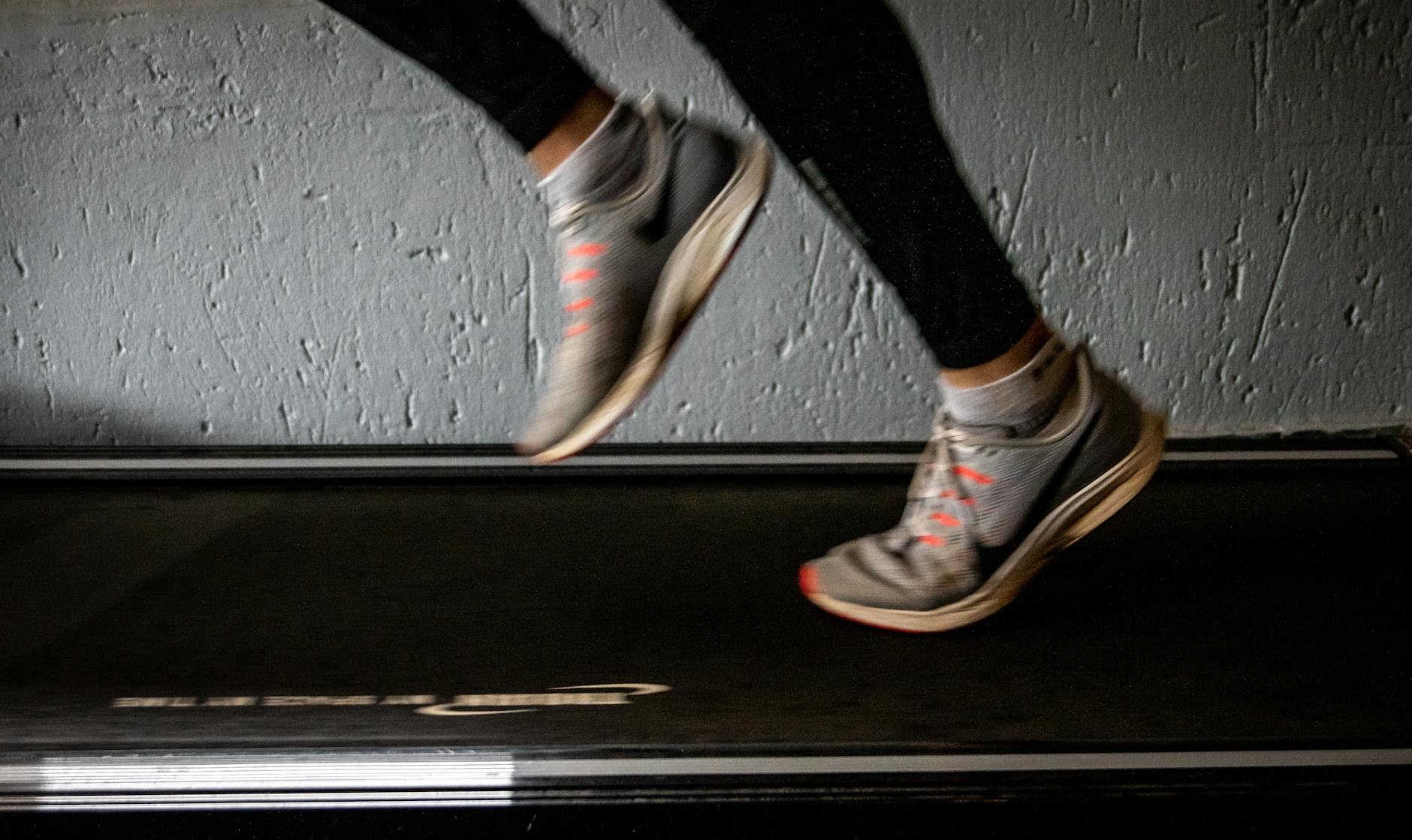
Treadmill belts typically move at a constant velocity, requiring runners to match that pace precisely or risk drifting backward. This mechanical constraint subtly alters running form compared to outdoor propulsion. When running outside, the foot pushes against a stationary surface to propel the body forward. On a treadmill, the moving belt effectively pulls the foot backward during stance phase, reducing the propulsive demands on the posterior chain while increasing the importance of hip flexor engagement to lift the leg forward.
This biomechanical shift concentrates stress differently within the shoe. The reduced push-off demand means less forefoot engagement in some runners, while the continuous belt movement creates additional friction and heat at the outsole. Studies measuring midsole temperature during treadmill running have recorded increases of 10-15 degrees Fahrenheit over 30-minute sessions, significantly accelerating the breakdown of EVA and polyurethane foams. This thermal stress, combined with the mechanical compression of repetitive loading, explains why shoes used primarily on treadmills often lose their cushioning properties 15-20% faster than identical models used outdoors.
- **Hip flexor dominance** shifts landing patterns and can expose stability weaknesses in shoes designed for outdoor propulsion mechanics
- **Reduced ground contact variability** means the same midsole regions absorb impact repeatedly without recovery time
- **Belt friction generates heat** that softens foam compounds and accelerates permanent compression
- **Constant pace maintenance** prevents the natural speed variations that give shoe materials momentary relief during outdoor runs
Warning Signs Your Running Shoes Are Failing on the Treadmill
Recognizing shoe degradation during treadmill sessions requires attention to subtle cues that busy runners often dismiss. The most reliable early indicator is a change in perceived impact””when the same treadmill, same pace, and same duration suddenly feels harder on the joints, the shoe’s cushioning system has likely begun to fail. This sensation typically emerges between 200-300 miles on shoes used predominantly for treadmill running, compared to 350-450 miles for the same shoes used outdoors.
Visual inspection after treadmill runs reveals additional warning signs. Examine the midsole from behind the shoe while it sits on a flat surface; any visible lean to the left or right indicates uneven compression that will worsen with continued use. Check the outsole for smooth, shiny patches where the rubber has worn thin, particularly in the heel strike zone and beneath the ball of the foot. On treadmill-dedicated shoes, these wear patterns develop more uniformly and rapidly than on outdoor shoes, which typically show more varied wear distribution.
- **Increasing leg fatigue** at distances that previously felt manageable suggests cushioning degradation
- **Hot spots or new friction points** indicate that shoe structure has shifted from its original geometry
- **Audible changes** in footstrike sound, particularly a harder slapping noise, reveal compressed or hardened midsole foam

How to Select Running Shoes That Withstand Long Treadmill Sessions
Choosing footwear specifically suited for treadmill running requires consideration of factors that matter less for outdoor use. Durability of cushioning materials becomes paramount””shoes featuring newer foam technologies like Nike ZoomX, Adidas Lightstrike Pro, or Saucony PWRRUN PB maintain their responsive properties longer under the repetitive stress of belt running. However, these premium foams often trade durability for performance, creating a cost-benefit analysis that serious treadmill runners must navigate.
The upper construction deserves equal attention for treadmill-specific shoes. Indoor running generates more heat due to reduced airflow compared to outdoor movement, and shoes with heavily engineered uppers or waterproof membranes trap moisture against the foot. Seek models with breathable mesh uppers and minimal overlays, as these designs promote airflow and reduce the thermal stress that accelerates both shoe degradation and blister formation. Brands increasingly offer “gym” or “indoor” variants of popular models optimized for these conditions.
- **Midsole density matters more than stack height** for treadmill durability; firmer foams resist compression better than soft, maximalist cushioning
- **Outsole rubber compound** should be selected for durability rather than grip, as treadmill belts require less traction than asphalt or trails
- **Heel counter rigidity** provides stability benefits on the consistent surface where foot placement repeats identically
- **Consider dedicated treadmill shoes** rotated separately from outdoor pairs to extend the functional life of both
Common Mistakes That Accelerate Shoe Breakdown During Treadmill Runs
Even quality running shoes fail prematurely when runners unknowingly accelerate their degradation through preventable habits. The most damaging practice involves beginning treadmill sessions immediately after entering a climate-controlled gym from cold outdoor temperatures. Midsole foams perform best within a moderate temperature range; cold foam is brittle and prone to micro-fractures, while the rapid temperature increase during initial running stresses the material structure. Allowing shoes five to ten minutes to equilibrate with indoor temperatures before beginning significantly extends their functional lifespan.
Incline settings, while excellent for fitness development, create asymmetric stress patterns that challenge shoe construction. Continuous uphill walking or running at steep grades shifts body weight forward, concentrating force on the forefoot and toe box regions. This loading pattern compresses forefoot cushioning disproportionately while also straining the upper where it meets the midsole. Runners who frequently use incline features should inspect these areas regularly and expect faster degradation in these zones compared to flat-belt runners.
- **Skipping warm-up walks** forces cold foam to absorb maximum impact before reaching optimal temperature and flexibility
- **Excessive incline use** concentrates wear on forefoot regions not designed for primary impact absorption
- **Wearing shoes immediately after washing** introduces moisture that weakens adhesives and promotes foam breakdown
- **Storing shoes in gym bags** traps heat and moisture, preventing proper drying between sessions

Extending Shoe Lifespan Through Strategic Rotation and Recovery
The practice of rotating between multiple pairs of running shoes has strong scientific support, with research indicating that runners who alternate between at least two pairs experience significantly lower injury rates than single-pair runners. This benefit amplifies for treadmill training, where the consistent stress patterns make recovery time between wears particularly valuable. Midsole foams require approximately 24-48 hours to fully recover their original shape and cushioning properties after compression during running.
Implementing a rotation system need not require significant additional investment. Many runners successfully extend their shoe fleet by demoting older pairs to treadmill duty while using fresher shoes for outdoor runs or races. This strategy acknowledges that treadmill running, despite its harsh effects on footwear, places lower demands on traction and weather protection””allowing shoes past their prime outdoor usefulness to serve additional miles on the belt. The key lies in honest assessment of remaining cushioning rather than continuing to run in shoes that have lost their protective properties simply because they show little outsole wear.
How to Prepare
- **Establish baseline comfort metrics** by rating your cushioning perception on a 1-10 scale during a familiar treadmill workout with well-rested shoes””this reference point allows objective comparison as shoes age.
- **Document shoe mileage accurately** using a running app or simple log that tracks which shoes you wear for each session, enabling data-driven replacement decisions rather than guesswork.
- **Photograph shoe wear patterns monthly** from multiple angles including rear view, sole, and side profile, creating a visual record that reveals gradual changes invisible during daily use.
- **Learn your foot mechanics** through gait analysis at a specialty running store or by reviewing slow-motion video of your treadmill running, understanding whether you overpronate, supinate, or maintain neutral mechanics.
- **Research shoe technologies** before purchasing, focusing on midsole foam composition, expected durability ratings, and user reviews specifically mentioning treadmill performance rather than relying solely on outdoor testing reports.
How to Apply This
- **Conduct a 30-minute test run** on the treadmill at your normal easy pace with your current shoes, paying deliberate attention to impact sensation, hot spots, and any asymmetric feelings between feet””record your observations immediately afterward.
- **Compare treadmill feel to outdoor performance** by running similar distances on both surfaces within the same week, noting whether cushioning perception differs significantly between environments.
- **Implement the 24-hour rule** by never wearing the same running shoes on consecutive days during heavy treadmill training blocks, allowing foam recovery time that extends functional shoe life by 20-30%.
- **Set calendar reminders** at 200-mile intervals to formally assess shoe condition through both feel testing and visual inspection, replacing shoes proactively before degradation causes injury.
Expert Tips
- **Run your first treadmill mile at moderate effort** before increasing to workout pace, as this warm-up period allows shoe materials to reach optimal temperature and flexibility while reducing early-run impact stress.
- **Place a small fan directed at your feet** during long treadmill sessions to reduce heat buildup in shoes, slowing thermal degradation of midsole foams and improving comfort.
- **Store treadmill shoes outside your gym bag** in a ventilated area, as proper drying between sessions prevents moisture-related breakdown of adhesives and foam structures.
- **Consider shoes with carbon fiber plates for long treadmill runs** not for the performance benefit but for the structural rigidity that distributes force more evenly across the midsole, potentially reducing localized compression.
- **Trust discomfort signals over visual appearance** when evaluating shoe condition, as midsole cushioning typically fails long before outsole rubber shows significant wear on low-friction treadmill belts.
Conclusion
The relationship between treadmill running and accelerated shoe degradation represents a significant but manageable challenge for indoor runners. Understanding that the consistent, repetitive nature of belt running creates unique stresses on footwear empowers runners to make informed decisions about shoe selection, maintenance, and replacement timing. The controlled environment that makes treadmill running convenient and weather-independent simultaneously removes the natural variability that protects both runners and their equipment during outdoor training.
Armed with knowledge about biomechanical differences, warning signs of shoe failure, and strategies for extending footwear lifespan, treadmill runners can train effectively while protecting their bodies from the cumulative damage caused by worn shoes. Regular assessment, strategic rotation, and willingness to retire shoes based on performance rather than appearance form the foundation of injury-free indoor running. The miles logged on treadmills count just as much as those run outside””and the shoes carrying runners through those miles deserve equal attention and care.
Frequently Asked Questions
How long does it typically take to see results?
Results vary depending on individual circumstances, but most people begin to see meaningful progress within 4-8 weeks of consistent effort. Patience and persistence are key factors in achieving lasting outcomes.
Is this approach suitable for beginners?
Yes, this approach works well for beginners when implemented gradually. Starting with the fundamentals and building up over time leads to better long-term results than trying to do everything at once.
What are the most common mistakes to avoid?
The most common mistakes include rushing the process, skipping foundational steps, and failing to track progress. Taking a methodical approach and learning from both successes and setbacks leads to better outcomes.
How can I measure my progress effectively?
Set specific, measurable goals at the outset and track relevant metrics regularly. Keep a journal or log to document your journey, and periodically review your progress against your initial objectives.
When should I seek professional help?
Consider consulting a professional if you encounter persistent challenges, need specialized expertise, or want to accelerate your progress. Professional guidance can provide valuable insights and help you avoid costly mistakes.
What resources do you recommend for further learning?
Look for reputable sources in the field, including industry publications, expert blogs, and educational courses. Joining communities of practitioners can also provide valuable peer support and knowledge sharing.