Understanding how your legs should feel during and after a 5-6 mile treadmill run is essential knowledge for runners at every level, yet it remains one of the most frequently misunderstood aspects of training. The distinction between productive muscular fatigue and warning signs of injury can mean the difference between consistent progress and weeks spent recovering from preventable damage. Many runners push through sensations they shouldn’t ignore while simultaneously worrying about completely normal responses to sustained effort. A 5-6 mile treadmill run represents a substantial cardiovascular and muscular challenge, falling into the moderate-distance category that forms the backbone of most training programs.
At this distance, your legs encounter enough cumulative stress to trigger adaptation while remaining manageable for regular training sessions. The controlled environment of the treadmill adds specific variables to the equation-the consistent surface, fixed pace, and absence of terrain variation create a unique muscular experience that differs meaningfully from outdoor running. This article breaks down exactly what sensations indicate healthy adaptation, what feelings should prompt concern, and how the timeline of leg fatigue typically progresses from warm-up through recovery. By the end, you’ll possess a detailed framework for interpreting your body’s signals, allowing you to train more intelligently and recover more effectively. Whether you’re building toward your first 10K or maintaining fitness between marathon cycles, this information will help you calibrate your effort and protect your long-term running health.
Table of Contents
- What Should Your Legs Feel Like During a 5-6 Mile Treadmill Run?
- Normal Muscle Fatigue vs. Warning Signs During Treadmill Running
- How Your Legs Should Feel After a 5-6 Mile Treadmill Run
- Managing Leg Fatigue During Your Treadmill Run
- Common Leg Problems During 5-6 Mile Treadmill Runs
- Recovery Strategies for Your Legs After Treadmill Running
- How to Prepare
- How to Apply This
- Expert Tips
- Conclusion
- Frequently Asked Questions
What Should Your Legs Feel Like During a 5-6 Mile Treadmill Run?
During a properly paced 5-6 mile treadmill run, your legs should progress through several distinct phases of sensation. The first mile typically involves a transition period where muscles feel slightly heavy or resistant as blood flow increases and metabolic processes ramp up. This initial stiffness, sometimes called “dead legs,” resolves within 8-12 minutes for most runners as synovial fluid lubricates joints and muscle temperature rises. By mile two, a sense of rhythm should emerge where leg turnover feels automatic rather than forced. The middle miles of your treadmill run-roughly miles two through four-represent the sweet spot where legs should feel engaged but sustainable.
A moderate burning sensation in the quadriceps and calves indicates lactate production is occurring but remains within clearance capacity. Your hamstrings should feel active during the swing phase without cramping or sharp pulling. The repetitive nature of treadmill running means these sensations remain more consistent than outdoor runs, where terrain changes constantly alter muscular recruitment patterns. The final miles bring increased fatigue that manifests as heavier leg sensation and reduced spring in your stride. This progression is normal and expected-your glycogen stores are depleting, and accumulated metabolic byproducts affect muscle contractility. However, this late-run heaviness should feel distributed across major muscle groups rather than concentrated in specific tendons or joints.
- **Progressive warmth**: Muscles should feel warm to the touch internally, reflecting increased blood flow and metabolic activity
- **Moderate muscle engagement**: A sense of working without straining, similar to effort level 5-6 on a 10-point scale
- **Rhythmic coordination**: Legs moving in sync without conscious micromanagement of form
- **Sustainable mild fatigue**: Tiredness that feels manageable rather than overwhelming

Normal Muscle Fatigue vs. Warning Signs During Treadmill Running
Distinguishing between productive fatigue and problematic pain requires understanding the fundamental difference between muscular and structural stress. Normal fatigue during a 5-6 mile treadmill run presents as a generalized, diffuse sensation affecting the belly of muscles-the thick, meaty portions of your quadriceps, hamstrings, calves, and glutes. This fatigue builds gradually, responds proportionally to effort changes, and distributes relatively evenly between both legs. Warning signs that warrant attention during treadmill running include sharp, localized pain that can be pinpointed with a finger.
Pain concentrated at muscle-tendon junctions-where soft tissue attaches to bone-suggests developing tendinopathy. Symptoms appearing suddenly rather than progressively, or pain that worsens despite slowing pace, indicate potential injury rather than normal training stress. The IT band, Achilles tendon, and patellar tendon are particularly vulnerable during repetitive treadmill running due to the lack of lateral movement variation. Asymmetrical sensations deserve particular attention. If one leg consistently feels significantly more fatigued or painful than the other during your treadmill run, this imbalance may indicate compensation patterns, leg length discrepancy effects, or developing overuse injury on the affected side.
- **Normal**: Burning sensation in quadriceps that eases when pace decreases
- **Concerning**: Sharp pain behind the kneecap that intensifies regardless of speed
- **Normal**: General calf tightness affecting both legs equally
- **Concerning**: Point-specific pain in one Achilles tendon
- **Normal**: Heavy legs in the final mile that improve after stopping
How Your Legs Should Feel After a 5-6 Mile Treadmill Run
The immediate post-run period-the first 30 minutes after stepping off the treadmill-should bring a distinctive set of sensations. Your legs will likely feel heavy and somewhat unsteady, a phenomenon sometimes called “treadmill legs” caused by your proprioceptive system readjusting to stationary surfaces. Muscles should feel warm, slightly swollen with blood flow, and pleasantly fatigued rather than acutely painful. A general achiness across the quadriceps and calves is entirely normal and indicates appropriate training stimulus. Within two to six hours after your run, the initial heaviness typically transitions into a deeper muscular tiredness.
This phase may include mild stiffness when standing after sitting for extended periods. Your legs might feel slightly tight but should maintain normal range of motion. This is when microscopic muscle damage begins triggering repair processes that ultimately strengthen tissue. The sensation resembles the feeling after moderate strength training-tired muscles that responded to challenge. Conditioned runners who regularly complete 5-6 mile treadmill runs often experience minimal delayed soreness, as their muscles have adapted to this training stimulus. Newer runners or those returning from layoffs may experience more pronounced DOMS peaking around 24-48 hours post-run.
- **0-30 minutes post-run**: Heavy legs, mild instability, warm muscles, immediate fatigue
- **2-6 hours post-run**: Deepening tiredness, slight stiffness, functional range of motion
- **12-24 hours post-run**: Peak delayed onset muscle soreness (DOMS) for newer runners; minimal soreness for conditioned athletes
- **24-48 hours post-run**: Resolution of acute symptoms, return to baseline readiness
Managing Leg Fatigue During Your Treadmill Run
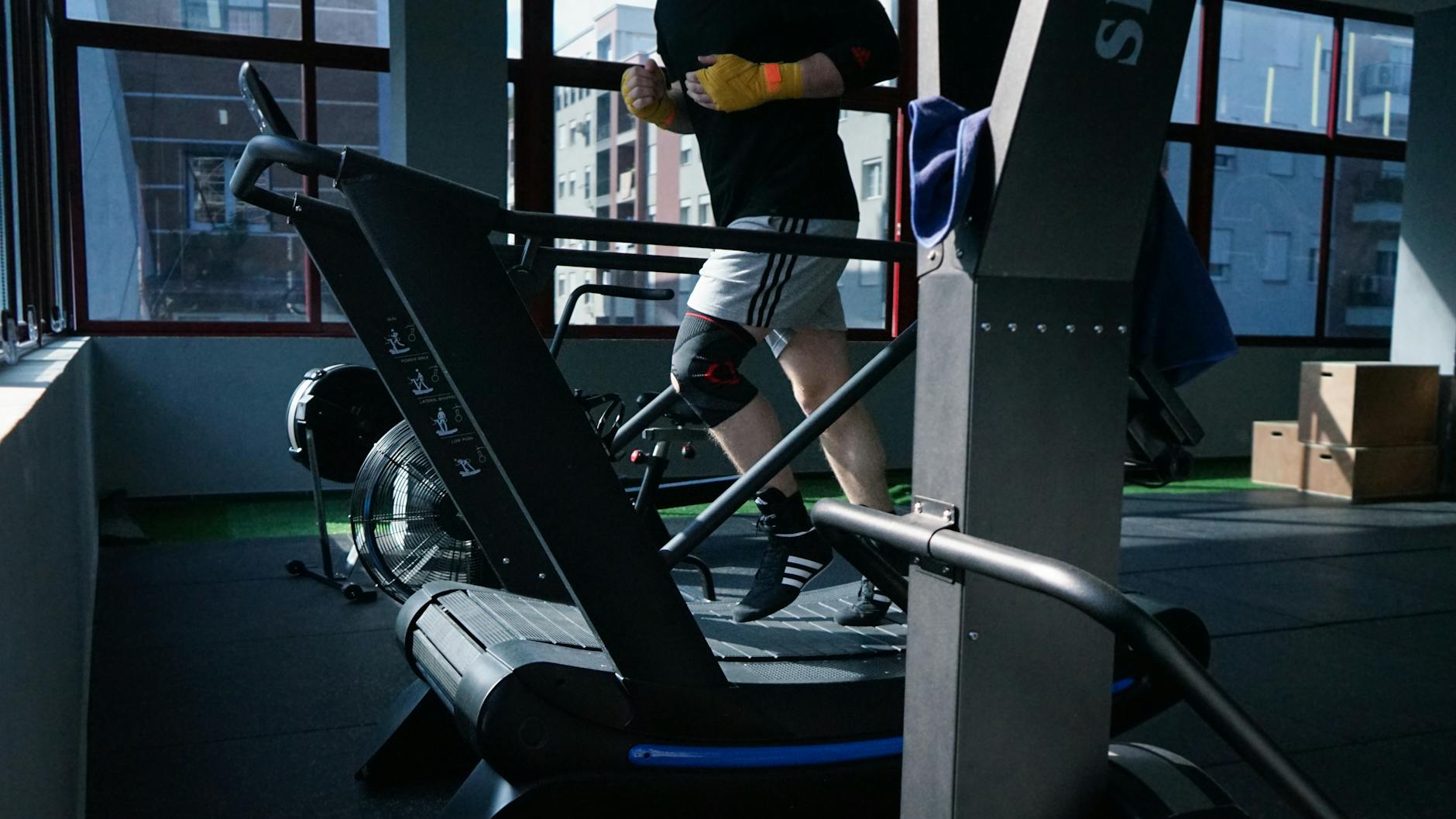
Active fatigue management during a 5-6 mile treadmill run begins with appropriate pacing strategy. Starting conservatively-approximately 15-30 seconds per mile slower than goal pace-allows muscles to warm thoroughly before demanding peak performance. This approach reduces early glycogen depletion and distributes workload more evenly across the run duration. Most treadmills allow micro-adjustments of 0.1 mph, enabling fine-tuned pacing that outdoor running cannot replicate. Incline manipulation offers another powerful tool for managing leg sensation during treadmill runs.
A slight incline of 1-2% better simulates outdoor running biomechanics and reduces the repetitive stress of perfectly flat running. Periodically varying incline by small amounts-even just 0.5% changes-shifts muscular recruitment patterns enough to provide micro-recovery for specific muscle groups. This technique proves particularly valuable during longer treadmill sessions where repetitive strain accumulates. Form adjustments can also reduce leg fatigue accumulation. Maintaining slight forward lean from the ankles, landing with feet beneath your center of mass, and avoiding overstriding all reduce braking forces that increase muscular workload. The treadmill’s belt assistance means you need slightly less push-off force than outdoor running, so focus on quick, light foot strikes rather than powerful propulsion.
- **Pace management**: Begin conservatively, build gradually, reserve fastest efforts for final miles
- **Incline variation**: Use 1-2% base incline with periodic small adjustments
- **Cadence awareness**: Maintain 170-180 steps per minute to reduce ground contact time and impact stress
- **Mental segmentation**: Break the run into manageable chunks to prevent premature fatigue perception
Common Leg Problems During 5-6 Mile Treadmill Runs
Several leg issues appear with notable frequency during moderate-distance treadmill running. Shin splints-medial tibial stress syndrome-often develop in runners unaccustomed to treadmill running’s consistent surface. The lack of terrain variation means identical muscle fibers absorb impact repeatedly without the distribution that varied surfaces provide. Symptoms include diffuse pain along the inner shin bone that worsens during running and improves with rest. IT band syndrome represents another common treadmill-specific complaint.
The iliotibial band, a thick fibrous tissue running from hip to knee along the outer thigh, can become irritated by the repetitive motion of treadmill running without lateral movement. Symptoms typically manifest as sharp pain on the outer knee, often appearing around the 3-4 mile mark and worsening with continued running. The fixed belt width of treadmills compounds this issue by preventing the natural slight lateral foot placement variation of outdoor running. Calf cramping during the later miles of treadmill runs often indicates either dehydration or electrolyte imbalance. The climate-controlled indoor environment can mask sweat rate, leading runners to underestimate fluid needs. Sodium losses in particular contribute to muscle cramping, especially during longer sessions or in gyms kept at warmer temperatures.
- **Shin splints**: Treated with reduced volume, proper footwear, and gradual mileage increases
- **IT band syndrome**: Addressed through foam rolling, hip strengthening, and occasional outdoor running variety
- **Plantar fasciitis**: Aggravated by treadmill running if footwear lacks adequate support
- **Quadriceps dominance fatigue**: Results from treadmill’s reduced posterior chain engagement compared to outdoor running

Recovery Strategies for Your Legs After Treadmill Running
Effective recovery begins immediately upon completing your 5-6 mile treadmill run. A 5-10 minute walking cooldown at gradually decreasing speeds helps clear metabolic byproducts from muscles while preventing blood pooling in the lower extremities. This simple practice significantly reduces post-run leg heaviness and accelerates return to baseline. Many runners skip this step when pressed for time, but the investment pays substantial dividends.
Post-run nutrition timing influences leg recovery quality. Consuming 15-25 grams of protein within 30 minutes of finishing supports muscle protein synthesis necessary for repair. Carbohydrate replenishment-roughly 0.5 grams per pound of body weight-restores glycogen that muscles depleted during the run. Hydration should replace approximately 150% of fluid lost through sweat, accounting for continued losses after exercise cessation. Compression garments, elevation, and gentle stretching all provide additional recovery support, though their effects are more modest than nutrition and sleep quality.
How to Prepare
- **Complete a dynamic warm-up before stepping onto the treadmill**: Spend 5-10 minutes performing leg swings, walking lunges, high knees, and bodyweight squats. This preparation increases muscle temperature by 1-2 degrees Celsius, improves joint lubrication, and activates neural pathways that coordinate running movement. Cold muscles fatigue faster and sustain damage more easily.
- **Hydrate strategically in the hours before your run**: Consume 16-20 ounces of water 2-3 hours before running, then another 8 ounces 15-30 minutes before starting. Proper hydration ensures adequate blood volume for oxygen delivery to working muscles and supports metabolic processes that clear fatigue byproducts. Pre-run hydration status affects leg sensation more than drinking during the run.
- **Assess leg readiness through a brief test jog**: Begin your treadmill session at walking pace for 2 minutes, then increase to easy jogging for another 2-3 minutes while evaluating how your legs respond. This diagnostic phase reveals whether muscles recovered adequately from previous training and whether any concerning sensations require attention before committing to the full distance.
- **Program your treadmill with appropriate settings**: Set your base pace approximately 30 seconds per mile slower than goal pace, establish a 1-1.5% incline to simulate outdoor conditions, and ensure the emergency stop clip is attached. Having these details arranged before starting prevents mid-run adjustments that interrupt rhythm and allows full attention to body signals.
- **Ensure footwear and equipment are appropriate**: Confirm running shoes have adequate cushioning and support-most shoes lose significant shock absorption after 300-400 miles. Wear moisture-wicking socks that fit properly without bunching. Improper footwear dramatically increases leg fatigue and injury risk during treadmill running, where the consistent surface amplifies footwear deficiencies.
How to Apply This
- **Monitor your legs at predetermined checkpoints during the run**: At miles 1, 3, and 5, perform a quick body scan assessing how each major muscle group feels. Compare sensations against baseline expectations, noting whether fatigue is distributed normally or concentrated problematically. This systematic monitoring prevents ignoring early warning signs while building body awareness.
- **Adjust effort based on leg feedback rather than predetermined pace**: If legs feel unusually heavy or tight, reduce pace by 0.2-0.3 mph and reassess after half a mile. If legs feel strong and responsive, gradual pace increases of 0.1 mph are appropriate. This responsive approach respects daily variation in readiness and prevents forcing workouts that your body cannot productively absorb.
- **Implement mid-run interventions when necessary**: If specific muscle groups fatigue disproportionately, make targeted adjustments. Calf fatigue often improves with slight incline reduction; quadriceps fatigue may respond to cadence increases that shorten ground contact time. Brief walking intervals of 30-60 seconds can provide enough recovery to continue running if fatigue becomes excessive.
- **Execute proper post-run recovery protocols**: Walk 5-10 minutes after completing your run, then perform static stretching targeting quadriceps, hamstrings, calves, and hip flexors. Consume recovery nutrition within 30 minutes, and elevate legs for 10-15 minutes if significant fatigue persists. Document your leg sensations in a training log to track patterns over time and identify concerning trends.
Expert Tips
- **Alternate foot strike patterns briefly during long treadmill runs**: Spending 30 seconds every mile consciously landing with more forefoot or more heel strike than usual shifts stress between muscle groups, reducing cumulative fatigue in any single area. This technique mimics the natural variation outdoor terrain provides.
- **Use the treadmill’s exact pace control to find your lactate threshold sensation**: The point where leg burning increases disproportionately to pace increases represents your lactate threshold. Treadmill running allows precise identification of this threshold pace, which you can then target during workouts for maximum aerobic development.
- **Pay attention to leg sensation differences between early and late-week runs**: Tuesday’s run should feel different than Saturday’s in a typical training week due to accumulated fatigue. If legs feel identical regardless of weekly timing, you may be undertraining. If they feel progressively worse, you may be overtraining.
- **Run without music occasionally to better perceive leg feedback**: Audio entertainment, while motivating, can mask subtle body signals during treadmill running. Periodic undistracted runs improve your ability to interpret muscular sensations accurately and respond to early warning signs.
- **Compare indoor and outdoor leg sensations periodically**: Treadmill running recruits muscles differently than outdoor running, particularly underutilizing hamstrings and glutes. If your legs feel significantly worse during outdoor runs of similar distance, incorporate more outdoor training to develop complete muscular conditioning.
Conclusion
How your legs feel during and after a 5-6 mile treadmill run provides essential information about your fitness, recovery status, and injury risk. The sensations you experience-from initial stiffness through mid-run rhythm to post-run fatigue-follow predictable patterns that, once understood, become reliable guides for training decisions. Normal muscular fatigue presents as diffuse, gradual, and proportional to effort, while warning signs manifest as sharp, localized, and unresponsive to pace reduction. Learning to distinguish between these categories protects your long-term running health while enabling more confident training.
Building this body awareness takes time and deliberate attention. Each treadmill run offers an opportunity to refine your understanding of personal sensation patterns and expand your vocabulary for internal feedback. Consistency matters more than perfection-running regularly at moderate distances like 5-6 miles develops both physical conditioning and interpretive skill simultaneously. Trust the process of gradual adaptation, respect warning signs when they appear, and remember that productive training feels challenging but sustainable. Your legs will tell you what they need if you develop the patience to listen.
Frequently Asked Questions
How long does it typically take to see results?
Results vary depending on individual circumstances, but most people begin to see meaningful progress within 4-8 weeks of consistent effort. Patience and persistence are key factors in achieving lasting outcomes.
Is this approach suitable for beginners?
Yes, this approach works well for beginners when implemented gradually. Starting with the fundamentals and building up over time leads to better long-term results than trying to do everything at once.
What are the most common mistakes to avoid?
The most common mistakes include rushing the process, skipping foundational steps, and failing to track progress. Taking a methodical approach and learning from both successes and setbacks leads to better outcomes.
How can I measure my progress effectively?
Set specific, measurable goals at the outset and track relevant metrics regularly. Keep a journal or log to document your journey, and periodically review your progress against your initial objectives.
When should I seek professional help?
Consider consulting a professional if you encounter persistent challenges, need specialized expertise, or want to accelerate your progress. Professional guidance can provide valuable insights and help you avoid costly mistakes.
What resources do you recommend for further learning?
Look for reputable sources in the field, including industry publications, expert blogs, and educational courses. Joining communities of practitioners can also provide valuable peer support and knowledge sharing.
Related Reading
- Should You Feel Fatigued or Energized After a 6-Mile Treadmill Run?
- The Mental Shift That Should Happen Around Mile 3-4 on the Treadmill
- The Difference Between Productive Discomfort and Warning Pain on the Treadmill
- How a 5-6 Mile Treadmill Run Should Feel for Longevity and Injury Prevention
- What Experienced Runners Feel During a Steady 6-Mile Treadmill Run