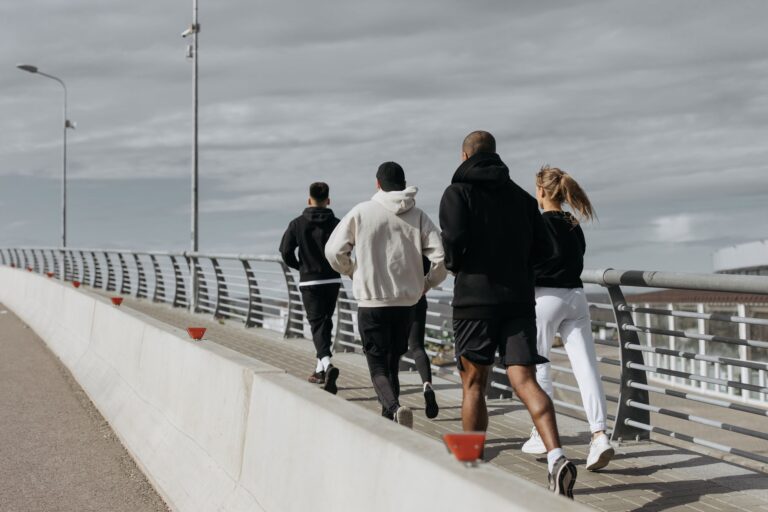
Maintaining your running routine while traveling comes down to three core adjustments: flexible pacing expectations, route reconnaissance before you arrive, and accepting that travel runs often feel different than home runs—and that’s normal. A runner traveling for two weeks to a conference, a family visit, or a vacation faces genuine obstacles: unfamiliar roads, jet lag, heat or cold outside your normal climate, and the mental shift of being away from your established training environment. But the solution isn’t to stop running; it’s to shift from performance-focused training to consistency-focused movement, which actually keeps your aerobic base intact better than taking a two-week break would.
Most runners who travel expect to replicate their home routine in a new city and become frustrated when a 6-mile route takes longer due to hills, heat, or air quality. The constraint isn’t your fitness—it’s the environment. Running while traveling succeeds when you plan for logistics (routes, timing, access to running spaces) before you leave and mentally reframe the run from “maintaining my pace” to “maintaining the habit.” Research on athlete recovery and adaptation suggests that consistent, lower-intensity movement during travel actually supports recovery better than complete rest, and prevents the detraining effect that disrupts your rhythm when you return home.
Table of Contents
- How Can You Find Safe, Navigable Routes in Unfamiliar Cities?
- What Happens to Your Running Schedule When You Cross Time Zones?
- How Should You Adjust Pacing and Intensity While Traveling?
- What Should You Pack Specifically for Traveling to Run?
- How Do Weather, Altitude, and Unfamiliar Terrain Affect Your Running?
- What Options Exist for Running When You Have Limited Space or Access?
- How Do You Track Progress and Stay Motivated When Your Runs Feel Inconsistent?
- Frequently Asked Questions
How Can You Find Safe, Navigable Routes in Unfamiliar Cities?
Use mapping apps to scout routes before you travel. Google Maps, AllTrails, Strava, and MapMyrun all show user-created running routes and terrain in your destination city, letting you plan around traffic patterns, parks, and sidewalks. Download offline maps if you’re traveling internationally or to an area with spotty data coverage—a dead phone or roaming charges mid-run defeat the purpose. Test your chosen route on your first day in town at an easy pace; unfamiliar terrain demands more attention, and your body needs time to adjust.
The limitation here is that photos and satellite views don’t reveal pavement conditions, actual traffic speed, or whether a “park trail” is well-lit after sunset. A route that looks scenic on Google Maps might have broken asphalt or an unexpected hill that tests your knees. If you’re staying more than three days, spend your first run learning the immediate neighborhood—a 2-mile out-and-back on safe streets you’ve seen in daylight beats a 5-mile loop through unknown territory. Hotel concierges, local running clubs (many cities have them, often discoverable via Meetup or running store bulletin boards), and other guests can also point you toward routes they know to be safe and well-maintained.
What Happens to Your Running Schedule When You Cross Time Zones?
Jet lag affects your energy, sleep, and perceived effort more than your actual fitness. A run that feels easy at home might feel hard in a new time zone not because you’re deconditioned but because your circadian rhythm is disrupted, your glycogen stores are depleted from travel, and your hydration status is off. Runner’s World and sports physiology resources suggest that crossing three or more time zones shifts your body’s peak performance window, meaning a tempo run scheduled for morning might feel better at evening local time for the first few days. The practical approach: run easy for the first two days in a new time zone, treating those runs as movement and adaptation rather than training.
Your easy pace will naturally feel slower—embrace this instead of pushing to hit familiar times. Run during daylight hours when you can, as light exposure helps reset your circadian rhythm faster. Avoid hard workouts or long runs until you’ve spent at least three days adjusting; a runner who lands in Singapore on Monday and attempts a 12-mile progression run on Tuesday often experiences an injury or illness within the week due to cumulative stress (travel fatigue plus training stress), not because the run was inherently dangerous. Wait until your energy feels closer to normal before returning to intensity.
How Should You Adjust Pacing and Intensity While Traveling?
Dropping your usual pace by 30 to 60 seconds per mile is a reasonable hedge when you return to running after travel, especially if your trip involved more than five hours of flight. You’re not less fit—you’re just managing a different set of stressors: dehydration, sleep debt, altered muscle glycogen, and mental fatigue. Running a 9:00 mile pace at home and dropping to 9:45 while traveling isn’t failure; it’s pattern-matching to your actual available resources.
This becomes more important the longer you’ve traveled and the more time zones you’ve crossed. A three-hour domestic trip with a one-hour time difference might only require knocking 15 seconds off your pace; a transpacific flight covering a 12-hour shift might warrant a 60-second reduction. One specific example: a runner trained to marathon pace at 7:30 per mile, who travels to altitude (Denver, Bogotá, Mexico City) should expect natural pacing to slow by 45 to 90 seconds per mile for the first 7 to 10 days due to reduced oxygen availability, not fitness loss. This isn’t negotiable—pushing your normal pace at altitude increases injury risk and doesn’t speed adaptation.
What Should You Pack Specifically for Traveling to Run?
Bring one pair of well-worn running shoes you know work on your feet, plus insoles if you use custom ones—hotels often don’t have the space or time to help replace a shoe that breaks mid-trip, and blisters or foot pain from new shoes derail your entire travel schedule. Pack moisture-wicking socks and shirts rather than cotton, especially if your destination has humidity; sweat management becomes harder when you’re not in your familiar climate. A small rolling bag or compression bag keeps running clothes separate and lets you hand-wash items between runs without needing a laundry service.
Bring basics that home running often doesn’t demand: sunscreen (sun exposure is harsher when you’re running in an unfamiliar climate or at a new latitude), a small first-aid kit with blister treatment, and any recovery tools you use regularly—foam roller attachment if you pack light, or muscle-relaxing cream if you find it helpful. Don’t pack your entire training shoe rotation; limiting yourself to one or two pairs forces you to run easy on non-running days (or skip a day), which often proves healthier than the daily running you do at home. The tradeoff is that you lose the ability to rotate shoes for injury prevention, so this strategy works better for short trips (under two weeks) than extended ones.
How Do Weather, Altitude, and Unfamiliar Terrain Affect Your Running?
Heat increases your perceived effort and glycogen depletion; a run in 85°F and 75% humidity feels harder than the same run at 65°F and 40% humidity, regardless of your fitness. If you’re traveling to a hotter climate, expect to drink more, sweat more, and run slower. Early morning runs (before 7 AM if possible) or evening runs (after 6 PM) help you avoid peak heat. Dehydration is also the primary injury risk on hot-weather travel runs—drink fluids regularly before, during, and after, not just when you feel thirsty. Altitude is trickier. Many runners perform worse above 5,000 feet elevation because less oxygen is available in each breath.
This is not a fitness issue; it’s physiology. Some runners acclimatize in five to seven days, others take two to three weeks, and a subset never fully adapt during a short trip. Running slowly and easily at altitude for the first week, then gradually building back to normal pacing during week two or three, helps your body adjust without triggering altitude sickness or overtraining. An important warning: if you experience headache, nausea, or unusual breathlessness during easy running at altitude, rest for a day and reevaluate rather than pushing through—these are signs your body isn’t adapting as quickly as hoped. Unfamiliar terrain (dirt trails, steep hills, sand) recruits muscles differently than your home running surface, even if the distance and pace are identical. Trail running uses small stabilizer muscles that road running doesn’t heavily load; a five-mile trail run often creates more soreness than a six-mile road run at the same pace. Plan easier recovery days after terrain changes, and avoid trying a new surface type for the first time on the same trip you’re managing jet lag, heat, or other stressors.
What Options Exist for Running When You Have Limited Space or Access?
Hotel treadmills, when available, are slower and more boring than running outside but they eliminate route-finding stress and weather uncertainty. A 40-minute treadmill run at a consistent 7:00 pace requires less attention and decision-making than negotiating four different neighborhoods to cover the same distance outdoors. Many runners find treadmill running during travel acceptable as a backup, not a first choice. The limitation is that hotel gyms are often closed during early morning or late evening hours (exactly when you might prefer to run due to heat), and treadmill running over multiple days can cause repetitive stress injuries in knees and hips due to the rigid surface.
Local running clubs, gym day passes, or hotel partnerships sometimes offer temporary access to better facilities than your hotel alone provides. Search for running clubs or groups in your destination city before you travel; several will welcome visiting runners for free or a small donation. This also solves the social/motivation piece of travel running—running with others resets the “this is fun and normal” feeling that travel often disrupts. A runner staying in a large city like New York, London, or Toronto can often find a weekly group run through a running store or Meetup, which transforms a solo travel run into a community experience.
How Do You Track Progress and Stay Motivated When Your Runs Feel Inconsistent?
Shift from performance metrics (pace, distance, time) to consistency metrics (runs completed, days out of the week) when you’re traveling. A runner who normally tracks 10 weekly miles at a 7:30 pace might track “four runs this week, total 8 miles, various paces” during travel. This mental reframe removes the frustration of slower pacing and celebrates the achievement of consistency despite disruption.
Most runners find that returning home after a travel break where they maintained regular easy running returns to their normal pace within 7 to 10 days, often faster than after a break where they didn’t run at all. Use simple tracking: a notebook, a notes app, or your usual running app, but log runs by feel and completion rather than comparing to home splits. One runner traveling for a family event completed four 20-30 minute easy runs during a 10-day trip, didn’t feel fast or impressive at the time, returned home, and hit their usual 7:30 marathon-pace workout within a week—the consistency had preserved their fitness even though the travel weeks felt slow and disjointed. This is the outcome that matters: consistency beats intensity during disruption, and disruption doesn’t erase fitness if you don’t abandon the habit entirely.
Frequently Asked Questions
Should I run on the day I travel?
Usually not, unless it’s a short domestic flight. Travel days involve dehydration, irregular eating, sleep disruption, and mental fatigue. A walk around the airport or hotel is better than a run. Your first actual run should be the next day at easy effort, after you’ve eaten and slept.
What if I’m too tired to run while traveling?
Skip the run. Consistency matters, but one skipped run doesn’t break your fitness. Travel fatigue combined with training stress increases injury risk and illness risk more than rest does. A missed week of easy running doesn’t deconditioning you measurably; a missed week due to injury does.
Can I do speed work or long runs while traveling?
Only after you’ve adjusted (three or more days at easy pacing). Hard workouts during jet lag and dehydration are inefficient training and high injury risk. Save intensity for after your adjustment window or wait until you’re home.
How do I run safely in an unfamiliar city at night?
Run before dark when possible. If you must run at dusk, stick to main streets with streetlights and foot traffic, avoid isolated parks or trails, and tell your hotel or travel companions your route and expected return time. A headlamp helps others see you, though it doesn’t guarantee safety on an unknown route.
What’s the minimum I should do to maintain fitness while traveling?
Three 30-minute easy runs per week, spread throughout your trip, maintains aerobic fitness reasonably well. This assumes you’re already trained (not building base fitness during travel) and the trip is less than three weeks. Shorter trips allow longer gaps between runs; longer trips require more frequent runs to prevent detraining.