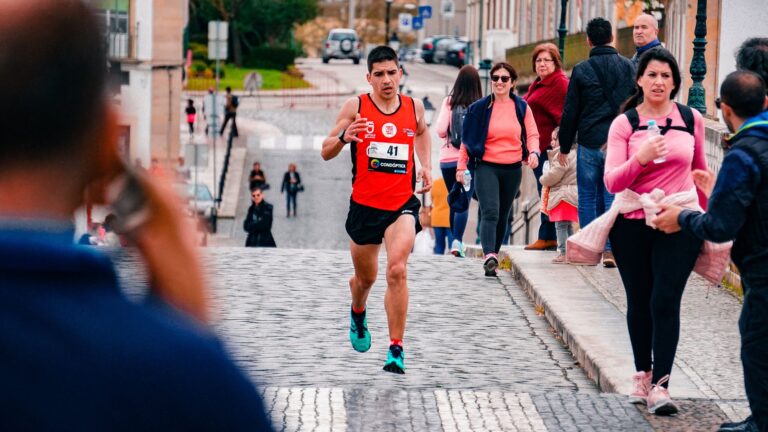
Running drives heart and lung adaptation through a process called cardiovascular training effect, where repeated aerobic exercise stimulates your body to build more efficient oxygen-delivery systems. When you run regularly, your heart becomes stronger and more efficient at pumping blood, while your lungs expand their capacity to extract oxygen from the air and your muscles develop better ability to utilize that oxygen. The adaptations happen at the cellular level—mitochondria in your muscle cells multiply, capillaries expand, and hemoglobin levels increase, all working together to create a more powerful aerobic engine. A concrete example: a sedentary person might have a resting heart rate of 75 beats per minute and VO2 max of 35 ml/kg/min.
After 12 weeks of consistent running three times per week, that same person often sees their resting heart rate drop to 60-65 bpm and VO2 max climb to 42-48 ml/kg/min. This measurable difference reflects real physiological changes happening inside their cardiovascular and respiratory systems. These adaptations don’t happen overnight, but they’re remarkably consistent and predictable. Your body is essentially responding to the demand you’re placing on it—when you run, you’re sending a signal that says “I need better oxygen delivery,” and your cardiovascular system listens.
Table of Contents
- What Happens to Your Heart When You Run Regularly
- Lung Capacity and Respiratory System Changes from Running
- Cellular Adaptations That Enable Better Oxygen Utilization
- How to Optimize Your Training for Maximum Adaptation
- Plateau and Maladaptation Risks in Endurance Training
- Blood Volume and Oxygen Transport Improvements
- Future Performance and Maintaining Cardiovascular Adaptations
- Conclusion
- Frequently Asked Questions
What Happens to Your Heart When You Run Regularly
Your heart responds to running training by increasing in size and strength, particularly in the left ventricle, which is responsible for pumping oxygenated blood throughout your body. This chamber becomes thicker and more muscular, allowing it to eject more blood with each beat—a phenomenon called increased stroke volume. A trained runner’s heart can pump 25-30 milliliters of blood per beat, compared to 20 milliliters in untrained individuals. This efficiency means your heart doesn’t have to beat as fast to deliver the same amount of oxygen to your muscles. The structural changes in your heart also include increased capillary density around the heart muscle itself. This allows better nourishment of the heart tissue and improved removal of metabolic waste products.
Your body also adjusts your heart rate variability—the variation in time between heartbeats—which is considered a marker of cardiovascular health and parasympathetic nervous system activity. A higher heart rate variability at rest indicates better overall cardiac autonomy and resilience. One important limitation: these cardiac adaptations plateau. After roughly two years of consistent endurance training, your heart reaches its adaptive ceiling for aerobic improvements. Continuing to train will maintain these gains and allow for sports-specific improvements, but the dramatic 30-40% efficiency gains of the first year are unlikely to repeat. This is why beginners see such dramatic improvements in their performance while advanced runners must work harder to see meaningful gains.

Lung Capacity and Respiratory System Changes from Running
Your lungs don’t actually grow larger with running training, but your body becomes far more efficient at using the lung capacity you have. Running stimulates your respiratory muscles—the diaphragm, intercostal muscles, and accessory breathing muscles—to strengthen and develop better endurance. Over time, your breathing becomes more coordinated and efficient, requiring less muscular effort to move air in and out of your lungs during exercise. This means less oxygen is wasted on the act of breathing itself, leaving more available for your working muscles. The real adaptation happens in your alveoli and the surrounding capillary network. The alveoli are tiny air sacs where oxygen crosses from your lungs into your bloodstream.
Running training stimulates the development of more efficient oxygen diffusion across these surfaces through increased capillary density around the alveolar walls. Your body also improves its oxygen extraction ratio—the percentage of available oxygen in your blood that your muscles actually use. An untrained person might extract 15-20% of available oxygen, while a trained endurance athlete can extract 25-30%. A significant warning: pushing too hard too quickly in your running training can cause disproportionate breathing effort and even exercise-induced asthma symptoms, even in people without diagnosed asthma. Your respiratory system adapts more slowly than your legs can handle increasing workload, so many runners experience seasonal breathing difficulties or performance plateaus when they increase volume too rapidly. Gradual progression and paying attention to breathing efficiency, not just speed, prevents these setbacks.
Cellular Adaptations That Enable Better Oxygen Utilization
At the cellular level, running training triggers a cascade of adaptations that occur primarily in your leg muscles. The most significant of these is mitochondrial biogenesis—the creation of new mitochondria within your muscle cells. Mitochondria are the “powerhouses” of your cells, responsible for converting oxygen and nutrients into usable energy. A single muscle fiber might contain hundreds of mitochondria before training; after consistent running training, that number can increase 50-100%. More mitochondria means more capacity to process oxygen aerobically. Your muscles also develop increased levels of oxidative enzymes, proteins that facilitate aerobic metabolism. Key enzymes like citrate synthase and cytochrome c oxidase become more abundant and active.
Additionally, your muscles improve their capillary density—the network of tiny blood vessels that deliver oxygen directly to muscle fibers becomes denser and more efficient. This capillary expansion happens gradually over months and represents one of the most important adaptations for distance running. Runners who maintain their fitness for years develop capillary networks that are visibly more prominent under the skin. A specific example of this in action: consider a runner training for their first marathon. In weeks 1-4, their adaptations are primarily neural—they’re learning to use muscles more efficiently. In weeks 5-12, mitochondrial density and capillary networks begin expanding significantly. By week 16-20, their muscle biopsy would show 40-60% more mitochondria than baseline, and their ability to sustain aerobic effort improves dramatically. This is why marathon training timelines are roughly 16-20 weeks—that’s approximately how long these cellular adaptations take to develop meaningfully.

How to Optimize Your Training for Maximum Adaptation
The key to driving cardiovascular and respiratory adaptations is consistency combined with strategic variation in intensity. Low-intensity steady running builds your aerobic base and stimulates capillary and mitochondrial development without excessive systemic stress. Most of your running volume—roughly 80%—should be at low intensity where you can hold a conversation comfortably. High-intensity interval training (HIIT) and tempo runs make up the remaining 20% and provide a different stimulus that drives cardiac remodeling and increased VO2 max. The classic approach is a training structure that includes one long run per week (which builds mitochondrial density and aerobic capacity), one tempo or threshold run (which improves lactate clearance and cardiovascular efficiency), one interval workout (which drives VO2 max improvements), and two to three easy runs per week (which build aerobic base and support recovery).
This balanced approach addresses different physiological systems and prevents the overuse injuries that single-paced training often produces. A critical tradeoff: optimizing for these adaptations requires consistency that many runners find difficult to maintain. Missing weeks disrupts adaptation progress more significantly than most people expect—two weeks off can reduce your aerobic capacity by 10-15%, and a full month off can erase 3-4 weeks of training gains. Additionally, pushing for maximal adaptations means increasing injury risk. The sweet spot for most recreational runners is 80% of the adaptations with 50% of the injury risk, which typically means 30-50 miles per week rather than pursuing elite athlete volumes of 100+ miles weekly.
Plateau and Maladaptation Risks in Endurance Training
Most runners experience a frustrating plateau around 12-16 weeks of consistent training, where the early rapid improvements in fitness suddenly slow dramatically. This happens because your body has made the major metabolic adaptations—mitochondrial expansion, capillary growth, and cardiac remodeling—and further progress requires either greater training stimulus or more time. The solution isn’t necessarily to train harder, but often to vary your training stimulus or allow adequate recovery time for adaptations to consolidate. A significant risk that many runners encounter is overtraining syndrome, which paradoxically results from too much training without adequate recovery. Overtraining suppresses your parasympathetic nervous system and elevates resting cortisol levels, actually preventing the adaptations you’re training to create.
Signs include persistent fatigue, elevated resting heart rate, difficulty maintaining previous paces, and frequent minor illnesses. Unlike general fatigue, overtraining syndrome takes weeks or months to recover from and represents a real maladaptation where your cardiovascular system becomes less efficient rather than more. Another concern is that running-specific adaptations don’t fully transfer to other sports or activities. A dedicated runner develops excellent aerobic capacity and mitochondrial density in their leg muscles, but their upper body fitness and power development lag significantly. This is why runners who add strength training or cross-training report improved running performance—the variety of stimuli drives more comprehensive adaptations. Running alone creates excellent endurance adaptations but leaves gaps in power, strength, and movement diversity.

Blood Volume and Oxygen Transport Improvements
One underappreciated adaptation to running is an increase in total blood volume. Your body produces more red blood cells and plasma volume increases, expanding the total volume of blood circulating in your system. This adaptation can increase blood volume by 10-15% over several months of consistent training. More blood volume means more capacity to transport oxygen and more surface area for nutrient and waste exchange.
This adaptation takes several months to develop fully but represents a fundamental improvement in your body’s oxygen-carrying capacity. Your hemoglobin levels also often increase slightly with training, particularly if you’re running at altitude where lower oxygen availability stimulates red blood cell production. Even at sea level, the increased training stimulus signals your body to produce more red blood cells. A practical note: this is why some runners feel like they’re “losing fitness” after a week at altitude—the increased red blood cell production that felt good at altitude becomes somewhat excessive at sea level, slightly raising blood viscosity and reducing efficiency temporarily. This effect resolves within a few days but can feel discouraging if misunderstood.
Future Performance and Maintaining Cardiovascular Adaptations
The adaptations you build through running training form the foundation of your aerobic capacity for years. Runners who maintain their fitness see remarkable cardiovascular stability—a runner who maintained 40+ miles per week for five years can often return to previous fitness levels with just 8-10 weeks of consistent training after a two-month break, whereas a person returning to running after years of inactivity faces months to rebuild. This suggests that these adaptations create lasting changes in your muscle physiology and cardiovascular system.
Looking forward, understanding these adaptations also opens possibilities for personalized training. Emerging research suggests that individual genetic variation means some people adapt more readily to aerobic training while others respond better to strength or interval training. Future runners may use genetic testing and real-time metabolic monitoring to optimize their training prescriptions rather than following generic programs. For now, consistent running with strategic intensity variation remains the most reliable way to drive the heart and lung adaptations that define endurance fitness.
Conclusion
Running drives heart and lung adaptation through interconnected mechanisms operating at multiple scales—your cardiac structure becomes more efficient, your respiratory system strengthens and coordinates better, your muscles develop more mitochondria and capillary networks, and your blood volume increases. These adaptations compound over time, creating the remarkable cardiovascular fitness that distance runners develop.
The process is gradual and predictable, following established patterns that are largely similar across different people, though individual variation exists. To realize these adaptations in your own training, commit to consistent low-intensity volume with strategic high-intensity efforts, expect the most dramatic changes in the first 12-16 weeks, and understand that plateaus reflect real physiological adaptation rather than training failure. The cardiovascular and respiratory improvements you make through running represent genuine biological changes that will support your health and performance for years to come.
Frequently Asked Questions
How long until I see cardiovascular improvements from running?
You’ll notice subjective improvements within 2-3 weeks as your body’s efficiency improves and breathing becomes easier. Measurable changes in resting heart rate appear around week 4-6, and significant VO2 max improvements typically emerge by week 8-12 of consistent training.
Can I adapt my cardiovascular system through walking instead of running?
Walking creates adaptations, but more slowly. Running creates stronger stimulus because of higher intensity and greater oxygen demand, so equivalent adaptations take roughly 2-3 times longer with walking. Walking remains valuable for building aerobic base and recovery, but running is more efficient for cardiovascular remodeling.
What’s the difference between VO2 max improvements and cardiovascular fitness?
VO2 max is a specific measurement of the maximum oxygen your body can utilize per minute, usually measured in ml/kg/min. Cardiovascular fitness is broader and includes factors like resting heart rate, heart rate recovery, cardiac efficiency, and blood vessel density. You can improve overall cardiovascular fitness with modest VO2 max gains by building aerobic base.
If I stop running, how quickly do I lose these adaptations?
The first 3-4 weeks off produce negligible losses. After 2-4 weeks away, you’ll lose 10-15% of aerobic capacity. Mitochondrial density drops more slowly, so your ability to rebuild fitness remains relatively high for 2-3 months. After 6+ months away, adaptations are largely lost, though neuromuscular patterns persist somewhat.
Does running at altitude create better adaptations than sea-level training?
Altitude training stimulates additional red blood cell production, creating slightly greater adaptations. However, the performance benefit of altitude comes mainly from increased red blood cell count, which dissipates within 2-3 weeks at sea level. For most runners, sea-level training is more practical and produces excellent adaptations without the complications of altitude adjustment.
Can I get the same cardiovascular benefits from running short, intense workouts versus longer slow runs?
Both matter, but they drive different adaptations. High-intensity intervals improve VO2 max and cardiac stroke volume more efficiently, while longer slow runs build mitochondrial density and capillary networks. Combining both, roughly 80% easy and 20% hard, produces superior overall adaptations compared to either approach alone.