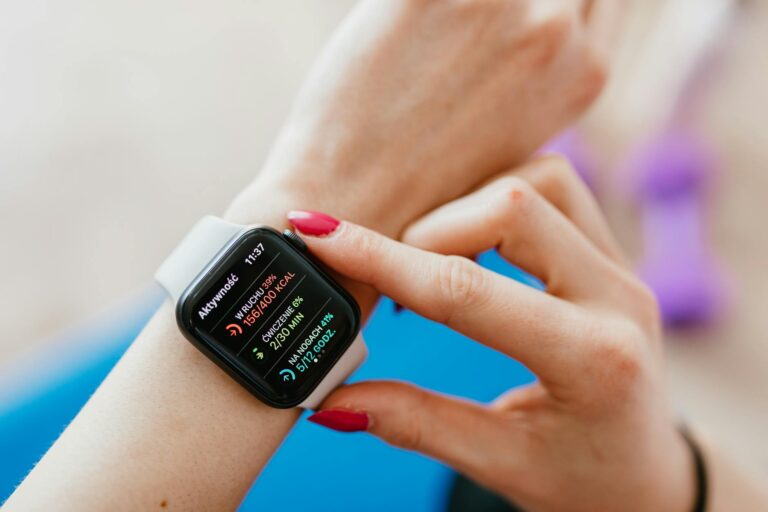
Weekly and daily intensity patterns reveal fundamentally different insights about fitness progress, and which lens you choose matters for your training outcomes. Daily tracking captures acute fluctuations—your heart rate variability on Tuesday morning might be 20% lower than Wednesday’s, seemingly suggesting fatigue or stress—but these day-to-day swings are mostly noise. Weekly patterns, by contrast, show what actually matters: whether you’re consistently hitting your target intensity distribution, accumulating sufficient training volume, and adapting over time. For runners and endurance athletes, this distinction can mean the difference between overtraining and optimal conditioning, yet most people using fitness trackers default to obsessing over daily metrics without understanding that meaningful patterns typically require weeks to crystallize.
The science here is clear. Competitive endurance athletes training 10 to 13 times per week follow the 80/20 rule—approximately 80% of sessions conducted at low intensity and 20% at high intensity near 90% VO2max. This weekly distribution, not daily fluctuations, drives fitness gains. Similarly, researchers find that weekly training volumes matter enormously; athletes completing five or more sets per exercise per week achieve approximately 20% larger strength gains compared to those completing fewer than five sets. Yet fitness tracker users fixate on daily steps, daily calorie burns, and daily HRV readings, missing the accumulated patterns that actually correlate with measurable improvements.
Table of Contents
- What Do Daily and Weekly Intensity Patterns Tell You?
- Understanding Heart Rate Variability and Daily Noise
- Weekly Training Volume and Strength Gains
- Practical Approaches to Daily and Weekly Tracking
- Common Pitfalls in Fitness Tracking Interpretation
- The Sustainability Challenge
- The Future of Daily Fitness Monitoring
- Conclusion
- Frequently Asked Questions
What Do Daily and Weekly Intensity Patterns Tell You?
Daily intensity patterns show moment-to-moment variations in your fitness state, but they’re dominated by noise. heart rate variability data from recent wearable research illustrates this perfectly: devices measuring HRV via RMSSD—the most common metric on Oura rings and many Garmin watches—show daily variability of 25 to 29 percent around a mean of approximately 44.7 milliseconds. If your HRV reads 50 ms on Monday and 35 ms on Tuesday, that’s not necessarily indicating a meaningful change in your fitness. It could reflect sleep quality, caffeine consumption, stress, hydration, or measurement variability. Daily fluctuations completely overshadow long-term trends, which show a decline of approximately 0.3 milliseconds annually—a trivial magnitude swamped by weekly swings.
Weekly patterns, conversely, reveal your actual training stimulus and adaptation trajectory. When you aggregate a week of workouts, you can assess whether you hit your intended intensity distribution. A runner who completes three easy runs, one long run, and one interval session has followed a proven framework. A runner who logs seven easy runs and skips speed work hasn’t, regardless of weekly step count. Weekly volume—the total sets performed, total duration completed, or total intensity accumulated—predicts strength and endurance gains far better than any single day. The research emphasizes that near-daily HRV measurements, when averaged weekly, provide superior insight into chronic training adaptations and recovery capacity than isolated daily assessments.

Understanding Heart Rate Variability and Daily Noise
Heart rate variability has become the darling metric of fitness tracking, but its interpretation requires understanding both measurement methodology and statistical noise. Oura rings, Garmin devices, and Fitbit trackers all measure HRV via RMSSD (root mean square of successive differences), which reflects parasympathetic nervous system activity. Apple devices use SDNN (standard deviation of normal-to-normal intervals), which captures overall heart rate variability. These different metrics don’t correlate perfectly, which means comparing your HRV score across devices or switching wearables introduces a confounding variable that many users never notice.
The critical limitation is that daily HRV is substantially influenced by unmeasured factors: a poor sleep night will depress HRV, alcohol consumption disrupts it, seasonal allergies affect it, and even the ambient temperature in your bedroom matters. One night of disrupted sleep can swing your HRV by 30 percent, yet it tells you nothing about your fitness state. This is why researchers recommend treating daily HRV as a single data point within a weekly average rather than a standalone diagnostic tool. If your HRV has genuinely declined by 15 percent over three weeks, that’s worth investigating. If it bounced down 20 percent overnight and recovered the next day, it’s almost certainly environmental noise, not a meaningful fitness signal.
Weekly Training Volume and Strength Gains
Strength development depends critically on weekly volume—not daily intensity. Stronger By Science research shows that athletes performing five or more sets per exercise per week achieve roughly 20 percent larger strength gains compared to those performing fewer sets. This finding applies whether the sets are distributed across one workout or spread across the entire week. A runner doing one high-volume leg strength session on Monday will see similar adaptations to someone splitting those sets across Monday and Thursday, provided the total is equivalent. This principle reshapes how you should interpret weekly versus daily feedback.
An athlete who completes six sets of squats on Monday might feel the fatigue acutely—the next day’s performance will likely be depressed—but spreading six sets across Monday and Thursday distributes recovery demands and maintains daily readiness. Weekly volume accumulation, not daily peak intensity, determines whether you’re stimulating the adaptation threshold. Endurance athletes often make the opposite error, believing that running hard daily is better than alternating hard and easy days; the 80/20 rule directly contradicts this. When elite endurance athletes train 10 to 13 times per week, only about 20 percent of sessions target high intensity. The remaining 80 percent are genuinely easy—easy enough that daily metrics might look unimpressive, yet the weekly distribution drives superior fitness.
Practical Approaches to Daily and Weekly Tracking
Most fitness tracker users interpret daily data as though it’s equivalent to weekly data, then abandon tracking when they see inconsistency. Approximately one in three users lose interest in their device within six months, partly because daily metrics don’t map neatly to expectations. You run eight miles and feel accomplished, yet your tracker shows fewer calories burned than yesterday’s four-mile easy run because muscle damage and recovery consume energy not visible in real-time tracking. This apparent contradiction frustrates users who expect a linear relationship between effort and metrics. A more effective approach uses daily tracking to build accountability while reserving interpretation for weekly aggregates.
Daily step counts provide genuine value—fitness tracker users take on average 2,000 more steps daily than non-users—but viewing steps as a daily target (10,000 per day) creates unnecessary rigidity compared to viewing them as a weekly target (70,000 per week). Some days, 6,000 steps might be perfectly appropriate for a recovery day; other days, 15,000 might be appropriate for a longer run. The weekly perspective accommodates training structure rather than fighting it. Similarly, log your workouts daily, but audit your weekly intensity distribution and volume weekly. Did you hit your 80/20 target? Did you complete your planned training frequency? These questions matter; “did my HRV go up today” does not.
Common Pitfalls in Fitness Tracking Interpretation
The most common error is treating your device as though it understands training context, because it doesn’t. A fitness tracker cannot distinguish between an easy recovery run and a time trial, yet both register as workouts. It sees elevated heart rate and assumes effort; it doesn’t account for the pacing strategy or the intended training stress. This leads athletes to dismiss tracker feedback (“it said I burned more calories yesterday, but today was harder”) without recognizing that calories burned and training effect are different metrics. A second pitfall is over-reliance on a single metric.
If you’re tracking HRV, steps, sleep, calorie burn, training load, and recovery, you have seven different sources of daily feedback—many contradicting. One metric says you’re recovered, another suggests fatigue. Your step count is low, but your training volume is high. Rather than treat each metric as equally important, establish a hierarchy: training frequency and volume matter most, weekly intensity distribution matters next, and acute metrics like daily HRV matter least. This reduces paralysis and decision fatigue. Approximately 30 percent of fitness tracker users rate their device as “very helpful” in achieving fitness goals, while 46 percent rate it as “somewhat helpful”—the remaining users experience limited benefit, often because they’re drowning in daily data without a clear framework for decision-making.

The Sustainability Challenge
Fitness trackers improve adherence—users take 2,000 more steps daily than non-users—but this effect is strongest in the first six months. By month six, roughly one in three users have stopped engaging meaningfully with their device. The novelty of daily metrics fades, and without understanding weekly patterns, users lose motivation. You can’t sustain commitment to a metric you don’t comprehend.
Reframing from daily to weekly interpretation helps sustain engagement. Rather than checking your HRV every morning, check your weekly average every Sunday. Rather than aiming for exactly 10,000 steps daily, assess weekly totals on Saturday. This shifts your relationship with data from anxiety-driven (constantly checking) to decision-driven (gathering information for purposeful adjustments). The data itself becomes less novel and more meaningful.
The Future of Daily Fitness Monitoring
Wearable technology continues advancing, and new metrics emerge constantly, but the fundamental principle remains unchanged: aggregation is more informative than isolation. Future devices may provide better estimates of muscle damage, central nervous system fatigue, or real-time training readiness, but these will only become useful when interpreted within a weekly framework. The technology will improve, but human interpretation will remain the limiting factor.
Daily tracking serves a purpose—it builds awareness, holds you accountable, and provides raw data. But actionable insights require stepping back and viewing weeks as your primary decision-making window. That shift in perspective transforms fitness tracking from a numbers game into a tool that actually informs training decisions.
Conclusion
Weekly and daily intensity patterns answer different questions. Daily patterns show variability and acute responses; weekly patterns show whether you’re following a proven training structure and accumulating sufficient stimulus for adaptation. For endurance athletes, the 80/20 rule applies weekly, not daily.
For strength athletes, weekly volume matters far more than daily intensity. Fitness trackers provide excellent feedback for building consistent habits, but meaningful interpretation requires patience—viewing your data through a weekly lens rather than a daily one. Your next step is straightforward: stop checking daily metrics as though they’re diagnostic, start recording weekly patterns in a simple log, and assess your progress monthly. Did your weekly volume increase? Did your training distribution match your plan? Is your trend positive over weeks and months? These questions will guide better training decisions than any daily data point can provide.
Frequently Asked Questions
Why does my HRV fluctuate so much from day to day?
Daily HRV is affected by sleep quality, stress, caffeine, hydration, and environmental factors. These swings of 20 to 30 percent are normal and mostly reflect noise, not fitness changes. Look at weekly averages instead.
Should I track my intensity daily or just weekly?
Track daily to build accountability, but interpret weekly. Log each workout daily, then review your weekly intensity distribution to ensure you’re following your target structure (like the 80/20 rule).
How long does it take to see patterns in fitness tracking?
Meaningful patterns typically emerge over three to four weeks. A single week of data is too short; a single day is almost meaningless. Monthly and quarterly reviews are more informative than daily check-ins.
Is there an ideal number of workouts per week?
It depends on your goals. Endurance athletes often train 10 to 13 times weekly following an 80/20 intensity split. Strength athletes might train three to five times weekly with higher per-session volume. Quality and consistency matter more than frequency.
Why do my fitness tracker metrics sometimes contradict each other?
Different metrics measure different aspects of fitness. High daily steps might coincide with low HRV if that day was also stressful. Weekly aggregation smooths these contradictions and reveals the genuine trend.
Do fitness trackers actually help people get fitter?
They help build consistent habits—tracker users average 2,000 more daily steps—but only 30 percent report them as “very helpful” for achieving goals. Their value depends on your ability to interpret weekly patterns rather than chasing daily numbers.