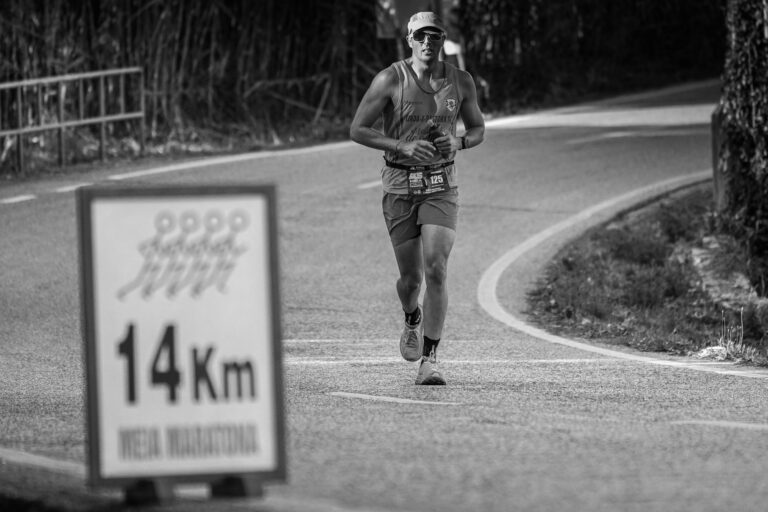
The fastest way to improve your fartlek time is to structure your speed intervals more deliberately, recover at a genuine easy pace between efforts, and run fartlek sessions no more than twice per week while building your aerobic base on the remaining days. Most runners treat fartlek as a random collection of surges with no plan, then wonder why their times plateau.
A runner who commits to a progression-based fartlek approach — say, starting with six 30-second pickups in week one and building to eight 90-second surges by week four — will typically see measurable pace improvements within three to five weeks, which is faster than almost any other interval format delivers for recreational athletes. This article breaks down the specific training adjustments that make fartlek sessions more productive, including how to set the right intensity for your surges, why your recovery pace matters more than you think, and how to periodize fartlek work across a training block. We will also cover common mistakes that slow progress, the role of strength and mobility work in supporting faster turnover, and how to know when you have outgrown basic fartlek and need to shift to more formal interval training.
Table of Contents
- What Actually Determines How Fast You Can Run Fartlek Intervals?
- Building a Fartlek Progression That Actually Works
- The Role of Pacing Discipline in Fartlek Gains
- Strength and Mobility Work That Supports Faster Fartlek Running
- Common Mistakes That Stall Fartlek Progress
- Using Heart Rate Data to Fine-Tune Your Fartlek Efforts
- When to Graduate Beyond Basic Fartlek
- Conclusion
- Frequently Asked Questions
What Actually Determines How Fast You Can Run Fartlek Intervals?
Your fartlek speed is governed by three physiological systems working together: your VO2max ceiling, your lactate threshold, and your running economy. VO2max sets the upper limit of how much oxygen your body can use. Lactate threshold determines how long you can sustain a hard effort before acid accumulates and forces you to slow down. Running economy is how efficiently you convert oxygen into forward motion — two runners with identical VO2max values can differ by 30 seconds per mile if one has significantly better economy. When you run fartlek intervals, you stress all three systems simultaneously, which is precisely why the format is so effective but also why poor execution wastes the stimulus. The key insight most runners miss is that fartlek improvement is not just about running the fast portions faster.
A 2019 study published in the Journal of Strength and Conditioning Research found that runners who maintained a controlled easy pace during recovery intervals improved their repeat performance by roughly 12 percent more over eight weeks compared to runners who jogged too fast between surges. The recovery pace matters because it determines how completely your aerobic system replenishes energy stores before the next effort. If your recovery jog is actually moderate-intensity running, you accumulate fatigue prematurely and your later intervals degrade, which blunts the training stimulus for the session overall. Think of it this way: a runner doing six one-minute surges at 5K pace with 90 seconds of genuine easy jogging between them gets a fundamentally different workout than someone doing the same surges but shuffling at tempo pace during the rest. The first runner hits each surge fresh enough to maintain quality. The second runner is essentially doing a sloppy threshold run with random accelerations — still hard, but not the right kind of hard for fartlek development.
Building a Fartlek Progression That Actually Works
The most effective way to structure fartlek for improvement is to use a three-phase progression over six to eight weeks. In the first phase, lasting about two weeks, keep your surges short — 20 to 45 seconds — at roughly your current mile race pace, with recovery intervals that are two to three times the length of the surge. The goal is neuromuscular activation: teaching your legs to turn over quickly without accumulating significant fatigue. In the second phase, extend the surges to 60 to 90 seconds at 5K to 3K effort, with recovery intervals equal to or slightly longer than the surge. This phase develops your VO2max and lactate clearance. In the third phase, mix durations — alternate between 30-second bursts and two-minute sustained efforts within the same session — which trains your body to handle pace changes, the exact skill fartlek was invented to build.
However, if you are currently running fewer than 20 miles per week, jumping into phase two or three will likely cause injury or burnout before you see results. Runners with a smaller training base need a longer phase one — possibly three to four weeks — and should cap their total fartlek volume at no more than 10 to 12 minutes of hard running within a session. The Swedish coaches who originally developed fartlek in the 1930s intended it for athletes with a substantial aerobic foundation already in place. Gosta Holmer designed the method for Swedish cross-country teams who were already fit; he was adding sharpness, not building a base. Skipping that base-building step is the single most common reason recreational runners stall on fartlek improvement. A practical weekly layout for an intermediate runner doing 30 miles per week might look like this: one fartlek session on Tuesday, one tempo or threshold run on Thursday, a long run on Saturday, and easy aerobic runs on the other days. The fartlek session itself should total 35 to 45 minutes including warmup and cooldown, with the structured surge portion lasting 15 to 25 minutes in the middle.
The Role of Pacing Discipline in Fartlek Gains
One of the paradoxes of getting faster at fartlek is that you often need to start your surges slower than your instinct demands. Most runners blast the first two or three intervals at near-sprint effort, then watch their pace decay badly across the remaining repeats. A better approach is to run the first third of your surges at about 90 percent of your target effort, the middle third at full target effort, and the final third at 95 to 100 percent. This negative-split micro-strategy within each surge teaches your body to accelerate under fatigue, which is the specific adaptation that translates to racing. Consider a runner whose goal fartlek surge pace is 6:30 per mile.
In a session with eight one-minute surges, an undisciplined approach might produce splits of 6:10, 6:15, 6:25, 6:35, 6:45, 6:50, 7:00, and 7:10 — a classic fade pattern where the average lands around 6:39 and the last few repeats are essentially junk volume. A pacing-disciplined runner might hit 6:35, 6:32, 6:30, 6:28, 6:30, 6:28, 6:25, and 6:20, producing a 6:28 average with a strong finish. The disciplined runner accumulates more time at or better than target pace, which delivers a stronger physiological stimulus even though the session felt more controlled. GPS watches are useful here but can also become a distraction during fartlek, which is supposed to be more intuitive than track intervals. A good compromise is to run by effort during the session and review your splits afterward. Over several weeks, you should see your average surge pace drop while your perceived effort stays stable — that convergence is the clearest sign your fartlek fitness is improving.

Strength and Mobility Work That Supports Faster Fartlek Running
Runners who only run will eventually plateau on speed work, and fartlek is no exception. Two types of supplementary training have the strongest evidence for improving interval performance: heavy resistance training and hip mobility work. A meta-analysis in Sports Medicine found that adding two to three sessions per week of heavy lower-body strength work — squats, deadlifts, single-leg exercises at 70 to 85 percent of one-rep max — improved running economy by an average of 4 percent in trained runners. That 4 percent translates directly into faster fartlek surges at the same effort level. The tradeoff is recovery cost. Heavy strength training creates muscle damage that takes 48 to 72 hours to fully repair.
If you schedule a hard leg session on Monday and a fartlek workout on Tuesday, your surges will suffer. The better approach is to place strength work on the same day as your hard running — do your fartlek in the morning and lift in the afternoon, or vice versa — so that your easy days remain truly easy. This polarized scheduling, where hard days are hard and easy days are easy, is consistently supported by research as the most effective distribution for endurance athletes. Hip mobility deserves specific mention because limited hip extension is a silent limiter on stride length during surges. If your hip flexors are chronically tight from sitting — and for most people who work desk jobs, they are — you cannot fully extend your leg behind you during pushoff, which shortens your stride and forces you to compensate with higher cadence or more vertical bounce, both of which waste energy. Spending ten minutes daily on hip flexor stretches and glute activation drills like single-leg bridges can unlock noticeable pace improvement within two to three weeks without any additional running volume.
Common Mistakes That Stall Fartlek Progress
The most damaging mistake is running fartlek sessions too frequently. Because fartlek feels less formal than track intervals, many runners treat it as a default workout and do some version of it on three, four, or even five days per week. This creates a training distribution that is almost entirely moderate-to-hard with no genuine easy days, which suppresses aerobic development, delays recovery, and raises injury risk. Two quality fartlek sessions per week is the ceiling for most runners. One session per week is often enough if you also include another form of speed or threshold work. The second mistake is ignoring terrain. Fartlek was born in the Swedish forests, where the natural undulation of trails dictated when to push and when to ease off.
Running fartlek exclusively on a flat road or treadmill removes the variability that makes the format uniquely effective. Hills, in particular, add a strength component to surges that flat running cannot replicate. If you live somewhere genuinely flat, simulate variability by alternating between surges into a headwind and recovery with a tailwind, or by manipulating treadmill incline. However, avoid running fartlek surges on steep downhills — the eccentric loading on your quads at speed significantly increases injury risk, particularly for the IT band and patellar tendon. A third and subtler mistake is never changing the session structure. If you have been doing the same eight-by-one-minute fartlek for three months, your body has adapted to that specific stimulus and returns are diminishing. Alter the number of surges, the duration, the recovery length, or the terrain every three to four weeks. Periodization applies to fartlek just as it does to any other training element.

Using Heart Rate Data to Fine-Tune Your Fartlek Efforts
Heart rate monitoring during fartlek provides a useful reality check on your effort distribution. During surges, your heart rate should climb into zone four or five — roughly 85 to 95 percent of your maximum. During recovery intervals, it should drop back to zone two — around 65 to 75 percent of max — before you launch the next surge.
If your heart rate never drops below 80 percent during recovery, either your recovery intervals are too short, your recovery pace is too fast, or you are not aerobically fit enough for the session you have designed. For example, a 35-year-old runner with a max heart rate of 185 should see surges pushing into the 157-to-176 range and recoveries settling back to 120-to-139 before starting the next effort. Over weeks of consistent training, you will notice that your heart rate recovers faster between surges — dropping from peak to zone two in 60 seconds instead of 90. That cardiac recovery rate is one of the most reliable markers of aerobic fitness improvement and a strong predictor that your fartlek race-day performance is advancing.
When to Graduate Beyond Basic Fartlek
Fartlek is a powerful tool, but it has a ceiling. Once you can comfortably sustain surges at your 5K race pace for 90 seconds with full recovery and your total hard running volume in a session exceeds 20 minutes, you have likely extracted most of what unstructured fartlek can offer. At that point, transitioning to more formal interval training — such as track repeats at specific paces with precisely timed rest — will provide a more targeted stimulus for continued improvement.
That said, fartlek never becomes obsolete. Even elite runners use it as a maintenance tool during base phases, a mental break from the rigidity of track work, or a race-simulation workout where they practice surging and recovering at goal pace. The best approach for long-term development is to cycle between fartlek-heavy phases and structured-interval phases every six to eight weeks. This alternation keeps the training stimulus fresh, prevents psychological burnout, and develops both the intuitive pacing skills that fartlek builds and the precision that formal intervals demand.
Conclusion
Improving your fartlek time comes down to a handful of principles applied consistently: structure your surges with a clear progression plan, protect your recovery intervals from creeping intensity, limit fartlek sessions to one or two per week within a polarized training framework, and support your running with targeted strength and mobility work. Most runners who follow this approach see meaningful improvement within four to six weeks, provided they have an adequate aerobic base to begin with. The next step is to run your current fartlek session with honest self-assessment.
Time your surges and recoveries. Note your heart rate patterns. Identify whether your pace fades across repeats or holds steady. That baseline data will tell you exactly which of the strategies in this article to prioritize first — and it will give you a concrete benchmark to measure your progress against in the weeks ahead.
Frequently Asked Questions
How long does it take to see fartlek improvement as a beginner?
Most beginners notice improved surge consistency within three to four weeks if they run fartlek once or twice per week alongside easy aerobic runs. Measurable pace improvement at the same perceived effort typically appears by week five or six.
Should I do fartlek on a track or on the road?
Neither is ideal in isolation. Trails or rolling terrain best capture what fartlek was designed for. If you only have access to flat surfaces, vary your surge durations and intensities to create the unpredictability that fartlek training depends on.
Can I do fartlek and tempo runs in the same week?
Yes, and for most intermediate runners this is the best combination. Schedule them on separate days with at least one easy day between. Running fartlek on Tuesday and a tempo run on Thursday, for example, stresses different energy systems while allowing adequate recovery.
Is fartlek better than traditional interval training for getting faster?
They serve different purposes. Fartlek develops pace adaptability and aerobic power across a range of intensities. Structured intervals target specific pace zones more precisely. For most recreational runners, fartlek produces faster initial gains because it is more forgiving of pacing errors and easier to sustain consistently.
How do I know if my fartlek surges are fast enough?
Your surges should feel like a controlled hard effort — roughly 8 out of 10 on a perceived exertion scale. If you can hold a conversation during surges, they are too slow. If you feel like you are sprinting and cannot maintain the pace for the full duration of the interval, they are too fast.
Should I do fartlek during marathon training?
Yes, but adjust the structure. Marathon fartlek sessions should use longer surges — two to four minutes — at marathon pace to half-marathon pace, with recovery intervals at easy long-run pace. This builds the pace-change ability you need for surging on hills or in late-race moves without compromising your aerobic development.