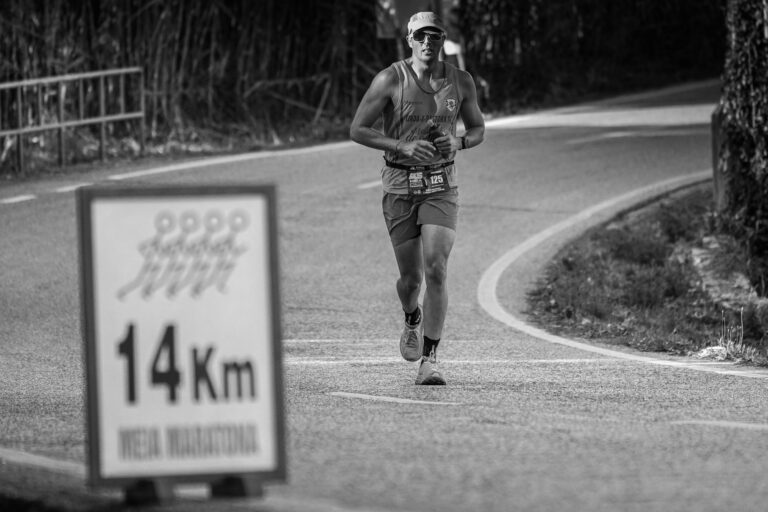
Heart rate zones for runners over 60 differ significantly from younger athletes because maximum heart rate declines with age, requiring recalculated zone boundaries to ensure safe and effective training. The traditional formula of 220 minus age gives a 60-year-old a maximum heart rate of 160 beats per minute, which then divides into five training zones: Zone 1 (recovery) at 50-60% of max, Zone 2 (aerobic base) at 60-70%, Zone 3 (tempo) at 70-80%, Zone 4 (threshold) at 80-90%, and Zone 5 (maximum effort) at 90-100%. For a 60-year-old runner, this translates to Zone 2 falling between 96 and 112 beats per minute””a range where most training miles should occur for building endurance without excessive strain on an aging cardiovascular system.
Consider a 62-year-old runner named Margaret who returned to running after a decade away. Using standard younger-athlete zones, she consistently pushed into what she thought was moderate effort but was actually threshold training, leaving her exhausted and prone to injury. Once she recalculated her zones using age-appropriate formulas, she discovered her easy runs should feel genuinely conversational at around 100-108 bpm rather than the 130 bpm she had been maintaining. This article covers how to calculate your personal heart rate zones, why the standard formulas may need adjustment for older runners, the specific benefits of training in each zone, how medications and health conditions affect heart rate response, practical methods for monitoring your effort, and common mistakes that lead to overtraining or undertraining in the 60-plus population.
Table of Contents
- Why Do Heart Rate Zones Change for Runners After 60?
- Calculating Accurate Heart Rate Zones After Age 60
- The Critical Importance of Zone 2 Training for Older Runners
- How Medications and Health Conditions Affect Training Zones
- Using Heart Rate Variability to Guide Training Intensity
- Adjusting Zones for Heat, Humidity, and Altitude
- How to Prepare
- How to Apply This
- Expert Tips
- Conclusion
- Frequently Asked Questions
Why Do Heart Rate Zones Change for Runners After 60?
Maximum heart rate declines approximately one beat per minute for every year of age, a physiological reality caused by changes in the heart’s electrical conduction system and reduced responsiveness of the heart muscle to adrenaline stimulation. This decline occurs regardless of fitness level””even elite masters athletes experience it””though their hearts become more efficient at pumping blood per beat, partially compensating for the lower maximum rate. The practical consequence is that a training zone percentage translates to fewer actual beats per minute, making external metrics like pace increasingly unreliable compared to heart rate for gauging effort. The comparison between a 35-year-old and a 65-year-old illustrates this shift clearly.
The younger runner with a max heart rate of 185 bpm has a Zone 2 range of 111-130 bpm, while the older runner with a max of 155 bpm should train in Zone 2 between 93 and 109 bpm. If both runners tried to maintain 120 bpm during an easy run, the younger athlete would be comfortably aerobic while the older runner would be working at nearly 80% of maximum””solidly in tempo territory and far too intense for recovery or base building. Beyond the mathematical adjustments, older runners often experience a blunted heart rate response, meaning the heart takes longer to elevate at the start of exercise and longer to decrease afterward. This delayed response can make interval training particularly tricky, as heart rate may not peak until after an interval ends and may still be elevated when the next one begins. Understanding these age-related changes prevents the common error of assuming yesterday’s training intensities remain appropriate today.

Calculating Accurate Heart Rate Zones After Age 60
The standard 220-minus-age formula, while convenient, becomes increasingly inaccurate for older populations and can underestimate maximum heart rate in fit individuals by 10-15 beats per minute. More accurate alternatives include the Tanaka formula (208 minus 0.7 times age), which yields a max heart rate of 166 for a 60-year-old, or the Gulati formula developed specifically for women (206 minus 0.88 times age). The most precise method remains a supervised maximal exercise test, though this requires medical clearance and isn’t practical for everyone. For calculating training zones, the Karvonen method offers superior accuracy because it accounts for resting heart rate, which varies significantly among individuals and reflects cardiovascular fitness.
The formula calculates target heart rate as resting heart rate plus a percentage of heart rate reserve (maximum minus resting). A 60-year-old with a resting rate of 58 and estimated max of 160 has a heart rate reserve of 102; their Zone 2 (60-70% of reserve) becomes 119-129 bpm rather than the simpler 96-112 bpm from the percentage-of-max method. However, if you take beta-blockers, calcium channel blockers, or other heart rate-limiting medications, both formulas become unreliable because these drugs artificially suppress maximum heart rate by 20-30 beats per minute or more. Runners on such medications should instead use perceived exertion scales or the talk test, where Zone 2 effort allows comfortable conversation, Zone 3 permits only short sentences, and Zone 4 makes speaking difficult. Consulting with a cardiologist familiar with exercise physiology can help establish appropriate intensity guidelines when medications complicate heart rate-based training.
The Critical Importance of Zone 2 Training for Older Runners
Zone 2 training””the aerobic base zone where fat serves as the primary fuel source””becomes increasingly valuable after 60 because it builds cardiovascular capacity without the joint stress, recovery demands, and injury risk associated with higher-intensity work. This zone improves mitochondrial density, capillary networks in muscles, and the heart’s stroke volume while keeping cortisol and inflammatory markers relatively low. For runners managing age-related concerns like osteoarthritis, recovering from joint replacements, or returning after cardiac events, Zone 2 represents the safest path to meaningful fitness gains. A specific example demonstrates Zone 2’s power: Robert, a 64-year-old former competitive runner, spent two years frustrated by his inability to return to previous paces after a knee replacement.
His breakthrough came when he committed to six months of almost exclusively Zone 2 running, initially at a pace so slow it felt embarrassing. His average heart rate during easy runs dropped from 138 to 118 bpm at the same pace, indicating dramatically improved cardiovascular efficiency, and his sustainable race pace improved by nearly two minutes per mile””all without high-intensity intervals that would have stressed his surgical knee. The challenge with Zone 2 training for competitive-minded older runners is psychological: the required paces often feel unreasonably slow, especially on good days when the body seems capable of more. Running 12-minute miles when you remember running 8-minute miles requires ego surrender. Yet this zone specifically targets the aerobic adaptations that decline most with age, making it arguably more important for 60-plus runners than for any other age group.

How Medications and Health Conditions Affect Training Zones
Common medications prescribed to older adults can dramatically alter heart rate response, rendering standard zone calculations misleading or even dangerous. Beta-blockers reduce maximum heart rate by 20-40 bpm and blunt the heart rate’s rise during exercise, meaning a medicated runner might feel exhausted while their monitor shows an apparently moderate heart rate. Diuretics can cause dehydration and electrolyte imbalances that affect heart rate variability. ACE inhibitors generally have minimal direct heart rate effects but may cause dizziness during exercise, particularly when standing from bent-over stretches. The comparison between medicated and unmedicated training highlights the stakes.
An unmedicated 65-year-old might have a true max of 155 bpm and work comfortably at 124 bpm (80% of max) during tempo runs. The same runner on atenolol might have a suppressed max of 125 bpm, meaning that previous 124 bpm now represents near-maximal effort””a recipe for cardiac events and severe overtraining. Runners starting or changing cardiac medications should completely reassess their training zones rather than assuming previous targets remain valid. Beyond medications, conditions common in older runners””including atrial fibrillation, pacemakers, diabetes affecting autonomic function, and thyroid disorders””all influence heart rate behavior in ways that require individualized assessment. Runners with these conditions benefit from working with sports cardiologists or exercise physiologists who can conduct appropriate testing and establish personalized training parameters rather than relying on population-based formulas.
Using Heart Rate Variability to Guide Training Intensity
Heart rate variability (HRV)””the variation in time between consecutive heartbeats””provides insight into recovery status and autonomic nervous system balance that single heart rate measurements cannot offer. Higher HRV generally indicates a well-recovered, parasympathetic-dominant state ready for harder training, while suppressed HRV suggests accumulated fatigue, stress, or incomplete recovery requiring easier efforts. For runners over 60, whose recovery typically takes longer than younger athletes, daily HRV monitoring helps prevent the overtraining that results from following rigid training plans regardless of recovery status. A practical warning applies here: HRV values vary enormously between individuals, making comparisons meaningless. A 60-year-old with an HRV of 25 ms may be perfectly healthy and well-recovered, while another with 45 ms might be overtrained””what matters is each person’s own baseline and trends over time.
Additionally, HRV measurements require consistency in timing, position (lying versus sitting), and duration to be comparable day-to-day. Taking your HRV while lying in bed immediately upon waking, before coffee or bathroom use, for 60-90 seconds produces the most reliable data. Modern wearables from companies like Whoop, Garmin, and Oura have made HRV tracking accessible, though their algorithms and recommendations vary in quality. The most useful application for older runners is using HRV trends to modify planned workouts””choosing an easy Zone 2 day when HRV is suppressed rather than pushing through the scheduled tempo run. This flexible, recovery-responsive approach reduces injury risk and improves long-term consistency.

Adjusting Zones for Heat, Humidity, and Altitude
Environmental conditions significantly affect heart rate response, a factor that becomes more pronounced with age because older adults have reduced thermoregulatory efficiency and slower acclimatization to new conditions. In hot and humid weather, heart rate runs 10-20 beats higher at any given pace due to increased blood flow to the skin for cooling and reduced plasma volume from sweating. A runner who normally hits Zone 2 at 108 bpm might see 125 bpm at the same easy effort on a 90-degree day””technically Zone 3, but physiologically still aerobic base training. For example, a 67-year-old runner training in Phoenix noticed her heart rate during summer runs was 15-18 bpm higher than during identical winter runs despite feeling the same perceived effort.
Rather than forcing her heart rate down by running impossibly slowly, she added 15 bpm to her zone boundaries during summer months and scheduled harder workouts for pre-dawn hours when temperatures were lowest. Altitude presents similar challenges, with heart rates elevated 10-20% above sea-level values during the first few days at elevation before partial acclimatization occurs. Runners traveling from low to high altitude for races should expect their zone-based training to require pace adjustments and should not interpret higher heart rates as fitness loss. The general principle is that perceived exertion should guide training when environmental conditions make heart rate unreliable, using the talk test as a practical backup.
How to Prepare
- **Establish your resting heart rate accurately.** Measure your heart rate first thing in the morning before getting out of bed, ideally using a chest strap for accuracy, over five consecutive days and average the results. Avoid measuring after poor sleep, alcohol consumption, or illness, as these artificially elevate resting rate.
- **Determine your maximum heart rate through testing or calculation.** If medically cleared and comfortable with hard effort, perform a supervised max heart rate test such as running three minutes at progressively faster paces until you cannot continue, then note the highest reading. Otherwise, use the Tanaka formula (208 minus 0.7 times age) as a starting estimate.
- **Calculate your personal zones using the Karvonen method.** Subtract resting heart rate from maximum to find heart rate reserve, then multiply by zone percentages and add resting rate back. Write these zones down and program them into your watch.
- **Invest in a reliable heart rate monitor.** Chest straps remain more accurate than optical wrist sensors, particularly during high-intensity efforts or cold weather when blood flow to extremities decreases. The Polar H10 and Garmin HRM-Pro represent current gold standards.
- **Plan a two-week calibration period.** Run at various efforts while noting both heart rate and perceived exertion to verify your calculated zones match your actual physiology. If Zone 2 feels like threshold effort, your maximum heart rate estimate is likely too low.
How to Apply This
- **Structure 80% of weekly running volume in Zones 1 and 2.** For most runners over 60, this means four to five easy runs per week where heart rate stays below 75% of maximum throughout, including warmup and cooldown periods. Monitor the tendency to drift upward during runs and consciously slow when approaching Zone 3.
- **Incorporate one Zone 3-4 workout weekly if your fitness and health allow.** This might be a tempo run of 15-25 minutes at Zone 3-4 effort or shorter intervals with Zone 4 peaks. Always precede intense work with 10-15 minutes of Zone 1-2 warmup and follow with similar cooldown duration.
- **Use heart rate to govern recovery, not just training.** After hard workouts, monitor how long your heart rate takes to return below 100 bpm; longer recovery times indicate accumulated fatigue. If resting heart rate is elevated 5+ beats above normal on any morning, substitute an easy day regardless of the training plan.
- **Track and analyze patterns monthly.** Note whether your heart rate at standard paces is decreasing over time (indicating improving fitness), staying stable, or increasing (suggesting overtraining or health changes). This cardiac drift at given paces provides valuable feedback that race times alone cannot offer.
Expert Tips
- Focus on cardiac drift during longer runs””if heart rate rises more than 10% over an hour at constant pace, you started too fast or are insufficiently trained for that duration.
- Do not compare your zones to other runners, even those your age; individual variation in maximum heart rate spans 20+ beats per minute among healthy adults of identical age.
- When returning from illness or injury layoff, expect your zones to function differently for two to four weeks; start conservatively and let your body recalibrate.
- Consider keeping a training log that tracks both heart rate data and subjective factors like sleep quality, stress, and energy levels to identify patterns affecting your cardiovascular response.
- Avoid doing Zone 3 work frequently””it is too hard for recovery benefits and too easy for significant threshold improvement, often called “junk miles” by coaches. Commit to either truly easy or genuinely hard efforts.
Conclusion
Heart rate zone training offers runners over 60 a physiologically sound framework for building fitness while respecting the cardiovascular realities of aging. By calculating accurate personal zones using age-appropriate formulas and the Karvonen method, monitoring how medications and conditions affect heart rate response, and committing to predominantly Zone 2 training, older runners can improve performance, avoid overtraining, and reduce injury risk. The key insight is that zones must be individualized””not just to age, but to resting heart rate, medications, and verified maximum heart rate.
Moving forward, establish your current zones using the methods described, invest in reliable monitoring equipment, and begin tracking your cardiovascular response during various efforts. Pay particular attention to how Zone 2 training improves your efficiency over months rather than weeks. Consider working with a sports medicine physician or exercise physiologist if you have cardiac conditions or take heart-rate-affecting medications, as personalized guidance significantly improves both safety and training effectiveness for runners navigating the complexities of cardiovascular fitness after 60.
Frequently Asked Questions
How long does it typically take to see results?
Results vary depending on individual circumstances, but most people begin to see meaningful progress within 4-8 weeks of consistent effort. Patience and persistence are key factors in achieving lasting outcomes.
Is this approach suitable for beginners?
Yes, this approach works well for beginners when implemented gradually. Starting with the fundamentals and building up over time leads to better long-term results than trying to do everything at once.
What are the most common mistakes to avoid?
The most common mistakes include rushing the process, skipping foundational steps, and failing to track progress. Taking a methodical approach and learning from both successes and setbacks leads to better outcomes.
How can I measure my progress effectively?
Set specific, measurable goals at the outset and track relevant metrics regularly. Keep a journal or log to document your journey, and periodically review your progress against your initial objectives.
When should I seek professional help?
Consider consulting a professional if you encounter persistent challenges, need specialized expertise, or want to accelerate your progress. Professional guidance can provide valuable insights and help you avoid costly mistakes.
What resources do you recommend for further learning?
Look for reputable sources in the field, including industry publications, expert blogs, and educational courses. Joining communities of practitioners can also provide valuable peer support and knowledge sharing.