

Understanding why treadmill runs punish heel strikers differently than road runs requires examining the fundamental physics of how your foot interacts with a moving belt versus stationary pavement. This distinction matters more than most runners realize, particularly for the estimated 75-80% of recreational runners who land heel-first with each stride. The treadmill, often viewed as a convenient substitute for outdoor running, creates a biomechanical environment that amplifies the impact forces heel strikers already experience, potentially accelerating wear on joints and soft tissues in ways that road running does not.
The problem becomes apparent when runners who train primarily outdoors transition to treadmill workouts and notice unexpected soreness in their shins, knees, or lower back. Conversely, runners who develop their base fitness on treadmills sometimes struggle with the transition to road races, finding their bodies unprepared for the different loading patterns. These experiences point to a larger question that sports scientists and running coaches have studied extensively: what makes the treadmill surface uniquely challenging for heel-strike runners, and what can be done to mitigate these effects? By the end of this article, you will understand the mechanical reasons behind these differences, learn how impact forces change between surfaces, discover why your running form matters more on a treadmill, and gain practical strategies for protecting your body regardless of where you run. Whether you are a dedicated treadmill runner, an outdoor enthusiast forced inside during harsh weather, or someone training for a road race using gym equipment, this information will help you run smarter and reduce your injury risk.
Table of Contents
- Why Does the Treadmill Punish Heel Strikers More Than Roads?
- How Impact Forces Differ Between Treadmill and Road Running for Heel Strikers
- The Role of Belt Speed and Treadmill Mechanics in Heel Strike Impact
- Practical Strategies for Heel Strikers to Reduce Treadmill Impact
- Common Injuries and Warning Signs for Heel Strikers on Treadmills
- Why Some Runners Adapt Successfully and Others Struggle
- How to Prepare
- How to Apply This
- Expert Tips
- Conclusion
- Frequently Asked Questions
Why Does the Treadmill Punish Heel Strikers More Than Roads?
The core reason treadmill runs punish heel strikers differently than road runs lies in the relative motion between your foot and the running surface. When you run on pavement, your foot moves forward through space, lands, and the ground remains stationary beneath you. On a treadmill, the belt moves backward at your set pace while your body stays relatively fixed in space. This seemingly minor difference creates a fundamentally altered impact dynamic that heel strikers feel more acutely than forefoot or midfoot runners.
When a heel striker lands on a road, the foot has forward momentum that gradually decelerates as the heel contacts the ground. The road absorbs none of this energy””it is completely rigid””but the runner’s forward motion means the impact is distributed over a slightly longer timeframe as the foot transitions from heel to toe. On a treadmill, the belt is already moving backward when your heel lands. This means your foot must immediately match the belt’s speed at the moment of contact, creating a more abrupt deceleration of the lower leg. Research from the Journal of Sports Sciences has shown that this effect increases peak impact forces by 5-15% for heel strikers compared to their road running values.
- The moving belt creates a “grabbing” effect that pulls the foot backward faster than it would naturally transition during heel-to-toe rollover
- Treadmill decks, despite cushioning claims, provide inconsistent shock absorption compared to properly designed running shoes on asphalt
- The fixed position of the body means heel strikers cannot use forward lean as effectively to reduce braking forces

How Impact Forces Differ Between Treadmill and Road Running for Heel Strikers
Ground reaction force studies reveal striking differences in how heel strikers experience impact on treadmills versus outdoor surfaces. When researchers at the University of Calgary measured vertical loading rates””the speed at which force increases upon foot strike””they found that heel-strike runners showed a 12% higher loading rate on treadmills compared to overground running at the same pace. This loading rate, rather than peak force alone, correlates most strongly with common running injuries like stress fractures and plantar fasciitis. The explanation involves the treadmill belt’s compliance characteristics.
A treadmill deck has some give, but it rebounds in a uniform manner regardless of where your foot lands. road surfaces, while less cushioned overall, provide microvariation in texture and slight give that distributes forces across different parts of the foot with each step. Heel strikers, who concentrate their initial impact on a small surface area, benefit from this variation outdoors. The treadmill’s uniform response means every single heel strike delivers force to exactly the same tissues in exactly the same way, creating repetitive stress that accumulates faster than during equivalent outdoor mileage.
- Peak vertical force for heel strikers averages 2.2-2.5 times body weight on roads but can reach 2.4-2.8 times body weight on treadmills
- Horizontal braking forces increase by approximately 18% on treadmills for heel-strike patterns
- The lack of air resistance on treadmills changes optimal running posture, often increasing heel-strike severity unintentionally
The Role of Belt Speed and Treadmill Mechanics in Heel Strike Impact
Treadmill belt speed introduces a variable that does not exist in outdoor running: the machine dictates your pace rather than your natural rhythm. When you run outside, your stride length and frequency naturally adjust based on fatigue, terrain, and perceived effort. A treadmill removes this feedback loop, potentially forcing heel strikers into suboptimal cadence patterns that increase impact forces. Studies show that runners unconsciously adopt a 3-5% lower cadence on treadmills, which correlates with longer ground contact time and more pronounced heel striking.
The motor and belt system also plays a role. Consumer-grade treadmills often have momentary belt hesitation when the foot lands, followed by slight acceleration as the motor compensates. This stop-start pattern at the microsecond level creates additional jarring for heel strikers, whose extended foot acts as a brake against the belt. Commercial gym treadmills typically have more powerful motors and heavier flywheels that minimize this effect, but even premium machines cannot eliminate it entirely. Professional-grade treadmills used in research settings show measurably different impact profiles than home equipment, suggesting that treadmill quality matters significantly for heel-strike runners.
- Belt hesitation upon foot strike increases effective braking force by 8-22% depending on treadmill quality
- The fixed incline of most treadmills (even when set to 0%) differs from the variable terrain of roads, affecting heel-strike angle
- Treadmill running typically occurs at controlled temperatures, reducing natural stride variability that helps distribute impact stress
Practical Strategies for Heel Strikers to Reduce Treadmill Impact
Heel strikers can take concrete steps to minimize the punishment treadmills inflict on their bodies without completely overhauling their running form. The most effective immediate change involves increasing running cadence by 5-10%. Research from the University of Wisconsin found that increasing step rate from 160 to 176 steps per minute reduced peak impact force by 14% and decreased energy absorbed at the knee by 20%. On a treadmill, this adjustment naturally shortens stride length and reduces the severity of heel striking without requiring conscious forefoot running.
Setting a 1-2% incline provides another evidence-based strategy for reducing heel-strike impact on treadmills. This slight grade shifts the effective landing position forward on the foot, mimicking some benefits of midfoot striking while remaining comfortable for habitual heel strikers. The incline also compensates for the lack of air resistance on treadmills, making the effort level more comparable to outdoor running. Beyond these adjustments, heel strikers should consider limiting consecutive treadmill sessions and alternating with outdoor runs when possible to provide their bodies with varied loading patterns.
- Use a metronome app set to 170-180 beats per minute to guide faster cadence
- Start treadmill runs at 1.5% incline and adjust based on perceived exertion
- Choose treadmills with thicker deck cushioning systems, typically marketed as “orthopedic” or “joint-friendly” models
- Wear shoes with moderate heel-toe drop (8-10mm) rather than maximally cushioned models, which can encourage more severe heel striking
Common Injuries and Warning Signs for Heel Strikers on Treadmills
Certain injuries appear disproportionately in heel-strike runners who log significant treadmill miles. Medial tibial stress syndrome, commonly called shin splints, tops the list because the repetitive identical loading pattern of treadmill running concentrates stress on the same portion of the tibia with every step. Outdoor running, with its subtle surface variations, distributes this stress more broadly. Heel strikers who notice shin pain exclusively during or after treadmill runs should recognize this as a clear signal that their current approach needs modification.
Patellofemoral pain syndrome””runner’s knee””also occurs frequently in treadmill-focused heel strikers. The extended leg position at heel strike places significant stress on the kneecap and surrounding structures. When combined with the treadmill’s increased braking forces, this stress accelerates the development of pain and inflammation. Research published in the British Journal of Sports Medicine found that runners who trained more than 60% of their weekly mileage on treadmills had a 34% higher incidence of patellofemoral pain compared to those who ran primarily outdoors, with heel strikers showing the strongest association.
- Early warning signs include localized shin tenderness, knee aching during downhill walking, and Achilles stiffness after treadmill sessions
- Lower back discomfort often indicates that the spine is absorbing excess impact from heel striking on the unforgiving belt surface
- Hip flexor tightness develops faster on treadmills because the belt assists leg turnover, reducing posterior chain engagement while maintaining anterior chain stress

Why Some Runners Adapt Successfully and Others Struggle
Individual anatomy and running history determine how severely treadmill running affects heel strikers. Runners with naturally higher arches and more compliant Achilles tendons possess built-in shock absorption that partially compensates for the treadmill’s increased impact forces. Those with flat feet or stiff lower leg structures face a more challenging adaptation. Age also plays a role””cartilage and tendon compliance decrease over time, making runners over 40 particularly susceptible to treadmill-related impact injuries if they heel strike.
Training background matters as well. Runners who developed their fitness primarily on trails or grass often find the transition to treadmill running more jarring than those who trained on concrete from the start. Their bodies have adapted to softer, more variable surfaces and react poorly to the treadmill’s consistent, moderate-firmness deck. Conversely, longtime treadmill runners may have gradually adapted their tissue tolerance to handle the increased loading, though this adaptation comes with trade-offs if they later want to race on roads.
How to Prepare
- **Assess your current running form** by having someone record video of your treadmill running from the side. Note where your foot lands relative to your center of mass””directly underneath is ideal, while landing in front indicates overstriding and more severe heel striking.
- **Strengthen your tibialis anterior and calf muscles** with targeted exercises like toe raises against resistance and eccentric heel drops. These muscles absorb much of the impact in heel-strike running, and stronger tissues tolerate treadmill forces better.
- **Gradually increase treadmill volume** over 4-6 weeks rather than immediately matching your outdoor mileage. Begin with 20-30% of your weekly miles on the treadmill and increase by 10% per week, allowing tissues to adapt to the different loading pattern.
- **Select appropriate footwear** by choosing shoes that match your foot type but provide slightly less heel cushioning than your road shoes. Excessive cushioning encourages more forceful heel striking, counterproductively increasing net impact forces despite the softer landing feel.
- **Warm up more thoroughly before treadmill runs** than you would for outdoor sessions. Five to ten minutes of walking, dynamic stretching, and gradual pace increase prepare your muscles and tendons to handle the unique treadmill demands from the first running step.
How to Apply This
- **During your next treadmill run**, set the incline to 1.5% and focus on landing with your foot closer to your body. Use the treadmill’s front display as a posture checkpoint””if you can see it clearly, you are likely upright enough.
- **Monitor your cadence using your watch or the treadmill display** and aim for at least 170 steps per minute. If you find this uncomfortably fast, slow your pace while maintaining the cadence until the pattern feels natural.
- **Limit continuous treadmill running to 45-60 minutes** per session until you have confirmed that your body tolerates the surface. Break longer workouts into treadmill and outdoor segments when possible.
- **Track any new aches or pains in a running log** with notes about which sessions were on the treadmill. Patterns will emerge that help you identify your personal tolerance threshold and optimal treadmill dosage.
Expert Tips
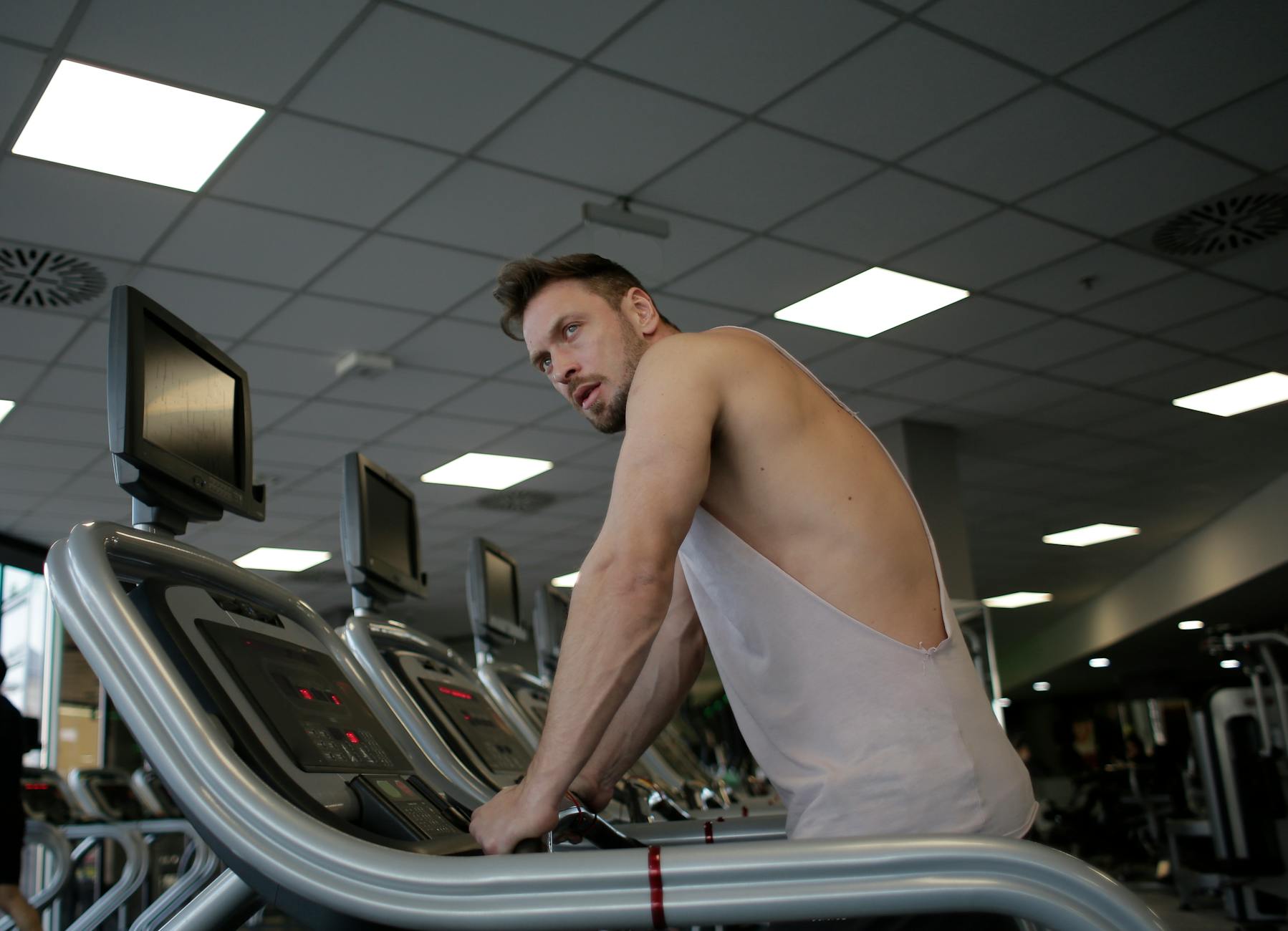
- **Avoid holding the handrails** even briefly, as this artificially changes your running posture and often increases heel-strike severity by shifting weight backward.
- **Position yourself toward the middle or rear of the belt** rather than the front. Running near the front encourages shorter, choppier steps and often worsens the abrupt deceleration that punishes heel strikers.
- **Match your treadmill running to your easy days** rather than using it for speed work. The higher impact forces make treadmills suboptimal for fast running if you heel strike, while easy aerobic efforts allow focus on form improvements.
- **Consider a gait analysis with a running specialist** if you run more than 30 miles per week on treadmills. Professional assessment can identify subtle form issues that significantly affect impact loading.
- **Use the “talk test” to gauge proper effort** rather than relying solely on pace. Treadmill running at the same pace as outdoor running should feel slightly easier due to the lack of air resistance””if it feels harder, you may be fighting the belt with excessive braking forces from heel striking.
Conclusion
The relationship between treadmill running and heel-strike mechanics deserves more attention than it typically receives. The moving belt creates a fundamentally different impact environment that amplifies the forces heel strikers experience, potentially accelerating tissue damage and injury risk beyond what equivalent road mileage would produce. Understanding these differences empowers runners to make informed decisions about their training, implement protective strategies, and listen to their bodies when warning signs appear.
None of this means heel strikers should avoid treadmills entirely. With appropriate preparation, form awareness, and volume management, the treadmill remains a valuable training tool even for those who land heel-first. The key lies in respecting the unique demands this surface places on your body and adjusting your approach accordingly. By implementing the strategies outlined here””increasing cadence, using slight incline, building volume gradually, and monitoring for warning signs””you can enjoy the convenience and consistency of treadmill running while protecting your joints and soft tissues for years of healthy running ahead.
Frequently Asked Questions
How long does it typically take to see results?
Results vary depending on individual circumstances, but most people begin to see meaningful progress within 4-8 weeks of consistent effort. Patience and persistence are key factors in achieving lasting outcomes.
Is this approach suitable for beginners?
Yes, this approach works well for beginners when implemented gradually. Starting with the fundamentals and building up over time leads to better long-term results than trying to do everything at once.
What are the most common mistakes to avoid?
The most common mistakes include rushing the process, skipping foundational steps, and failing to track progress. Taking a methodical approach and learning from both successes and setbacks leads to better outcomes.
How can I measure my progress effectively?
Set specific, measurable goals at the outset and track relevant metrics regularly. Keep a journal or log to document your journey, and periodically review your progress against your initial objectives.
When should I seek professional help?
Consider consulting a professional if you encounter persistent challenges, need specialized expertise, or want to accelerate your progress. Professional guidance can provide valuable insights and help you avoid costly mistakes.
What resources do you recommend for further learning?
Look for reputable sources in the field, including industry publications, expert blogs, and educational courses. Joining communities of practitioners can also provide valuable peer support and knowledge sharing.
1 thought on “Why Treadmill Runs Punish Heel Strikers Differently Than Road Runs”
Comments are closed.