A quick 90-second heart rate recovery test can estimate your marathon finishing time with surprising accuracy—but only if you understand what the test actually measures and how to apply it correctly. The concept isn’t about a single branded assessment; rather, it’s based on research showing that your heart’s ability to recover from exertion correlates strongly with your aerobic fitness and marathon potential. The most established version of this approach is the Ruffier Test, which measures how quickly your heart rate drops after a controlled period of exercise. A 2025 study found that heart rate recovery, combined with body fat percentage and half-marathon race time, correlated with actual marathon performance at r=0.77—a strong statistical relationship that suggests the test has real predictive power.
However, the critical limitation is that this test doesn’t work as a standalone oracle. It requires personal baseline data and honest interpretation. A runner with a naturally slow-recovering heart rate might still be aerobically fit if that’s their normal physiology, while another runner’s fast recovery might indicate good conditioning or simply genetic variation. The 90-second timeline refers to how quickly the test itself is administered, not how accurately it predicts your marathon time. If you’re considering using heart rate recovery as part of your race prediction toolkit, you need to understand what’s actually happening physiologically and what the numbers really mean.
Table of Contents
- Can Heart Rate Recovery Actually Predict Your Marathon Finish Time?
- How the Ruffier Test Works and What It Actually Measures
- Smartwatch Accuracy and Why Your Device Matters
- Maximum Heart Rate Formulas and What They Mean for Marathon Prediction
- Why Heart Rate Metrics Alone Aren’t Enough
- Garmin Race Predictor and Advanced Heart Rate Prediction Tools
- The Future of Marathon Prediction and Heart Rate Technology
- Conclusion
Can Heart Rate Recovery Actually Predict Your Marathon Finish Time?
Yes, but with important caveats. heart rate recovery acts as one indicator of aerobic fitness among several factors that influence marathon performance. The physiological logic is sound: runners with better cardiovascular fitness typically recover faster from exertion because their parasympathetic nervous system—the system that helps the body relax—is more responsive. This same fitness capacity translates to better oxygen utilization during a marathon, which is strongly linked to race performance. A runner who recovers 50 beats per minute in the first 60 seconds after hard effort has demonstrated a cardiovascular response that correlates with marathon-paced endurance. The research backing this comes from legitimate exercise science.
The Ruffier Test, developed in France nearly a century ago, uses a straightforward protocol: measure resting heart rate, perform a set number of squats or step-ups for a fixed period, then measure heart rate immediately after and again after a recovery interval. The difference between these measurements reveals how efficiently your cardiovascular system shifts out of “exertion mode.” For marathon prediction specifically, studies have found this metric particularly useful when combined with other data like half-marathon times or body composition. In practical terms, if you complete a test and see a substantial drop in heart rate within 60 to 90 seconds—say from 150 bpm down to 110 or lower—that pattern suggests your aerobic system is responding well to training. The limitation is that marathon performance depends on more than cardiovascular recovery speed. Factors like mental toughness, pacing discipline, nutrition strategy, injury history, and the specific course terrain all matter significantly. A runner with mediocre heart rate recovery but exceptional mental resilience and several years of marathon experience might outperform someone with excellent heart rate recovery but less race-specific preparation. The 90-second test is a data point, not a destiny.
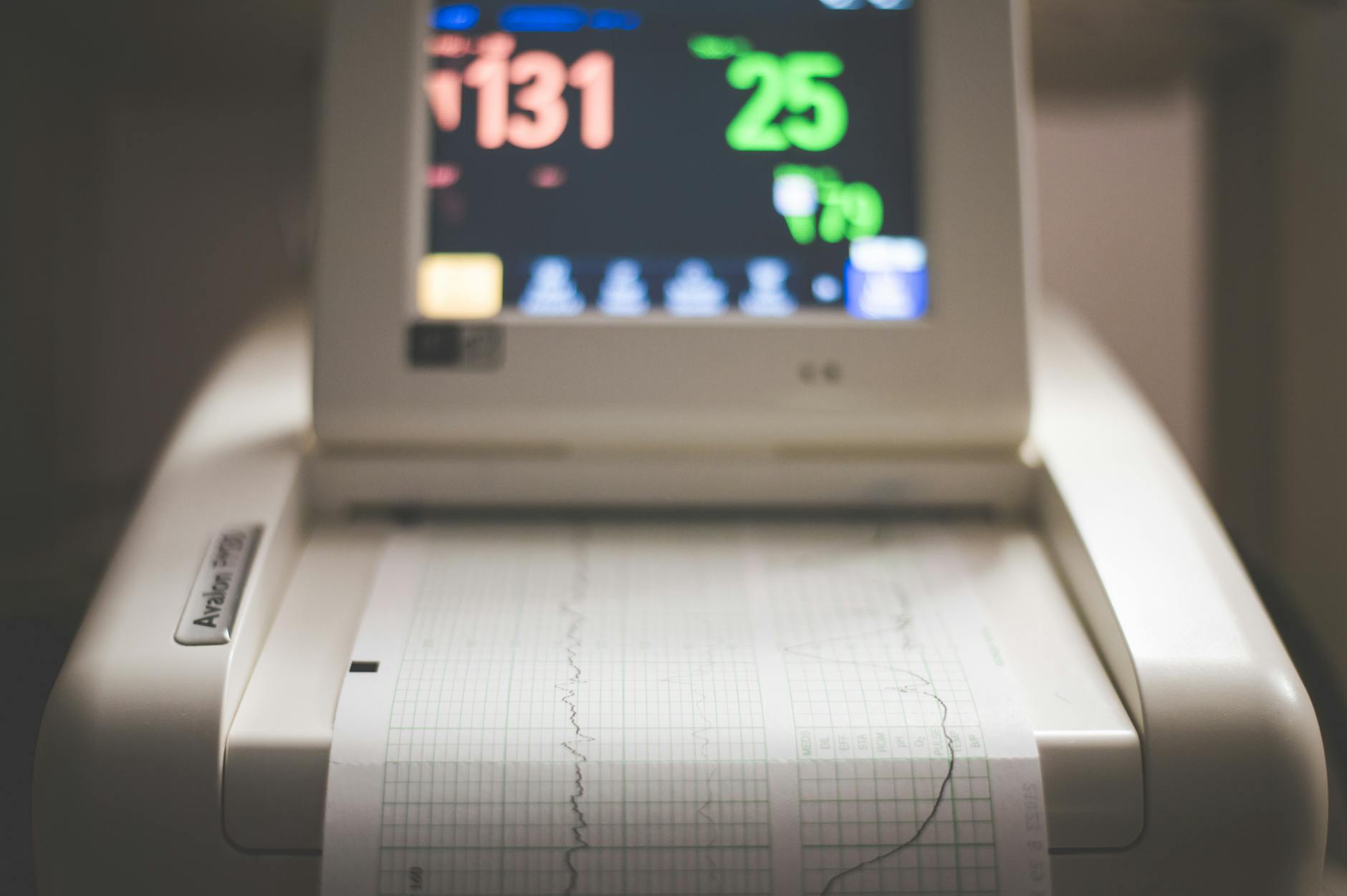
How the Ruffier Test Works and What It Actually Measures
The Ruffier Test is straightforward enough to administer at home, though consistency in how you perform it matters for meaningful results. The standard protocol involves measuring your resting heart rate while seated or lying down, then performing 30 deep squats in about 45 seconds while keeping a steady tempo. Immediately after finishing, you measure your heart rate again—this is typically elevated significantly, often reaching 120 to 160 bpm depending on your fitness level. Then you rest for one minute and measure again. The test calculates recovery as the difference between your immediately post-exercise heart rate and your one-minute recovery heart rate. What this test measures is not your raw cardiovascular power but your parasympathetic responsiveness—essentially, how quickly your nervous system can switch from “fight or flight” to “rest and digest.” This matters for marathon running because your ability to recover between hard efforts during a race, and your ability to shift into sustainable pacing, both depend on this parasympathetic tone.
Runners with well-trained cardiovascular systems show pronounced drops in heart rate during the recovery window, sometimes 40 to 60 bpm, while less-trained runners might see drops of only 10 to 20 bpm. The magnitude of this recovery is what correlates with aerobic fitness and ultimately marathon performance. One important warning: the Ruffier Test involves sudden exertion and assumes you’re healthy enough for that stress. If you have any history of cardiac issues, chest pain, or haven’t exercised recently, you should get medical clearance before attempting this test. Additionally, factors like caffeine intake, stress level, sleep quality, and time of day can all affect heart rate measurements. Testing yourself in the early morning in a calm state will give more accurate and consistent results than testing after a stressful workday or too soon after coffee. For marathon prediction purposes, run the test multiple times over several weeks to establish your personal baseline rather than relying on a single measurement.
Smartwatch Accuracy and Why Your Device Matters
Modern smartwatches have become increasingly reliable for heart rate monitoring, but their accuracy varies depending on conditions and technology. Apple Watch heart rate measurements are within ±2 to 3 beats per minute when you’re standing still, but during exercise they’re within ±5 bpm about 87% of the time—not perfect, but reasonably close. Other popular running watches like Garmin and Polar have similar accuracy ranges. This level of precision is generally sufficient for tracking recovery patterns and identifying your personal baseline, even if individual measurements might be off by a few beats. The practical implication is that your smartwatch can help you perform the heart rate recovery test with useful consistency, but you shouldn’t treat the precise numbers as absolute truth. If your watch shows a recovery from 145 bpm to 105 bpm, the actual values might be 148 to 100 or 142 to 110.
What matters is establishing your typical pattern and looking for improvements over time as your training progresses. Many runners find that their heart rate recovery improves noticeably over 8 to 12 weeks of consistent aerobic training, which aligns with what the research suggests about using this test as a progress indicator. The watch gives you the signal; your training response confirms whether the signal is meaningful. However, there’s a significant limitation here: using a smartwatch for a heart rate recovery test is different from using it for continuous monitoring during runs. The chest strap monitors that serious runners use for structured workouts are typically more accurate than wrist-based sensors, particularly during intense efforts. If you’re going to use heart rate recovery testing as a key component of your marathon prediction, consider borrowing or investing in a chest strap monitor for the tests themselves, even if you use your smartwatch for everyday training data.
Maximum Heart Rate Formulas and What They Mean for Marathon Prediction
Your maximum heart rate—the theoretical upper limit your heart can reach—is often used to calculate training zones, and more accurate maximum heart rate estimates can indirectly improve marathon prediction. The oldest formula, frequently taught in fitness classes, is 220 minus your age. But this formula has known flaws. The more accurate Tanaka formula—208 minus 0.7 times your age—performs better across diverse populations, and it’s particularly more accurate for women, where the traditional 220-minus-age formula tends to overestimate by about 5 beats per minute on average. If you use your estimated maximum heart rate to define your aerobic training zones, a more accurate formula means your zones are more aligned with your actual physiology. This matters for marathon training because much of the work should happen in sustained aerobic zones where you can hold effort for extended periods.
If your zones are calculated incorrectly because your max heart rate estimate is wrong, you might spend too much time training too hard or too easy. A runner aged 45, for example, would have a max heart rate of 220-45=175 bpm using the old formula but 208-31.5=176.5 bpm using Tanaka. That’s close in this case, but for a 55-year-old runner, the difference is more substantial: 165 bpm versus 169.5 bpm. The limitation is that maximum heart rate has considerable individual variation beyond what any formula can capture. Some people are simply born with naturally higher or lower max heart rates. The only truly accurate way to know your max heart rate is to perform a maximal effort test under controlled conditions, which most recreational runners won’t do. For marathon prediction purposes, the Tanaka formula is a reasonable improvement over the traditional formula, but your personal training experience and how you feel at different effort levels will always be more informative than any formula result.
Why Heart Rate Metrics Alone Aren’t Enough
This is the crucial insight that often gets lost in discussions about heart rate testing: while heart rate recovery correlates with marathon performance, location-based metrics like GPS pace and distance achieve 97% accuracy for performance prediction, while biometric metrics including heart rate require a personal baseline for meaningful interpretation. In plain language, this means your actual running pace and distance data from training are nearly 20 times more predictive than heart rate alone. A runner who has consistently completed 12-mile runs at a certain pace has more reliable information about marathon potential than someone with excellent heart rate recovery who has never trained for distance. This doesn’t mean heart rate recovery testing is useless—it means it should be part of a larger picture. The best marathon prediction approach combines multiple data points: your actual training paces and distances, your heart rate metrics as an indicator of fitness changes, any race experience you have, and objective factors like your body composition and injury history. For example, if you’ve completed several 15-mile training runs and multiple half-marathons, and you also see improving heart rate recovery over a 12-week training block, you have much stronger evidence about your marathon potential than either metric alone would provide.
Conversely, excellent heart rate recovery with minimal long-run training is not a reliable marathon predictor. One important warning for runners relying on heart rate data: individual factors can create noise that obscures the real signal. Overtraining, poor sleep, stress, caffeine intake, dehydration, and even altitude or air quality can temporarily elevate resting heart rate and reduce heart rate recovery. A bad recovery number on one day doesn’t indicate fitness loss; rather, it might indicate you’re depleted or stressed. This is why establishing a personal baseline over several weeks, under consistent conditions, matters far more than occasional spot-checks. And this is also why using personal baseline data is essential—comparing your recovery numbers to population averages is less useful than comparing them to your own pattern.

Garmin Race Predictor and Advanced Heart Rate Prediction Tools
Many runners now use automated race prediction features built into their running watches and training apps. Garmin’s Race Predictor feature exemplifies how manufacturers are attempting to combine multiple data sources—including heart rate, pace, distance, and recent effort trends—into a single prediction. A September 2024 software update enhanced this tool by incorporating recent fastest runs into the model, attempting to capture current fitness more accurately than older versions that relied on longer-term training history. However, independent validation of real-world race-day accuracy for these predictors is still pending; most users report that the predictions are useful trend indicators but not always spot-on. The value of tools like Garmin’s Race Predictor is in trending—if the prediction was 3:50 marathon for three weeks and then shifts to 3:42 after a solid training block, that movement has meaning.
The absolute number might be off by 10 to 15 minutes, but the direction and magnitude of change usually accurately reflect your fitness gains. Additionally, advanced models using combined heart rate and accelerometer data have achieved mean absolute errors as low as 2.33 ml·kg⁻¹·min⁻¹ in VO2 max prediction, which is scientifically respectable. This suggests that the underlying technology for fitness prediction is improving, even if consumer-facing tools still have limitations. For practical purposes, treat any automated race prediction as a useful reference point but not gospel truth. If multiple data sources—heart rate recovery, actual training paces, previous race results—all point toward a similar marathon prediction, you can feel more confident. If one tool predicts 3:45 while your training paces suggest 4:05, the disagreement is a signal to examine your training more carefully rather than automatically trusting the tool.
The Future of Marathon Prediction and Heart Rate Technology
The trajectory of marathon prediction technology is moving toward increasingly sophisticated integration of multiple biometric data streams. As smartwatches and training devices continue to improve in accuracy and collect more diverse information—heart rate variability, blood oxygen, running power, stride metrics—the models that synthesize this data should theoretically improve. Researchers are exploring whether advanced machine learning models trained on large datasets of training history and race outcomes could eventually predict marathon performance more reliably than current consumer tools.
However, the fundamental limitation remains: no amount of data collection can fully capture the human variables like motivation, pacing discipline, and mental toughness that influence race-day performance. The role of heart rate testing, specifically the 90-second recovery assessment, will likely remain as part of a broader toolkit rather than becoming the primary predictor. As more runners gather continuous data through their devices, researchers will have better opportunities to understand which metrics matter most and in what combinations. What we know now is that heart rate recovery is a legitimate marker of aerobic fitness, but it works best in combination with other data, personal baselines, and honest assessment of training volume and intensity.
Conclusion
The 90-second heart rate test can provide valuable insight into your marathon potential, but it works best as one component of a comprehensive prediction strategy rather than a standalone assessment. The Ruffier Test and heart rate recovery metrics correlate meaningfully with aerobic fitness and endurance performance, particularly when you establish personal baselines and track changes over training cycles.
However, your actual running performance—the paces you can sustain during training, the distances you’ve built to, any previous race results—remains far more predictive than any heart rate number. If you decide to use heart rate recovery testing as part of your marathon preparation, be consistent with how you administer the test, use a reliable device, compare yourself to your own baseline rather than population averages, and integrate these results with your actual training data. The 90 seconds it takes to assess your heart rate recovery is worthwhile information, as long as you understand it as part of a larger picture rather than a shortcut to predicting race day.