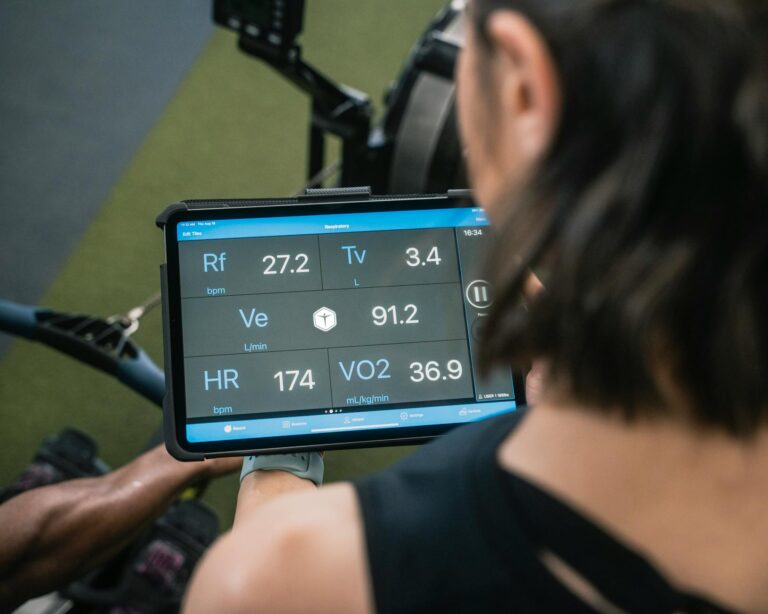
An 8-week aerobic test measures your cardiovascular fitness by tracking how your body responds to sustained aerobic exercise over a two-month period. Rather than a single test day, it’s a structured protocol where you perform the same aerobic effort—typically a set distance or timed run, bike, or swim—at regular intervals and compare your heart rate, pace, and recovery metrics to see measurable improvements.
For example, if you can run three miles in 30 minutes with an average heart rate of 165 bpm at the start, but complete the same distance in 28 minutes at 155 bpm after eight weeks, you have concrete evidence that your aerobic fitness has improved. The 8-week timeframe works because it’s long enough for physiological adaptations to take hold—your mitochondria respond, your heart becomes more efficient, and your body improves oxygen utilization—but short enough to sustain motivation and control variables. Most runners and endurance athletes see noticeable changes in resting heart rate, lactate threshold, and perceived effort during steady runs within this window.
Table of Contents
- How Does an 8-Week Aerobic Test Measure Your Fitness?
- What Makes the 8-Week Window Ideal for Aerobic Development?
- Common Methods for Testing Aerobic Fitness
- Setting Up Your 8-Week Testing Protocol
- Avoiding Common Pitfalls and False Signals
- Interpreting Your Results
- Using 8-Week Testing as Part of Longer-Term Training
- Conclusion
- Frequently Asked Questions
How Does an 8-Week Aerobic Test Measure Your Fitness?
The aerobic test works by establishing a baseline effort, then repeating it at fixed intervals to measure changes in heart rate, pace, or power output. The most common approach is the “tempo test” or “threshold test,” where you perform a sustained effort (30 minutes to an hour) at a fixed pace and track your average heart rate. Another method is the “VO2 max field test,” where you run a known distance as fast as possible and use pace and heart rate to estimate aerobic capacity. Some athletes use a bike or rowing machine with a fixed wattage or resistance, making the numbers even more objective. The beauty of this approach is that it removes guesswork. You’re not trying to judge “I felt faster today”—you have data.
If your heart rate dropped 5 to 10 beats per minute at the same pace, your heart is working more efficiently. If you covered the same distance 90 seconds faster with a lower heart rate, your aerobic system is clearly more powerful. The test isolates one variable (your aerobic fitness) while keeping everything else as constant as possible: the same route, similar conditions, the same time of day, and the same pre-run routine. One limitation is that a single test doesn’t account for daily variability. You might run slower on a given day due to poor sleep, high stress, or inadequate nutrition—which has nothing to do with your fitness. That’s why many runners do a baseline test, then repeat it at weeks 4 and 8, rather than just comparing week 1 to week 8. This gives a clearer picture of the trend.
What Makes the 8-Week Window Ideal for Aerobic Development?
Eight weeks is the sweet spot for aerobic training because it’s long enough for adaptive changes to occur but short enough to maintain focus and motivation. Your cardiovascular system begins to adapt within 2 to 3 weeks of consistent aerobic training, but these early changes are often small—mainly neural adaptations and slight improvements in muscle capillary density. By week 4, most people see meaningful progress if they’ve been consistent. By week 8, the changes are substantial enough that almost any serious runner or cyclist will notice a difference in real-world performance. The physiology behind this involves mitochondrial growth, improved oxygen extraction by muscles, and increased blood volume. Your heart also becomes more efficient, meaning it pumps more blood per beat.
These adaptations take time but accelerate with consistent training. If you test every four weeks instead of every eight, you might see minimal progress and get discouraged. If you wait 12 weeks, you’ve prolonged the measurement window so far that external factors—illness, schedule changes, overtraining—become more likely to interfere with your results. A significant warning: an 8-week test period assumes consistent training. If you miss two weeks due to injury or illness, you should restart your clock. Similarly, if you ramp up training volume too quickly, you risk overuse injuries, which will crater your test results and sideline you entirely. The goal is steady, sustainable improvement, not a sprint to the finish.
Common Methods for Testing Aerobic Fitness
The most practical and repeatable test for runners is the 5-kilometer time trial. Pick a flat, measured route (a track works best), run it as fast as possible, and record your time and average heart rate. Repeat it at week 4 and week 8. This test is objective, easy to reproduce, and directly relevant to running performance. If you drop 30 seconds to a minute over eight weeks while keeping your effort honest (truly running hard, not cruising), you’ve made real progress. For cyclists, a fixed power output test on a trainer is highly reliable.
Set the bike to a specific wattage (for example, 250 watts), hold it for 30 minutes, and record your average heart rate and perceived effort. Eight weeks later, the same power output should feel noticeably easier, or you should be able to hold a higher power output at the same heart rate. This eliminates route variability and weather, making the data extremely clean. Swimmers can use a 1,600-meter threshold swim, taking the same route or pool once a week and timing it with heart rate data. Trail runners might use a specific hill repeat circuit, running it at a set effort level and comparing times. The key is picking something repeatable, because a different route or route variation introduces too many confounding variables.

Setting Up Your 8-Week Testing Protocol
Start by choosing your test and doing a baseline test in week 1. Record three metrics: time (or distance), average heart rate, and how hard the effort felt on a scale of 1 to 10. Then follow a consistent aerobic training plan for eight weeks. This doesn’t mean doing the same workout every day—it means including regular easy runs, one or two harder efforts per week, and a long run. The mix matters, but the continuity matters more. Repeat your test at weeks 4 and 8. Keep conditions as similar as possible: run at the same time of day, in similar weather, with the same pre-workout meal, and with adequate rest the day before.
Some athletes even wear the same shoes and clothing. This sounds excessive, but small variables add up. Wind direction, temperature, humidity, and even what you ate can shift your heart rate by 5 to 10 beats per minute, which can mask real fitness gains. Compare your three data points. If you improve at week 4 but plateau or regress by week 8, that’s a red flag. It could mean you’re overtraining, not recovering enough, or dealing with accumulated fatigue. Conversely, if week 4 shows minimal change but week 8 shows big gains, you might be a slow responder—which is fine, but it tells you to plan your training cycles around eight-week windows rather than four-week ones.
Avoiding Common Pitfalls and False Signals
One of the biggest mistakes is testing when you’re fatigued. If you did a hard workout the day before your test, your heart rate will be elevated and your pace will be slower, making it look like you’ve regressed. Always take an easy day or a rest day before testing. Another pitfall is not controlling for heat and humidity. Aerobic tests in summer heat will show higher heart rates and slower paces than winter tests, even if your fitness hasn’t changed. That doesn’t mean winter is better for testing—just that you need to account for the difference when interpreting results. Illness is another confound.
If you had a cold two weeks ago and are just getting back to normal training, testing during that recovery week won’t show your true fitness. A good rule of thumb is to wait at least two weeks of normal training after any illness before testing. Some athletes test despite this and then are surprised to see a “decline” that’s really just their body still recovering. Injury is similar—a sore knee or strained calf will hobble your test and not reflect true fitness. A subtle but important warning: don’t let testing become the only thing that matters. The goal is fitness, not test scores. If you’re so focused on hitting your test paces that you neglect recovery, sleep, and nutrition, your test results will suffer and you’ll increase injury risk. The test should reflect the quality of your overall training and life; it shouldn’t drive you to unsustainable habits.
Interpreting Your Results
Typical improvement over eight weeks ranges from 2 percent to 10 percent, depending on your starting fitness and training consistency. A runner who runs 25 minutes for a 5K and improves by 5 percent will drop to about 23:45. A cyclist holding 250 watts for 30 minutes might increase to 260 watts with the same effort. These aren’t massive changes, but they translate directly to real-world performance.
That 5 percent improvement on a 5K means you can run a 10K noticeably faster, or a half-marathon with less fatigue. If you see improvement at week 4 but stagnation by week 8, your training might need adjustment. Eight weeks of the same workouts can lead to a plateau because your body adapts and stops responding. This is normal and doesn’t mean you’re done improving—it means you need to change stimulus. Increase volume, intensity, or variety, then test again after another eight weeks.
Using 8-Week Testing as Part of Longer-Term Training
Think of the 8-week test as one snapshot in a longer film. Elite endurance athletes often structure their year in overlapping 8 to 12 week training blocks, with testing at the end of each block to measure progress and guide the next phase. You might spend eight weeks building aerobic base, test to confirm you’ve improved, then spend the next eight weeks adding intensity. This cyclical approach keeps you progressing without overtraining.
The real power of the 8-week test is that it turns abstract notions of “getting faster” into concrete data. Over a year, combining four testing cycles, you can objectively measure whether your training approach is working. If you’re improving 5 percent per cycle, you’re on track. If you’re stagnant, something needs to change—and the data proves it’s time to pivot.
Conclusion
An 8-week aerobic test is a simple but powerful way to measure cardiovascular fitness improvements. By repeating the same effort every four weeks and tracking your pace, heart rate, and perceived effort, you get objective evidence of whether your training is working. The 8-week timeframe is long enough for real physiological adaptations but short enough to maintain focus and account for variables. Start with a baseline test in week 1, repeat at weeks 4 and 8, and keep conditions consistent.
Track time, heart rate, and effort level. Interpret the results honestly—if you’re improving, continue what you’re doing and add volume or intensity. If you’re stagnating, change your training approach. Used correctly, the 8-week test removes guesswork from your training and gives you a clear signal whether you’re moving forward or treading water.
Frequently Asked Questions
Can I test every week instead of every four weeks?
You can, but weekly testing creates noise and can be discouraging. Your fitness doesn’t change much week to week—daily variability in sleep, stress, and hydration will mask small improvements. Testing every four weeks gives trends enough time to emerge.
What if I get sick during my 8-week test period?
Restart the clock after you’ve recovered and returned to normal training for at least two weeks. Testing while recovering from illness doesn’t reflect true fitness.
Should I do a hard workout the day before my test?
No. Take an easy day or rest day before testing. Hard training the day before elevates your baseline heart rate and fatigue, making the test unreliable.
Does the 8-week test work for all sports?
Yes, but you need to adjust the protocol. Cyclists use power output and heart rate, swimmers use time and stroke count, and rowers use splits and heart rate. The principle is the same: repeat the same effort and track how it changes.
What’s a realistic improvement to expect?
Expect 2 to 10 percent improvement over eight weeks, depending on training consistency and starting fitness. Beginners often see larger improvements; very fit athletes see smaller ones.
Should I train differently during the 8-week test period?
No. Follow a balanced aerobic training plan with easy runs, one or two harder efforts per week, and a long run. The test measures the results of normal training, not special training.