Wrist-based heart rate monitors don’t deliberately lie—they just can’t keep up with reality when you push hard. The issue comes down to physics: these devices rely on optical sensors (a technology called Photoplethysmography or PPG) that measure minute changes in blood volume by detecting light reflections through your skin. At lower intensities, this works reasonably well.
But when you accelerate to a fast tempo or hit anaerobic efforts, the increased movement and vibration create “noise” that overwhelms the signal, causing your watch to guess at your actual heart rate instead of measuring it accurately. The practical result? Your wrist monitor might tell you that you hit zone 4 at 165 BPM when you actually spiked to 180 BPM. For casual walkers and easy-paced runners, this margin of error doesn’t matter much. But for anyone doing speed work, intervals, or tempo runs—situations where precise heart rate feedback is genuinely useful—your wrist-based monitor becomes increasingly unreliable the harder you push.
Table of Contents
- How PPG Sensors Break Down Under Intense Movement
- Accuracy Decline Above 150 BPM
- Real Device Performance Variability
- Comparing Wrist Monitors to Chest Straps
- Motion Artifact and Device Placement Variability
- Racial Disparities in Accuracy
- The Practical Implications for Your Training
- Conclusion
How PPG Sensors Break Down Under Intense Movement
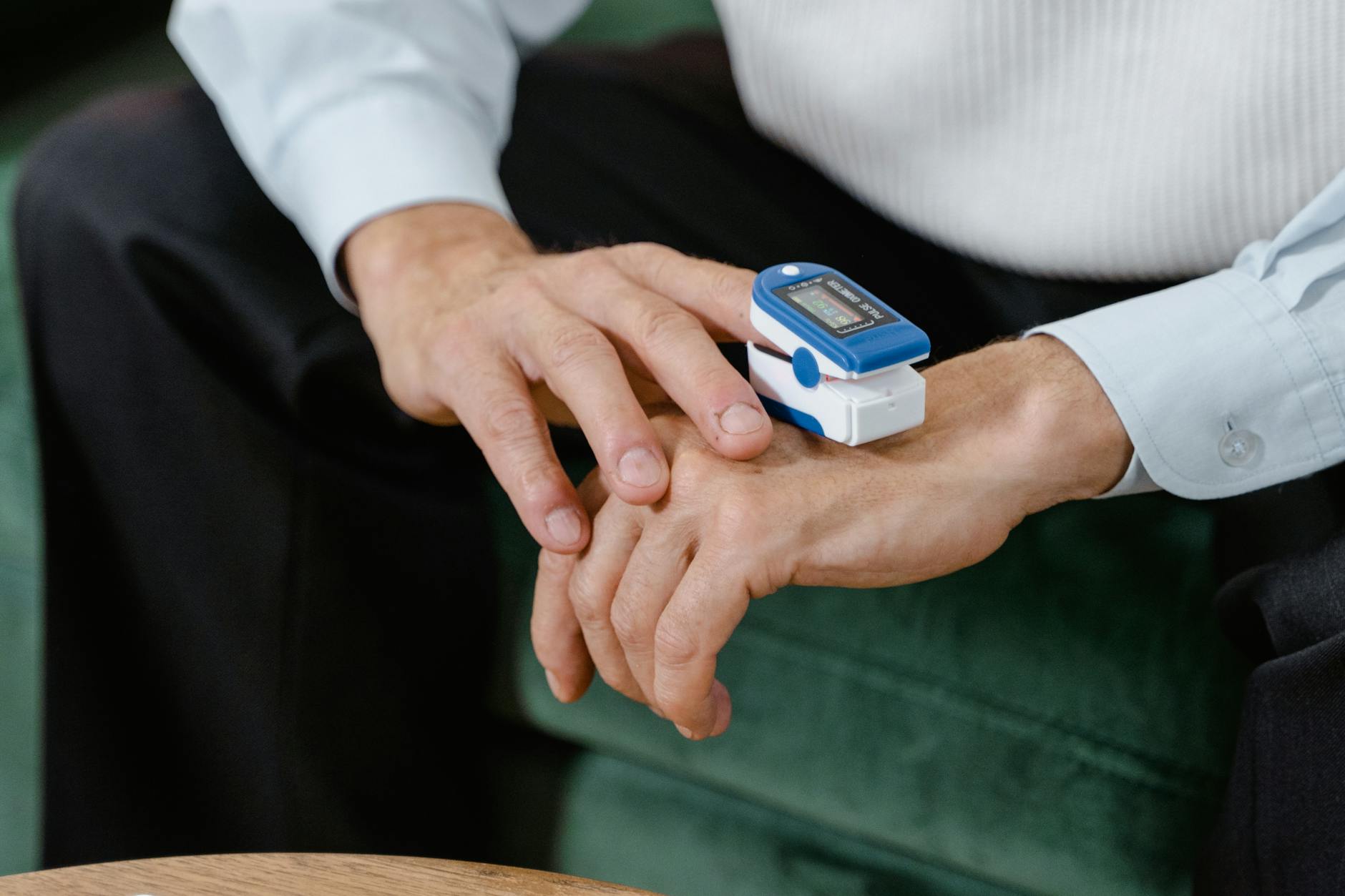
Photoplethysmography works by emitting light through the skin and analyzing how much bounces back. The amount of reflected light changes slightly with each heartbeat as blood volume pulses through your wrist. In theory, it’s elegant. In practice at high intensity, it falls apart. A 2025 validation study in JMIR Cardio confirmed that PPG accuracy is fundamentally compromised by body movements, especially at a distal site like the wrist during intense exercise.
The light sensors can’t distinguish between the small changes caused by your heartbeat and the larger, more dramatic changes caused by your arm swinging, your wrist twisting, and the overall acceleration of your body. The more your body moves, the more “noise” interferes with the signal. During sprinting—when optimal heart rate feedback becomes valuable—wrist monitors showed average absolute errors ranging from 1.25 BPM to 2.34 BPM in research testing. But these are averages. Individual readings can be far worse, sometimes missing your actual heart rate by 10-15 BPM or more in a single beat. This matters because your perceived exertion and your training decisions depend on knowing roughly where your heart rate actually is.
Accuracy Decline Above 150 BPM
The relationship between exercise intensity and monitor accuracy isn’t gradual—it’s a cliff. Studies consistently show that heart rate estimation errors increase significantly above the anaerobic threshold, which for most runners falls between 170-190 BPM depending on age and fitness. Above 150 BPM, wrist-based devices require what researchers call “effective intervention” to register accurate readings at all. In plain language: the devices simply can’t be trusted.
A comprehensive systematic review analyzing 32 different studies involving 1,085 participants across 16 different wrist-based device models found alarming variability. Some devices showed mean percentage errors up to 20%, meaning a reading of 160 BPM could represent anywhere from 128 to 192 actual BPM in the worst cases. The threshold problem is particularly acute because runners doing interval work often spend the most intense portions of their workouts in exactly the zone where wrist monitors become least reliable. This creates a perverse situation: the workouts where you most need accurate feedback are the ones where your monitor becomes least accurate.
Real Device Performance Variability
Not all wrist monitors fail equally. Apple Watch, for instance, consistently outperforms competitors, showing the lowest mean absolute percentage error across studies, particularly during moderate-intensity activities. Fitbit, by contrast, exhibited greater error rates—especially during high-intensity exercises. But even the best-performing devices show meaningful degradation at higher intensities.
If you’re using a mid-range or older smartwatch, you’re likely dealing with significantly worse accuracy. This device-to-device variability creates another problem: you can’t reliably calibrate for the errors. You might assume your watch runs about 5 BPM high, but that assumption only holds true during easy runs. During your tempo run, the error could be twice that. Some runners try to compensate by ignoring their watch altogether during hard efforts—a sensible workaround, but it defeats the entire purpose of wearing a monitor.
Comparing Wrist Monitors to Chest Straps
Chest strap monitors remain the gold standard for accuracy, especially during high-intensity workouts. They avoid the motion artifact problems that plague wrist placement by positioning the sensor directly against relatively stable chest tissue. During fast running, a quality chest strap (the type with electrode contact sensors rather than optical sensors) will give you consistent, reliable data at every intensity level. A standard Polar or Garmin chest strap costs $50-$100 and will likely outlast two smartwatches.
The practical tradeoff is comfort and convenience. A chest strap requires a separate device and a strap across your torso—annoying on humid days or if you prefer minimal gear. A wrist monitor lets you wear your phone replacement, check notifications, and track other metrics beyond heart rate. If accurate heart rate feedback is your priority, the chest strap wins decisively. If integrated sports watch features matter more to you, you’re accepting reduced accuracy in exchange for convenience.
Motion Artifact and Device Placement Variability
Beyond PPG’s fundamental limitations, wrist monitors suffer from secondary problems that compound the primary accuracy issues. Motion artifact—the interference caused by your arm moving—is the main culprit, but device placement variability and external factors like sweat, skin tone, and arm hair all affect signal reliability. A study in PLOS ONE (2024) found that heart rate measurement error using wrist-based devices was significantly greater with increasing exercise intensity for people with darker skin tones. This represents a critical equity issue in sports technology: the same device that under-performs at high intensity performs even worse for runners with particular skin tones. The placement problem is often overlooked.
Your monitor needs to sit in exactly the right spot with exactly the right tightness to maintain consistent skin contact. Shift the band even slightly during a run, and your readings change. Sweat lubricates your skin and reduces contact. Your arm diameter changes as you lose weight. All of these factors combine to make wrist-based monitoring inherently less stable than chest strap monitoring, and the problems magnify as intensity increases.

Racial Disparities in Accuracy
The research on how PPG technology performs across different skin tones reveals an uncomfortable truth: wrist-based monitors were primarily developed and validated on people with lighter skin. PPG relies on light absorption and reflection, and melanin (the pigment that darkens skin) affects how light travels through and reflects off the skin. A 2024 study published in PLOS ONE demonstrated that accuracy gaps widen significantly at higher exercise intensities for people with darker skin, creating a situation where runners of color get less reliable feedback precisely when they need it most.
This isn’t a minor discrepancy. For a given device, Black runners might see accuracy problems kick in at 140 BPM while white runners see them start at 160 BPM. If you’re aware of this limitation and your device model is affected, you might choose to rely on perceived exertion (which is actually quite reliable for most runners) rather than trusting your watch during hard efforts. Ideally, device manufacturers would continue improving PPG algorithms to close this equity gap.
The Practical Implications for Your Training
The existence of these accuracy problems doesn’t mean you should throw your smartwatch in a drawer. It means you should use it appropriately. At easy pace (under 70% of max heart rate), wrist-based monitors provide useful feedback. During aerobic runs and tempo work, they’re reasonably reliable. During sprints, VO2 max intervals, and race-pace efforts, they should be treated as estimates at best.
Pairing your wrist monitor with perceived exertion—the way your breathing feels, the power in your legs, the difficulty of maintaining the pace—actually makes you a better runner than relying on any single metric. Technology is improving. The latest generation of wrist-based PPG sensors are more sophisticated than previous versions. Machine learning algorithms are better at filtering out motion artifact. But they’re not solving the fundamental physics problem: optical sensors at the wrist during high-intensity exercise face inherent limitations that aren’t going away. The continued evolution of wrist-based monitors will push the accuracy ceiling higher, but they’ll never match the reliability of chest strap monitors at high intensity.
Conclusion
Wrist-based heart rate monitors don’t lie deliberately—they simply can’t measure accurately when your body is moving hard and your heart rate is high. The PPG technology they depend on breaks down with motion artifact, device placement variability becomes more problematic, and the accuracy problems are worse for runners with darker skin tones. For most running scenarios, they provide useful data. For the specific moments when you most need precise feedback—during hard intervals, tempo work, and race-pace efforts—you’re relying on an approximation.
The practical solution depends on what matters most to you. If precise heart rate feedback during hard efforts is essential to your training, invest in a chest strap monitor for those workouts. If you value the all-in-one convenience of a smartwatch and can base your intensity on perceived exertion instead of numbers, keep wearing your wrist-based monitor and just be aware of its limitations. Either way, understanding what your monitor can and cannot do makes you a smarter runner.