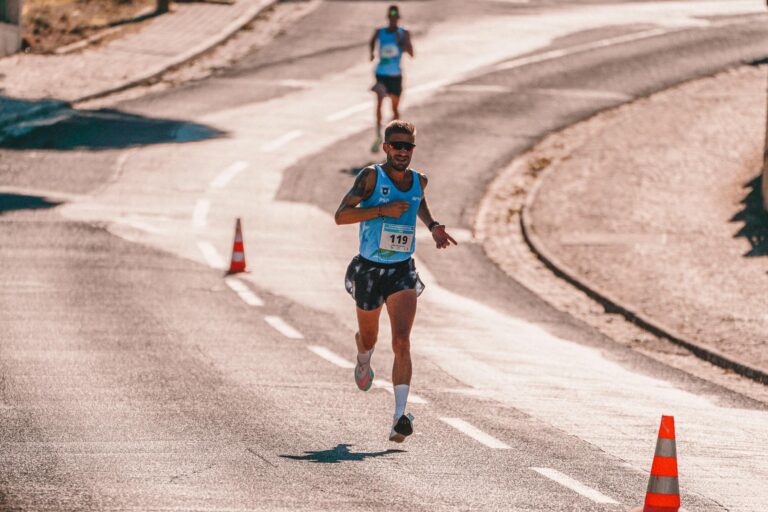
Running on trails without twisting your ankle comes down to three fundamental strategies: strengthening your feet and ankles through targeted exercises, improving your running technique to reduce jarring impacts, and gradually building your trail-running fitness so fatigue doesn’t compromise your stability. Most importantly, focus on single-leg balance work and core strength—these have the most direct effect on preventing the ankle roll that happens when your foot lands on a rock or root. For example, a runner who strengthens her glutes and hips while doing weekly single-leg exercises will have dramatically better control when her foot catches an unexpected dip compared to a runner who neglects this work. The statistics underscore why this matters.
Research shows that 49.5 percent of all trail running injuries affect the ankle, with 40.4 percent occurring during races and 42.6 percent happening in training. Ultra-trail runners face even steeper odds—28.6 percent experience at least one ankle sprain during a competitive event. These aren’t rare freak accidents; they’re predictable injuries that better training and technique can prevent. The good news is that ankle injuries aren’t random—they follow patterns, and once you understand those patterns, you can design a running practice that sidesteps them.
Table of Contents
- Understanding Why Trail Runners Twist Ankles So Frequently
- Building Ankle Stability Through Targeted Strength Training
- Selecting the Right Footwear and Maintaining Equipment Responsibly
- Optimizing Running Cadence and Technique on Technical Terrain
- Progressive Training as Your Foundation for Injury Prevention
- Complementary Strategies for Maximum Resilience
- Adapting Your Approach as Your Trail Running Evolves
- Conclusion
Understanding Why Trail Runners Twist Ankles So Frequently
Trail running demands constant micro-adjustments to uneven ground that road running never requires. Your foot strikes a rock, a root suddenly appears, or the ground slopes sideways—your ankle must stabilize you instantly or roll inward or outward. This is why ankle injuries in trail running occur at rates ranging from 2.2 to 65 injuries per 1,000 hours of running, depending on the study and the runner population examined. Ultra-trail runners specifically face an incidence of 13.1 injuries per 1,000 hours of training, meaning a runner logging 10 hours per week faces a meaningful statistical chance of an ankle injury over a season. The mechanism is straightforward: when your foot lands on uneven terrain with insufficient ankle stability or poor proprioceptive awareness, your ankle joint rolls beyond its normal range. If your surrounding muscles—particularly the peroneal muscles on the outside of your shin and the smaller stabilizers deep in your foot—aren’t strong enough to catch that motion, a sprain results.
Fatigue accelerates this; tired muscles react slower and provide less support. This is why many ankle injuries occur late in a run or race when muscular fatigue compounds the problem. What makes trail running unique is the speed at which hazards appear. Unlike road running, where you can see and plan your steps predictably, trail running forces reactive stability. Your central nervous system must identify terrain changes and fire stabilizer muscles within milliseconds. This reflex can be trained, but it requires specific work that general running doesn’t provide.

Building Ankle Stability Through Targeted Strength Training
Single-leg exercises are the gold standard for ankle injury prevention because they force your stabilizer muscles to engage in a way that mimics the demands of trail running. When you stand on one leg—whether during a single-leg deadlift, a pistol squat, or simply balancing exercises—your ankle muscles work to keep you upright without the symmetrical load distribution that two-leg exercises provide. This trains the exact neural pathway your ankle uses when it encounters an unexpected shift on the trail. Core and hip strength matter equally, perhaps more than ankle-specific work. When your glutes and deep core muscles are strong, they control your hip position and limit excessive rotation of your entire lower body. This upstream stability dramatically reduces the rotational forces that your ankle must resist.
A runner with weak glutes will compensate by putting excessive stress on her ankles and knees; a runner with strong glutes distributes the load more safely. Think of it as a kinetic chain: if the larger joints above your ankle are unstable, your ankle has to work much harder and is more likely to fail under stress. Barefoot time and sand training offer another avenue for strengthening. When you run barefoot or on sand, your foot musculature engages more extensively because you lack the shoe’s support structure. Your arch muscles, the small intrinsic foot muscles, and your ankle stabilizers all activate more intensely. A runner who spends 10 minutes weekly on barefoot walking or running short distances on sand will see measurable improvements in foot strength and arch function over eight weeks. The limitation here is that you must progress gradually—too much barefoot running too fast can cause overuse injuries in structures unaccustomed to that load.
Selecting the Right Footwear and Maintaining Equipment Responsibly
Shoe choice significantly affects ankle injury risk, though not in the way many runners assume. Your shoes don’t prevent ankle injuries through arch support alone—rather, properly fitted shoes keep your foot from shifting around inside the shoe while you run, which would cause your ankle to make micro-compensations. A shoe that’s tied snugly and fits your foot securely will keep your ankle aligned; a shoe that’s loose or too roomy allows your foot to slide during landing, forcing your ankle to work overtime to stabilize. The worn-out shoe problem is more serious than many runners realize. When the midsole loses its cushioning and becomes compressed, the shoe no longer absorbs ground impact effectively. Your ankle and joint structures absorb more shock with each step, which accelerates fatigue and reduces your ankle’s stability reserve. A shoe becomes unsafe for trail running before it feels obviously worn—if the sole has compressed noticeably or the heel counter feels soft, it’s time to retire the shoe.
For a runner logging 25 miles per week on trails, this typically means replacing shoes every 250–350 miles, or roughly every two to three months depending on terrain and running style. Pushing shoes beyond this point is a false economy that increases injury risk. Different trail shoes offer varying levels of ankle support. Some feature higher ankle collars or stiffer midsoles; others are more minimal. For injury prevention, a shoe with a slightly stiffer midsole and responsive cushioning is safer than either an extremely minimal shoe (which provides minimal protection from impacts) or an overly cushioned, soft shoe (which offers less ground feedback). The shoe should feel responsive underfoot—meaning your foot can sense the terrain—while still absorbing shock. Test shoes on actual trails, not just on the road, to feel how they handle real terrain.

Optimizing Running Cadence and Technique on Technical Terrain
Running cadence—the number of steps you take per minute—directly influences ankle injury risk. A higher cadence (typically 180 steps per minute or above) reduces ground contact time and decreases the impact force with each step. More importantly, a higher cadence inherently shortens your stride, which reduces overstriding. Overstriding is a major risk factor for ankle injuries because it means your leg is extended in front of your body when you land, forcing your ankle to absorb more force in a mechanically disadvantaged position. When you shorten your stride and increase your cadence, your foot lands closer to your center of gravity, where your ankle is stronger and more stable. This becomes even more critical on downhills. On downhill terrain, runners naturally overstride and extend their legs forward—the foot lands far out in front, creating a braking motion and excessive stress on the ankle and knee.
Deliberately increasing your step rate on downhills—even by 10 percent—measurably reduces ankle strain. A runner descending at 170 steps per minute faces significantly different mechanical stresses than one descending at 155 steps per minute, even though the pace is identical. Many runners discover that focusing on “quick feet” and “short steps” when going downhill prevents the ankle pain that usually hits after aggressive trail descents. Active mobility during running is often overlooked but matters substantially. By active mobility, we mean the range of motion your ankle demonstrates while moving—not the static flexibility you might stretch for on the ground. As you run trails, your ankle needs to accommodate lateral tilts, small rotations, and sudden dorsiflexion (toes pointing upward). If your ankle lacks active mobility, it may roll farther than it should when terrain shifts unexpectedly. You can improve active mobility through dynamic warm-ups that include ankle circles, lateral shuffles, and inchworms before trail running.
Progressive Training as Your Foundation for Injury Prevention
Gradual distance and intensity buildup is perhaps the most underrated injury prevention strategy. When you rush into trail running or increase your weekly mileage too quickly, your muscles, tendons, and neural adaptations fall behind the demands placed on them. Your ankle stabilizer muscles simply haven’t built sufficient endurance, and by mile five or six of a run they fatigue. Fatigued muscles respond slower and provide less support, creating the exact conditions where ankle injuries occur. The rule of thumb is to increase weekly running mileage by no more than 10 percent per week, and to introduce trail running gradually if you’re primarily a road runner. A practical example: a runner with a road base of 20 miles per week should not immediately run 20 miles on trails. Instead, she might spend the first two weeks adding 3–4 miles of trails per week while reducing road mileage, for a total of 20 miles.
By week three, she might try 6 miles of trails. By week five or six, she’s ready to shift 15 miles of her weekly volume to trails. This gradual transition allows her ankle stabilizers and proprioceptive systems to adapt without the acute fatigue that causes injuries. Runners who skip this progression and dive into trail running at their previous road mileage frequently tweak or sprain ankles within two weeks. The limitation of this approach is that it requires patience and restraint, which many enthusiastic runners struggle with. The temptation is strong to maintain your previous running volume while adding trails, which works fine—until it doesn’t. When the ankle injury hits, the recovery timeline (typically 4–12 weeks depending on severity) far exceeds the few weeks you “saved” by skipping the gradual buildup. Almost every serious trail runner can point to an injury that resulted from not respecting the need to build into new terrain gradually.

Complementary Strategies for Maximum Resilience
Balance training beyond simple single-leg standing amplifies ankle stability. Sport-specific balance work—such as lateral lunges, single-leg stands on uneven surfaces, or balance beam walking—trains your proprioceptive system to handle the exact perturbations you’ll encounter on trails. If you can balance on one leg while doing an upper-body movement, you’re training your ankle stabilizers to work while your attention is divided, exactly as it is during running. A runner who dedicates 10 minutes twice per week to balance-specific exercises will experience measurably fewer ankle issues than one who doesn’t.
Trail selection matters too. Extremely rocky trails with loose terrain demand more ankle stability than runnable, packed-dirt trails. When you’re building into trail running or recovering from a recent ankle issue, choosing slightly less technical terrain is prudent. This isn’t forever—once your ankle stability has improved, you can progress to more challenging terrain. But the goal early on is to build the required strength without forcing your stabilizer muscles to work maximally on every run.
Adapting Your Approach as Your Trail Running Evolves
Your ankle prevention strategy should evolve as your trail-running experience deepens. A new trail runner’s focus should be almost exclusively on gradual buildup and basic single-leg strength work. An experienced trail runner who has developed solid ankle stability might emphasize maintaining fitness with varied terrain and periodic balance maintenance rather than constant ankle-specific work.
The fundamentals—cadence, footwear, core strength—never change, but the emphasis shifts. Looking forward, the trail-running community increasingly recognizes that ankle injuries are preventable through systematic training rather than random bad luck. The research is clear that targeted strength work, technique refinement, and gradual progression reduce injury rates substantially. For any runner considering trail running or struggling with repeated ankle issues, viewing ankle injury prevention as a structured, multi-faceted training component—not as something that happens passively—is the mental shift that drives results.
Conclusion
Twisting your ankle on trails is largely preventable through discipline in four areas: strengthening your stabilizer muscles and core through targeted single-leg and balance work, refining your running technique to maintain appropriate cadence and avoid overstriding, progressing gradually into trail running to build the required muscular adaptations, and selecting shoes that fit securely while maintaining them responsibly. The research is unambiguous: runners who implement these strategies experience substantially fewer ankle injuries than those who don’t.
Your action plan should start this week with just two additions to your routine: if you’re not already doing single-leg exercises, add them twice per week; and if you’re primarily a road runner, commit to the 10-percent weekly increase rule when adding trail mileage. These two changes alone address the most common mechanisms of trail-running ankle injuries and provide immediate protection.