To maximize toning with running, you need to combine interval training with strength work and ensure adequate protein intake—running alone won’t build the muscle definition you’re after. Many runners assume steady-state jogging will sculpt their muscles, but the physiology doesn’t work that way. A runner who adds high-intensity interval sessions and targeted strength training while maintaining a slight caloric deficit will see noticeable muscle definition within 4-6 weeks, whereas someone relying only on long, slow distance runs may never achieve visible muscle tone despite significant cardiovascular improvements.
Running does build muscle, particularly in the legs and core, but it’s primarily an endurance activity. The key to toning is understanding that muscle definition requires three elements: building muscle through resistance stimulus, reducing body fat so muscle becomes visible, and maintaining adequate nutrition to support both. This article breaks down the specific strategies that elite distance runners and fitness enthusiasts use to achieve lean, defined physiques.
Table of Contents
- What Type of Running Actually Builds Muscle for Toning?
- The Role of Strength Training in Muscle Toning
- Nutrition Strategies for Running-Based Toning
- How to Structure Your Weekly Training Schedule for Toning
- Common Mistakes That Sabotage Muscle Definition from Running
- Recovery and Sleep’s Impact on Toning Progress
- Advanced Techniques for Accelerated Muscle Definition
- Conclusion
- Frequently Asked Questions
What Type of Running Actually Builds Muscle for Toning?
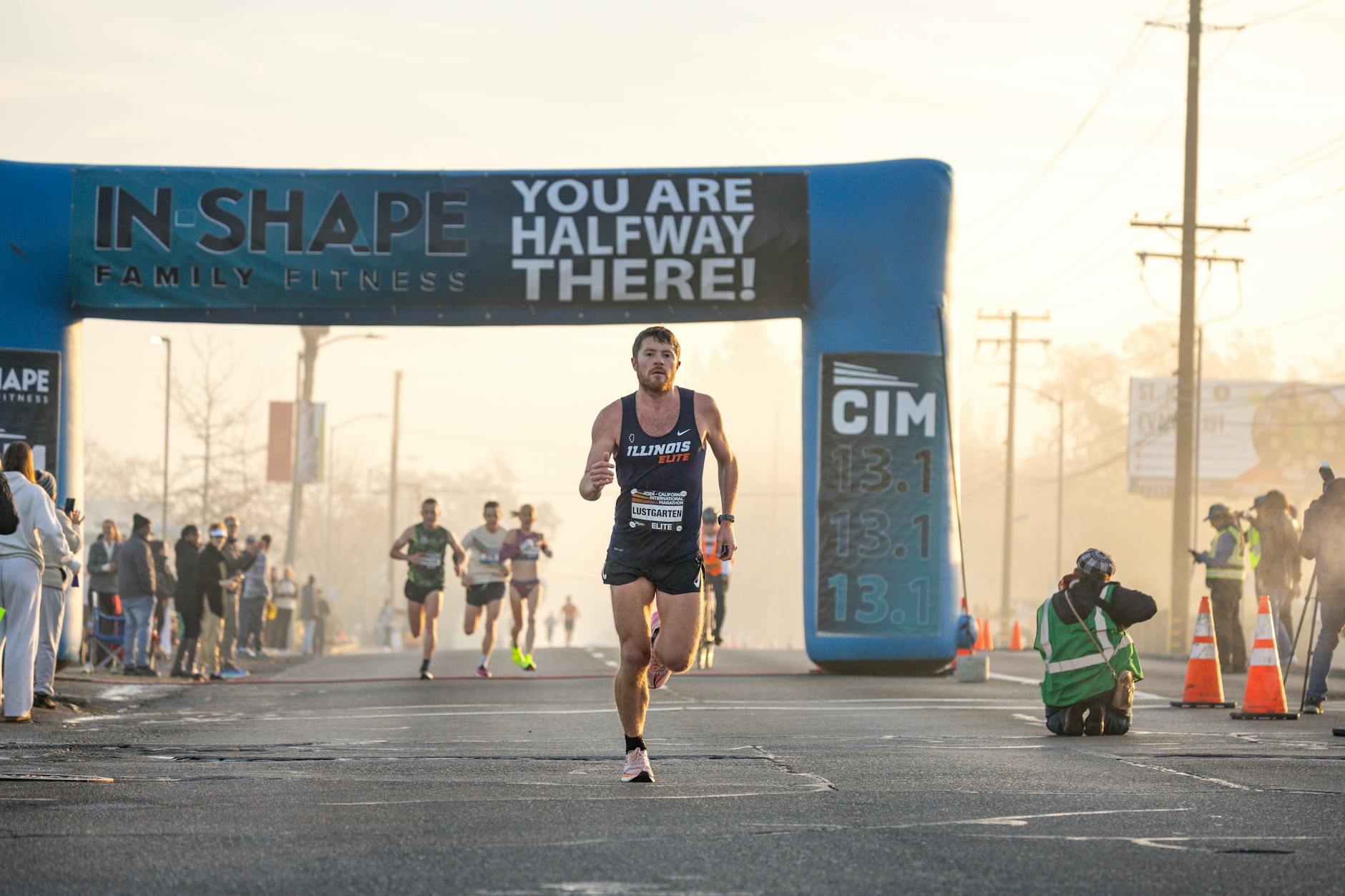
Not all running produces the same muscle-building stimulus. Sprint intervals and tempo runs create more muscle-building demand than easy jogging because they place greater force on your muscles and require greater power output. When you run at high intensity, you activate more muscle fibers, particularly the fast-twitch fibers responsible for power and definition. A runner doing 8x400m intervals at 5K pace recruits different muscle fibers than someone doing a comfortable 5-mile run, despite similar duration.
The best running workouts for toning include hill repeats, which place eccentric load on your legs and glutes; track intervals, which demand maximum power; and tempo runs held at uncomfortably hard effort. Hill repeats are particularly effective because gravity increases resistance, forcing your muscles to work harder on the descent. A 6-week block of twice-weekly hill work often produces visible changes in leg muscle definition that months of flat-road running won’t deliver. However, the tradeoff is intensity: these workouts carry higher injury risk, require more recovery, and demand proper pacing to avoid overuse injuries like patellofemoral pain syndrome.

The Role of Strength Training in Muscle Toning
Running alone has a ceiling for muscle development. While running can maintain muscle, building noticeable muscle definition requires progressive overload—consistently adding weight, reps, or resistance over time. Two to three strength sessions per week, focusing on legs, glutes, and core, transform how running affects your physique. The combination of running for calorie burn and strength training for muscle stimulus is what actually delivers the toned look most people want.
The key limitation many runners face is trying to do too much: high mileage, intense interval work, and heavy strength training simultaneously. Your body has limited recovery capacity, and attempting all three often results in mediocre progress in each area and increased injury risk. A runner toning for definition should prioritize: one intense interval session per week, one tempo or strength-focused run, easy runs for aerobic base, and two strength sessions emphasizing lower body and core. This structure lets you maintain fitness while building the muscle stimulus needed for definition. Runners who attempt 50+ miles per week while also doing heavy squats and deadlifts often regress in both running performance and muscle building because they’re chronically under-recovered.
Nutrition Strategies for Running-Based Toning
Muscle definition isn’t visible until body fat is low enough to reveal it. This creates a unique nutrition challenge: you need enough protein to build muscle, enough carbs to fuel hard running workouts, but a deficit to lose fat. Most runners trying to tone should aim for 1.6-2.2 grams of protein per kilogram of body weight daily—the higher end if your training includes heavy strength work. A 150-pound runner should consume roughly 110-150 grams of protein daily, distributed across meals to maximize muscle protein synthesis.
Carbohydrate timing matters for both performance and toning. Eating carbs before hard workouts fuels your intensity, allowing you to generate greater muscle-building stimulus through intervals or hills. Eating carbs and protein after workouts supports recovery. The specific example many runners overlook: a runner doing fasted morning runs for fat loss often compromises the intensity of their workout, meaning they create less muscle-building stimulus while also being in a deficit—a combination that can actually lead to muscle loss rather than toning. Eating 20-30 grams of carbs and 10 grams of protein before morning workouts improves performance enough to offset the calorie cost through better workout quality.
How to Structure Your Weekly Training Schedule for Toning
A practical toning-focused week might look like: Monday (lower body strength—squats, deadlifts, lunges), Tuesday (tempo run 4-6 miles), Wednesday (easy run 4-5 miles or rest), Thursday (upper body and core strength), Friday (high-intensity intervals—8×2 minutes at 5K pace), Saturday (long run 8-12 miles at easy pace), Sunday (rest or recovery walk). This structure balances the muscle-building stimulus from strength work with the calorie burn and intensity from running, while allowing adequate recovery. The tradeoff in this schedule is volume versus intensity.
You’re not maximizing weekly running mileage—elite distance runners log 80-100 miles per week, but a toning-focused runner with strength work might do 25-35 miles while getting better muscle definition. This lower-mileage approach is actually advantageous for toning because you’re managing fatigue, allowing harder efforts in workouts, and leaving recovery capacity for strength training. However, if your goal is marathon performance, this approach sacrifices race-specific aerobic development. Choose based on your actual goal: toning plus fitness, or pure race performance.
Common Mistakes That Sabotage Muscle Definition from Running
Many runners focus exclusively on lower body strength but neglect the posterior chain—glutes and hamstrings—which dramatically affects how toned your legs appear. A runner with developed quads but weak glutes won’t look as sculpted as one with balanced lower body development, and you’re also more likely to develop muscle imbalances causing injury. Prioritizing single-leg work, hip thrusts, Romanian deadlifts, and glute-focused exercises ensures definition shows across your entire lower body. Another critical limitation: doing high-mileage easy running while in a caloric deficit.
Your body will preserve energy by downregulating metabolism and breaking down muscle tissue. Long easy runs in a deficit can paradoxically decrease muscle definition because you’re burning calories without building stimulus. A runner trying to tone should do most easy running at a comfortable sustainable pace, keep intervals and tempo runs hard, and strength train with intention. If your weekly routine includes 40+ miles of running with heavy strength work and a 500-calorie deficit, you’ll likely lose both fat and muscle—potentially looking smaller but not more defined. A 200-300 calorie deficit with strategic hard work preserves muscle while losing fat.
Recovery and Sleep’s Impact on Toning Progress
Muscle is built during recovery, not during workouts. A runner doing perfect training but sleeping 5 hours nightly will struggle to see toning progress because insufficient sleep suppresses testosterone, increases cortisol, and reduces muscle protein synthesis. Prioritizing 7-9 hours of sleep amplifies the effects of strength training and running. Research consistently shows that athletes sleeping less than 6 hours per night experience slower progress and higher injury rates.
Consider a practical example: two runners doing identical training. Runner A sleeps 8 hours, manages stress, and sees visible leg muscle definition within 6 weeks. Runner B does the same workouts but sleeps 5-6 hours while working a stressful job, and sees minimal progress. The difference isn’t the training—it’s the recovery environment. If you’re not seeing toning progress despite consistent effort, before changing training, audit your sleep and stress levels.
Advanced Techniques for Accelerated Muscle Definition
Advanced runners sometimes incorporate periodization for toning: alternating between strength-focused blocks (lower volume running, heavier weights, progressive overload) and running-focused blocks (higher volume, lower intensity, maintenance strength work). This prevents adaptation and keeps your body responsive. A 4-week strength emphasis block followed by a 2-3 week running focus allows maximum muscle development without sacrificing aerobic fitness. Body composition changes also become visible faster when you’re actively building habit change.
Runners who see the biggest improvements in definition aren’t necessarily those with the best genetics—they’re the ones who build sustainable consistency over months. The combination of hard interval training, focused strength work, adequate sleep, and proper nutrition creates a compounding effect. By week 8-12 of consistent toning-focused training, most runners notice visible changes in muscle definition, which further motivates consistency. The outlooks for runners who commit to this approach is not just improved physique, but also better running performance, fewer injuries, and greater overall fitness.
Conclusion
Maximizing toning with running requires moving beyond the assumption that simply running more will deliver results. The actual formula combines high-intensity running intervals, progressive strength training twice weekly, adequate protein intake, and sufficient recovery—not high mileage alone. A runner who shifts from 40 miles per week of easy running to 25 miles including intervals and hill work, adds focused strength training, and maintains consistent sleep and nutrition will see dramatic improvements in muscle definition within 6-8 weeks.
Start by auditing your current training: are you doing any high-intensity work, any strength training, and tracking protein intake? If the answer to any is no, that’s where the leverage exists. Pick one change—adding one tempo run, starting two strength sessions per week, or hitting your protein target daily—and stay consistent for 3 weeks before adding the next element. Toning through running is achievable, but it requires strategic training that most casual runners never implement.
Frequently Asked Questions
Can I build muscle and lose fat simultaneously through running?
Yes, but only if you’re newer to training or returning after time off. Muscle definition requires a small caloric deficit (200-300 calories), which works best combined with strength training and high-intensity running. You’ll see body recomposition most clearly in the first 6-12 weeks when your body is responsive to the stimulus.
How much protein do I really need if I’m running and lifting?
Aim for 1.6-2.2 grams per kilogram of body weight daily. For a 150-pound runner, that’s 110-150 grams. This can come from whole foods—chicken, fish, eggs, Greek yogurt, legumes—and doesn’t require supplements. Post-workout protein is helpful but not magical; total daily intake matters most.
Is running on a treadmill as effective for toning as outdoor running?
Outdoor running produces slightly more muscle stimulus because of wind resistance and uneven terrain, but the difference is small. Treadmill training is effective if you include incline work and intervals. The best training is the one you’ll actually do consistently.
How long until I see visible muscle definition?
Most runners notice changes within 4-6 weeks if they’re doing everything right—intensity work, strength training, protein, sleep, and a slight deficit. Genetics affect how quickly definition appears, and people starting with higher body fat may need 8-12 weeks.
Should I do strength training on the same day as running intervals?
Generally, no. Do strength training on separate days or after easy runs. High-intensity running and heavy strength work on the same day competes for recovery resources and often results in one or both being suboptimal.
What’s the best exercise for running-specific toning?
Single-leg work—Bulgarian split squats, single-leg deadlifts, lunges, step-ups—develops the muscles running actually uses while improving stability and preventing imbalances. Add these 2-3 times weekly for noticeable definition.