Functional fitness activities deliver compounding returns because they train your body the way it actually moves. Rather than isolating single muscle groups on machines, functional exercises engage multiple muscle groups in coordinated patterns—the same patterns you use when climbing stairs, carrying groceries, or sprinting for a bus. This integrated approach means benefits accumulate quickly: stronger stabilizer muscles, better balance, improved coordination, and increased calorie burn all develop simultaneously. Within three to four weeks of consistent functional training, most people notice they tire less during daily activities and recover faster from runs.
Consider a simple example: a farmer’s carry, where you hold weights at your sides and walk. This single movement strengthens your grip, core, shoulders, and legs while improving posture and balance. Compare that to a biceps curl machine, which isolates one muscle in one plane of motion. The farmer’s carry builds more capability in less time because it mimics real-world demands. For runners specifically, this means functional fitness activities translate directly into improved performance, fewer injuries, and the ability to run faster and farther with less fatigue accumulating.
Table of Contents
- Why Do Functional Fitness Benefits Compound So Quickly?
- How Functional Fitness Differs from Traditional Strength Training
- Functional Activities That Deliver Fast Results for Runners
- Building a Practical Functional Fitness Routine
- Common Mistakes and Limitations
- Recovery and Sustainability
- Long-Term Benefits and Progression
- Conclusion
- Frequently Asked Questions
Why Do Functional Fitness Benefits Compound So Quickly?
Functional exercises create what researchers call “neuromuscular adaptation”—your nervous system learns to recruit muscles more efficiently. This happens faster than traditional strength training because you’re training movement patterns, not just muscle size. Within the first two weeks, your body rewires how it coordinates muscle activation. By week four, strength gains become noticeable in daily life. A runner who adds Bulgarian split squats or step-ups to their routine typically notices immediately that they can climb hills with less quad burn and maintain better form in the final miles of a run. The stacking effect matters too.
Each functional exercise builds qualities that support other exercises. Better core stability from planks improves your balance during single-leg deadlifts. Stronger glutes from hip thrusts reduce knee strain in lunges. Improved ankle mobility from calf stretches and lateral movements prevents trips and enhances running economy. These adaptations layer on top of each other, creating accelerating returns. A runner who performs just three functional exercises three times weekly often sees measurable improvements in running economy and speed within six weeks—faster than someone doing isolated strength work.
How Functional Fitness Differs from Traditional Strength Training
Traditional strength training typically uses machines or fixed weights to target specific muscle groups in controlled, single-plane movements. Functional fitness removes those constraints. You use free weights, bodyweight, or unstable surfaces, and you perform movements in multiple planes—forward and back, side to side, and with rotation. This approach demands more from your nervous system, core, and stabilizer muscles. The tradeoff is that functional exercises carry a higher learning curve and injury risk if done with poor form, unlike machine-based exercises where range of motion is predetermined and safer by design. For runners, this distinction matters significantly.
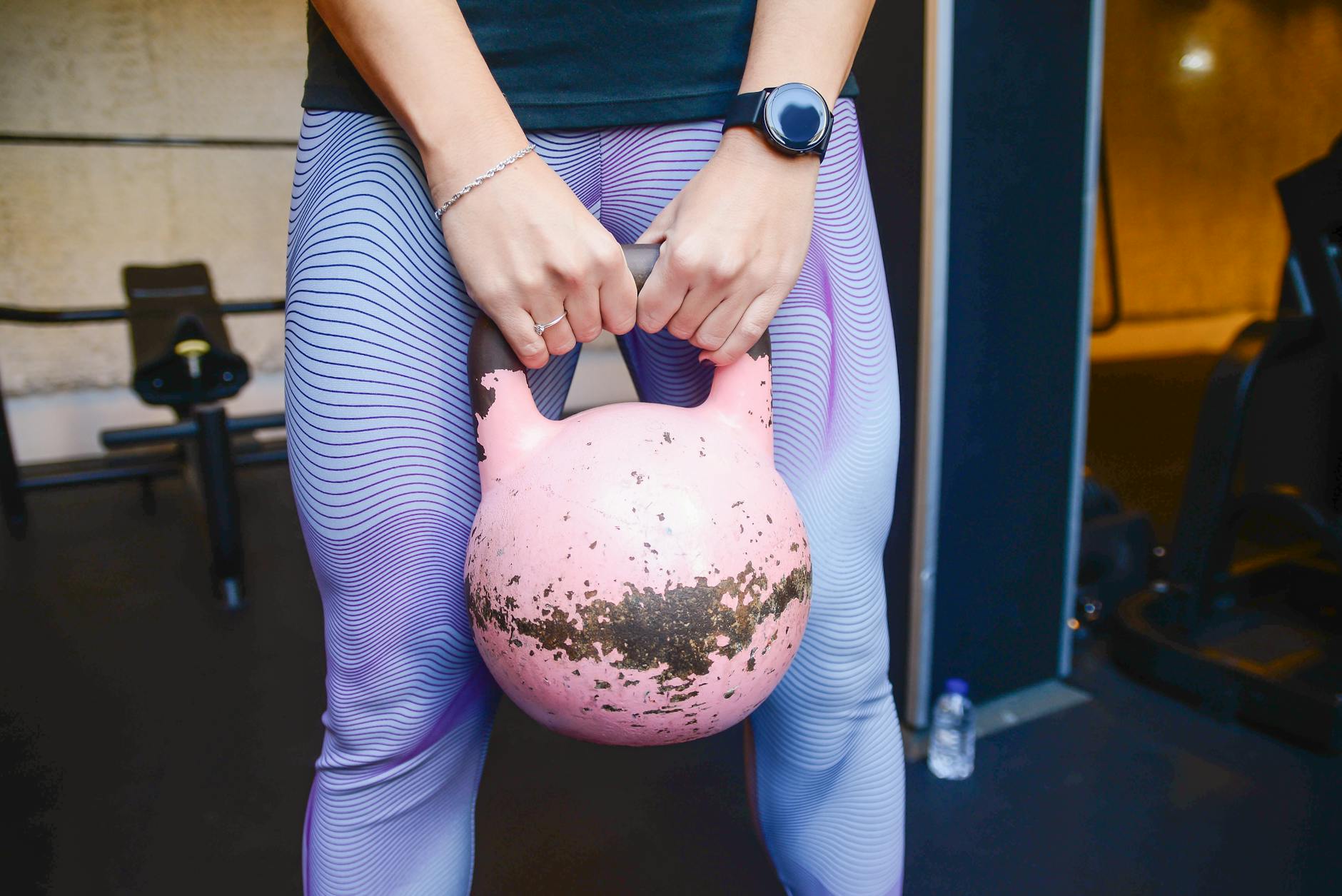
Machines don’t prepare you for the unpredictable forces of trail running, the rotational demands of changing direction, or the stabilization needed on fatigued legs in mile 18 of a marathon. Functional movements train your body to handle those demands. However, there’s a limitation: functional exercises require more technical skill. A poorly executed pistol squat can injure your knee. A sloppy Turkish getup can strain your shoulder. Proper form and progression are non-negotiable, which means beginners benefit from coaching or detailed instruction, not just jumping into complex movements.
Functional Activities That Deliver Fast Results for Runners
Certain functional exercises pay immediate dividends for runners. Single-leg deadlifts build balance and posterior chain strength in 3-4 weeks, directly translating to stronger push-off power and reduced injury risk. Box step-ups strengthen your quads, glutes, and stabilizer muscles in a pattern that mirrors running. Farmer’s carries improve grip strength, core rigidity, and postural endurance—qualities that prevent slouching in the final miles when fatigue sets in. Medicine ball rotations enhance core power and rotational stability, reducing stress on your lower back during hard efforts.
Consider a concrete example: a runner who adds single-leg deadlifts and box step-ups to their routine twice weekly typically notices within 4-5 weeks that their pace on hilly terrain improves and their knees feel more stable. Their cadence may naturally increase because their stabilizer muscles can handle faster leg turnover. These aren’t flashy improvements—no dramatic max-squat records—but they’re the kind of improvements that matter on a 10-mile run or during a race. The caveat is that results depend on consistency and proper progression. Someone doing three sloppy single-leg deadlifts twice weekly won’t see the same returns as someone doing controlled reps with full range of motion.

Building a Practical Functional Fitness Routine
An effective functional routine for runners requires only 2-3 sessions per week, 20-30 minutes each. A sample session might include: three sets of single-leg deadlifts (8-10 reps per leg), three sets of box step-ups (10 reps per leg), three sets of farmer’s carries (40-50 meters), and two sets of core anti-rotation holds (15-20 seconds per side). The key is performing these movements with intention and quality. Five perfect reps beat ten sloppy ones every time. The major tradeoff is energy management. Functional training taxes your central nervous system more than traditional cardio, so you must balance it against your running volume.
A runner training 40-50 miles weekly might allocate only 2 functional sessions. Someone running 20 miles weekly can handle 3 sessions. The limiting factor isn’t time—it’s recovery. Functional exercises demand quality sleep, adequate protein, and proper nutrition because they stimulate real adaptation. Neglect recovery and you’ll stall or risk injury. Many runners make the mistake of adding functional training without adjusting their mileage or sleep, then wonder why they feel perpetually fatigued.
Common Mistakes and Limitations
The most frequent error is moving too fast or too heavy before mastering movement patterns. A runner attempting pistol squats without months of single-leg strength work invites knee problems. Rushing progression into complex movements like Turkish getups or heavy kettlebell swings can cause shoulder, wrist, or lower back strains. Another common mistake is treating functional training as a supplement rather than a priority. It works only if you show up consistently. One session per week won’t deliver the neuromuscular adaptations that create fast results. You need at least two weekly sessions for noticeable gains within a month.
There’s also a limitation in scope: functional fitness improves running economy and injury resilience, but it won’t make you a faster runner on its own. You still need proper running training—quality workouts, tempo runs, interval training—to build aerobic capacity and speed. Functional fitness is a multiplier: it makes your running training more effective by keeping your body healthy and efficient. It’s not a shortcut. Additionally, functional training requires reasonable equipment or gym access. Bodyweight exercises take you far, but access to barbells, dumbbells, boxes, or kettlebells opens more options and allows better progression. Runners in truly limited settings may struggle to see the full benefit.
Recovery and Sustainability
Functional training damages muscle fibers intentionally, creating adaptation. That adaptation requires sleep. Most runners underestimate how much functional training interrupts sleep architecture. A hard functional session can elevate cortisol and core temperature, making sleep more difficult that night. This is why functional training works best when paired with consistent sleep hygiene: 7-9 hours nightly, consistent bedtime, cool dark room. Nutrition matters equally. Functional training increases protein demands because you’re building muscle alongside running. A runner eating 1.2 grams of protein per kilogram of bodyweight typically sees better functional gains than someone eating 0.8 grams, even with identical training.
Sustainability means respecting deload weeks. Every fourth week, reduce functional training volume by 40-50%. Do lighter weights, fewer sets, or fewer sessions. This allows your connective tissues and nervous system to fully recover. Without deload weeks, you accumulate fatigue markers and injury risk spikes sharply around week 7-10 of continuous hard training. You’ll feel strong for 6-7 weeks, then suddenly everything feels heavy and injuries nag. Smart programming prevents this. The runners who stick with functional training for years build it around deloads, listen to their body, and adjust based on running volume and life stress.
Long-Term Benefits and Progression
Six months of consistent functional training produces runners who are noticeably more resilient. They recover faster between runs. They maintain better form when fatigued. They handle unpredictable terrain confidently. A year in, injury rates drop substantially. Studies on runners show that those doing functional training 2-3 times weekly reduce soft tissue injuries by 30-40% compared to runners doing cardio and no strength work.
These aren’t marginal gains—they’re the difference between running consistently year after year versus cycling through injuries and layoffs. The trajectory of progression matters. After establishing a foundation (3-4 weeks), gradually increase difficulty: add load, increase range of motion, reduce stability, or combine movements. A simple example: start with bodyweight Bulgarian split squats, progress to holding dumbbells, then to holding dumbbells while standing on a balance pad. This progression pattern—technical mastery first, load second, instability third—keeps you gaining without plateauing or injuring yourself. Runners who think long-term about functional training integrate it permanently because they experience fewer injuries, better performance, and genuine improvements in how their bodies feel and function in daily life.
Conclusion
Functional fitness activities deliver results quickly because they train movement patterns your body actually uses, triggering rapid neuromuscular adaptation and compounding benefits. Within 3-4 weeks of consistent work—just 2-3 sessions weekly—most runners notice improved stability, reduced injury risk, and better economy. These gains accelerate when you prioritize proper form, progressive loading, and adequate recovery. The investment is modest: 20-30 minutes per session, twice or three times weekly, alongside your normal running training. The path forward is straightforward: start with fundamental movements like single-leg deadlifts, box step-ups, and farmer’s carries. Master the patterns with bodyweight or light load.
Progress gradually. Sleep seven to nine hours. Eat enough protein. Deload every fourth week. Stick with it for at least eight weeks before evaluating results. Runners who take this approach typically find that functional fitness becomes non-negotiable—not because it’s trendy, but because they genuinely perform better, stay healthy longer, and run with greater confidence and resilience.
Frequently Asked Questions
How quickly will I see results from functional fitness training?
Most runners notice improvements in daily life (climbing stairs easier, better balance) within 2-3 weeks. Measurable running performance gains typically appear within 4-6 weeks with consistent 2-3 weekly sessions.
Can I do functional training and running on the same day?
Yes, but timing matters. Do functional training after running, not before, to avoid compromising running quality. Allow 6-8 hours between hard efforts if possible. On heavy running days, keep functional sessions light and shorter.
What if I don’t have access to a gym?
Bodyweight functional training works well: pistol squats, single-leg deadlifts, push-ups, planks, step-ups on stairs, and carries with household items. You’ll see results, though progression plateaus without external load. Even resistance bands and dumbbells expand options significantly.
How do I know if I’m doing functional exercises with proper form?
Video yourself and compare to tutorials from reputable sources. Better yet, get one or two sessions with a strength coach who understands running. Good form should feel controlled and stable, never rushed or painful.
Should I do functional training on rest days?
Light functional work on a true rest day is fine. But most runners benefit from pairing functional sessions with running days, then taking complete rest days. This simplifies recovery management.
Can functional fitness prevent running injuries?
It significantly reduces injury risk—studies show 30-40% fewer injuries in runners doing consistent functional training. It’s not a guarantee, but it’s the single most effective injury prevention tool alongside proper running progression and adequate recovery.